
AI professors compare notes: how academic science survives in the era of closed models and expensive computing
At a closed meeting of Schmidt Sciences fellows, professors from leading universities discussed why AI research is increasingly moving into private companies and how scientists can adapt to GPU shortages, closed models, and new questions about the future of science.

Over the past four years, the center of gravity in AI research has shifted from university laboratories to private companies. Scientists who were setting trends until recently now find themselves playing catch-up with industry. At a recent meeting of the Schmidt Sciences AI2050 program — an initiative by Eric and Wendy Schmidt that supports academic researchers — professors discussed how to survive in the new landscape.
Why the cutting edge left universities
The main reason is money and access to equipment. Universities cannot afford GPUs either for training large language models or for running the most advanced systems, while private labs are in no hurry to reveal the inner workings of their products. Professor Nika Haghtalab from UC Berkeley compares the position of an AI academic to that of a biologist whose exclusive control over CRISPR had been taken away by private firms: you can study the phenomena, but you cannot touch the tools.

So what's the result? Outside experts can observe the behavior of large models, but they cannot see how they are built or what they were trained on, let alone influence their development. Requests for rigorous analysis also come at a steep price: repeated calls to the APIs of OpenAI, Anthropic, and Google blow the budget of an average department. And federal funding for science in the U.S. is shrinking, making the problem increasingly acute.
Survival strategies: pick battles you can win
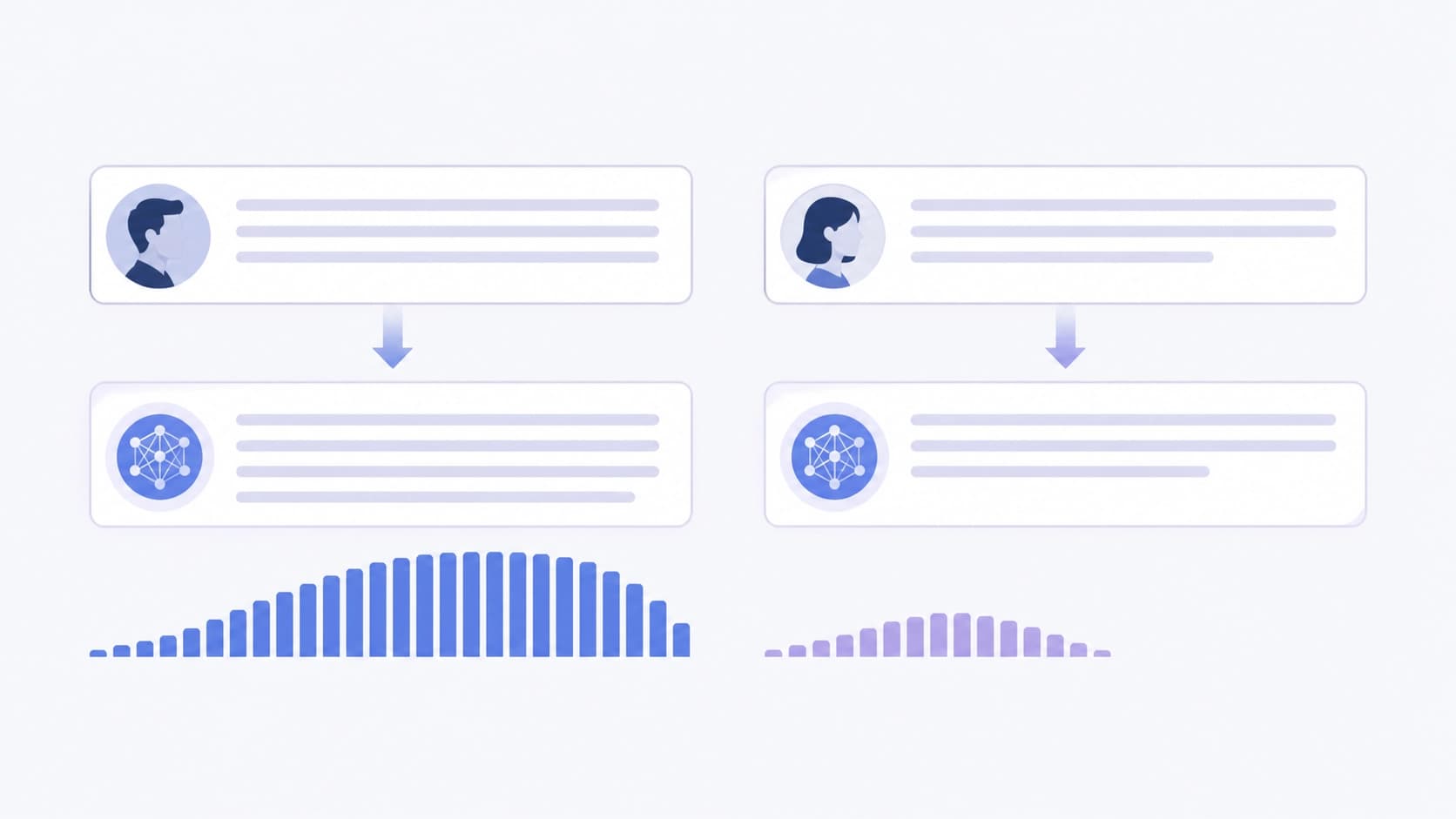
Many researchers deliberately steer away from topics that might interest tech corporations. Professor Anjali Field from Johns Hopkins tries not to take on tasks that a company would likely close off with its own resources. After all, business invests only in what generates profit, while questions that could put a corporation in an unfavorable light go unaddressed. Field, for instance, has shown that language models give less detailed and complex responses to queries phrased the way women typically speak.
For those who want to dig deeper, there is another path — participating in programs like AI2050. They provide grants for purchasing GPUs, and according to the fellows, this is arguably the greatest value of such support. Other researchers focus on topics that are unlikely to interest tech giants — this way, they can preserve academic independence.
Science that doesn't fit the LLM trend
Not all academic groups work with large language models. Some scientists build specialized AI systems for data analysis, forecasting, and simulating physical processes — for example, to address climate change problems. This comes with its own challenges: the general public thinks of "AI" as energy-hungry chatbots, and real scientific tools require a lot of explaining. The fate of AlphaFold is telling: the Google DeepMind team that created the Nobel-winning model for protein prediction was disbanded last month. This is a signal that even successful scientific projects are not immune to corporate logic.
The future: less pessimism, more efficiency
There are also troubling signals. Over the past six months, OpenAI's models have tackled several real research problems in mathematics — sparking fears that humans will soon have no place left in pure math. One of the fellows mentioned mental health struggles among mathematician colleagues. But the empirical sciences are far more resilient: data collection is inherently slow, so fully automating it is unlikely in the near future. Moreover, several prominent academics have recently taken leave from their universities to join cutting-edge labs, and many AI2050 fellows combine academic positions with work in industry. The landscape of science is changing before our eyes.
Tim Dettmers from Carnegie Mellon views what's happening without panic. He works on making model deployment cheaper and believes that AI scientists will not replace humans but make them significantly more productive. Limited resources are not only a curse: the lack of computing power pushes toward finding more efficient architectures and compact models. Perhaps it is precisely from these constraints that the next big breakthrough will emerge.
Frequently asked questions
Related materials
All materials
OpenCollab: programmable agent coordination, controlled execution environment, and policy compliance metric
The framework brings together the specification of agent interaction structures, a shared environment for experiments, and detailed event tracing, while the newly introduced Adherence metric reflects how closely actual execution follows the declared schema. In benchmarks, the Duo configuration achieves a new state of the art, while the single-agent variant uses the fewest tokens.
11 November 2026
Toollery: Choose tools for LLM agents from tens of thousands of options without fine-tuning
Toollery builds a search index from descriptions of skills and tools, then passes the model only a limited set of candidates for each query. In experiments with libraries containing tens of thousands of functions, the approach helps maintain selection quality at a fixed top-K, although the overall effect depends on the workload profile and the provider’s caching.
11 November 2026
WILSON: combining magnifications and patient slides for pathomorphological analysis and report generation
The preprint introduces WILSON, a vision-language model that encodes images of whole slides and series of slides from a single patient at different magnifications, rather than just a single “best” slide. Without task-specific fine-tuning, it outperforms specialized and larger slide models on a range of metrics while requiring substantially less compute, and its diagnostic descriptions received higher ratings from pathologists.
11 November 2026