

LM-Kit.NET
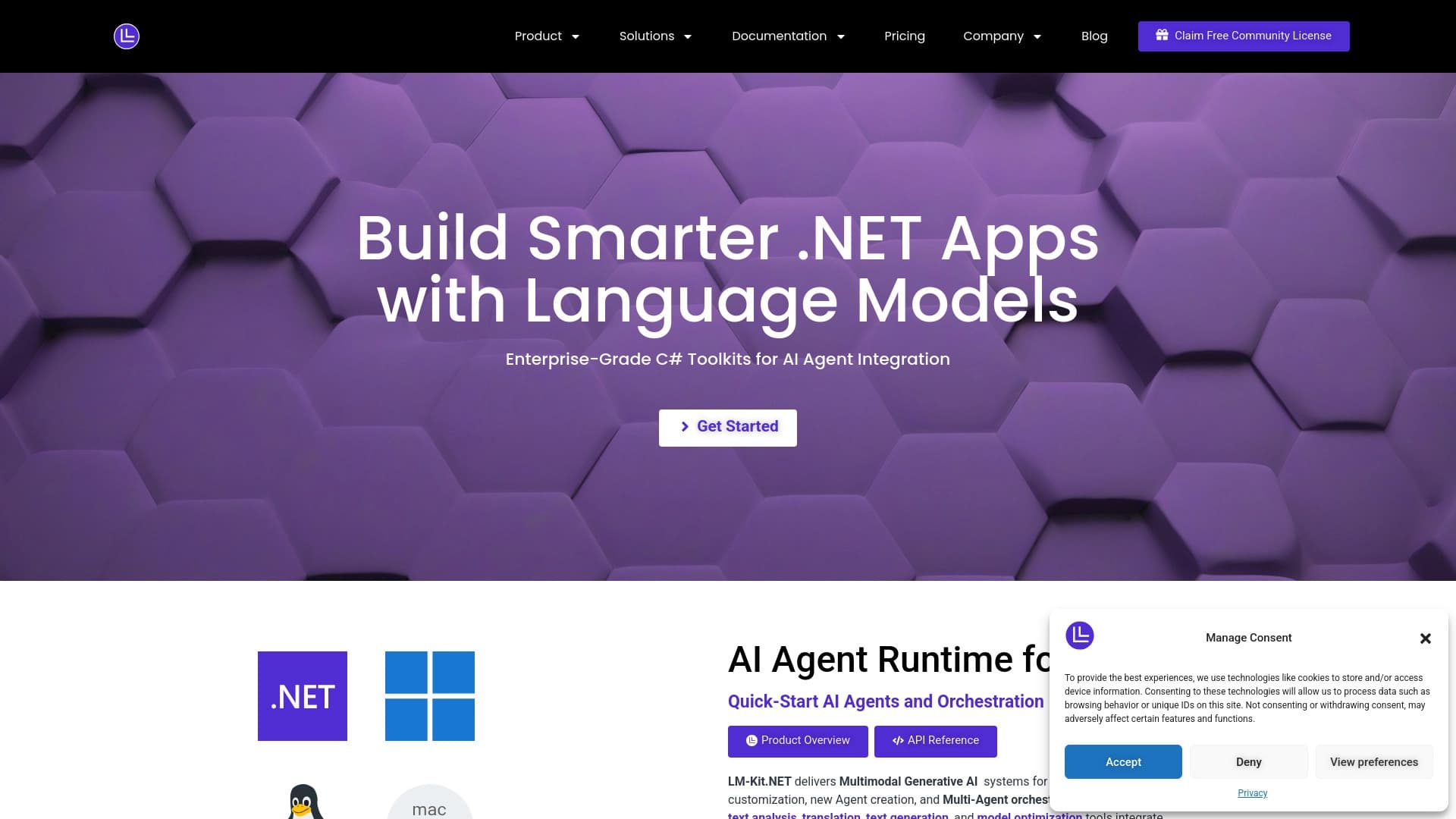
A C# toolkit for integrating AI agents into .NET applications with on-device execution.
Overview
LM-Kit.NET AI Description
LM-Kit.NET is a set of specialized libraries for C# developers, designed to integrate artificial intelligence technologies into applications running on the .NET platform. This tool is a comprehensive solution that enables the implementation of advanced AI agent systems without the need for cloud services or external APIs. The key feature of LM-Kit.NET is that all operations are performed directly on the user's device, ensuring full control over data and significantly reducing request processing latency.
The platform targets the enterprise segment and provides developers with all the necessary components for building both individual AI agents and complex multi-agent systems that can interact with each other to accomplish complex tasks. The tool is powered by modern machine learning algorithms optimized for local execution on various hardware configurations.
LM-Kit.NET Characteristics
| Characteristic | Value |
|---|---|
| Tool type | A set of C# libraries (toolkit) for developers |
| Target platform | .NET applications |
| Primary focus | Integration of AI agents into applications |
| Execution method | Local inference (on-device inference) |
| Multi-agent support | Yes, creation and orchestration of multiple AI agents |
| Key capabilities | Text analysis, translation, generation, model optimization |
| Orientation | Enterprise segment (enterprise-grade) |
| Data security | Ensured through local execution |
| Processing latency | Low (due to the absence of network calls) |
Who Is LM-Kit.NET Suitable For?
.NET Developers
LM-Kit.NET is primarily designed for programmers working with C# and using the .NET platform in their projects. This tool allows them to add artificial intelligence capabilities to existing applications without needing to learn separate machine learning frameworks or rewrite code in other languages.
Enterprise Solution Developers
Since the tool is positioned as an enterprise-grade solution, it will be useful for teams building software for large companies and organizations. This is especially relevant for projects where data confidentiality and minimized information processing latency are critical.
AI Agent Integration Specialists
Developers involved in creating and deploying AI agents in business processes will find in LM-Kit.NET a ready-made infrastructure for building both individual agents and complex systems of agents working in conjunction with each other.
How to Use LM-Kit.NET
Connecting Libraries
To start working with LM-Kit.NET, a developer needs to add the relevant packages to their .NET project. The libraries integrate using standard dependency management tools supported by the .NET ecosystem, making the connection process familiar to most developers.
Developing and Configuring Agents
After connecting the toolkit, the developer can begin creating AI agents for specific business tasks. The platform provides programming interfaces for detailed configuration of agent behavior, including the selection of models and their operating parameters. If necessary, multiple agents can be combined into systems with orchestration of their joint activities.
Optimization and Launch
The developer can optimize selected models to achieve better performance on target devices. After configuration is complete, the application launches, and all artificial intelligence operations are performed locally, without contacting external servers.
Key Functions of LM-Kit.NET
Text Data Analysis
The tool enables comprehensive text analysis — from extracting key information to identifying hidden patterns. This function can be applied in document management systems, analytical platforms, and other applications working with large volumes of textual information.
Text Translation and Generation
Built-in machine translation and text content generation capabilities allow the creation of applications with automatic document translation, speech interfaces, or automated report and article preparation.
Multi-Agent System Orchestration
Developers can create multiple specialized AI agents and combine them into a single system where each agent is responsible for its own area of work. The platform ensures coordination of their interaction and task distribution.
Model Optimization
LM-Kit.NET includes tools for optimizing artificial intelligence models, allowing improved efficiency on specific hardware configurations without compromising result quality.
Advantages of LM-Kit.NET
Local Execution and Security
Performing inference directly on the device guarantees that data is processed without transmission to external systems, reducing the risk of confidential information leakage and simplifying compliance with regulatory requirements and internal security policies.
Low Latency
The absence of network calls to cloud services reduces system response time, which is critical for real-time applications, including systems with instant response interfaces.
Cross-Platform Compatibility
The libraries are designed to work on various hardware configurations and operating systems supported by the .NET platform, ensuring seamless integration into heterogeneous IT infrastructures.
Support for Complex Agent Solutions
The ability to create and orchestrate multiple AI agents within a single system enables complex scenarios that are unattainable when using a single model.
Disadvantages of LM-Kit.NET
Limited Information Availability
Currently, there is no detailed data on the specific operating parameters of the tool, including hardware requirements, supported model architectures, and detailed documentation for all functions. This may complicate the initial assessment of the tool's suitability for a specific project.
Focus on the .NET Ecosystem
The main limitation is that the tool is intended exclusively for C# developers and the .NET platform. Projects using other programming languages or technology stacks will not be able to use this solution without rewriting the relevant components.
Potential Performance Limitations
Local model execution imposes constraints related to the device's computing power. For complex models or large data volumes, resources may be insufficient, requiring the developer to find compromises between accuracy and processing speed.
What Problems Does LM-Kit.NET Solve?
Creating Intelligent Assistants
The tool allows embedding AI agents into applications that can act as virtual assistants, consultants, or automated operators handling user requests.
Automating Text Work
Document analysis, translation, summarization, or categorization tasks can be fully automated using the functions provided by the library, reducing manual labor and speeding up information processing workflows.
Improving User Interfaces
With built-in text generation and query analysis capabilities, more intelligent interfaces can be created that adapt to user needs and provide relevant information at the right moment.
Ensuring Data Confidentiality
For organizations with high confidentiality requirements, it is important that data processing for artificial intelligence tasks is performed locally, without sending information to third-party services, completely eliminating risks associated with data transfer.
LM-Kit.NET Pricing
Official information about the licensing cost or distribution model of LM-Kit.NET is currently unavailable. There is no data on the availability of a free version, trial period, or corporate licensing terms, which complicates budget estimation for implementing this tool. Financial details must be clarified directly with the product developers.
LM-Kit.NET Terms of Use
Currently, there is no publicly available information about the specific terms of use for the tool, including licensing requirements, export restrictions, update policies, or commercial application procedures. Potential users are advised to contact the original source for official documentation detailing the legal and technical aspects of using the libraries.
LM-Kit.NET Availability
No data on distribution platforms, access systems, or supported operating systems for LM-Kit.NET is available in open sources. There is no information on whether the tool is fully open-source, distributed under a commercial license, or has a hybrid model. Given the product's corporate orientation, access is most likely provided on a paid basis upon request through the developer's channels.
How LM-Kit.NET Differs from Alternatives
Focus on Local Inference
Unlike many solutions that operate through cloud APIs or hybrid models, LM-Kit.NET is entirely focused on performing computations on the user's device. This is a key difference from competitors that rely more heavily on cloud infrastructure and network data transmission.
.NET Ecosystem
Most tools for AI agent integration target other programming languages, such as Python or JavaScript. LM-Kit.NET fills the niche for .NET developers, providing them with tools that organically fit into their existing technology stack without the need for intermediate layers.
Comprehensive Approach
Many alternatives specialize only in individual tasks, such as text generation or analysis. LM-Kit.NET combines agent creation, orchestration, text processing, and model optimization into a single toolkit, simplifying development and reducing the number of external dependencies in a project.
Enterprise Positioning
Unlike many open-source solutions aimed at individual developers and researchers, LM-Kit.NET explicitly states its focus on corporate use, implying a higher level of reliability, support, and security expected in commercial software.
Conclusion
LM-Kit.NET is a highly specialized toolkit for C# developers seeking to integrate artificial intelligence technologies into their .NET applications with a high degree of confidentiality and minimal latency. The main advantage of the solution is that all operations are performed locally, with no cloud dependency and support for complex multi-agent text processing scenarios. The main limitation to consider is its exclusive focus on the .NET ecosystem. At the same time, the lack of public information about pricing, distribution terms, and licensing formats makes it difficult to evaluate the product as a ready-made corporate solution until direct contact with the developers. For teams using .NET, the tool can be a useful addition to the available set of tools for building intelligent systems with high data security requirements.
Frequently asked questions
See also

A platform for aggregating world news using AI to analyze and reduce bias.


AI toolkit for video generation and editing, including avatars, lip-sync, and voice cloning.


Project management platform with task assignment, time tracking, and employee workload monitoring features.
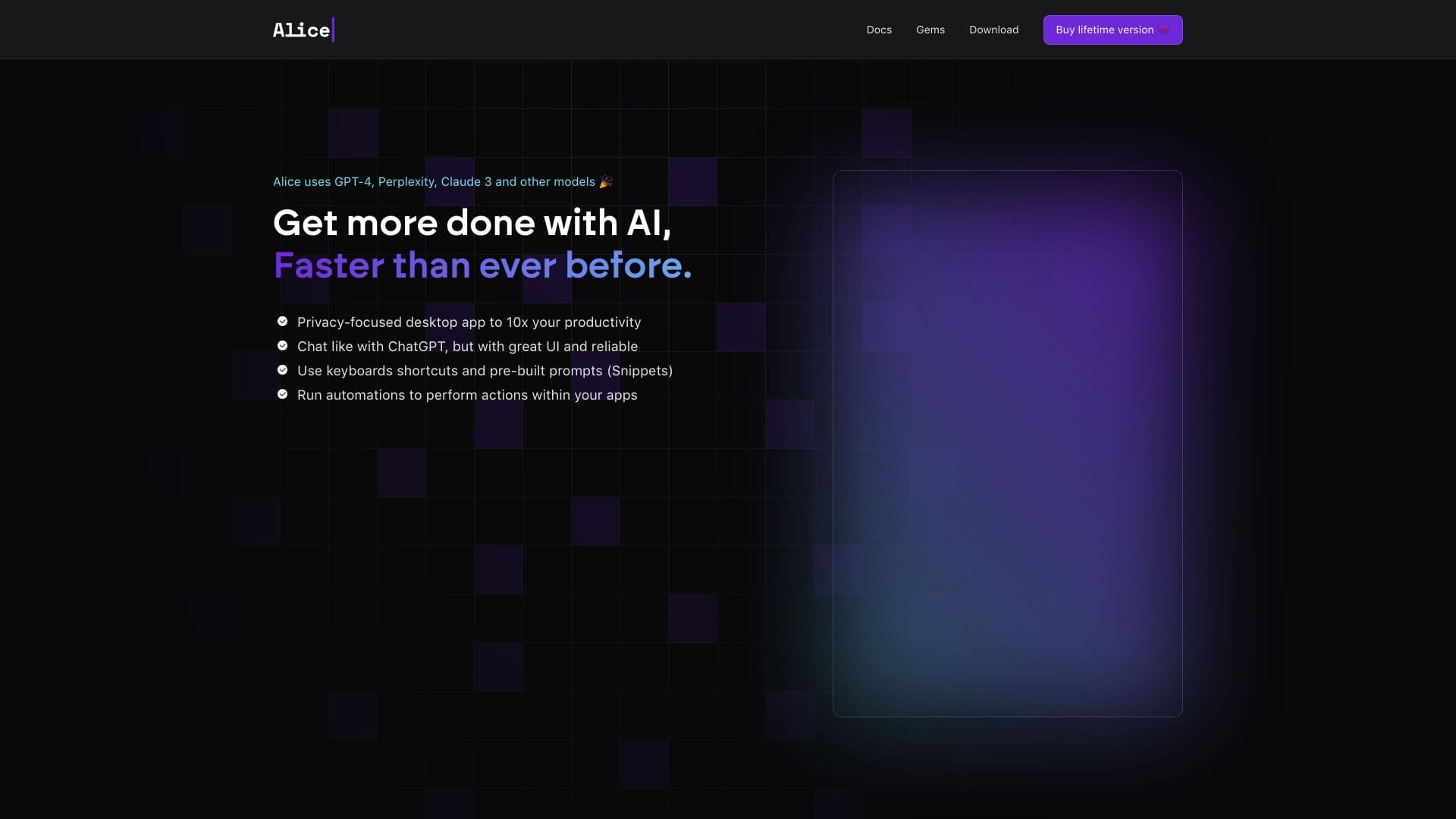

Desktop AI assistant for macOS, Windows, and Linux that launches via hotkey above all windows and combines multiple language models in one interface.
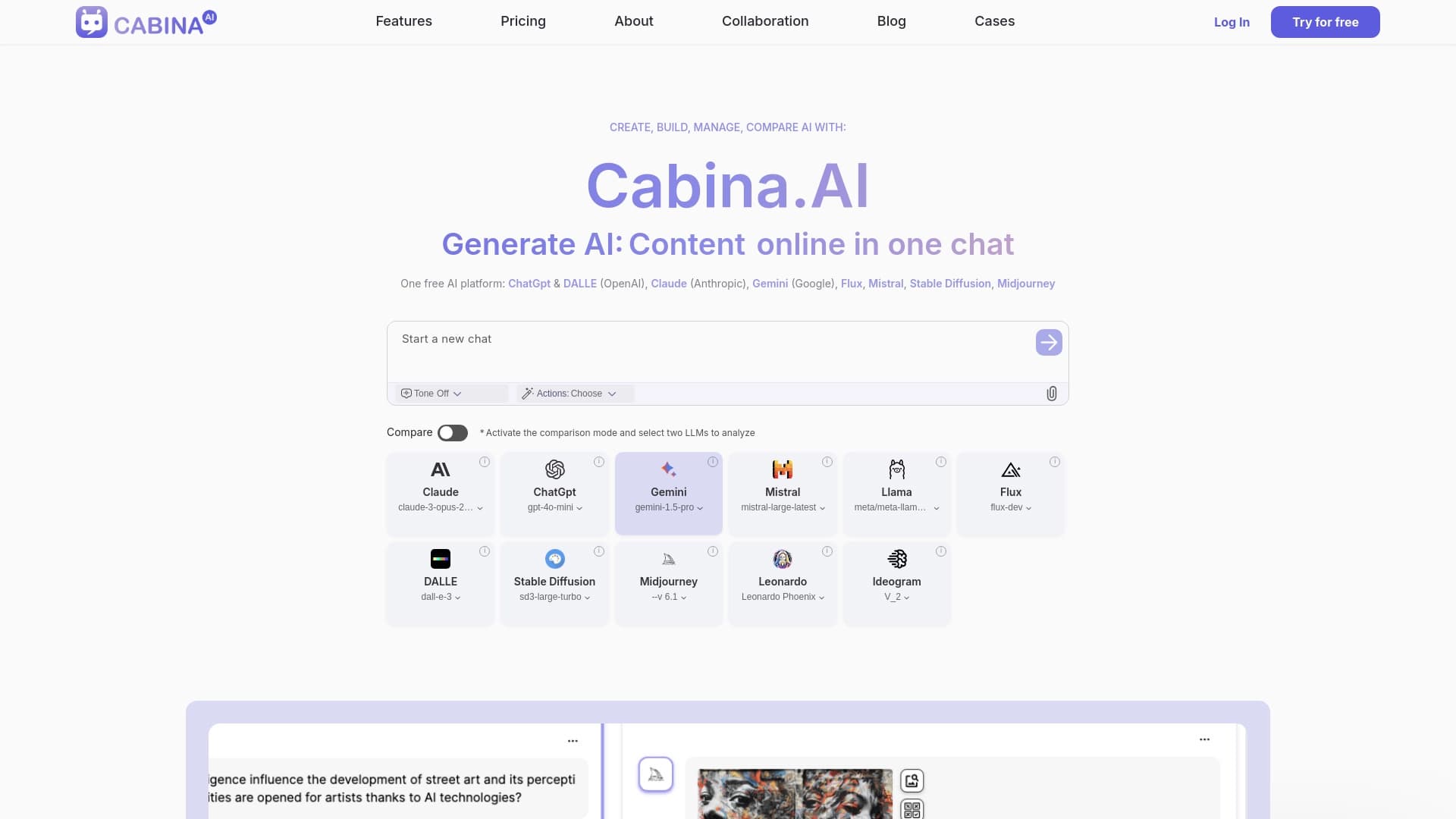
Cabina AI is a unified platform for working with various generative neural networks, enabling you to create texts, images, and videos.


Platform for creating multi-agent AI systems and chatbots to automate customer support and lead generation.

AI agent for automating customer communications and support.


Chrome extension that helps manage tabs, history, and bookmarks with an AI assistant.