

Magic
TypeScript library that lets you use GPT-4 as a runtime for functions described by comments.
Overview
Magic is a specialized library for the TypeScript programming language that fundamentally changes the approach to writing code. Instead of manually implementing a function's logic, a developer describes its desired behavior in the form of a regular comment. GPT-4 then comes into play, acting as a kind of runtime environment: it analyzes the comment, generates the necessary code, and executes it.
This approach allows developers to abstract away from low-level implementation details and focus on defining the task. Essentially, Magic blurs the line between the natural language used to formulate a task and the machine code that solves it. This makes the development process more intuitive and faster, especially when it comes to creating prototypes or automating routine operations.
Characteristics of Magic
| Characteristic | Value |
|---|---|
| Tool type | Library for developers |
| Programming language | TypeScript |
| Core technologies | GPT-4, runtime integration |
| Core working principle | Code generation and execution based on comments |
| Target audience | Developers working on prototyping and automation |
| Distribution model | Not defined (unknown) |
Who is the Magic neural network for?
Frontend and backend developers using TypeScript
The tool will be useful for programmers working with TypeScript who want to speed up writing routine functions. Instead of spending time on repetitive operations, you can simply describe the desired result.
Rapid prototyping specialists
Developers creating MVPs or test versions of products can use Magic to quickly validate hypotheses. There's no need to write full code — just describe what the function should do and get a ready result.
Technical specialists automating routine tasks
For tasks that require quick data transformation, creating helpers, or generating small pieces of logic, Magic becomes a convenient assistant. It lowers the barrier to automation without needing to dive into implementation details.
How to use the Magic neural network?
Getting started with the library
To use Magic, you need to install the library in a TypeScript project. After that, the developer gains access to a set of tools that enable interaction with GPT-4.
Formulating the task in a comment
The key step is writing a comment that accurately describes the behavior of the future function. The clearer the requirement, the more correct the code the neural network will generate. For example, you can specify input parameters and the expected output.
Running and getting the result
Once the comment is ready, Magic passes it to GPT-4 and executes the resulting code. The developer only needs to verify the result and, if necessary, adjust the task description for another generation cycle.
Key features of Magic
Code generation from descriptions
The tool's main function is automatically creating executable TypeScript code based on a textual description. This allows developers to skip manual implementation and simply state their intent.
Executing generated code
Magic doesn't just generate code — it immediately executes it as part of the project. This makes the tool a full-fledged runtime environment, not just a code generator.
Integration with TypeScript projects
The library is built specifically for TypeScript, ensuring seamless integration with existing projects. Developers can use Magic selectively for specific functions without rewriting the entire codebase.
Advantages of Magic
Development speed
Using comments instead of full code significantly speeds up the process of creating functions. This is especially noticeable with a large volume of routine tasks.
Reduced cognitive load
Developers don't need to think about implementation details, syntax, or potential errors — they just need to formulate the task in natural language.
Low barrier to entry
Even a developer with basic TypeScript skills can use Magic to solve complex problems, relying on GPT-4's intelligence.
Disadvantages of Magic
Dependence on description quality
The result directly depends on how accurately and completely the comment is formulated. Vague or ambiguous instructions can lead to incorrect code generation.
Unpredictable results
Since generation is performed by a neural network, the resulting code may differ from expectations or contain errors. Verification and debugging are required, which partially offsets the time savings.
Limited scope of application
The tool is suitable for functions that can be described verbally. Complex algorithms with intricate logic or specific architectural decisions may not be efficiently implemented through Magic.
What tasks does Magic solve?
Automating routine operations
The library handles functions that perform standard data transformations, validation, or formatting very well. Such tasks are easy to describe with a short comment.
Rapid function prototyping
When building a working version of a product, Magic allows you to get functional code in minimal time without getting distracted by writing the full implementation.
Learning and experimentation
Developers can use Magic to test ideas or explore GPT-4's capabilities in the context of code generation without creating a full project.
Magic pricing
Currently, there is no reliable information about the library's cost or distribution model. Official sources do not disclose pricing details, so potential users are advised to wait for official announcements from the developers or check the project's website for up-to-date information.
Magic terms of use
Information about licensing terms, restrictions, and requirements for using the Magic library is not available in public sources. It is unknown whether the tool is completely free, requires a subscription, or is distributed under an open license. Developers should consider this factor when planning to integrate the tool into their projects.
Magic availability
Currently, information about Magic's availability to a wide audience is limited. The tool is positioned as a TypeScript library, which suggests installation via standard package managers, but there is no confirmed data about its publication in npm registries or other repositories. The project may be in its early stages of development or distributed in a closed mode.
How Magic differs from alternatives
The main difference between Magic and traditional development tools and other AI assistants lies in its approach to code execution. While most solutions offer autocompletion or fragment generation that developers then copy into their projects, Magic uses GPT-4 directly as a runtime environment. The function isn't just generated — it's executed immediately, bringing the tool closer to the declarative programming paradigm. Additionally, the library is focused exclusively on TypeScript, making it a more specialized solution compared to universal AI tools.
Conclusion
Magic represents an interesting experiment in integrating large language models into everyday TypeScript development. The concept of using comments as executable code feels fresh and could be useful for rapid prototyping and automation. However, there is currently little public information about the project: pricing, distribution terms, and official development status remain unknown. Potential users should wait for more detailed announcements or test the library in personal projects to assess its real-world reliability and effectiveness.
Frequently asked questions
See also
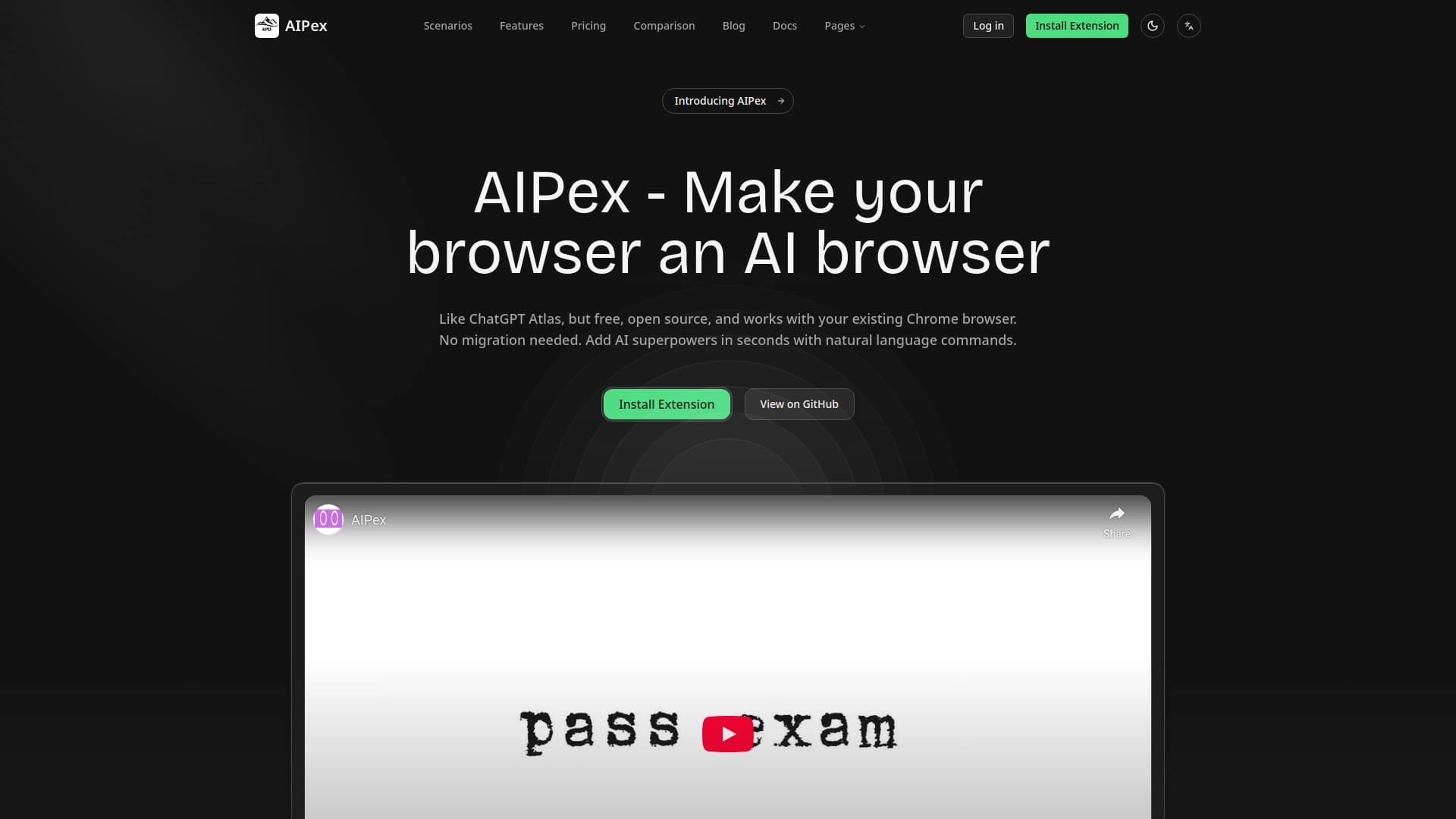

Chrome extension that helps manage tabs, history, and bookmarks with an AI assistant.
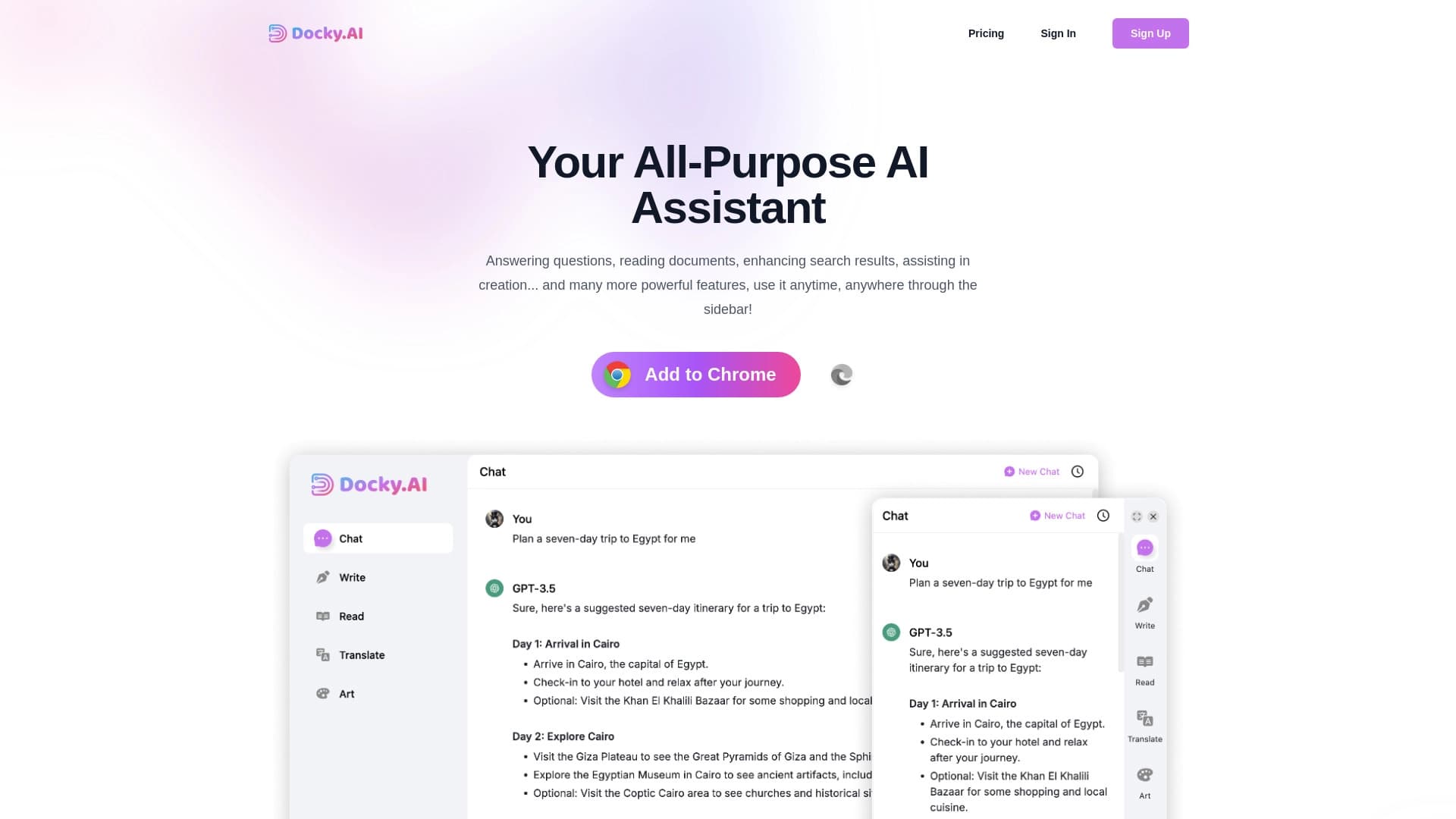

Side AI panel that helps answer questions, work with documents, and generate images.

Desktop AI assistant for macOS, Windows, and Linux that launches via hotkey above all windows and combines multiple language models in one interface.


AI toolkit for video generation and editing, including avatars, lip-sync, and voice cloning.


Project management platform with task assignment, time tracking, and employee workload monitoring features.


Platform for creating multi-agent AI systems and chatbots to automate customer support and lead generation.

AI agent for automating customer communications and support.
A neural network-powered cloud service for generating 3D models, textures, and animations from text descriptions or images.