

DiffRhythm
Neural network for generating full-fledged music tracks with vocals based on song lyrics and a specified style.
Overview
DiffRhythm is an artificial intelligence system designed to create complete musical compositions that include both a vocal part and instrumental accompaniment. The tool operates on a non-autoregressive diffusion model, allowing it to generate tracks with a high degree of readiness without the need for step-by-step editing of each element.
The key feature of the neural network is its minimal barrier to entry: users only need to provide the lyrics of the future song and the desired style to get a full-fledged audio track. The system handles arrangement, melody, mixing, and vocal-music synchronization. The generated composition can last up to 4 minutes and 45 seconds, while the creation process takes about 10 seconds, making the tool suitable for quickly working on a large number of projects.
DiffRhythm is distributed free of charge, and its source code is open. It supports multiple languages, including English and Chinese, as well as a wide range of musical genres. Users can influence the timing of lines in the lyrics, adding flexibility in managing the song's structure.
DiffRhythm Features
| Feature | Value |
|---|---|
| Type | AI music agent |
| Categories | AI Melody Generator, AI Song Generator, AI Midi Generator, AI Music Generator |
| Platforms | Web, Android, iOS |
| Date added to catalog | May 10, 2025 |
| Rating | 0/5 (no ratings) |
| Number of reviews | 0 |
| Monthly visits | 2.5K |
| Average visit duration | 00:00:03 |
| Bounce rate | 35.83% |
| Top traffic regions | India (57.42%), Russia (42.58%) |
| Distribution model | Free |
| Source code availability | Open |
Who is DiffRhythm suitable for?
Content creators and producers
Video content creators for YouTube, social media, and streaming platforms can use DiffRhythm to quickly generate background music or original vocal tracks for a specific video. The ability to set custom lyrics and style allows adapting the composition to the mood and theme of the video without a lengthy search for ready-made tracks and dealing with copyright issues.
Musicians and composers
For independent artists and songwriters, the neural network can serve as a tool for creating demo versions: just write the lyrics and specify the style to hear how a future composition might sound. This allows quickly developing ideas and experimenting with different arrangements before going to the studio.
Game developers and podcasters
Game developers can use the tool to generate soundtracks for levels, menus, or cutscenes. For podcasters, DiffRhythm is suitable for creating musical intros, transitions, and background layers — all of this can be generated to match specific words or the mood of an episode. The tool can also be useful for event organizers and professionals in music therapy.
How to use DiffRhythm?
Registration and setup
To get started, you need to create an account on the official DiffRhythm website. After logging in, the user selects a preferred musical style and mood for the future track. Parameters such as tempo and composition duration can be configured.
Creating a track and feedback
The next step is to enter the song lyrics (line timings can be edited if necessary) and start generation. Once the track is created, it can be previewed. If the result is not entirely satisfactory, the user can adjust the input data or provide feedback to the system to change certain aspects of the sound.
Downloading the result
When the composition is refined to the desired quality, it can be downloaded in its finished form for further use in projects — videos, games, podcasts, or other purposes. The entire process, including generation, takes minimal time.
Key features of DiffRhythm
- Music generation: creating a complete track with vocals and accompaniment based on lyrics and a style prompt.
- Personalization: adjusting tempo, duration, choosing style and mood; editing line timings in the lyrics.
- Feedback integration: the ability to influence the generation result through clarifying requests.
- Support for multiple genres: a wide range of musical styles for different tasks.
- High sound quality: professional-level output audio with vocal and instrument synchronization.
Advantages of DiffRhythm
- Generates complete songs with vocals and accompaniment in seconds.
- Supports creating compositions in multiple languages, including English and Chinese.
- Provides professional sound quality with precise synchronization of vocal and instrumental parts.
- Requires minimal input: just lyrics and a style specification, simplifying the workflow.
- High speed thanks to the non-autoregressive diffusion model.
- Covers a large number of musical directions and allows creating tracks up to 4 minutes and 45 seconds long.
Disadvantages of DiffRhythm
Among the tool's limitations, the lack of public pricing information should be noted, which may raise questions for users planning commercial use. There are also no clear explanations regarding restrictions on commercial use and copyright policy. Additionally, according to available data, DiffRhythm does not have a full presence in mobile app stores, despite listing Android and iOS platforms — access is likely through a web interface.
What tasks does DiffRhythm solve?
Creating background music and soundtracks
The tool is suitable for generating background layers for videos, podcasts, and game projects. Fast generation allows using the neural network in a content production pipeline when a unique track for a specific scene or mood is needed.
Developing original songs and event tracks
DiffRhythm can be used to create custom compositions for events — from corporate celebrations to private occasions. The ability to set your own lyrics makes such tracks unique and personalized.
Music therapy and educational tasks
The tool can be used to create relaxing or stimulating compositions for therapeutic purposes. The service is also potentially useful in educational projects where the connection between lyrics, style, and the final sound of a track needs to be demonstrated visually.
DiffRhythm Pricing
Official information about the cost of using DiffRhythm is not available in open sources. The catalog lists a free distribution model, but detailed pricing plans, terms of free access, and possible paid subscriptions are not disclosed. Users planning active or commercial use are advised to check current terms directly on the project's official resource.
DiffRhythm Terms of Use
Publicly available information about DiffRhythm's licensing terms is extremely scarce. Details regarding the commercial use of generated tracks and the policy on copyright for created content are not disclosed. Since the model has an open source code, basic usage principles may align with common open-source community norms, but this does not negate the need to verify the license and official terms before starting commercial activities.
DiffRhythm Availability
The service is available through a web application, and support for Android and iOS mobile platforms is also declared. Project traffic is concentrated mainly in India and Russia — these regions account for almost all visits. This may be related to the development of local communities around the tool or specific promotion features. A high bounce rate and low average visit time are noted, which may indicate insufficient user awareness of the service's capabilities or the existence of entry points that do not fully reveal the functionality. Nevertheless, web availability makes the tool easy for initial testing on any device with a browser.
How DiffRhythm differs from alternatives
The main difference between DiffRhythm and tools like Amper Music, Aiva, and Soundraw lies in the model architecture and speed. The use of a non-autoregressive diffusion model allows generating a track almost instantly — in 10 seconds, whereas many competitors offer longer iterations or require choosing from pre-made templates.
An important feature is the focus on text input: the user writes the song lyrics, and the neural network itself creates a vocal part synchronized with the music. Many alternatives focus either on instrumental generation or offer MIDI and sample editing, but not the full "lyrics → song" cycle. The ability to edit line timings adds control over the composition's structure, which is atypical for most simple generators.
At the same time, DiffRhythm is distributed under an open license and free of charge, while most alternatives operate on a subscription model with free-tier limitations. The availability of open code opens up opportunities for self-deployment and fine-tuning of the model by the community.
Conclusion
DiffRhythm is a fast-working tool for generating complete music tracks with vocals, requiring only lyrics and a style specification from the user. Thanks to its non-autoregressive diffusion model and open source code, it occupies a unique niche among AI agents for music. The service will be useful for content creators, game developers, musicians, and anyone who needs to quickly get a high-quality audio track for a specific task. The main limitations are related to the incompleteness of public information about licensing terms and commercial use — these issues should be clarified separately before large-scale application.
Pricing
Frequently asked questions
See also
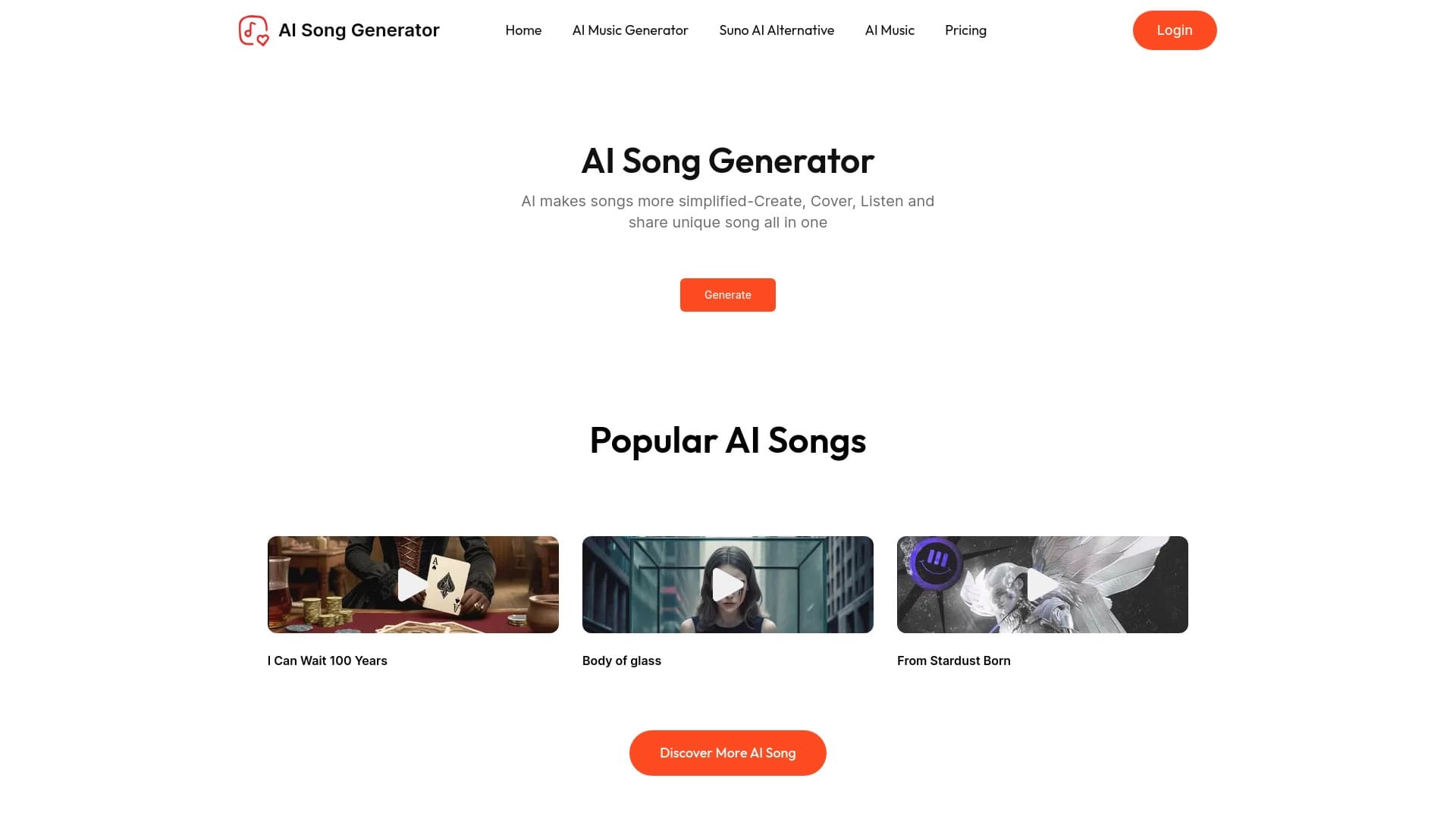
An online service that uses AI to create songs and music, supporting both simple text descriptions of a track and uploading your own lyrics.
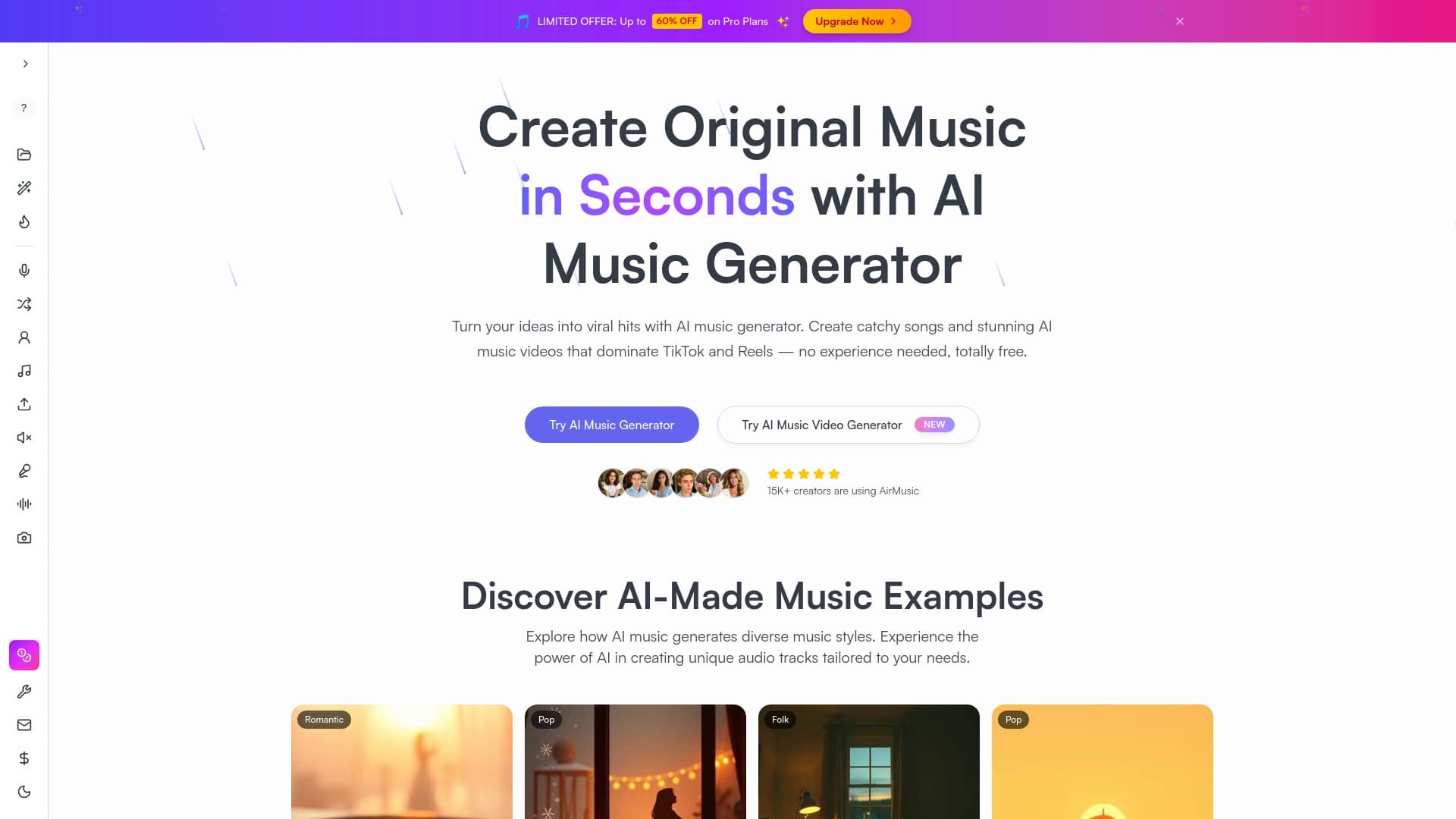
Music generator from text descriptions with style and mood customization, as well as export of individual tracks.
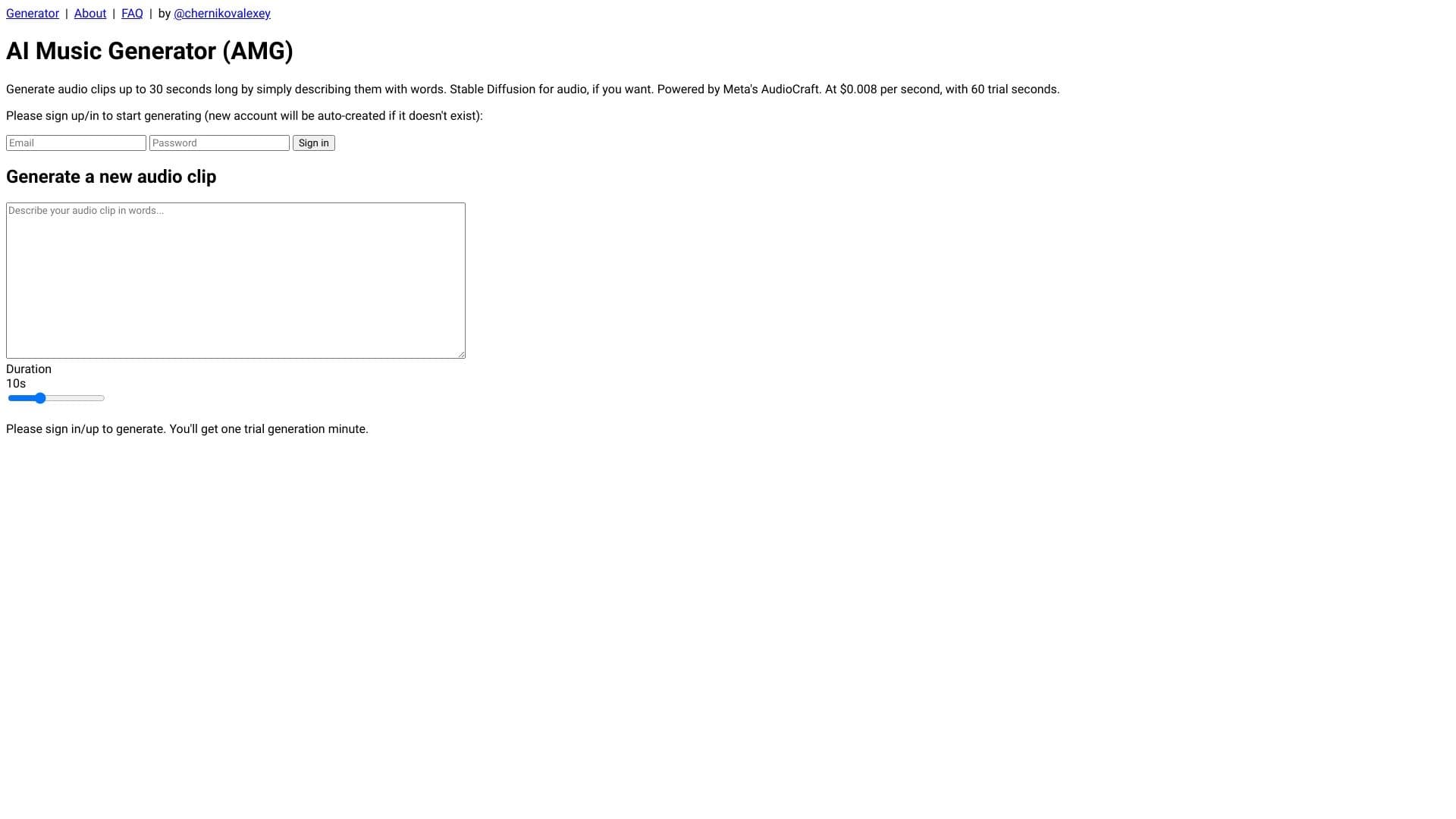
Online service for creating music and songs from a text description with the ability to download tracks.


An open platform for generating images and other visual content from text descriptions using AI.
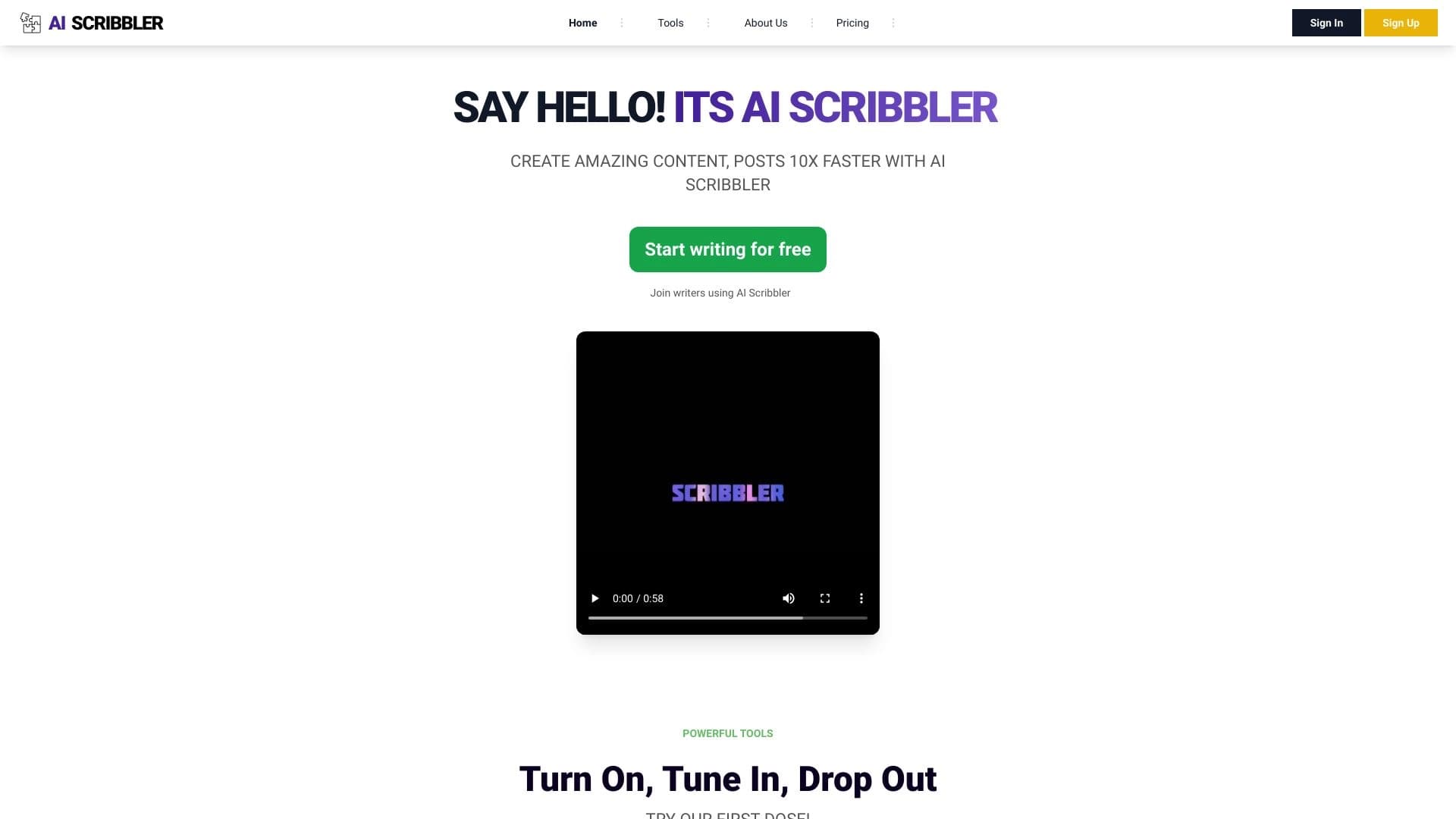

AI-powered online platform for quickly creating text content, including blogs, articles, and social media posts.
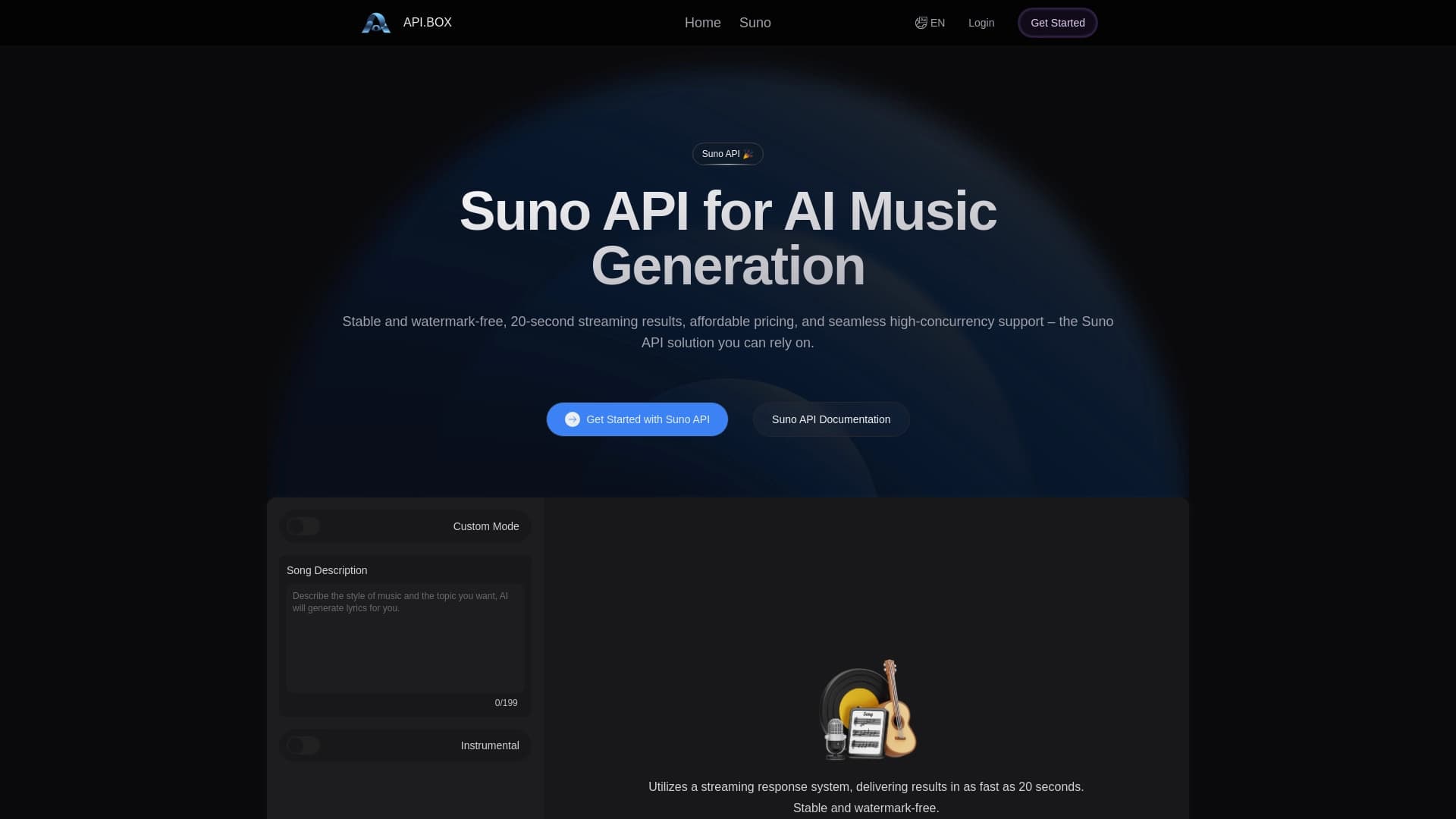
Unofficial API access to Suno AI for music generation and integration into applications.
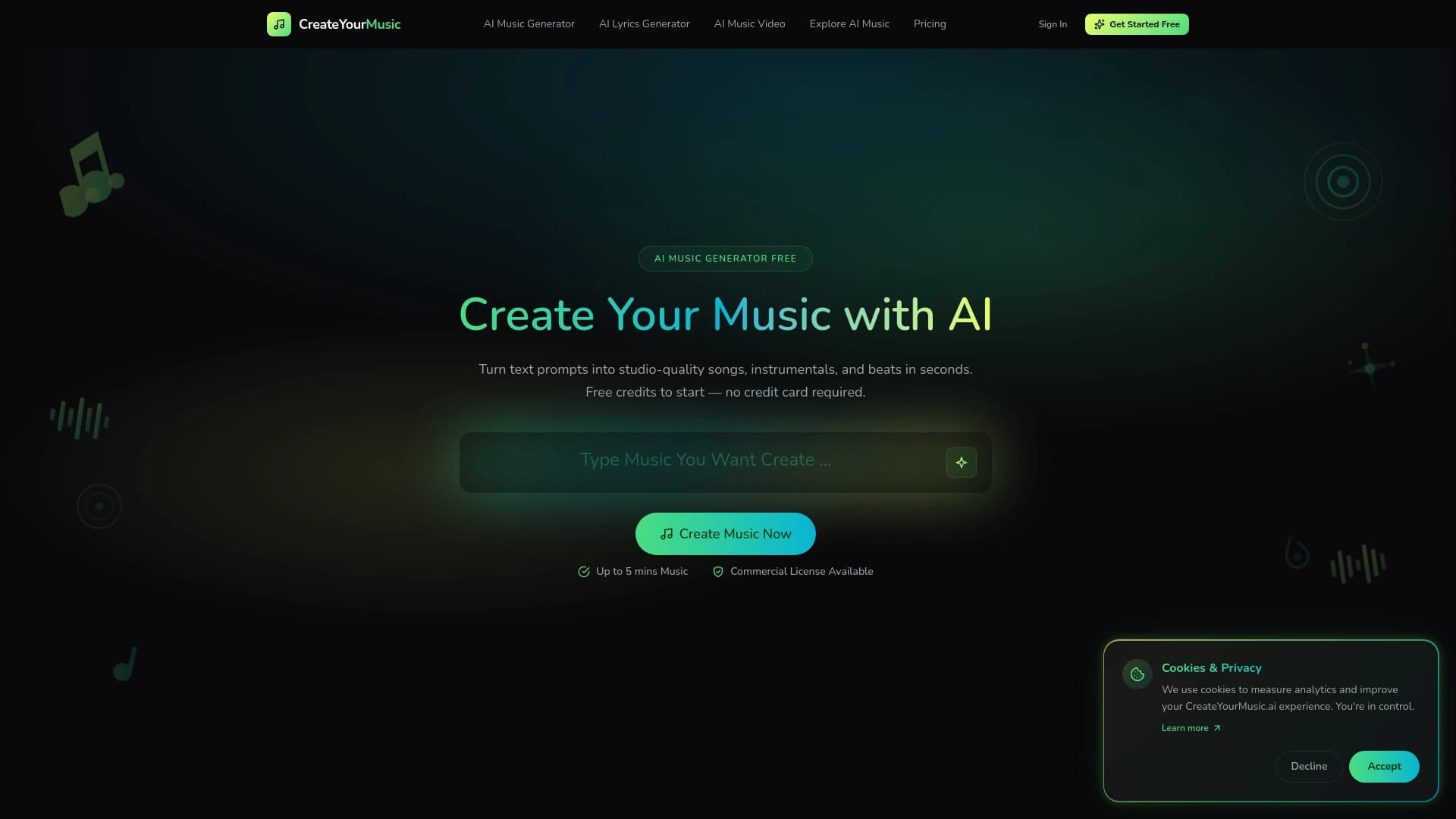

A neural network that creates music based on a text description or song lyrics.
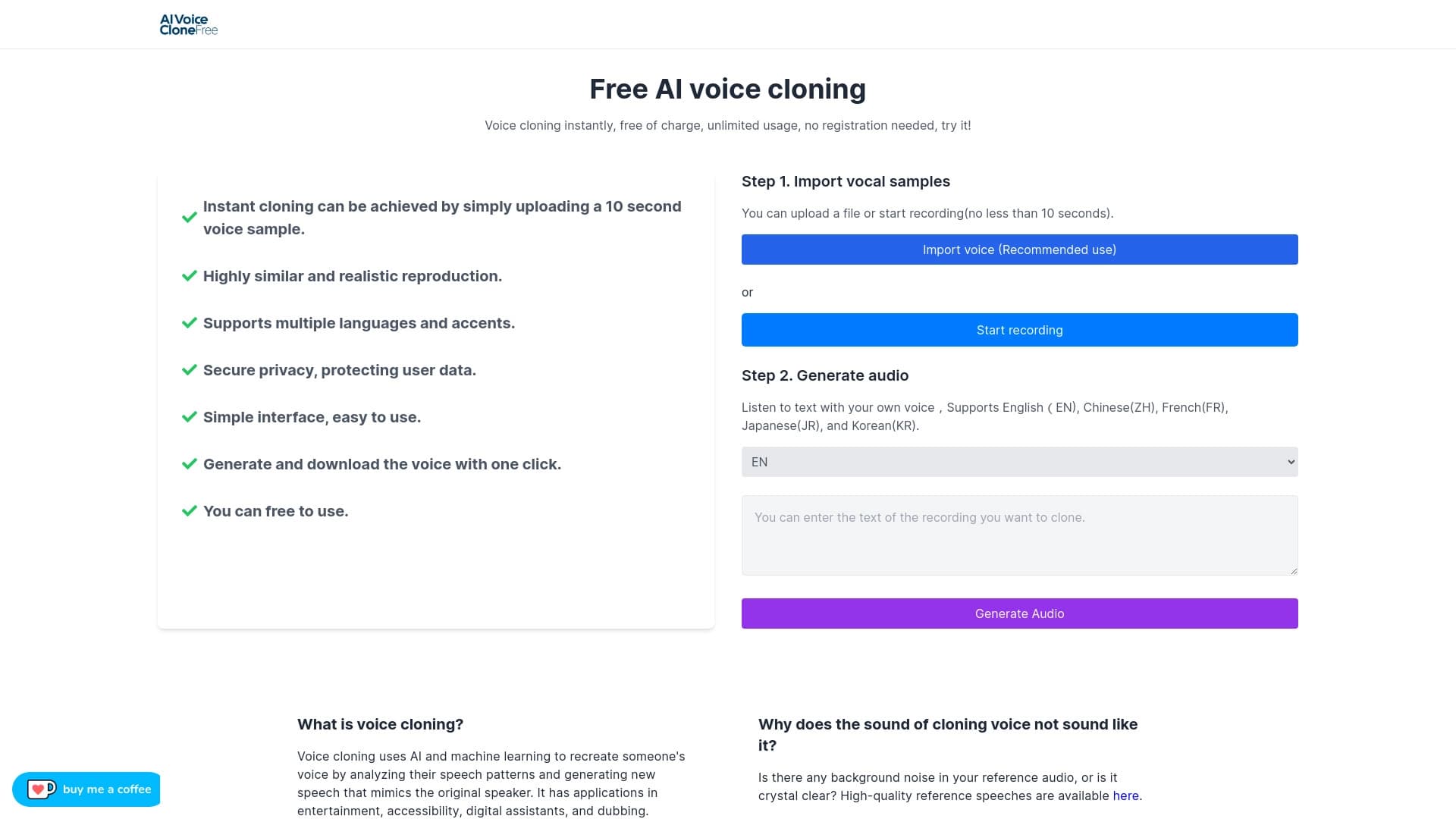
Online service for creating a realistic voice clone from a short audio recording and text-to-speech.