

Claudexor
Local control shell for AI agents, combining multiple tools in a single interface.

Overview
Claudexor is a local control plane for developers working with multiple AI agents simultaneously. Instead of switching between different interfaces like Claude Code, Codex, Cursor, and OpenCode, you get a single entry point. The tool runs entirely offline on your machine, sending no telemetry to third parties, and lets you centrally manage subscriptions, session context, and task execution. Essentially, it's a dispatcher that coordinates the work of multiple AI assistants, saving time and eliminating routine.
Claudexor Features
| Feature | Value |
|---|---|
| Category | Developer tools, Open source, Coding assistants |
| Type | Local control plane for AI agents |
| Tags | api, desktop application, github, macos, tool, offline |
| Platforms | macOS (DMG), CLI (via npm) |
| Current version | v3.0 |
| Free tier | Open source (free) |
| Distribution model | Free |
| Requirements | Node.js 20.19+, pnpm, git, a logged-in CLI agent or API key |
Who is Claudexor for?
Developers using multiple AI agents
The tool is built for those who don't limit themselves to a single AI assistant. If you work with Claude Code, Codex, Cursor, and OpenCode at the same time and are tired of switching between them, Claudexor brings them together in one window.
Teams and solo developers on a budget
Thanks to subscription rotation, Claudexor automatically tracks quotas and switches tasks to another account when one hits its limit. This lets you avoid interruptions at the most critical moments and make better use of subscriptions you've already paid for.
Privacy-conscious developers
Since all work happens locally and there's no telemetry, the tool suits those who don't want to send code and data to external servers any more than is already the case when working with the AI agents themselves.
How to use Claudexor
Installation via npm or DMG
To install the CLI version, you just need to run a single command via npm. For macOS users, a native build is available — a signed DMG file that you download and drag into the Applications folder.
Environment setup
Before you start, make sure your system has Node.js version 20.19 or higher, pnpm, and git installed. You'll also need at least one logged-in CLI agent from the supported list (Claude Code, Codex, Cursor, OpenCode) or a valid API key.
Running a task
Launch happens through the command-line interface or the macOS app. You pick one or more agents, define the task, specify flags (for example, --web for web search or --dry-run to test a patch), and get the result in a convenient format.
Key features of Claudexor
Unified interface and shared context
Claudexor provides a single window for running Claude Code, Codex, Cursor, and OpenCode. All sessions share a common context — there's no need to explain the context from scratch to each agent; it's carried over between tools automatically.
Subscription rotation and budget control
The subscription rotation feature tracks quotas for multiple Claude and Codex accounts. When one account hits its limit, Claudexor automatically switches the task to another. Every spend is recorded as a verifiable entry, enabling cost auditing.
Work modes and best-of-N
The tool supports three main modes:
- ask (read-only and questions);
- plan (creating a plan without making changes);
- agent (actual execution with patches). Best-of-N mode runs one task on multiple agents, then compares results and picks the best one. The --council flag lets multiple agents develop a plan in parallel with subsequent merging.
Change safety
Claudexor includes protection for critical paths (such as migrations or the .env file) — manual confirmation is required to modify them. The --dry-run flag tests a patch via git apply check without making changes to the repository. A --deep-scan flag is also available for in-depth repository analysis.
Claudexor advantages
- Saves time and resources — shared context between sessions eliminates duplicate work, and subscription rotation prevents idle waiting for limits to reset.
- Cross-checking results — best-of-N mode improves decision quality by comparing different models' approaches to the same task.
- Privacy and autonomy — fully local operation, no telemetry, and offline capability.
- Protection against accidental changes — built-in approval globs for critical paths and dry-run mode prevent unintended modifications.
- Product maturity — the current v3.0 release shows the product has moved past its early stages and is production-ready.
Claudexor drawbacks
- Learning curve — requires installing Node.js 20.19+, pnpm, and git, which may put off less technically savvy users.
- Limited platform support — currently only macOS (DMG) and CLI via npm are officially available; no native apps are announced for Windows or Linux.
- No explicit limitations stated — the developers don't disclose specific shortcomings or cases where the tool may perform suboptimally.
What problems does Claudexor solve
- Managing multiple AI agents — bringing Claude Code, Codex, Cursor, and OpenCode together in one interface.
- Saving money — automatic switching between accounts when a subscription limit is reached.
- Better decision quality — running one task on multiple agents and comparing the results.
- Risk-free planning — plan mode lets you draft and review a change plan without applying it to the codebase.
- Safe patch application — thanks to dry-run and critical path protection, patches are verified before changes are made.
- Budget control — every spend is recorded as a verifiable entry, simplifying audits.
Claudexor pricing
The project page doesn't list a specific price. The distribution model is marked as free, and the product itself is open source. This means access to the core functionality is free, but you'll need active subscriptions or API keys for the AI agents themselves (Claude Code, Codex, Cursor, OpenCode), which are paid for separately.
Claudexor terms of use
Using Claudexor doesn't require registration with a separate service. Installation is possible via npm (for CLI) or DMG (for macOS). The tool depends on Node.js 20.19+, pnpm, git, and at least one logged-in CLI agent or API key. No separate licensing restrictions are described in the sources — the product is distributed as open source.
Claudexor availability
Claudexor is available in two formats:
- CLI version — installed via npm and runs from the command line.
- Native macOS app — distributed as a signed DMG file.
The tool runs entirely locally, without telemetry, and can be used offline. No information about regional restrictions or interface languages is available in the sources — currently only macOS support is explicitly stated.
How Claudexor differs from alternatives
The project page doesn't offer a direct comparison with competitors, but it describes the product's position as a unified control plane for tools developers already use. Unlike the separate CLI interfaces of each agent, Claudexor creates a centralized point of control. Key differences:
- Cross-tool support — works with four AI agents at once, rather than being tied to one.
- Subscription rotation — automatic quota management across multiple accounts.
- Cross-checking — the ability to compare results from different models on the same task.
- Privacy — no telemetry and fully local operation.
Conclusion
Claudexor is a practical local tool for developers who use multiple AI agents in their work. It brings Claude Code, Codex, Cursor, and OpenCode under a single interface while offering advanced capabilities like subscription rotation, cross-model result comparison, and safe change application with critical file protection. The product is at version v3.0, which speaks to its maturity and stability. The main focus is on privacy and autonomy: everything runs locally, with no telemetry. Claudexor suits developers looking to optimize their work with AI agents and gain more control over the development process.
Frequently asked questions
See also
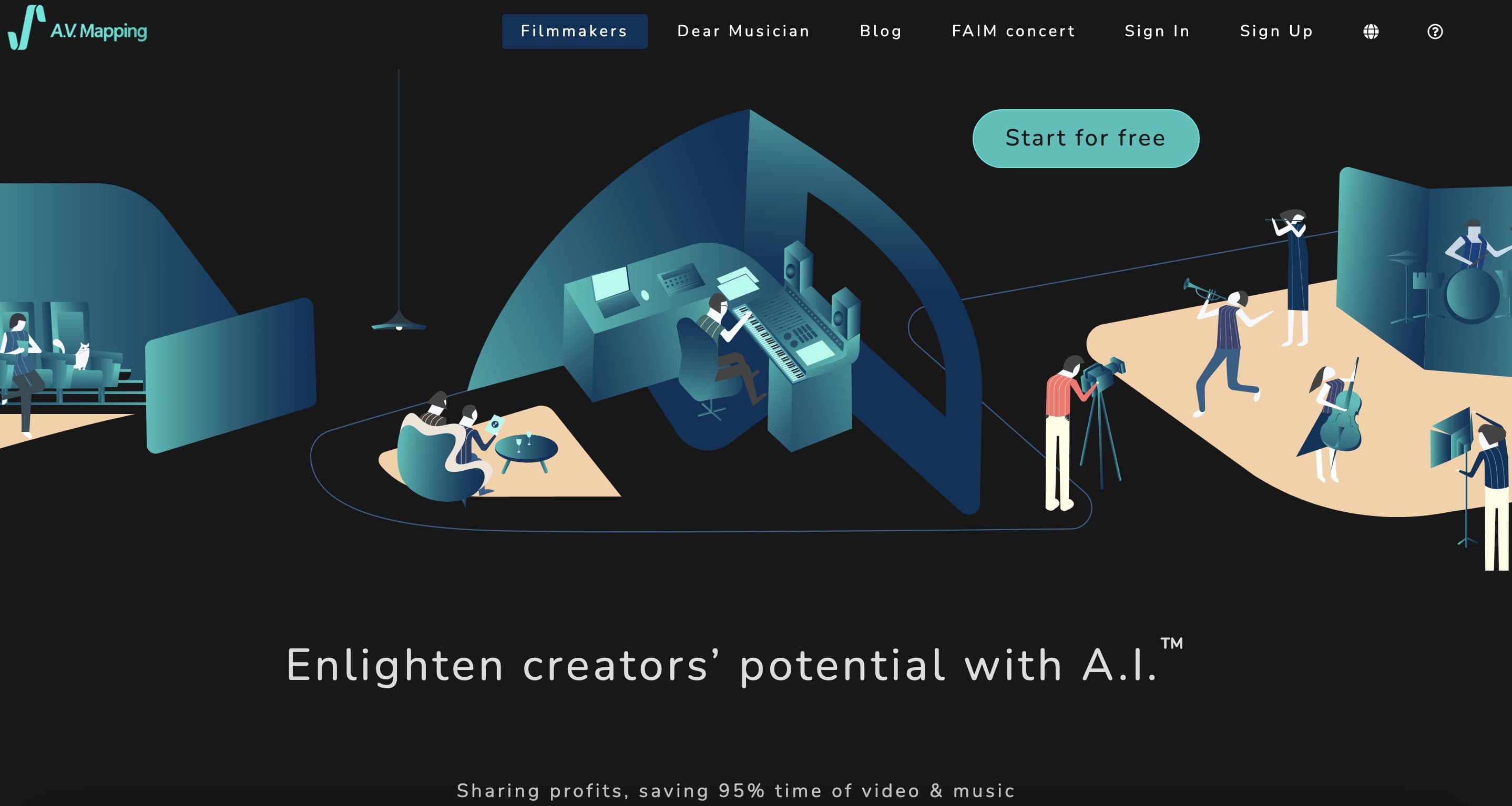

AI service for automatically selecting music to match the mood of videos, images, or text, with legal licenses.
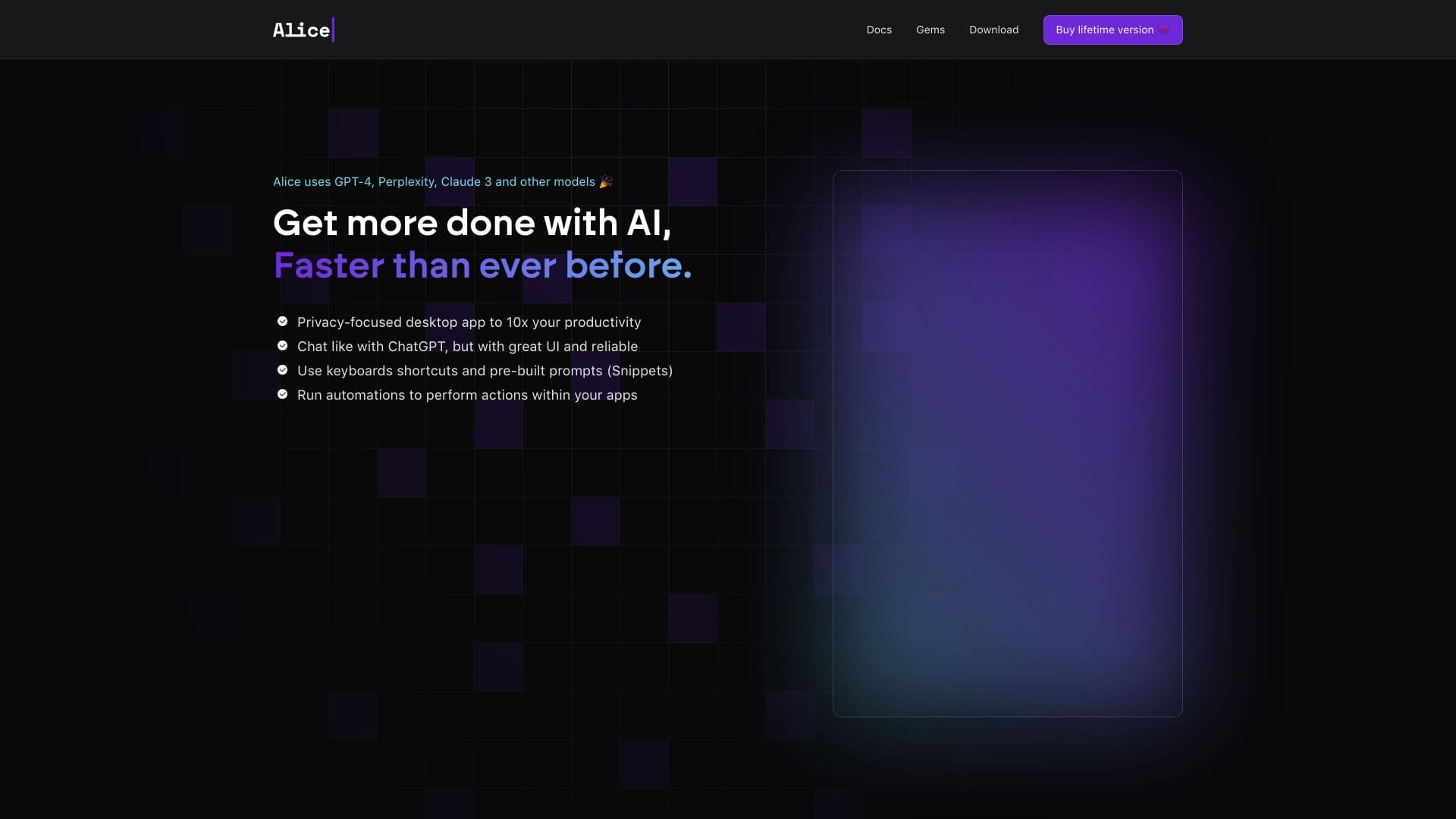

Desktop AI assistant for macOS, Windows, and Linux that launches via hotkey above all windows and combines multiple language models in one interface.
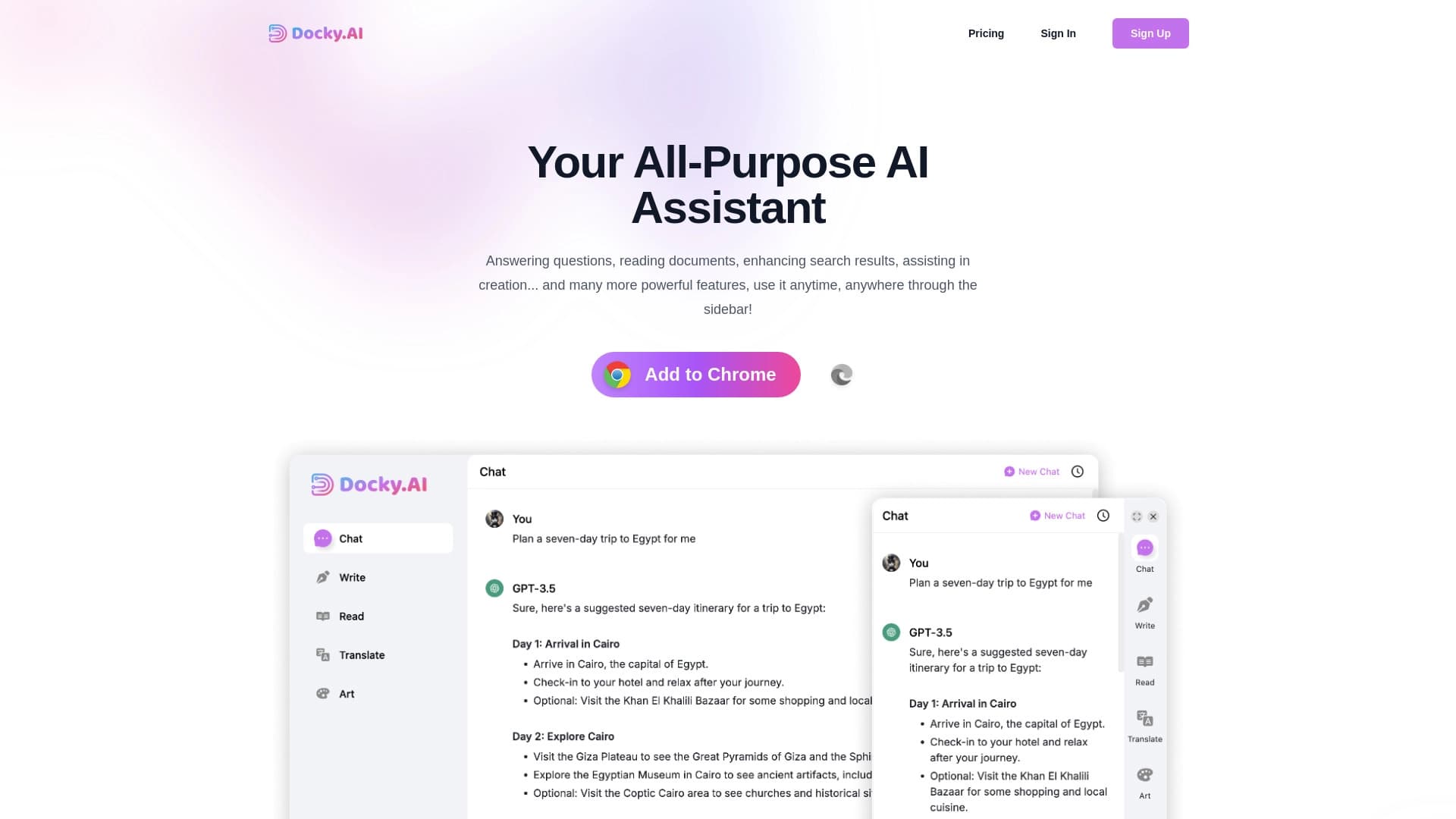

Side AI panel that helps answer questions, work with documents, and generate images.
AllChat is a universal platform that combines several popular language models in a single interface for communication, image generation, file analysis, and code execution.

Terminal AI agent for programming that dynamically adapts to developer tasks.

AI agent for assisting with programming and optimizing the development workflow.
Online platform for creating interactive AI twins based on the user's biography, personality, and personal experience.

AI-based service for automatic generation of text content in various formats.