
Chandra
Chandra is a model for recognizing text, tables, and formulas from PDFs and images, with support for over 40 languages.
Overview
Chandra is a specialized neural network developed by the Datalab team for optical recognition of content from PDF files and images. The model is trained to extract not only plain text from these formats, but also complex elements: tables with non-trivial structure, mathematical formulas, and diagrams. The tool's key feature is support for more than 40 languages, making it a universal solution for working with international documentation.
Chandra converts recognition results into one of three structured formats chosen by the user: HTML, Markdown, or JSON. This approach makes it easy to integrate extracted data into web pages, databases, or automated document processing systems. According to the developers, the model demonstrates high recognition accuracy, outperforming well-known neural networks such as DeepSeek and Mistral in this metric, especially when working with imperfect scans and handwritten insertions.
Chandra Characteristics
| Characteristic | Value |
|---|---|
| Type | OCR tool (optical character recognition) |
| Category | Image editing |
| Business model | Free |
| Publication date | 05-11-2025 |
| Tags | github, text-to-text |
| Language support | More than 40 languages |
| Output formats | HTML, Markdown, JSON |
| Distribution method | Freemium (free online version + local installation) |
Who is the Chandra neural network suitable for?
Specialists in international documentation
Chandra will be useful for those who regularly work with international contracts, research, or multilingual documentation. The model's multilingual support allows processing documents in dozens of languages without needing to select a separate tool for each language. This saves time and simplifies workflows for translators, lawyers, and international departments of companies.
Users with confidentiality requirements
The tool is suitable for those who need to process confidential data locally. Thanks to the ability to install via GitHub on your own server or computer, users can process sensitive information without transferring it to the cloud. This is critical for working with personal data, medical records, financial reporting, or internal corporate documentation.
How to use the Chandra neural network?
Local installation via GitHub
The model is available for self-installation on your own server or personal computer through the GitHub repository. This option is suitable for users who require regular processing of large volumes of data, full control over the process, or work with confidential information. Local installation does not require an internet connection during operation and allows configuring the environment for specific tasks.
Browser-based online version
For quick recognition of several files without setting up an environment, a free browser version is provided. The user simply opens the online tool, uploads a document or image, and gets the result. This option is optimal for one-off tasks, testing the model's capabilities, or working on devices without the ability to install additional software.
Key features of Chandra
Extraction of complex document elements
Chandra specializes in recognizing not only plain text, but also complex elements: tables with non-trivial structure, mathematical formulas, and diagrams. This allows the tool to be used for processing scientific publications, financial reports, technical documentation, and other materials with rich visual content.
Flexible result export formats
The neural network outputs recognition results in HTML, Markdown, or JSON formats. The choice of format depends on the user's end goal: HTML and Markdown are convenient for publishing on websites or in documentation, while JSON is optimal for transferring data to databases or automated processing systems.
Support for multilingual documents
The model supports more than 40 languages, allowing documents in different languages to be processed without switching tools. This feature is especially in demand when working with international correspondence, multilingual contracts, and research materials.
Advantages of Chandra
High recognition accuracy
The developers claim that Chandra recognizes text more accurately compared to DeepSeek and Mistral. The model shows fewer errors when processing scans of imperfect quality and also handles handwritten insertions in documents better. This is an important advantage when working with archival materials, historical documents, or carelessly made scans.
Free and accessible
The tool is distributed free of charge, making it accessible to a wide range of users — from individual researchers to small companies. The absence of usage fees allows the neural network to be applied in a variety of scenarios, including non-commercial and educational projects.
Local data processing
The ability to install locally via GitHub is a key advantage for organizations and professionals working with confidential information. Local deployment guarantees that data does not leave the company or device, which is critical from the perspective of information security and regulatory compliance.
Disadvantages of Chandra
Available sources do not mention any significant disadvantages of the Chandra model. The tool is distributed free of charge, which minimizes financial risks when using it. However, it is worth noting that full use of the local version may require command-line skills and software environment configuration, which could be a barrier for inexperienced users. Also, since the model requires uploading files to the online version, for users with strict security requirements, local installation will become a mandatory condition, which will require suitable hardware.
What tasks does Chandra solve?
Processing scanned documents and screenshots
Chandra is designed to extract data from scanned documents and screenshots of tables. This allows quickly digitizing paper archives, converting photos of documents taken with a smartphone into editable format, or extracting data from screenshots obtained from external systems and web interfaces.
Preparing data for information systems
The tool solves the task of accurate text recognition with subsequent transfer of the result to a database, website, or report. Thanks to export to JSON and other structured formats, the obtained data can be easily integrated into existing workflows: automating data entry, synchronizing information between systems, or generating reporting documents.
Chandra pricing
Chandra is distributed free of charge. The online version of the tool does not require payment for file recognition, and the version for local installation via GitHub also does not involve usage fees. At the time of catalog data publication, no paid plans or restrictions on free access are mentioned. The tool's business model is classified as freemium, which implies basic free functionality without the need to purchase a license.
Terms of use for Chandra
Information about the need for registration in the official tool catalog is not mentioned. The model is available in two usage options: a browser-based online version for quick file recognition and a version for local installation. The online version does not require environment setup and allows working immediately after opening the interface. Local installation will require the user to follow instructions from the GitHub repository and, likely, registration on the GitHub platform to clone the repository. No special licensing restrictions are specified in the source data.
Availability of Chandra
Chandra is available to users through two main channels. First, the tool can be found and installed via GitHub, which provides access to the current version of the model and the ability to deploy locally. Second, a free browser version is available, working directly in the web interface without installation. The model supports more than 40 languages, making it accessible to users from different countries and regions. The tool's publication date in the catalog is 05-11-2025.
How Chandra differs from analogues
Accuracy on complex input data
The main difference between Chandra and analogues such as DeepSeek and Mistral lies in recognition accuracy. According to the developers, Chandra surpasses these models when working with scans of imperfect quality and documents with handwritten insertions. Fewer errors on complex input data makes it a more reliable tool for working with real documents, not just perfectly prepared test samples.
Free distribution model
Unlike many commercial OCR models, Chandra offers completely free access to the tool. This distinguishes it favorably from competitors with a subscription payment model. The free browser version and open code for local installation make recognition technology accessible to all categories of users — from students to large corporations.
Conclusion
Chandra is a free OCR tool from the Datalab team, designed for accurate extraction of text, tables, and formulas from PDF files and images. The model supports more than 40 languages, exports results to HTML, Markdown, and JSON, and is available in two variants: local installation via GitHub and a browser-based online version. The tool demonstrates high recognition accuracy, surpassing some analogues such as DeepSeek and Mistral. The ability to deploy locally makes Chandra an attractive choice for professionals working with confidential data, and the complete absence of usage fees opens access to quality recognition for the widest range of users.
Frequently asked questions
See also

A multifunctional AI assistant for chat, text and image generation, translation, and programming help.

AI-powered platform for generating and editing images and videos.
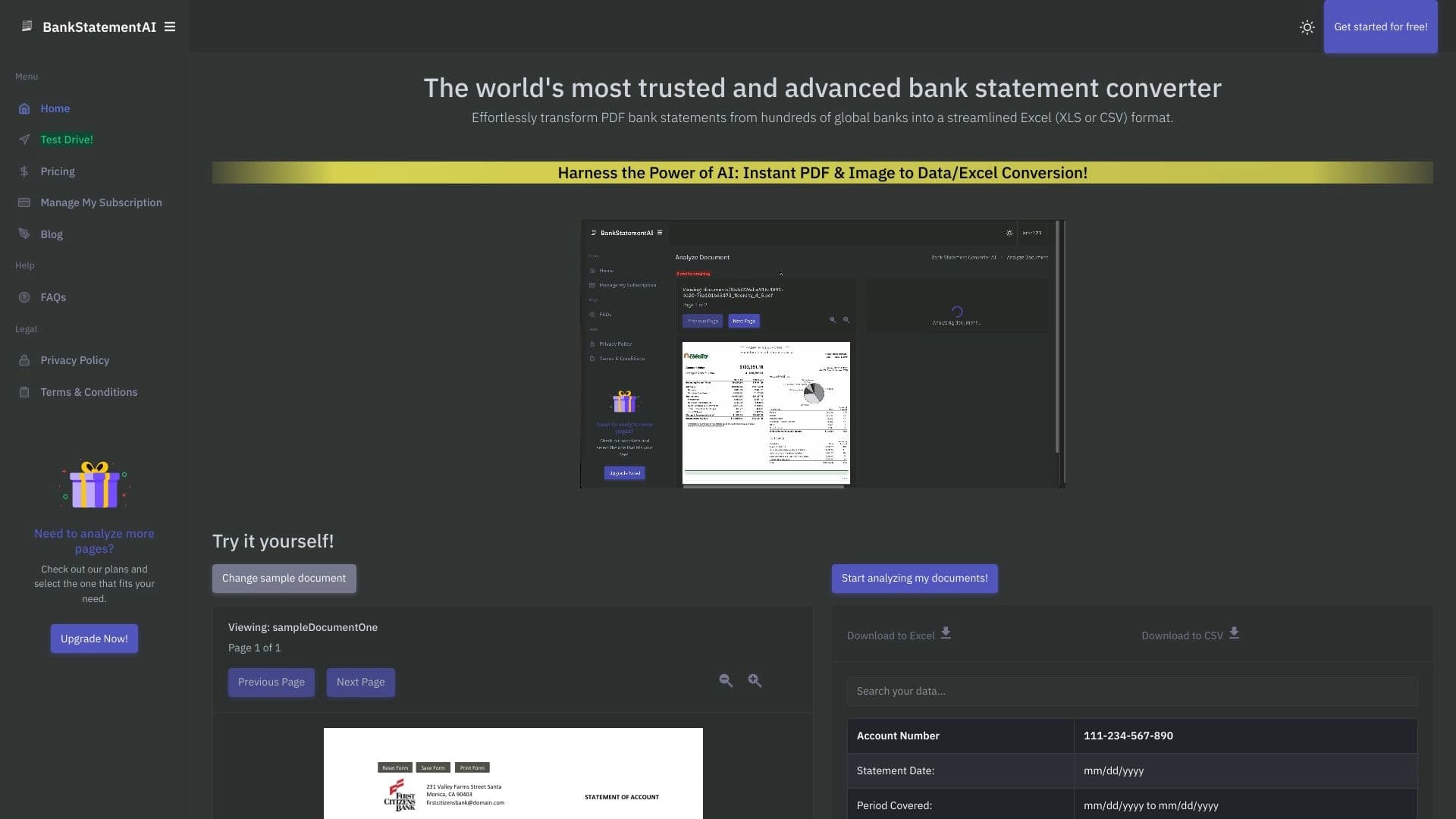
AI-powered online service that automatically converts bank statements from PDF into structured CSV files.


Web service for generating anime images from text prompts using AI.
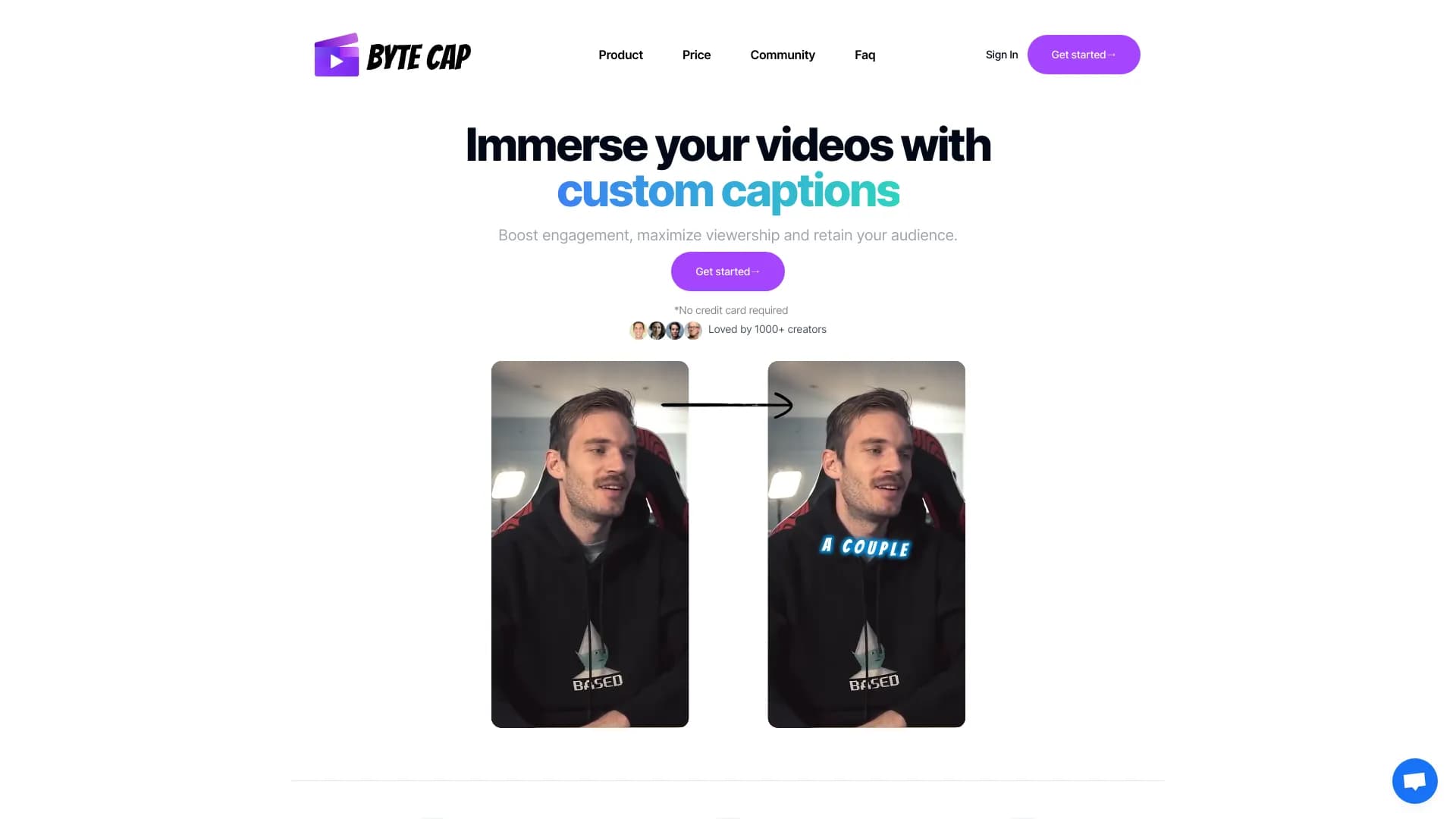
AI-powered online service for automatically generating video subtitles.

Google's neural network for generating and editing images from text descriptions, based on Gemini models.
Service for animating photos and creating videos with digital avatars using artificial intelligence.
Online AI-powered platform for generating and processing images.