
BenevolentAI
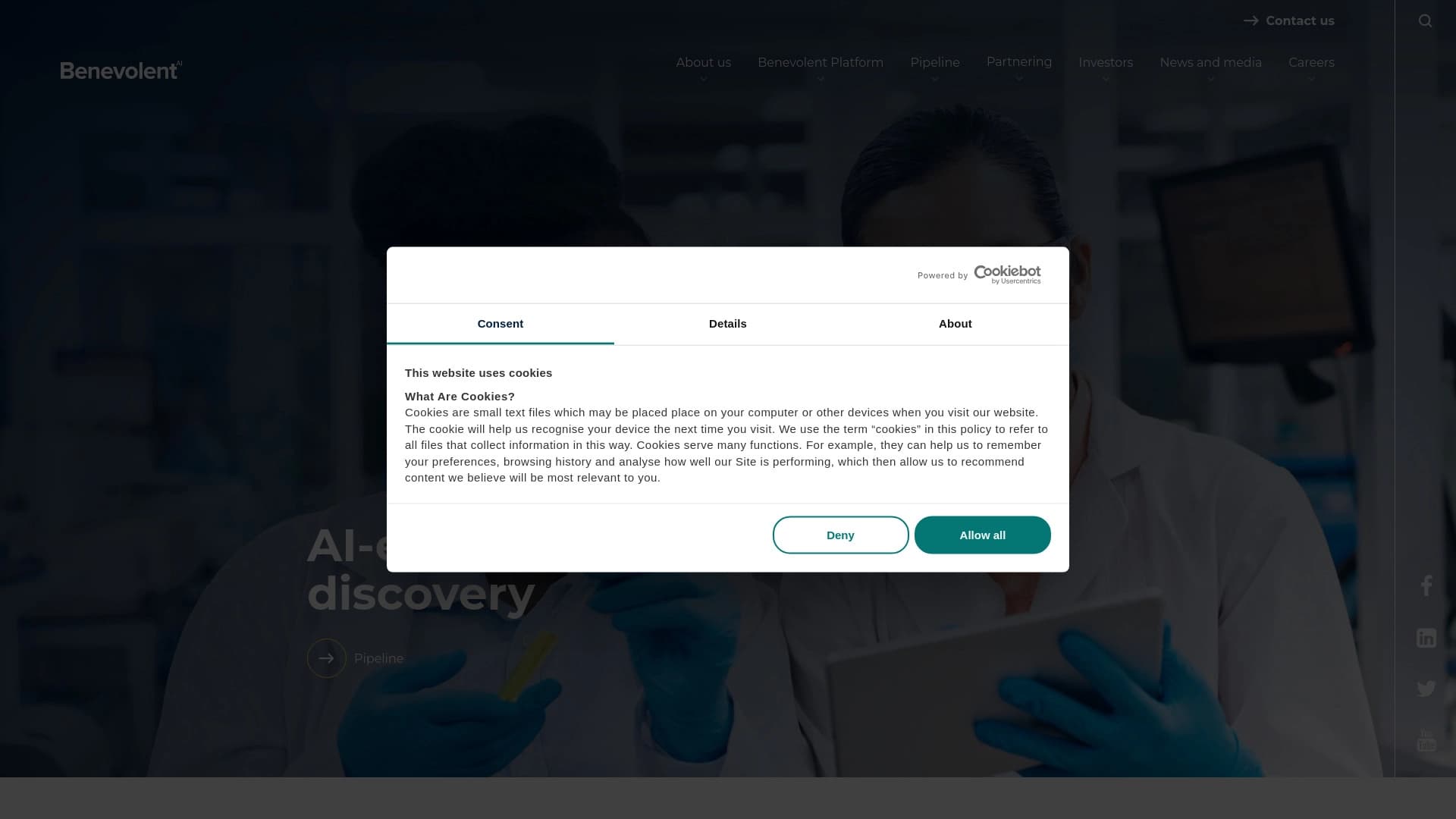
AI platform to accelerate the discovery and development of new drugs in the pharmaceutical industry.
Overview
BenevolentAI Neural Network Description
BenevolentAI is a specialized AI platform designed to accelerate the processes of discovering and developing new pharmaceutical drugs in the pharmaceutical industry. The system is intended for deep analysis of large volumes of biomedical data, including scientific publications, clinical trial results, and databases of molecular compounds. The platform's main task is to identify hidden patterns and non-obvious relationships that a researcher might miss during traditional manual analysis.
Based on the insights obtained, the neural network generates promising scientific hypotheses and proposes specific directions for experiments. This allows pharmaceutical companies to significantly reduce the time required to move from a theoretical idea to creating a working drug prototype. Essentially, the platform acts as an intelligent assistant that processes information faster and on a larger scale than a human, then passes the most well-founded options to scientists for further verification.
It is important to understand that BenevolentAI is not a universal consumer tool. It is a professional solution that requires users to have qualifications in biopharmaceuticals, an understanding of drug development processes, and data interpretation skills. The platform serves as a bridge between big data analytics and practical laboratory science, making the process of discovering new drugs more manageable and less time-consuming.
BenevolentAI Features
| Feature | Value |
|---|---|
| Type | AI platform for drug development |
| Categories | Healthcare tools, Text processing tools, Research tools |
| Platform | Website (online platform) |
| Developer | BenevolentAI |
| Starter plan | Free (basic features) |
| Professional plan | $99 per month |
| Enterprise plan | On request |
Who is BenevolentAI suitable for?
Pharmaceutical and biopharmaceutical companies
First and foremost, the platform is aimed at organizations that develop new drugs on a commercial basis. For large corporations, BenevolentAI becomes a strategic tool that helps optimize research budgets and accelerate time-to-market for drugs. The system helps reduce costs by filtering out obviously weak compounds at early stages of research.
Scientists and research groups
Researchers working in the field of biomedicine can use the platform to expand their own research horizons. BenevolentAI allows for rapid hypothesis testing, analysis of large volumes of scientific literature, and finding connections between biological processes that previously remained out of sight. This makes the platform useful for both fundamental research and applied development.
Professional research institutes
Academic and private research centers engaged in preclinical studies are also part of the target audience. However, it is important to note that effective work with the system requires serious training in data analysis and an understanding of biological processes. The platform is unlikely to be useful for beginners and enthusiasts without the appropriate background.
How to use the BenevolentAI neural network?
Registration and first login
To get started with the platform, you need to create an account on the official BenevolentAI website. The registration process is standard: you provide an email address and create a password. After confirming your account, you get access to the platform's online tools directly through your browser — no additional software installation is required. This allows for a quick start once you have an account.
Learning the interface
The BenevolentAI interface is not overloaded with unnecessary elements, but it is designed for professionals familiar with the subject area. Effective work will require time to learn the functional capabilities and the logic of building queries. The developers have provided intuitive navigation, but the final result depends on how well the user understands drug development processes and can formulate research tasks.
Working with data and hypotheses
After logging into the system, a researcher can upload their own data or work with existing arrays of biomedical information. The platform allows building analytical queries, identifying correlations, and obtaining lists of potential candidate compounds. It is important to understand that this is a decision support tool — the final verification of hypotheses is still carried out by scientists in laboratory conditions.
Key functions of BenevolentAI
Discovering new drugs through AI
The platform's key function is finding promising molecules and compounds that could become the basis for new drugs. The neural network analyzes available data on biological targets, mechanisms of action, and known compounds, then generates a list of the most likely candidates for further study.
Data analytics to accelerate drug discovery
BenevolentAI can process huge volumes of scientific information, including publication texts, clinical trial results, and genetic data. The system finds hidden patterns in this data that may point to promising research directions. This saves scientists time that they would otherwise spend weeks on manual analysis.
Hypothesis generation and validation
The platform does not just collect data — it actively proposes new scientific hypotheses based on identified patterns. Researchers can test these hypotheses, delve into details, and use them as a starting point for their own experiments. This helps structure the research process and make it more targeted.
Advantages of BenevolentAI
Significant acceleration of development
One of the platform's main advantages is speed. Instead of spending years sifting through compounds and analyzing literature, researchers can get a list of promising candidates for further work in a couple of months. This radically changes the economics of pharmaceutical research.
Finding non-obvious insights
BenevolentAI can find connections between biological processes that remain invisible during manual analysis. This opens up new opportunities for so-called "drug repositioning" — finding new uses for already known compounds, which is especially valuable for rare and hard-to-treat diseases.
Increased probability of success
The platform helps filter out weak compounds at early stages and focus on the most promising directions. This reduces the risk of failure at late stages of clinical trials and increases the overall percentage of successful developments, ultimately making research more efficient.
Disadvantages of BenevolentAI
High qualification requirements for users
Effective work with the platform requires a deep understanding of biopharmaceuticals and data analysis skills. The system's interface is not designed for beginners: without proper training, a user risks misinterpreting results or not using the tool's full potential. This significantly limits the pool of potential users.
The "black box" problem
Like many complex AI systems, BenevolentAI cannot always explain the logic behind its decisions. Sometimes the platform produces a result, but it is difficult for a researcher to understand on what data and patterns a particular suggestion was based. This creates certain difficulties in assessing the reliability and reproducibility of results.
High implementation cost
The enterprise plan involves significant financial investment, which is not always affordable for small teams and startups. In addition, full integration of the platform into existing research processes may require additional costs for staff training and integration with already operating systems.
What tasks does BenevolentAI solve?
Discovery and development of new drugs
The platform's main task is to help discover new drugs. BenevolentAI acts as an intelligent filter that narrows down the pool of potential compounds to the most promising options, saving research team resources.
Analysis of large volumes of biomedical data
The system is designed to work with so-called "big data" — arrays of information that cannot be processed manually. The platform organizes data, finds patterns in it, and presents results in a form suitable for further use.
Hypothesis generation and validation
BenevolentAI helps researchers formulate new scientific questions and test the validity of existing ideas. This transforms the research process from a chaotic enumeration of options into structured work with specific goals and objectives.
Accelerating the transition from hypotheses to prototypes
Finally, the platform directly accelerates the stage of moving from theoretical research to practical drug prototype development. Thanks to the speed of analysis and clear recommendations, researchers start laboratory testing faster and shorten the overall development cycle.
BenevolentAI Pricing
Starter plan
The free plan provides access to the platform's basic features. It allows you to get acquainted with the system's capabilities and assess its potential, but for full professional work, the free version's capabilities are usually insufficient. This plan is more suitable for initial testing than for performing serious research tasks.
Professional plan
The "Professional" plan costs $99 per month and includes expanded access to drug discovery tools. This option is designed for individual researchers and small groups who need more serious functionality than the free version but are not yet ready for full corporate collaboration.
Enterprise plan
For large pharmaceutical companies, an individual enterprise plan is provided, with pricing calculated on request. This format includes personalized terms, expanded integration capabilities, and technical support adapted to the specific organization's needs. As a rule, this plan is chosen by companies with serious research budgets and large-scale projects.
Terms of use for BenevolentAI
Registration on the official BenevolentAI website is mandatory to gain access to the platform. After creating an account, the user can work with the platform through a browser without installing additional programs. There are no direct restrictions on usage time or the number of sessions within a plan specified in the structured data.
It is important to note that full-fledged work with the system requires the user to have knowledge in biopharmaceuticals and data analytics. The platform is not designed for amateurs or people without special training: a deep understanding of the subject area is necessary for correctly interpreting results and formulating high-quality queries.
It should also be noted that BenevolentAI is not local software but a cloud service. This means that all data processing is performed on the company's servers, and the user needs a stable internet connection to access their information and analysis results.
BenevolentAI Availability
BenevolentAI is a web platform accessible through any modern browser. This ensures cross-platform compatibility: the system can be used from a desktop computer, laptop, or any other device with internet access. No special software or powerful local computing hardware is required.
However, it is worth noting that the speed of working with the platform depends on the quality of the internet connection and the volume of data being processed. Large research projects involve working with very large arrays of information, so organizations may need a high-quality communication channel for comfortable work with the system.
How BenevolentAI differs from analogues
There are various artificial intelligence tools on the market, but BenevolentAI stands out for its narrow specialization. Unlike universal neural networks for text generation or communication, BenevolentAI is designed exclusively for pharmaceutical research and drug discovery tasks. The platform does not try to cover all possible user needs — instead, it works as deeply as possible within its niche.
It is also worth noting that BenevolentAI is not a chatbot or text generator, but a full-fledged analytical system that works with structured and unstructured scientific information. Its main value lies not in content creation, but in detecting patterns and generating scientific insights. Therefore, comparing it to widely known general-purpose neural networks is incorrect — it is a tool for solving a completely different class of problems.
Conclusion
BenevolentAI is a powerful and specialized AI platform designed to accelerate the development of new drugs. It can significantly reduce research time, find non-obvious relationships in biomedical data, and increase the efficiency of pharmaceutical companies. However, such capabilities require a responsible approach: working with the system requires high user qualifications, an understanding of the subject area, and substantial financial investment. For these reasons, the platform is primarily aimed at large organizations that can afford full implementation and use of this tool in their research processes.
Frequently asked questions
See also
An intelligent assistant for lawyers that accelerates the search and analysis of legal information.

AI agent for automating routine browser actions, such as filling out forms and collecting data.
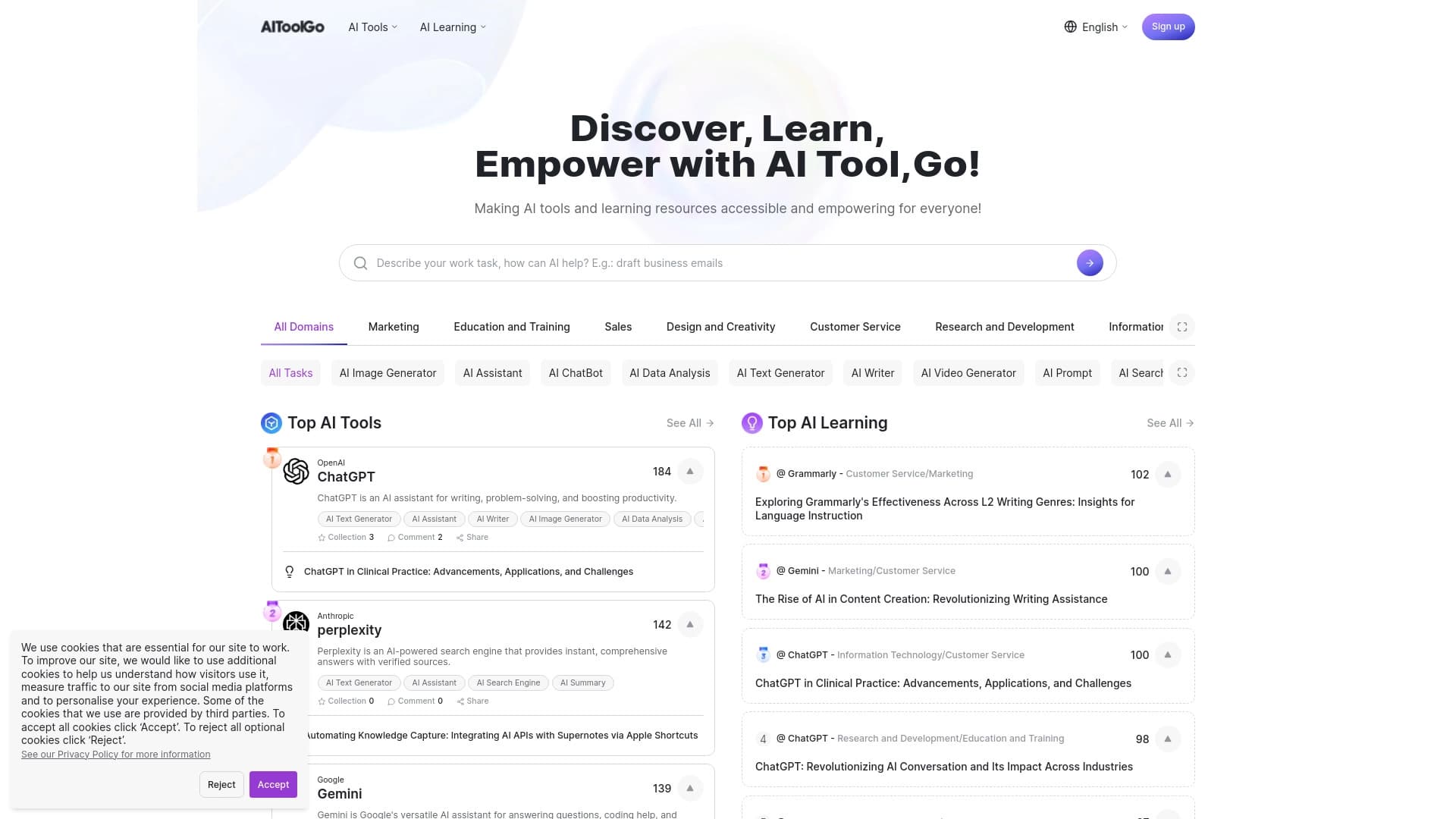
Catalog of AI tools with educational materials and guides for selecting neural networks.

AllChat is a universal platform that combines several popular language models in a single interface for communication, image generation, file analysis, and code execution.
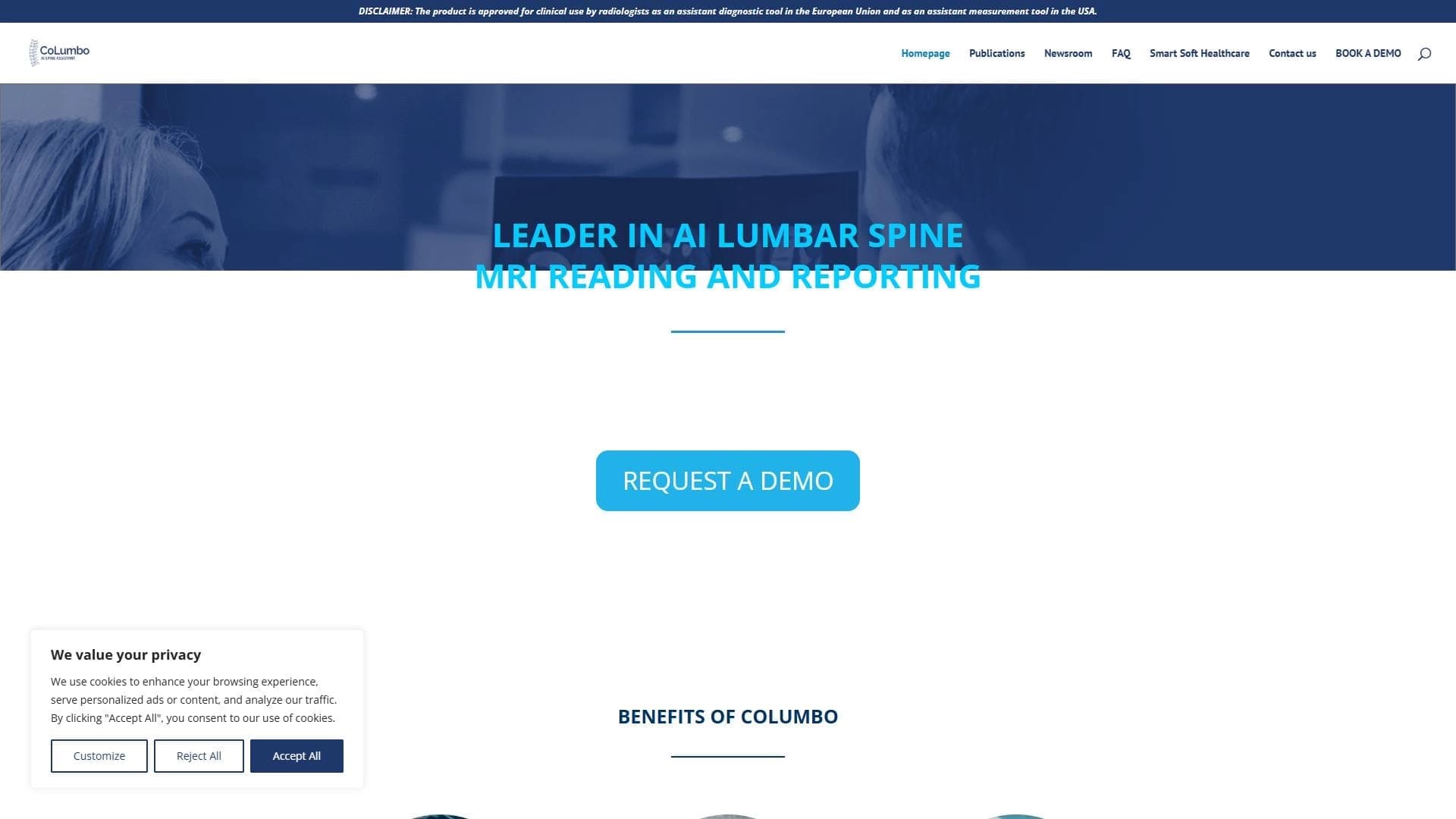

Neural network for automating the analysis of lumbar spine MRI and report preparation.
A platform for aggregating world news using AI to analyze and reduce bias.

A neural network for document analysis that extracts key information, creates summaries, and answers questions about the contents of uploaded files.

Platform for automated geospatial analysis of satellite imagery and geographic data.