

AutoContent API
A platform for automatically converting text materials into podcasts and other audio content.
Overview
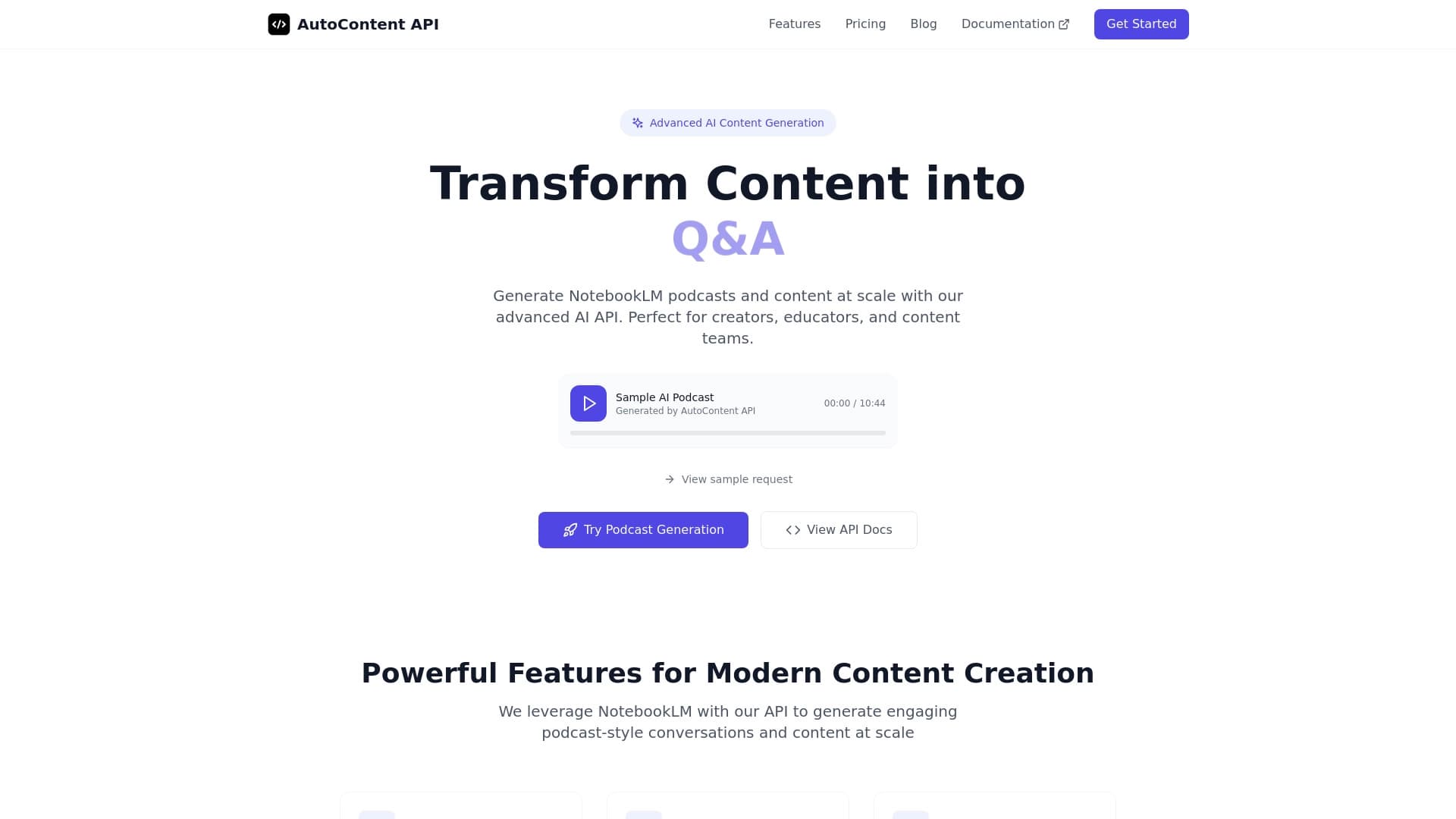
AutoContent API is a platform designed to automatically convert text materials into audio format, primarily podcasts. The system handles the entire process, from parsing the source text to generating a finished audio recording. In addition to podcasts themselves, the service can create auxiliary elements based on text — frequently asked questions (FAQ), study guides, timelines, and other structured documents.
The platform's key feature is its API-based operation. This means the service's functionality can be embedded into various applications, websites, and internal team workflows. This approach enables automating audio content production and integrating it into existing content production infrastructure.
AutoContent API Characteristics
| Characteristic | Value |
|---|---|
| Type | Platform for automated podcast and audio content creation |
| Categories | Text content generators, AI API design tools, YouTube management tools, Podcast tools |
| Developer | AutoContent Technologies |
| Monthly visits | 60.8K |
| Publication date on site | November 7, 2025 |
| Service link | autocontentapi.com |
Who is AutoContent API suitable for?
Authors and content creators
Bloggers, article authors, and video content creators can use the service to expand their media presence. Instead of manually recording and editing podcasts, they can convert existing texts into audio format. This is especially convenient for those who run text-based blogs and want to reach an audience that prefers listening over reading.
Educators and educational institutions
Teachers and creators of educational courses can use the platform to prepare learning materials in audio format. The service not only allows voicing lectures but also automatically generates supporting documents — self-assessment questions, timelines, or brief summaries. This saves time on material preparation and makes learning more accessible.
Marketers and freelancers
For marketing professionals and independent specialists, the service becomes a tool for rapidly scaling content. A small team or even a single person can produce a large number of podcasts, audio reviews, and training materials without additional resources. API integration allows configuring automatic content generation to suit specific clients or projects.
How to use AutoContent API?
Uploading source materials
To get started, you need to prepare the text materials you plan to convert into audio. Uploading is done via a POST request to the API — this is a standard technical process that requires basic programming knowledge or the use of ready-made integrations. The request sends the text itself that needs to be voiced.
Configuring the output format
After uploading the text, you need to specify the desired output format. This can be a full-fledged podcast, a study guide, an FAQ, or a timeline. The user can set parameters and instructions, controlling how the neural network processes the material. The system allows adapting generation to specific tasks and preferences.
Receiving the finished result
Once processing is complete, the service returns a finished audio file or a set of generated documents. The entire process happens automatically, in real time, without the need for manual review or expert involvement. The user can use the result directly for publication or further processing.
Key features of AutoContent API
Text-to-podcast conversion
The platform's main function is turning text material into a finished podcast. Artificial intelligence analyzes the semantic structure of the source text, writes a script based on it, and then voices it. The user doesn't need to write a script, select a narrator, or record — the aggregator handles all stages automatically.
Generating accompanying documents
In addition to audio, the service can create supporting text materials based on uploaded content. The system can automatically compile a block of frequently asked questions (FAQ), prepare study guides, or structure content as a timeline. These materials are useful for publishing alongside a podcast or for educational purposes.
Flexible configuration via API
API-based operation provides high configuration flexibility. The user can tailor the generation process to their instructions and requirements. These can include style parameters, duration, or output format. Integration capabilities allow embedding AutoContent API functionality into other services, creating automated content production pipelines.
Advantages of AutoContent API
Significant time savings
The traditional podcast creation process can take weeks, including scriptwriting, recording, editing, and publishing. AutoContent API reduces this process to a couple of clicks and a few minutes of waiting. For teams that publish content regularly, this is a tremendous saving of resources.
Content scalability
Thanks to automation, a small team of two people can produce a large number of podcasts and training materials. There's no need to expand staff or hire contractors for voiceover work. Production scale is limited only by the number of source texts, not manual labor.
Flexibility in settings
The service allows adapting the generation process to the user's individual instructions. This makes it possible to create content that meets specific style and format requirements. API flexibility also allows embedding the tool into existing workflows with minimal modifications.
Disadvantages of AutoContent API
Template-based results
When using automatic generation, different podcasts can end up similar to each other. The algorithmic approach limits the ability to create a truly unique product that stands out from other episodes. For authors striving for an individual style, this can be a significant limitation.
Difficulty creating a unique product
Due to limitations in templates and available settings, it can be difficult to create a truly unique show. The tool is better suited for standardized formats than for experimental content requiring a non-standard approach.
Demanding on source text
The quality of the final result directly depends on the quality of the source material. If the text contains errors, inaccuracies, or poorly structured logic, they will carry over into the audio. Users need to carefully review their source materials before submission to avoid distorting information.
What tasks does AutoContent API solve?
Automating podcast recording
The main task is to fully automate the podcast creation process. This includes all stages: from text analysis to generating the final audio file. The solution is suitable for authors who want to regularly publish new episodes without the costs of studio recording.
Converting text into audio content
The service solves the task of converting any text materials into audio format. This can include articles, lectures, reviews, or any other content. This approach allows creating alternative forms of information consumption for users.
Creating educational materials and guides
The platform is used for automatically generating study guides and practical manuals. Based on the source text, the neural network creates structured documents ready for educational use. This helps teachers and course authors prepare materials faster.
Generating supporting materials
The service automates the creation of additional elements for publications. FAQs, timelines, and other accompanying documents are generated automatically, allowing content creators to publish more complete and professional materials.
AutoContent API Pricing
"Hobbyist" plan
The cost is $35 per month. It includes creating up to 200 podcasts, using an AI host for voiceover, and email support. This plan is aimed at beginner users and authors with a moderate publishing frequency.
"Professional" plan
The price is $85 per month. It provides generation of up to 1,000 podcasts, priority API access, and email support. Suitable for more active users and small teams that require increased generation volume.
"Corporate" plan
Pricing is calculated individually upon request. Unlimited generation volumes and custom integration with the client's existing systems are available. Aimed at large companies and media projects with high volume requirements.
Terms of use for AutoContent API
The service operates online, with access via the website or directly through the API. To start using it, payment for one of the subscription plans is required — there is no free access. It's important to note that if the source text contains errors, the result may be inaccurate, so responsibility for the quality of source materials lies with the user. The service does not perform manual moderation or editing of uploaded texts, relying on automatic processing algorithms.
AutoContent API Availability
The platform operates online and is accessible via the website and API. The interface language and list of regions are not specified in public data. No geographical availability restrictions are recorded in the service description, but actual usage depends on the API's technical capabilities and payment terms.
How AutoContent API differs from alternatives
Narrow specialization
Unlike many universal AI tools, AutoContent API focuses specifically on converting text into audio format and creating accompanying documents. This allows for deeper refinement of this particular function. Alternative services (AskCodi, Polymer, Julius AI, Jasper AI, and others) solve a broader range of tasks but don't always have in-depth podcast generation capabilities.
Pricing approach
The service uses a pricing model that differs from most foreign AI tools. This can be an advantage for teams working with local payment methods. Alternatives such as Jasper AI or Albert AI typically target the international market and use different pricing structures.
Market focus
Given the pricing policy and offering, the service appears to focus on a specific market segment. Most direct alternatives (for example, Polymer or Julius AI) do not have explicit localization for this audience, which makes AutoContent API more adapted for local use.
Conclusion
AutoContent API is a specialized tool for automating podcast and audio content production from text materials. It allows turning articles, lectures, and other texts into finished podcasts, as well as creating additional educational documents: FAQs, guides, and timelines. The service is suitable for authors, educators, and marketers who need to save time on content production and scale their output. The main limitations are related to the template-based nature of results and the demands placed on source text quality. However, for standardized formats and regular publications, the platform represents a practical and effective tool.
Pricing
Frequently asked questions
See also
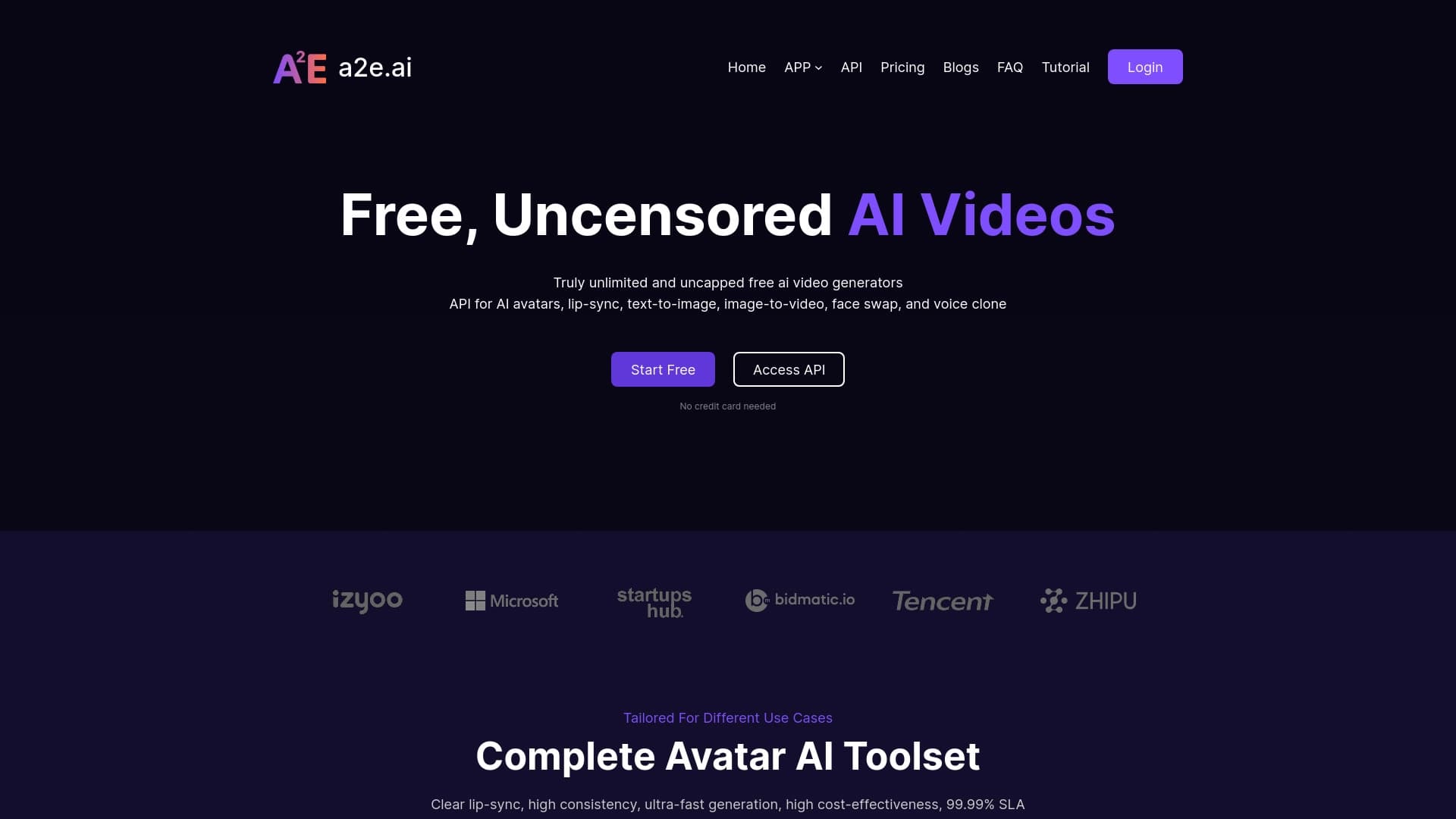

AI toolkit for video generation and editing, including avatars, lip-sync, and voice cloning.
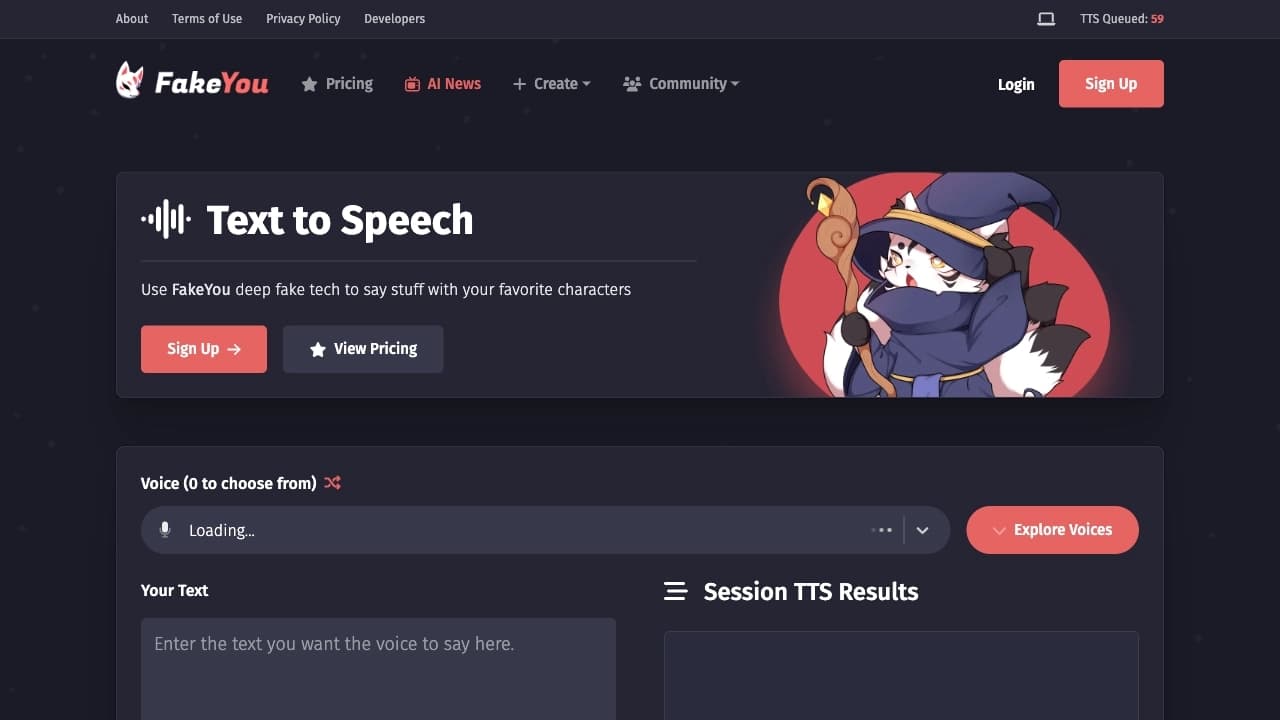

Online AI speech synthesis platform that allows generating audio with voices of famous characters and celebrities.
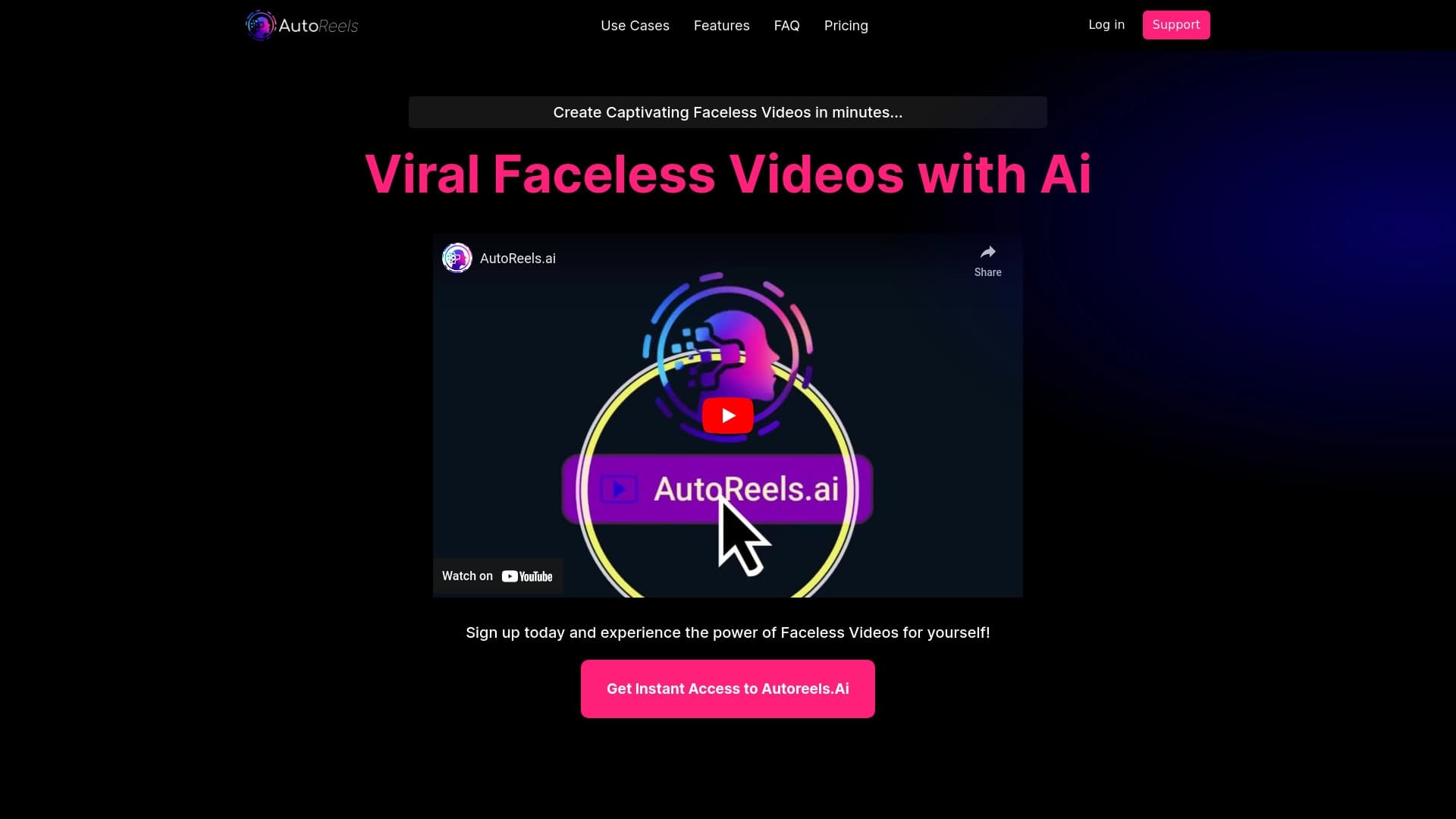

AI-powered service for automatically creating “faceless” short videos for TikTok, YouTube Shorts, and other platforms.


Service for live AI conversations, including text generation, voice, and speech recognition.
A tool for creating diagrams and mind maps from text descriptions in natural language.
A neural network for document analysis that extracts key information, creates summaries, and answers questions about the contents of uploaded files.

Online AI-powered service for quickly creating presentations based on a given topic or an uploaded document.

Service for quickly generating e-books on a given topic.