
AudioGenius.ai
AI-powered voice cloning and audio translation service.
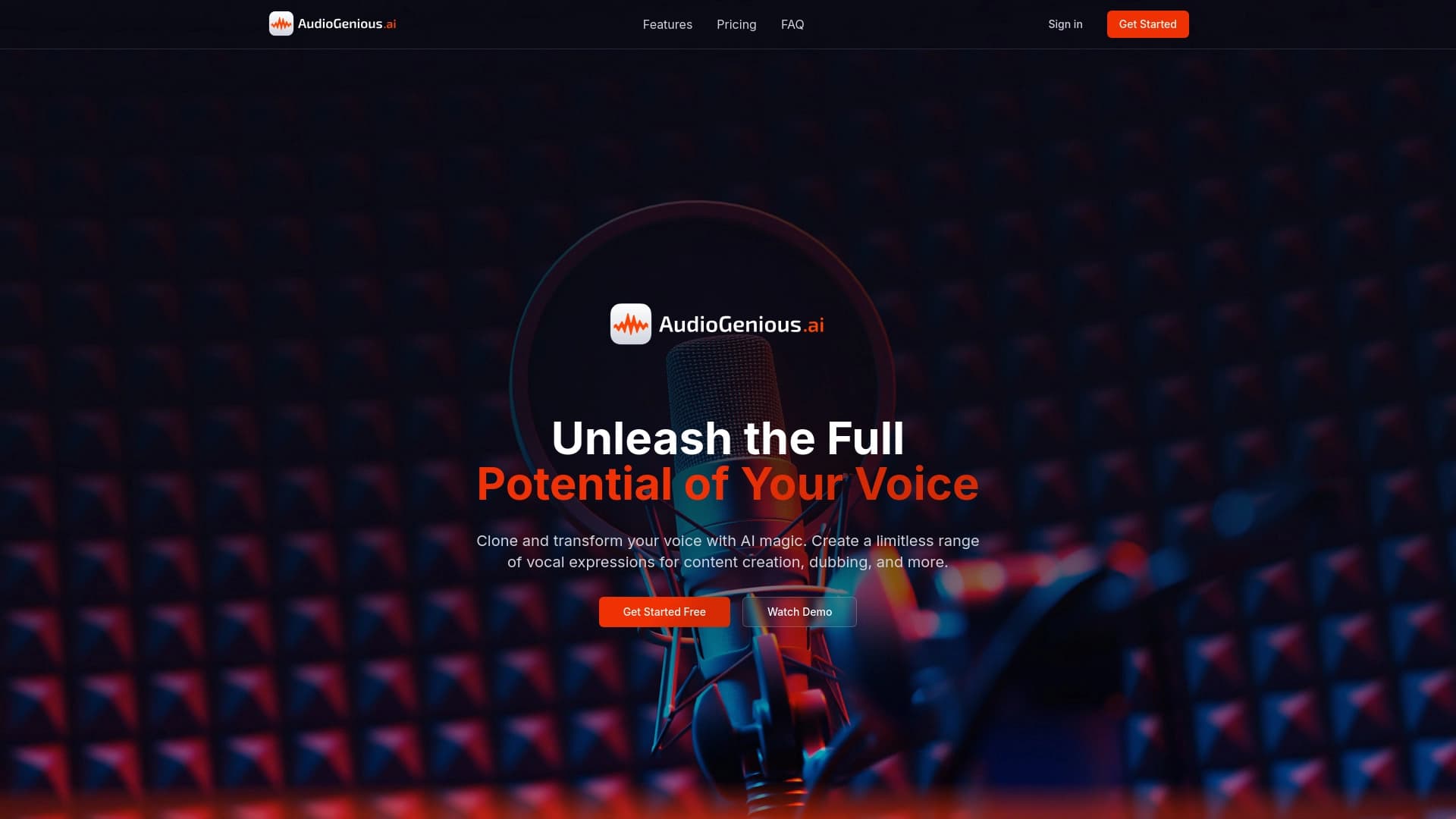
Overview
AudioGenius.ai is a web service that solves two key tasks: voice cloning and audio content translation while preserving the original timbre. Instead of hiring a voice actor for dubbing or a translator for localization, the user uploads a short voice sample, and the neural network creates a digital copy of it. After that, speech can be synthesized in different languages without losing the individual characteristics of the voice.
The service works entirely online: to start generation, you just need to register on the website, choose a suitable pricing plan, and upload an audio file. The system automatically processes the recording, creates a voice clone, and offers to translate or voice the content. This approach saves time and resources, replacing traditional studio dubbing and voice-over processes with an automated solution.
The platform is aimed at a wide range of users — from individual freelancers to large companies with content localization needs. Judging by the traffic (about 147.4 thousand visits per month), the service is already in demand on the market and continues to attract an audience interested in quickly creating voice content.
AudioGenius.ai Features
| Feature | Value |
|---|---|
| Type | AI-powered voice cloning and audio translation tool |
| Platform | Web service (website) |
| Categories | Translation tools, voice cloning, meeting facilitation, customer support |
| Monthly traffic | 147.4K visits per month |
| Developer | AudioGenius.ai |
| Starter plan | 240 minutes of audio, up to 5 voice clones |
| Creator plan | 800 minutes of audio, up to 20 voice clones |
| Professional plan | 4000 minutes of audio, up to 100 voice clones |
| Scale plan | 10000 minutes of audio, up to 500 voice clones |
| Business plan | 100000 minutes of audio, up to 10000 voice clones |
Who is AudioGenius.ai suitable for?
Freelancers and studios
Individual professionals and small studios working on video production, advertising, or podcasts can use the service for quick voice-over work. Instead of spending a long time searching for a voice actor and renting a recording studio, you just create a voice clone once and use it for all projects. This shortens delivery times and reduces production costs.
Content creators
YouTube bloggers, podcast hosts, and authors of educational courses often need to re-record audio multiple times. With AudioGenius.ai, you can generate draft versions of voice-overs, and the client can record the final version if needed. In addition, the translation feature allows adapting content for foreign audiences while preserving the author's voice.
Localization specialists
Companies and individual specialists who adapt films, TV series, and corporate videos for other markets get a tool for automatic dubbing. Instead of hiring voice actors for each language, you can use synthesized copies of the original voices, which speeds up the process and makes it more cost-effective.
Customer support teams
The service is also useful for customer service departments. Using voice messages translated into the customer's language, communication can be localized without involving translators. For example, a greeting or instruction recorded in one language is automatically voiced in English, German, or another language using the same employee's voice.
How to use AudioGenius.ai?
Registration and plan selection
The first step is to create an account on the service's official website. After registration, the user gets a three-day free trial period on any pricing plan. This allows testing the quality of generation and translation before making a payment. If a plan doesn't fit, it can be changed at any time — both by increasing limits and switching to a cheaper option.
Uploading audio and creating a clone
After choosing a plan, you need to upload a voice sample. A short audio recording is enough to create a digital copy — the process itself takes just a few minutes. The main requirement is the quality of the source file: the recording must be clean, without background noise or interference, since the quality of the final result directly depends on it.
Generation and translation
Once the voice clone is ready, you can move on to voicing content. To do this, upload text or an audio file for translation, select the target language, and the system automatically generates speech. The entire process happens online, without the need to install additional software.
Key features of AudioGenius.ai
Voice cloning in seconds
The service's main function is creating a digital copy of a voice based on a short audio recording. The neural network analyzes timbre, intonations, and pronunciation features, then reproduces them in synthesized speech. This allows using the same voice for an unlimited number of projects without repeated recordings.
Real-time voice translation of audio
The second key capability is translating audio content into other languages while preserving the original voice. The user uploads an audio file, specifies the target language, and the system returns a finished result where the speaker speaks in the target language but their voice remains recognizable. This is especially in demand for localizing videos and podcasts.
Advantages of AudioGenius.ai
Saving time and resources
Quick voice copy creation eliminates the need for traditional studio voice-over work. What used to take days or weeks is now done in minutes. This is critical for content creators with tight deadlines and limited budgets.
Automatic translation without involving people
The built-in audio translation feature makes the localization process fully automatic. There's no need to find translators and voice actors for each language — you just create a voice clone once and generate translations as needed. This reduces localization costs several times over.
Localizing customer support
For businesses working with international clients, the service opens up the ability to communicate with users in their native language via voice messages. At the same time, the company keeps its "human face" — the voice of a real employee rather than a faceless robot.
Disadvantages of AudioGenius.ai
Requirements for source audio quality
The neural network is sensitive to the quality of the source sample. If the recording was made in a noisy room, has background sounds, or distortions, the cloning result may be of low quality. Users have to pay special attention to preparing source files, which is not always convenient.
Legal risks
Cloning a voice without the owner's permission may violate copyright laws. Before using someone else's voice for commercial purposes, you must obtain the appropriate permission. Otherwise, the service user may face legal consequences.
Quality of synthesized speech
Synthesized voices sometimes sound unnatural, lacking emotion and natural intonation. Even with high cloning quality, a slight "mechanical" tint in the sound may be noticeable. The developers claim they are constantly improving the algorithms, but complete indistinguishability from a real voice is not always achieved.
What tasks does AudioGenius.ai solve?
Quick voice-over for presentations and videos
Instead of recording a voice in a studio, the user can synthesize a voice-over using the created clone. This is suitable for training videos, corporate presentations, and educational materials where production speed matters while maintaining quality.
Dubbing films and audio content
The service allows voicing films, TV series, and YouTube videos in different languages without replacing the original voice. Dubbing becomes more natural and closer to the original than traditional re-voiced narration.
Generating audio translation on the fly
Real-time audio file translation opens up possibilities for simultaneous interpretation of meetings, webinars, and presentations. Participants can listen to a speech in their native language while preserving the speaker's voice.
Localizing customer support
Support staff can communicate with customers from different countries using automatically translated voice messages. This unifies communication and makes service more personalized.
AudioGenius.ai Pricing
Pricing plan structure
The service offers five pricing plans that differ in audio minute limits and the number of voice clones that can be created:
| Plan | Audio limit | Maximum clones |
|---|---|---|
| Starter | 240 minutes | 5 |
| Creator | 800 minutes | 20 |
| Professional | 4000 minutes | 100 |
| Scale | 10000 minutes | 500 |
| Business | 100000 minutes | 10000 |
Trial period and plan changes
A free three-day trial period is available for all plans. This allows testing the service's functionality without financial obligations. The user can change the pricing plan at any time — both increasing limits as needs grow and switching to a more budget-friendly option.
Terms of use for AudioGenius.ai
To get started, you need to register on the service's website and choose a suitable pricing plan. Voice generation and audio translation are performed entirely online, without the need to install software on your computer. All you need is internet access and the source files to upload.
The trial period lasts 3 days and is available on any of the plans. After it ends, the user switches to a paid plan with the previously selected limits or can change the settings. The system allows flexible subscription management depending on current tasks and workload.
AudioGenius.ai Availability
The service is a web platform and is accessible through the official website. Any modern browser is sufficient — no additional applications need to be installed. No information about regional restrictions, VPN requirements, or interface language support is available in public sources.
How AudioGenius.ai differs from alternatives
There are several tools on the market that work with audio and voice. For example, Cleanvoice and Audo Studio focus on cleaning and processing audio recordings, Suno AI and Udio specialize in music generation, and AIVA creates compositions using artificial intelligence.
The main difference of AudioGenius.ai is the combination of two functions in one service: voice cloning and audio translation while preserving the voice. Competitors typically focus on only one of these tasks. This integration is convenient because the user doesn't need to switch between different platforms for a full audio content workflow.
Another feature is the pricing structure with clear gradation by minutes and number of clones. This allows choosing a plan that matches the specific project scale without overpaying for unused features, and scaling limits as needs grow.
Conclusion
AudioGenius.ai is a practical tool for AI-powered voice cloning and audio content translation, aimed at content creators, localization specialists, and business teams. Fast voice generation, flexible pricing plans, and a three-day trial period make the service accessible for projects of various scales. However, it's important to keep in mind that the quality of the result directly depends on the source recording, and when working with third-party voices, legal norms must be followed and permission from rights holders obtained. Synthesized voices don't always sound completely natural, so for tasks requiring maximum emotional expressiveness, additional refinement or a combination with traditional voice-over may be needed.
Frequently asked questions
See also

AI assistant for creating short summaries of videos, PDF documents, and web pages.
AI-powered online service that automatically converts bank statements from PDF into structured CSV files.

Online AI speech synthesis platform that allows generating audio with voices of famous characters and celebrities.

AI-powered platform for generating and editing images and videos.

AI platform for fast website creation and small business process management.

Free web tool from Google that uses machine learning to turn rough sketches into neat icons and illustrations.

Online service for text paraphrasing with seven modes, helping you create unique content.
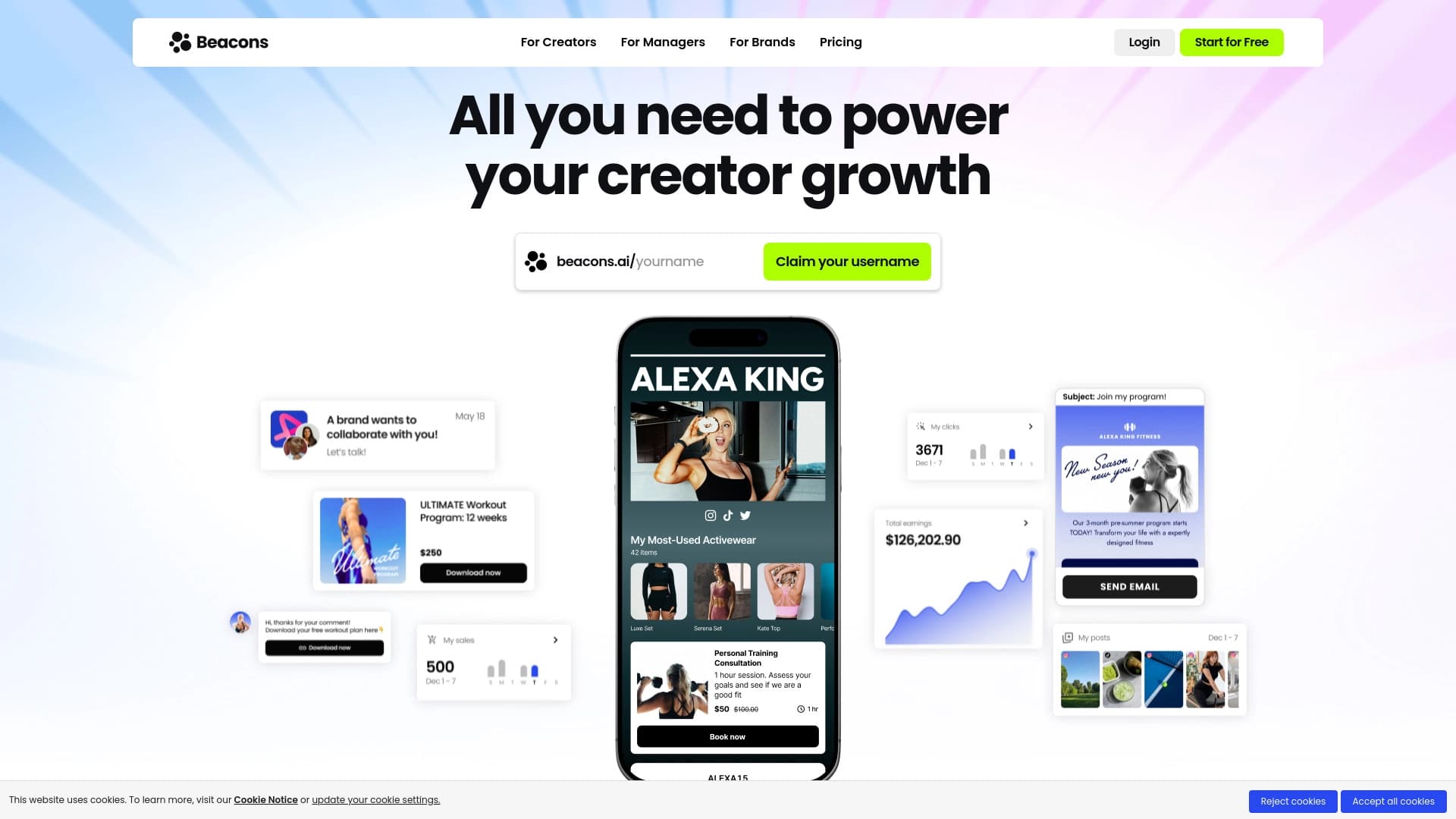
A platform for content creators that combines link management, email marketing, an online store, and analytics in a single visual editor without coding.