

AIML API
A unified API for accessing over 200 AI models for developers and businesses.
Overview
AIML API Description
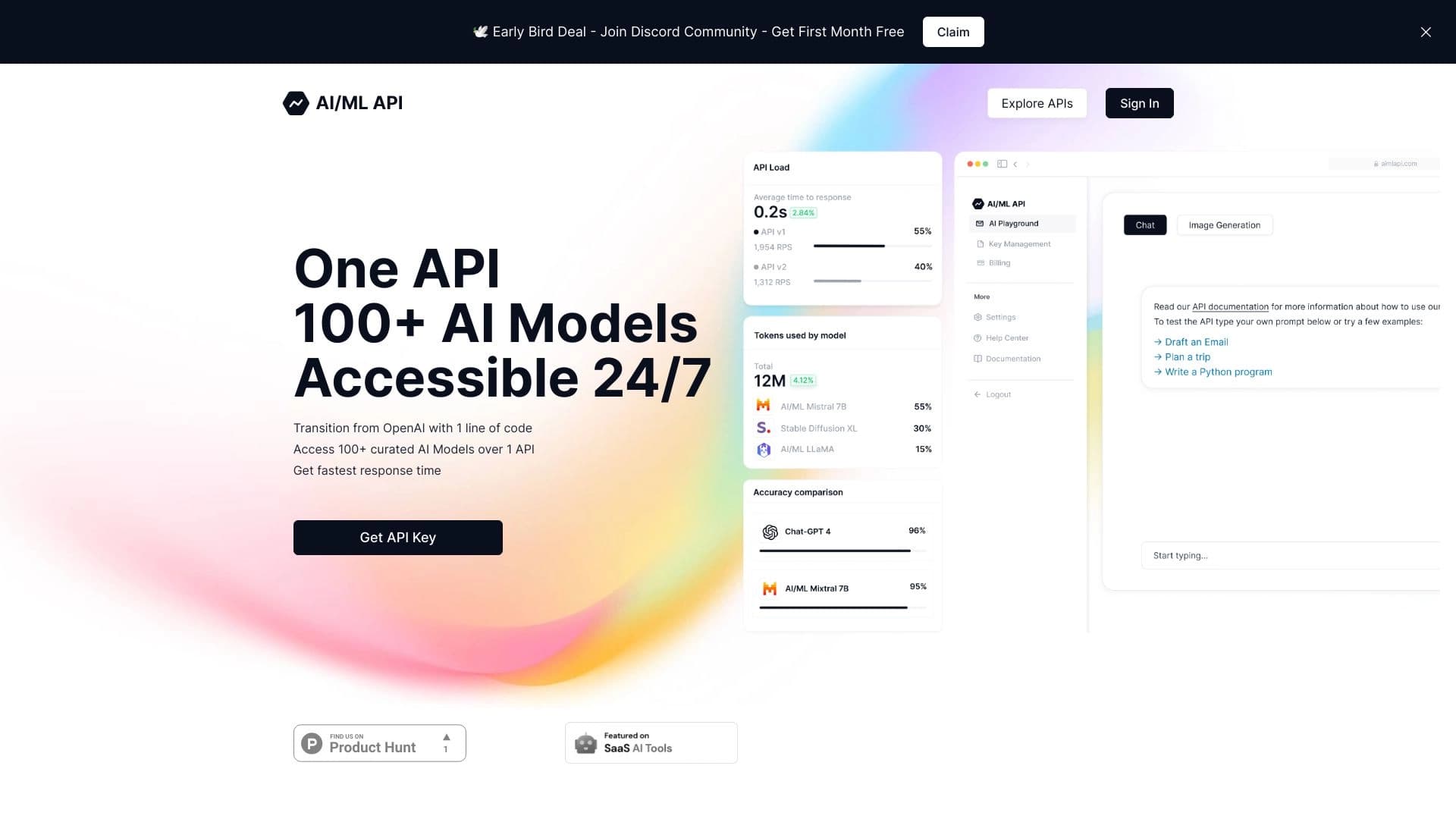
AIML API is a unified application programming interface (API) that gives developers and businesses access to a vast catalog of artificial intelligence. Instead of connecting each neural network separately and spending time learning different documentation, you get a single entry point for working with dozens and hundreds of models. The service is positioned as a scalable and cost-effective solution that simplifies integrating AI features into existing applications and products.
The platform's core value is versatility. With a single access key, you can send requests to models that process text, recognize images, or work with speech. This eliminates the need to subscribe to multiple different services and manage multiple billing accounts. Thanks to model aggregation, AIML API can significantly save your budget on developing and operating AI solutions, especially compared to directly using major international vendors.
Key Platform Idea
AIML API's main goal is to act as a bridge between developers and the world of large language models. The platform handles the technical complexities related to infrastructure, load balancing, and scaling. For the user, this means access to the latest technologies becomes as simple as a regular request to a web service. This approach is especially important for startups and small teams that lack the resources to build their own ML infrastructure layer.
Purpose of the Service
The service was created to accelerate the adoption of artificial intelligence in real products. By designing application architecture through a unified gateway, companies gain flexibility in choosing models as their needs evolve — today you can use one model for a chatbot, and tomorrow switch to a more powerful one for data analysis. AIML API acts as a connector, making advanced technologies accessible without deep immersion into the specifics of each individual neural network.
AIML API Features
| Feature | Value |
|---|---|
| Type | AI API (application programming interface) |
| Categories | AI Models, AI API, Large Language Models (LLMs) |
| Platform | Web (cloud service) |
| Pricing Model | Free/Freemium, Pay-as-you-go, Paid |
| Free Tier | Yes ("Developer" tier — 10 requests per hour) |
| Number of Models | Over 200 |
| Date Added to Catalog | August 28, 2024 |
Who Is AIML API For?
AIML API is designed for a wide range of technical professionals and entrepreneurs who need flexible access to AI computing power.
Developers and SaaS Entrepreneurs
This is the primary target audience. Developers can integrate the API into their projects in any programming language using standard HTTP requests. For startups building SaaS products, this solution lowers the barrier to entry: no need to spend time setting up your own machine learning servers. Entrepreneurs can quickly prototype features using AI Playground and then move them into production.
Researchers and Educators
For scientists and teachers, the service provides the ability to experiment with numerous models without purchasing expensive equipment or subscribing to each service individually. Educators can use the free tier to demonstrate how neural networks work to students in the learning process, while researchers can use it to quickly compare outputs from different algorithms.
Businesses and Corporate Teams
For companies looking to implement AI into their business processes (e.g., automating ticket processing, analyzing customer reviews, or recognizing documents), AIML API offers a single integration point. This simplifies work for legal and finance departments, as the company deals with one contractor instead of multiple service providers, streamlining document flow and technical support.
How to Use AIML API?
The process of getting started with the platform is intuitive and consists of several sequential steps.
Registration and Getting an API Key
The first step is creating an account on the official AIMLAPI.com website. Registration takes a couple of minutes and does not require a bank card for the free tier. After email confirmation, the user enters the dashboard, where a personal API key is automatically generated. This key will be used for all subsequent HTTP requests to the models.
Choosing a Model and Integration
After registration, you need to review the catalog of available models in the dashboard. The platform allows filtering models by task type (text, images, audio). The next step is integration: the developer needs to add the API key to their application's configuration files and send a test request according to the documentation. The service documentation describes the structure of requests and responses in detail.
Testing via Playground
Before deploying algorithms to production, it is recommended to use the AI Playground feature. This is a safe testing environment where you can send requests to a model and see its responses in real time without risking the main code. Once the result meets your requirements, you can move the code to the main application and then track call statistics and token usage through the built-in dashboard.
Key Features of AIML API
Single Access Point to Multiple Models
Instead of integrating each AI model separately, developers get one stable API for working with over 200 models. This is a powerful feature for aggregating diverse tasks.
Low Response Latency
The service infrastructure is optimized for fast request processing, which is critical for real-time applications (e.g., chatbots or video surveillance systems). Low latency is achieved through geographically distributed servers and modern routing algorithms.
Flexible Scalability
The platform is designed to handle peak loads. If an application suddenly requires more computing resources, AIML API automatically distributes the load without losing stability. This allows businesses to grow without rewriting code due to technical limitations.
Cost Efficiency
By aggregating requests, the platform can offer more favorable terms compared to directly using proprietary APIs from major vendors. Pay-as-you-go billing lets you pay only for the resources actually used.
Ease of Integration
To get started, you only need standard HTTP request libraries in any language. The interface is unified, so switching from one model to another does not require changing the entire code logic — just change the model name in the request parameters.
AIML API Advantages
The main benefit of the service is saving money and time. The platform promises to reduce AI costs by up to 80% compared to direct calls to giants like OpenAI. This is achieved through optimized request routing and competition between models within the catalog.
The service's high level of availability is also worth noting. Reliable server infrastructure ensures uninterrupted operation even under significant loads. Support for models with ultra-long context allows solving complex tasks that require processing large volumes of text, which is unavailable in many standard API solutions.
Another advantage is the AI Playground. This is a rapid prototyping tool that lets you test models in real time without writing code. An additional plus is 24/7 customer support and high data security standards, which is especially important for corporate clients.
AIML API Disadvantages
Despite the obvious advantages, the service has several limitations. First, the platform has no public open-source code or GitHub repository, which may deter developers accustomed to fully transparent open-source solutions.
Also noteworthy is the limited disclosure of pricing information. The exact price list is hard to find on the main page, requiring a visit to a dedicated section to study the nuances of billing. An indirect drawback is the lack of a native mobile app or desktop client — management is only possible through the web interface or programmatic code. Finally, the service requires a stable internet connection, creating dependence on the quality of communication channels.
What Tasks Does AIML API Solve?
Natural Language Processing (NLP)
The API enables tasks such as text translation, content generation, document summarization, sentiment analysis, and building intelligent assistants. For businesses, this means automating support and creating knowledge bases.
Computer Vision
Using catalog models, you can solve tasks like object recognition in images, content moderation, photo search, and OCR (optical character recognition). This is applicable in retail, logistics, security systems, and medical diagnostics.
Speech Recognition and Predictive Analytics
Audio models allow converting speech to text or creating voice assistants. For advanced analytics, the API enables building forecasts based on historical data (demand, customer churn, price changes). In robotics, the API is used for processing sensor data and making decisions based on machine learning.
AIML API Pricing
The platform follows a flexible pricing policy, giving users a choice between free, prepaid, and postpaid options.
| Tier | Cost | Included |
|---|---|---|
| Developer | $0 | 10 requests per hour (Free) |
| Startup | Pay As You Go | From 40 million tokens (pay-as-you-go) |
| Production | $50 / month | 100 million tokens |
| Scale | $200 / month | 400 million tokens |
| Pay in Crypto | $100 / month | 200 million tokens (cryptocurrency payment) |
| Enterprise | Custom | Tailored to client volumes and needs |
No credit card is required for the free tier. Final prices and billing terms should be confirmed on the official service page in the "AI/ML API Pricing" section. This ensures the information is always up to date.
AIML API Terms of Use
To register for the free plan, you only need to provide an email address and no bank card details. The AI Playground and basic testing features are immediately available. However, the free tier has a significant limitation — no more than 10 requests per hour, which is enough for evaluation but insufficient for full production application use.
The platform provides 24/7 technical support to all clients, including free tier users. All data security terms and the privacy policy can be found in the relevant sections of the website before you start. Keep in mind that active development will require moving to paid tiers or using the Pay-as-you-go model.
AIML API Availability
The service operates entirely on a web platform, meaning it is a cloud solution accessible from any device with a browser. For code integration, you only need internet access. No special software installation is required to work directly through the website.
According to web analytics, the largest number of site visitors comes from regions such as India (approximately 13.23%), the United States (11.9%), Indonesia (5.28%), Pakistan (3.49%), and France (2.87%). This geography indicates the service's demand in both developed countries and Southeast and South Asia. However, the service is global and does not restrict API access for users from other countries.
How AIML API Differs from Alternatives
The main difference between AIML API and services like OpenAI, IBM Watson, Google Cloud AI, or Amazon AWS AI is its focus on aggregation. While these giants promote their own models, AIML API acts as a neutral intermediary, providing access to many third-party models through a single interface. This approach gives developers the freedom to choose based on price or response quality.
The second strategic difference is an aggressive pricing policy. While major vendors set premium prices for access to their strongest models, AIML API positions itself as a cost-effective solution, allowing AI costs to be reduced by up to 80%. This makes the platform attractive for projects with high token consumption volumes, where economies of scale become critical.
Finally, unique conditions such as cryptocurrency payment support (the Pay in Crypto tier) set the platform apart from conservative corporate structures that only accept fiat currency payments. This attracts international teams and IT professionals from countries with limited access to international banking systems.
Conclusion
AIML API is a practical and technologically sound response to the market's demand for universal access to modern neural networks. The platform solves two key problems: simplifying integration and optimizing AI budgets. By combining over 200 models into a single framework, the service helps developers bring products to market faster and helps businesses reduce operational costs. The service's distribution model remains unclear, but the availability of a free tier and a flexible payment system make it a reasonable choice for those who want to experiment with AI without significant upfront investment. Provided stable operation and pricing transparency, AIML API can seriously compete with major cloud vendors in the B2B development niche.
Pricing
Frequently asked questions
See also


AI-powered platform for generating legal documents, contract analysis, and obtaining legal information.
Unified API for accessing over 100 popular AI models for developers.

Web service for generating images from text descriptions and communicating with virtual characters.

Russian-language GPT-based AI chatbot for information retrieval and text generation.
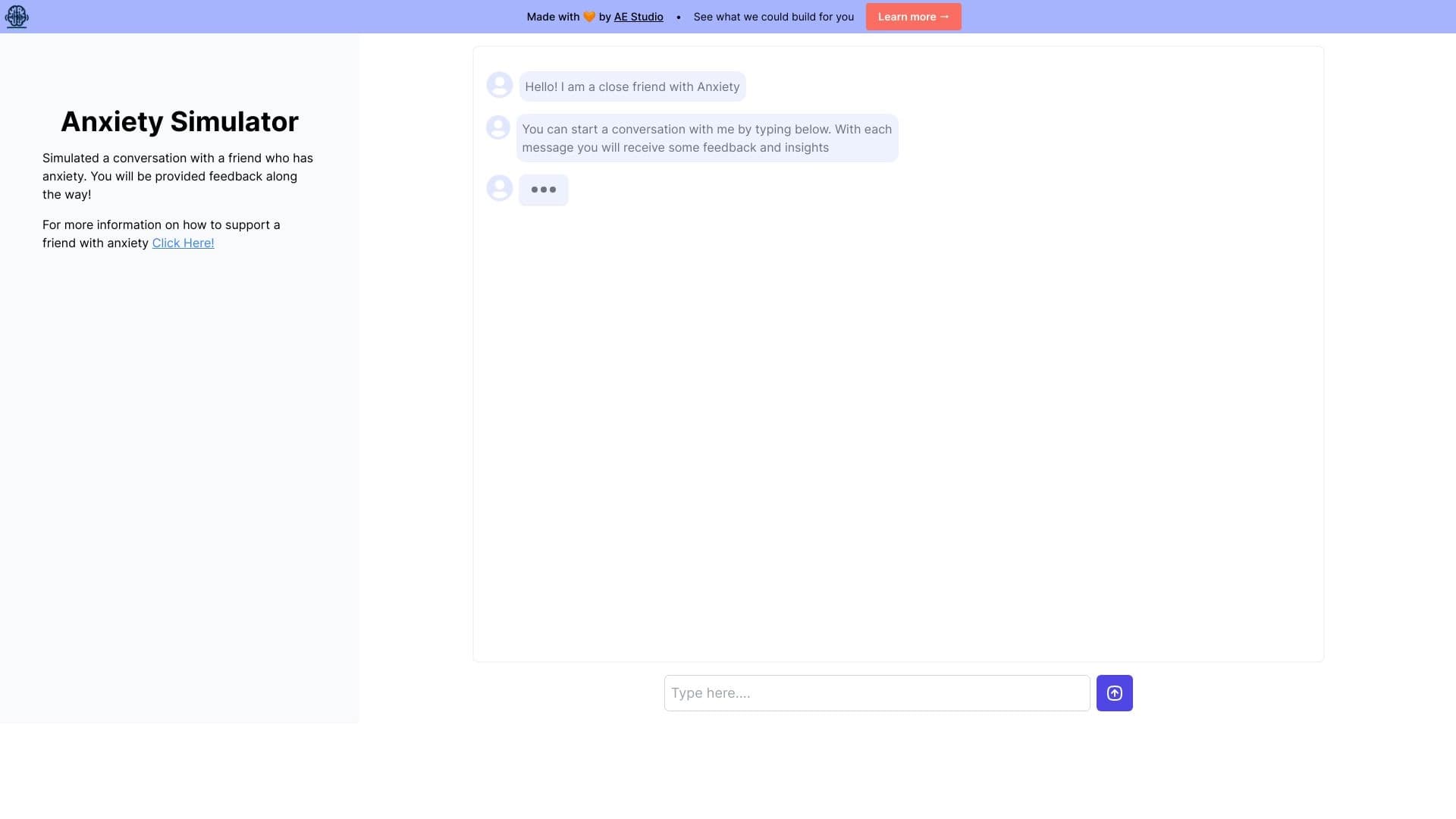
Web simulator for practicing supportive communication with a person experiencing anxiety.

AI assistant for business that helps manage tasks and automate routine through dialogue.
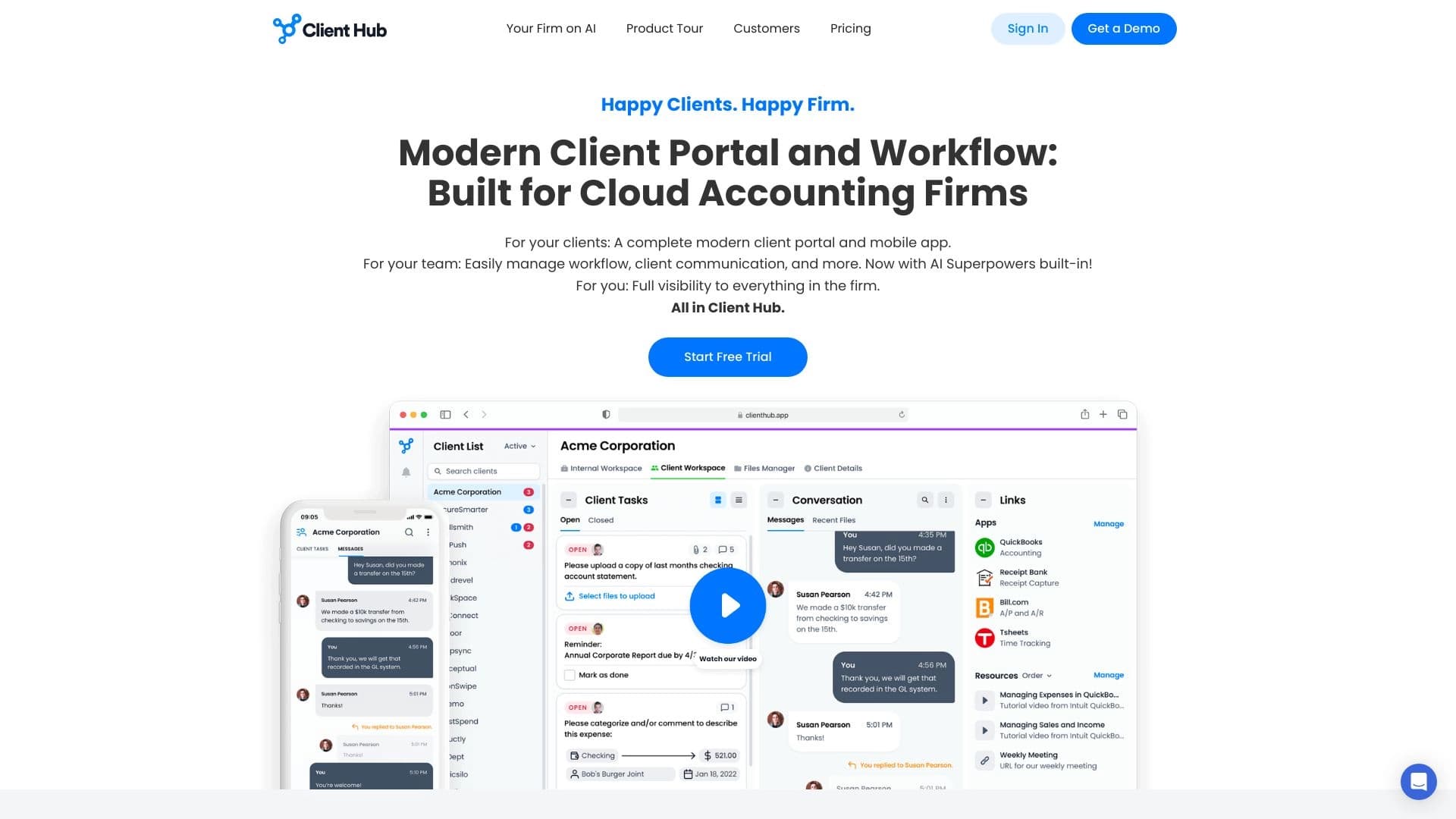
A platform for accountants that combines task management, file sharing, and client communication in a single interface.

A platform for creating and interacting with AI characters, each with their own personality and story.