
Introduction: Two Approaches to AI
The choice between Llama 3.1 and ChatGPT-4 is not just a comparison of two chatbots, but a choice between two philosophies of building AI. Meta's model is an open system that can be adapted to your needs, while OpenAI's development is a closed service designed for convenience and versatility. To understand which tool is right for you, it's worth looking at how they differ in practice and in which scenarios each one shines.

Performance: Logic vs. Text
When it comes to complex reasoning and problem-solving, Llama 3.1 demonstrates impressive results. It shows high accuracy in the ARC Challenge and Grade School Math benchmarks, meaning the model confidently handles logic puzzles and school-level math. Coding is also its strong suit: the open model holds its own well in tasks where precision and rule-following matter.
ChatGPT-4, for its part, works brilliantly with language. It is trained on a huge amount of data and can generate coherent, context-aware texts that are almost indistinguishable from human writing. Its strong results in text evaluation and image understanding benchmarks make it an excellent assistant for writing articles, letters, or analytical summaries. If you need not just to solve a problem, but to present the result nicely, ChatGPT-4 often comes out ahead.
One might be tempted to say, "get both," but such an approach is rarely justified. Better to look at the specific task: for engineering calculations and strict logic — Llama; for creative writing and content work — ChatGPT.
Multilingualism and Language Handling
In multilingual tasks, Llama 3.1 feels more confident. Even though ChatGPT-4 also supports a large number of languages, in specialized scenarios where cultural and grammatical nuances need to be carefully considered, Meta's open model pulls ahead. This is especially noticeable when translating technical texts, working with rare languages, or building local language models.
For most everyday tasks, such as correspondence or quick translation, the difference won't be critical. But if your work involves product localization or multilingual customer support, Llama's advantage could be a decisive factor.
Customization and Integration
Here, there is a chasm between the tools. Llama 3.1 is an open-source model, which means it can be fine-tuned, have its architecture changed, and be integrated into your own systems without restrictions. Community support is informal, but it is active: many enthusiasts and companies share modifications, advice, and ready-made solutions. If you have a team of engineers, you can build a unique assistant tailored to your business processes.
ChatGPT-4 is available via API, which is convenient, but you will have to pay for customization. OpenAI provides formal support, documentation, and fine-tuning tools, but flexibility is still limited by the platform's framework. For large businesses that value stability and official agreements, this is more of a plus than a minus — you get a predictable enterprise service.
Practical advice: if you are a startup or an independent developer and want full control over the model, choose Llama. If you need a reliable out-of-the-box service with guaranteed support, choose ChatGPT.
Cost and Accessibility
From a financial standpoint, the picture is simple: Llama 3.1 is free and open source. You can run it on your own hardware or in the cloud and pay only for compute resources. This makes it an excellent choice for researchers, small teams, and anyone looking to save money.
ChatGPT-4 operates on a freemium model. The free version provides basic capabilities, while the paid subscription unlocks additional features, faster responses, and priority support. This is convenient for individual use, but for team projects with large request volumes, the bill can grow.
In the end, if your budget is limited and you are willing to dig into the details, Llama will be more economical. If you need to get results quickly without setting up infrastructure, a paid ChatGPT-4 subscription may be justified.
What to Choose: Practical Recommendations
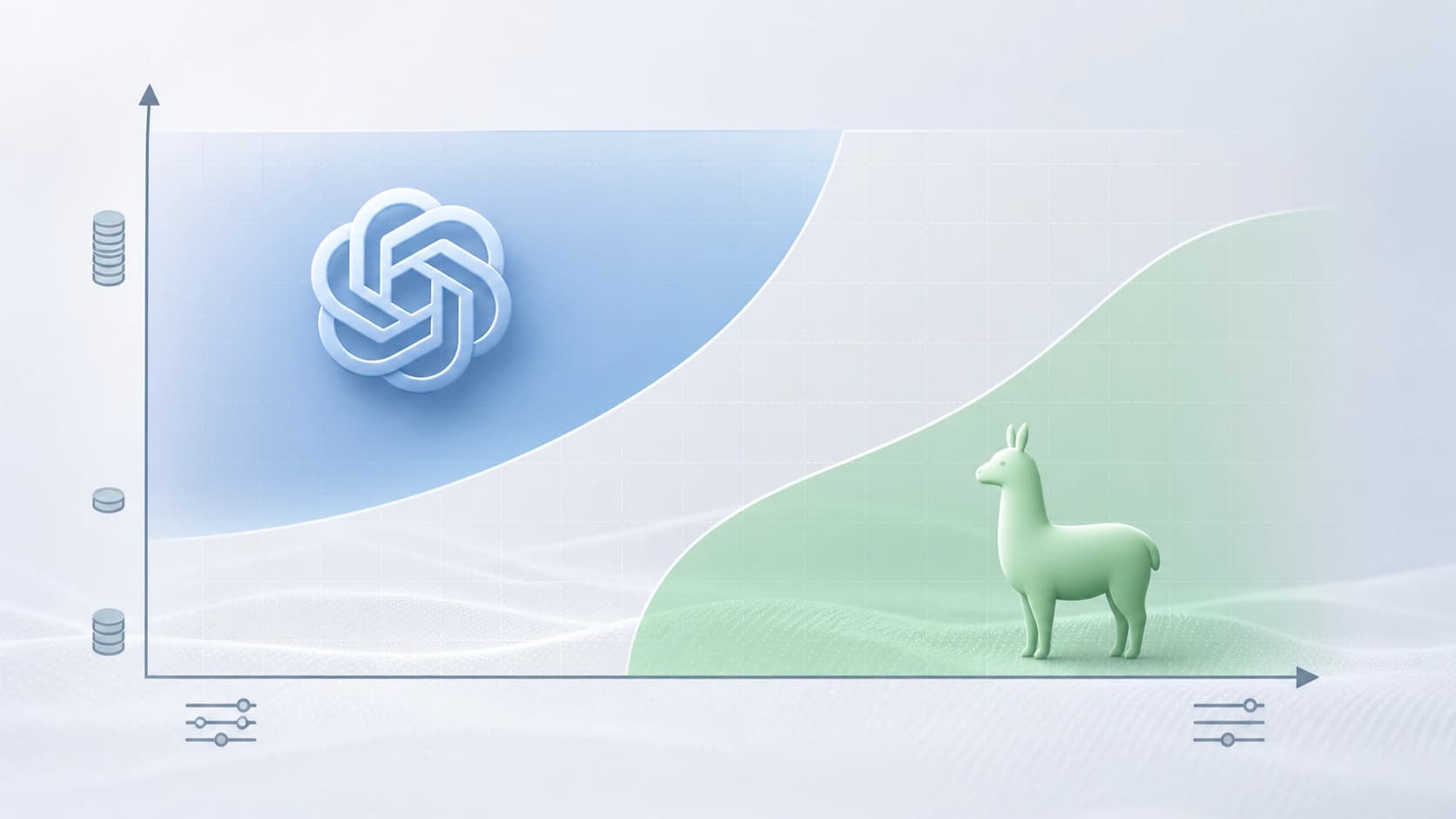
The final choice depends on your priorities. If your work involves programming, logical analysis, complex calculations, or multilingual projects, and you also need freedom of configuration, take a close look at Llama 3.1. It is better suited for technical tasks where accuracy matters more than polished text.
If you work in creative fields, write articles, scripts, develop educational courses, or support customers via chat, ChatGPT-4 will be a reliable assistant. It excels at generating natural text, structuring information, and working with visual data.
The ideal scenario is to use both tools in parallel: handle technical tasks with Llama and text-related tasks with ChatGPT. This way, you get maximum efficiency without compromises.