ElevenLabs is one of the most recognizable projects in the field of AI-powered speech generation. Over the course of a few years, the service has grown from a small startup into a full-fledged platform used by both individual users and major media companies. The developers' main bet is on the most natural possible sound of the synthesized voice, which is often indistinguishable from a recording of a real person.
In this article, we'll break down how the service works, how the pricing plans differ, what tasks it covers, and what compromises you'll have to make when using it.
Key Features of the Platform
The first question a beginner asks: what exactly does ElevenLabs do? In short — it's text-to-speech generation, voice cloning, and manipulation of existing audio files. However, behind this simple formula there are quite a few individual tools, each of which deserves its own consideration.
Text-to-Speech Generation
The basic function that most users come to the platform for. You type or paste text, choose a voice from the library, and get an audio file. This is where the service's main magic happens: algorithms place pauses, intonations, and stresses so that the result is not a mechanical reading but emotionally colored speech. What's more, this works across several languages, including Russian.
An important nuance: generation quality depends heavily on the chosen voice. Some voices sound like news anchors with very crisp articulation, while others are more conversational, with a slight rasp. Each intonation variant has its own strengths.
Voice Cloning
ElevenLabs has given a huge number of people the ability to "speak" with someone else's voice. The technology lets you train a model on a few minutes of audio and get a digital copy of the voice. After that, you can make that voice read any texts with a similar intonation.
The system splits cloning into two levels:
- Instant cloning — works after uploading a small voice sample (a couple of minutes), suitable for most amateur tasks;
- Professional cloning — a more labor-intensive process that requires a significant amount of clean audio material. It delivers much higher quality and accuracy in conveying individual speech characteristics.
At the same time, don't forget the ethical side of the issue. In many jurisdictions, using someone else's voice without consent is a violation of the law. The company has introduced a verification system and requires confirmation of rights to use a voice, although it hasn't been able to completely eliminate abuse.
 ### Working with Audio via API
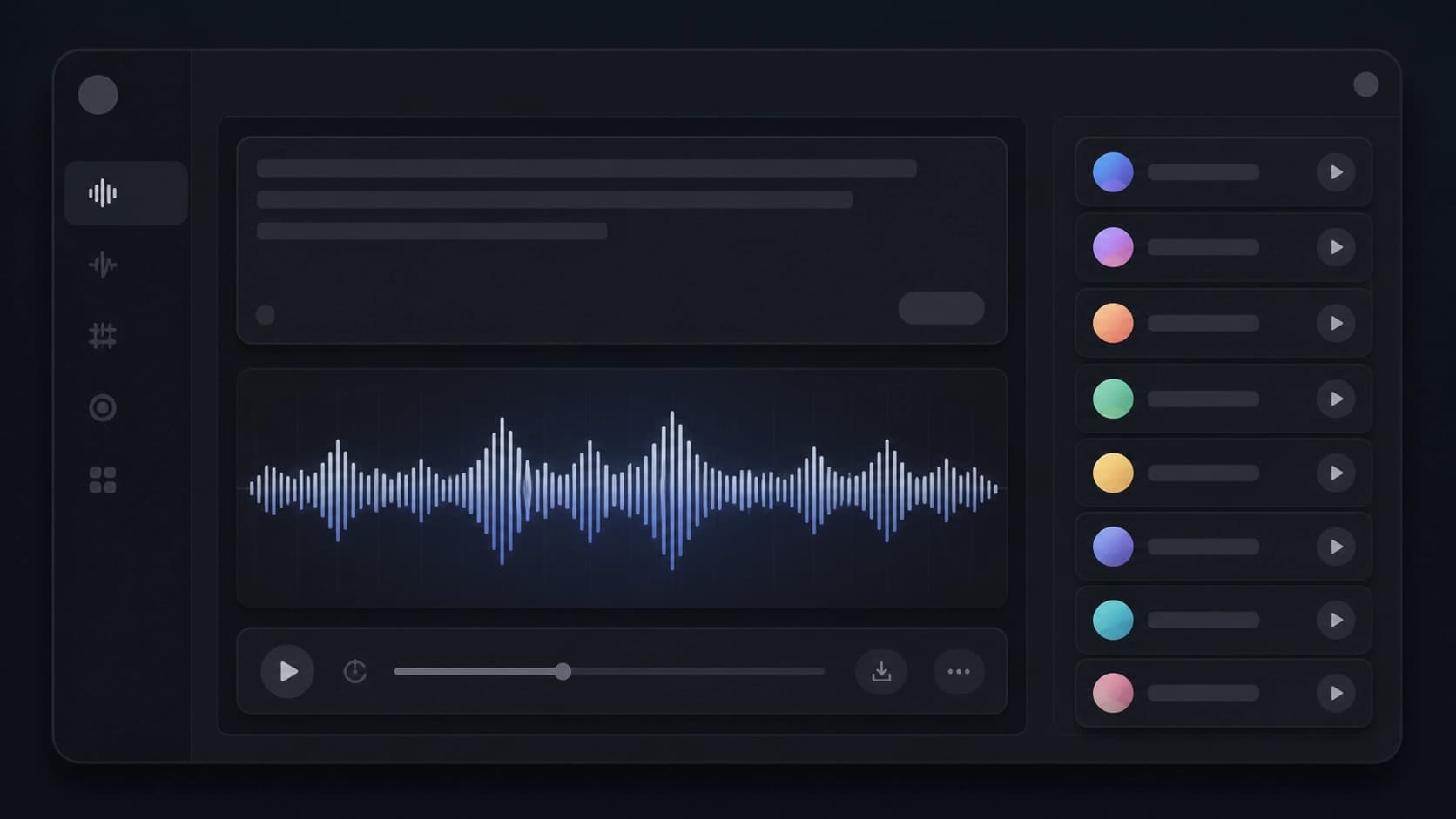
One of the main reasons developers choose ElevenLabs is its stable, well-documented API. Integration takes literally a few minutes, and the possibilities are almost limitless. You can automatically voice articles, generate dubbing subtitles, create content for mobile apps and smart speakers. What's more, the API includes a Speech-to-Speech feature: you speak into a microphone, and the system transforms your voice into any other voice from the library. This opens up interesting prospects for creating content without the need for a clean re-recording.
Catalog of Pre-Installed Voices
The service's library contains hundreds of ready-made voices that differ by age, timbre, accent, and language. Many of them are based on the voices of professional voice actors, created with their consent. This is very convenient for the workflow: you don't need to spend time training your own model if a suitable voice is already in the catalog.
Pricing Plans and Limitations
ElevenLabs' financial model is fairly transparent, but it's easy to get confused if you don't read the description. The cost is calculated based on the pricing plan and the volume of usage, measured in credits or the number of characters. The higher the plan, the cheaper it is per unit of generated audio.
Roughly, the plans can be divided into several tiers:
- Free — provides access to basic generation with limitations. Suitable for getting acquainted with the service, but the voices have watermarks and speech quirks;
- Starter paid plans — unlock the full set of voices and remove a significant portion of the limits. At this level, you can already work on small projects — YouTube videos, voiceovers for short podcasts, ad integrations;
- Professional plans — designed for teams and production studios that need a large volume of generation per month. They include advanced settings, priority task processing, and the ability to professionally clone voices without additional restrictions;
- Enterprise solutions — negotiated individually with the company's managers and tailored to the specifics of the business.
You often hear complaints about prices — but it's important to understand what you're paying for. The service spends huge computing resources on every second of audio, so generated voices can't get any cheaper while maintaining quality.
Limitations: even on paid plans, there are internal limits on the number of characters per request and the total number of generations per day. For large-scale production tasks, companies usually choose the API, where the pricing rules may differ.
Use Cases and Real-World Scenarios
ElevenLabs is already integrated into hundreds of products worldwide. Several enduring use cases stand out that really work.
Media and Content Marketing
The most obvious use case is voicing articles and news for platforms like YouTube. Authors of channels covering niche topics increasingly prefer using a synthetic voice over hiring a narrator. This saves the budget and lets you change the video's style with one click.
Audiobooks and longreads are also actively voiced with ElevenLabs. This is especially relevant for self-publishing, where authors can't afford a professional recording studio.
Gaming Industry and Interactive Content
Indie game developers use the platform to voice character dialogues. Previously, they had to either bring in amateur actors or skip character lines altogether. Now they can generate voices for dozens of characters while keeping them unique. The Speech-to-Speech feature even lets you play a character's voice in real time, paving the way for multiplayer games with live communication.
Educational Projects
Creating interactive courses, language-learning apps, and audio guides — all of this requires large amounts of text voiced by different voices. ElevenLabs helps create audio content in dozens of languages without the long search for actors and studios.
 Strengths and Weaknesses of the Service
Any technology deserves a critical look. Alongside the obvious advantages, there are also weak points that are better to know about in advance.
What Works Well
- Naturalness of speech. This is ElevenLabs' main trump card. The model correctly places stresses, controls intonation based on punctuation, and even imitates pauses for breath. To the human ear, it's almost indistinguishable from a live narrator's speech;
- Generation speed. You can