
Cognition
AI research lab that created Devin — an autonomous AI developer capable of writing code and managing repositories on its own.
Overview
Cognition
Description of the Cognition neural network
Cognition is a research AI laboratory focused on developing autonomous intelligent agents for engineering tasks. The company's main product is Devin, an AI developer capable of independently completing the full cycle of a programmer's tasks: writing code, fixing errors, running tests, and working with repositories. Unlike regular assistants, Devin acts as a full-fledged member of an engineering team, taking on routine development tasks and freeing up people's time for more complex work.
What is Devin
Devin is an autonomous AI agent that does not just suggest solutions but implements them end-to-end on its own. It can plan a sequence of actions, execute them, record results, and, if necessary, adjust its behavior based on intermediate outcomes.
Who is behind the project
Cognition Labs is a research organization focused on building a new generation of agentic systems. The team publishes open reports on Devin's performance, implementation case studies, and research in agent architectures, which makes the lab's work transparent to the community.
Cognition characteristics
| Characteristic | Value |
|---|---|
| Type | Research AI laboratory and AI developer |
| Category | Code assistants, Code generation |
| Main product | Devin — AI developer |
| Website | cognition.ai |
| Distribution model | Not specified |
Who is the Cognition neural network suitable for?
Engineering teams
Developers who write code, review it, and fix errors every day can delegate typical tasks to Devin — from refactoring to writing tests. This allows the team to focus on architecture and complex business logic.
Development managers
Tech leads and technical managers get a tool that can accelerate sprints, close technical debt, and take on experiments with new features. Devin works within existing team processes and does not require workflow restructuring.
Enterprises and large teams
Organizations interested in scaling development without proportionally increasing headcount can integrate Devin into their pipelines. The AI agent is suitable for automating repetitive operations and supporting infrastructure.
How to use the Cognition neural network?
Setting a task
The user formulates a task in natural language or as a technical description. Devin accepts the request and proceeds to execute it without requiring intermediate clarifications.
Step-by-step execution and documentation
The AI independently plans steps, writes code, fixes errors as it works, and runs tests. Every decision is documented, and progress is displayed in a dedicated interface — the user always sees what stage the task is at.
Analyzing results
After completing the work, Devin presents a report on the actions taken, test results, and the final state of the code. The interface allows analyzing the efficiency of the AI agent and, if necessary, adjusting subsequent tasks.
Main functions of Cognition
Writing code and fixing errors
Devin can generate code based on the assigned task, as well as find and fix errors in existing code. It acts as a full-fledged developer who does not stop at the first failure but looks for alternative solutions.
Working with repositories and infrastructure
The AI agent can interact with version control systems, manage branches, make commits, and work with the project's infrastructure components. This makes it suitable for real production tasks.
Documenting decisions and reporting
Devin records and explains every step — from choosing an approach to specific code changes. The progress tracking and results review interface helps the team understand what the agent did and why.
Integration into team processes
For enterprises, Devin can be embedded into existing workflows. This allows using the AI agent as an additional resource within an already configured development cycle.
Advantages of Cognition
A full-fledged team member
Devin works not as a hint provider but as an independent executor. It takes a task, completes it from start to finish, and returns a ready result — this is the key difference from regular code assistants.
Autonomous problem-solving
The AI developer does not require constant supervision. It plans actions on its own, fixes errors, and adapts to intermediate results. The user only sets the goal and checks the outcome.
Transparency and openness
Cognition publishes reports on Devin's performance, real implementation cases, and research in agent systems. This allows the community to evaluate the tool's real capabilities rather than rely on promises.
Integration without breaking processes
The tool is designed to work within existing team processes. It does not need to be implemented as a separate system — Devin fits into the current development workflow.
Disadvantages of Cognition
At present, open sources do not contain enough information about Cognition's disadvantages. Since the distribution model is not specified, it is impossible to assess the tool's affordability for small teams or individual developers. There is also no data on support for specific programming languages and frameworks, which may limit Devin's applicability in highly specialized projects.
What tasks does Cognition solve
Automation of typical developer tasks
Devin takes over writing code, fixing errors, and running tests — the work that takes up a significant portion of any programmer's time. This helps unload the team and speed up routine processes.
Accelerating sprints and reducing technical debt
The AI agent can work in parallel on tasks that accumulate in the backlog: refactoring, optimization, minor fixes. This helps close sprints faster and gradually reduce technical debt.
Experimenting with new features
Devin can be used for rapid prototyping and experiments. Instead of distracting developers to test hypotheses, the team assigns the agent to implement a prototype and evaluate the result.
Analyzing the efficiency of AI agents
In addition to performing tasks, Cognition provides tools for analyzing how effectively Devin handles work. This is useful for teams that want to assess the return on implementing AI agents in real projects.
Cognition pricing
There is no information about Cognition and Devin pricing in open sources. The distribution model is also not specified, so it is impossible to determine whether the product is paid, freemium, or subscription-based. For up-to-date information, it is recommended to visit the official website cognition.ai.
Cognition terms of use
Specific terms of use for Cognition are not publicly disclosed. The lab's website presents general information about the product and implementation cases, but detailed license agreements, privacy policy, or terms of service have not been found in available sources.
Cognition availability
Devin is available through the official website cognition.ai. Detailed information about geographic restrictions, supported platforms, and access methods has not been published at this time. Based on the product category (code assistant), working with it requires a repository with source code and access to development infrastructure.
How Cognition differs from analogues
Autonomy instead of hints
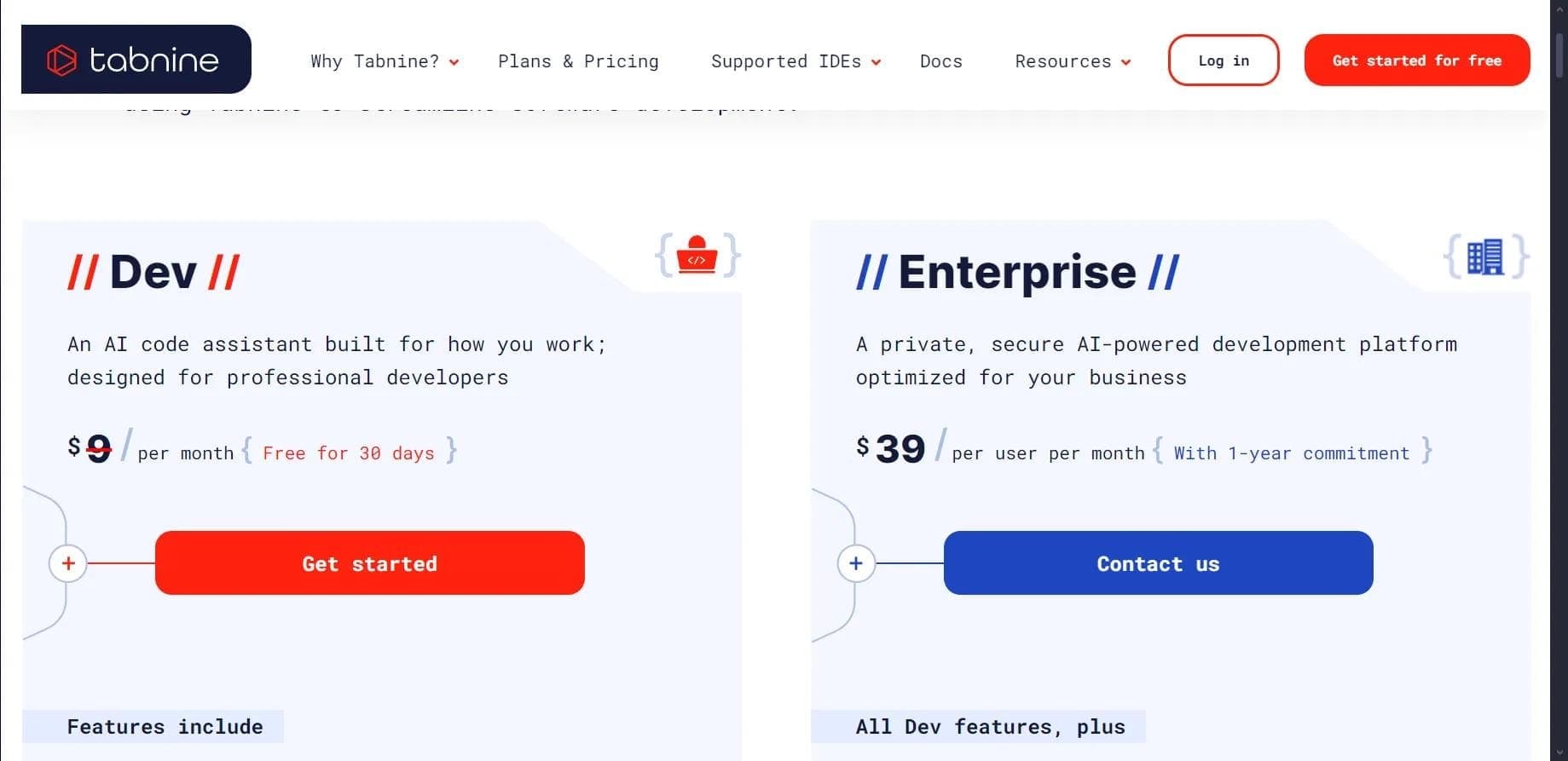
Most AI code assistants (for example, GitHub Copilot or Tabnine) work in a hint mode: they suggest code fragments or autocompletions, but the final decision remains with the human. Cognition went further — Devin independently completes the task from start to finish, without constant developer involvement.
A full-fledged engineering role
Unlike tools that help with individual stages (writing code, finding bugs), Devin covers the entire cycle: planning, implementation, testing, working with the repository, and documentation. It acts as a team member rather than an auxiliary plugin.
Research transparency
Cognition publishes the results of its work — performance reports, implementation cases, and research. This favorably distinguishes the lab from many commercial projects that prefer not to disclose the real metrics of their AI systems.
Conclusion
Cognition is a research AI laboratory that created Devin, an autonomous AI developer capable of completely replacing a human on typical programming tasks. Unlike traditional assistants, Devin does not offer hints but independently writes code, fixes errors, runs tests, and manages repositories. The tool is aimed at engineering teams, development managers, and enterprises seeking to automate routine processes and accelerate product delivery. At the same time, many details — pricing, terms of use, supported technologies — remain undisclosed, which makes it difficult to fully evaluate the product without referring to official sources.