
Codestral
Specialized Mistral AI model for writing, analyzing, and auto-completing code, supporting over 80 programming languages.
Overview
Codestral
Description of the Codestral neural network
Codestral is a specialized language model from Mistral AI, designed exclusively for programming-related tasks. Unlike general-purpose LLMs, Codestral focuses on writing, analyzing, autocompleting, and refactoring code. The model is trained on more than 80 billion tokens of code and supports over 80 programming languages, making it one of the most multilingual tools in its niche.
Codestral is available both via API and for local deployment, giving developers flexibility in how they use it. The model is distributed under a freemium model: basic functionality is available for free, while extended features require a subscription.
Codestral characteristics
| Characteristic | Value |
|---|---|
| Developer | Mistral AI |
| Model type | Specialized LLM for code |
| Context window | Up to 128K tokens |
| Training data volume | 80+ billion tokens of code |
| Supported programming languages | Over 80 |
| Distribution model | Freemium |
| Ways of use | API, local deployment, cloud |
| Tool categories | Code assistants, Code generation, For developers, Code refactoring |
Who is the Codestral neural network suitable for?
Solo developers and freelancers
Codestral will be useful for programmers who work independently and want to speed up the code writing process, reduce the number of errors, and quickly understand unfamiliar fragments. The free tier allows you to evaluate the model's capabilities without financial investment.
Development teams and IT companies
For production environments and integration into workflows, paid API access is suitable. Codestral can be embedded into IDEs, CI/CD pipelines, or used for automatic test and documentation generation.
Researchers and students
The model can act as a mentor: explaining code, suggesting optimizations, and helping with refactoring learning projects. Support for dozens of languages makes it a versatile tool for learning programming.
How to use the Codestral neural network?
Via the Mistral AI API
The most common way is integration through the official API. The developer sends a request with a code snippet or a task description, and the model returns generated or refined code. The API is suitable for embedding into web services, bots, and code editors.
Local deployment
Codestral can be run on your own servers or workstations. This gives full control over data: code does not leave the company's infrastructure, which is important when working with closed projects. Local use also allows you to fine-tune the model for specific tasks.
In cloud environments
Mistral AI provides the ability to run the model on cloud platforms. This is a compromise between the speed of local deployment and the simplicity of a cloud API — suitable for teams that want to avoid the costs of their own servers.
Main functions of Codestral
Code autocompletion
The model can predict and complete code in real time by analyzing the current context. This speeds up writing typical constructs and reduces the likelihood of syntax errors.
Refactoring and optimization
Codestral can analyze existing code and suggest improvements: simplifying logic, reducing duplication, improving readability. This feature is especially useful when working with legacy projects.
Code generation from description
Simply describe a task in natural language and the model will create a working code snippet in the desired programming language. This is convenient for rapid prototyping and automating routine tasks.
Code explanation
Codestral can explain what a particular block of code does, highlight potentially problematic places, and suggest alternative implementations. This makes it useful for code review and learning.
Advantages of Codestral
- Specialization in code. Unlike general-purpose models, Codestral is trained primarily on code data, which gives more accurate and relevant results for programming tasks.
- Support for 80+ languages. Huge coverage of programming languages — from popular ones (Python, JavaScript, Java) to rare and highly specialized ones.
- Large context window. Up to 128K tokens allows working with large files, entire modules, or even small projects within a single session.
- Deployment flexibility. API, locally, or in the cloud — the developer chooses the appropriate method without being tied to a single option.
- Free entry threshold. The ability to start using without payment lowers the barrier to getting familiar and testing.
Disadvantages of Codestral
- Limitations of the free tier. Full work with large volumes of code or frequent requests will require a paid subscription.
- Internet dependency when using the API. With local deployment, this drawback is removed, but not all developers have the ability to run the model on their own hardware.
- Lack of fine-tuning for a specific stack. Despite fine-tuning, the model may give suboptimal advice for very specific frameworks or company-internal libraries.
- Limited multimodality. Codestral is designed only for working with code and text — it does not analyze images, diagrams, or interface screenshots.
What tasks does Codestral solve
- Code generation and autocompletion. Helps write new modules, functions, and classes faster.
- Refactoring and optimization of existing code. Improves readability, performance, and maintainability of the codebase.
- Code explanation and documentation. Generates comments, descriptions, and technical documentation.
- Porting code between languages. Converting fragments from one programming language to another.
- Finding errors and potential vulnerabilities. Analyzing code for common bugs and unsafe constructs.
- Learning and onboarding. Helping new developers understand a project's codebase.
Codestral pricing
Codestral is distributed under a freemium model. Basic functionality is available for free — this is enough for getting familiar, small projects, and learning. For commercial use, higher request frequency, and work with large volumes of code, a paid subscription is provided, with a starting price of $15 per month. Exact terms of pricing plans and free access limits are specified on the official Mistral AI website.
Codestral terms of use
The model is available both in an open-weight version for local running and in a commercial version — via API with a paid subscription. Users can use Codestral in their own projects, integrate it into commercial products, and refine it for specific tasks using fine-tuning. With local deployment, data remains on the user's side, which meets security and code confidentiality requirements. For API use, standard Mistral AI terms apply, including restrictions on malicious use and compliance with license agreements.
Codestral availability
Codestral is available through the official Mistral AI API, and can also be deployed locally on suitable hardware or in cloud infrastructure. The date the model was added to the catalog is May 13, 2025. At the time of writing, Codestral is one of the company's current specialized models. To check current availability regions, supported platforms, and specific versions, it is recommended to refer to the official Mistral AI documentation.
How Codestral differs from analogs
Specialization vs. universality
Codestral's analogs — such as Claude Fable 5, Gemini 3 Pro, or Claude Sonnet 4.5 — are general-purpose language models that can also work with code, but code is not their primary focus. Codestral, in contrast, is initially trained primarily on code data. This means that for autocompletion, refactoring, and code generation tasks, it can produce more accurate results, while general-purpose models win in breadth of application and multimodal capabilities.
Mistral AI ecosystem
Codestral is part of the Mistral AI family of models, which also includes Mistral 7B and Mixtral 8x7B (compact open-weight models), Mistral Medium and Mistral Large (general-purpose LLMs), Pixtral (multimodal models), Voxtral (speech models), and Mistral Embed (vector embeddings). Developers can combine Codestral with other models in the ecosystem to build complete solutions.
Conclusion
Codestral is a specialized model from Mistral AI created for development tasks: autocompletion, refactoring, code generation, and explanation. Thanks to training on more than 80 billion tokens and support for over 80 programming languages, it is a versatile tool for programmers of any level. The model is available in free and paid versions, allowing you to start using it without investment and switch to a subscription as needs grow. Codestral does not replace general-purpose LLMs, but in its niche — working with code — it can be a more effective alternative.
Pricing
Frequently asked questions
See also

Open-source AI agent for developers, available in the terminal, IDE, and as a desktop application.

AI-powered code editor that analyzes your entire project and helps you write, rewrite, and optimize code.

AI assistant for programmers, working through your own API key and supporting popular language models.
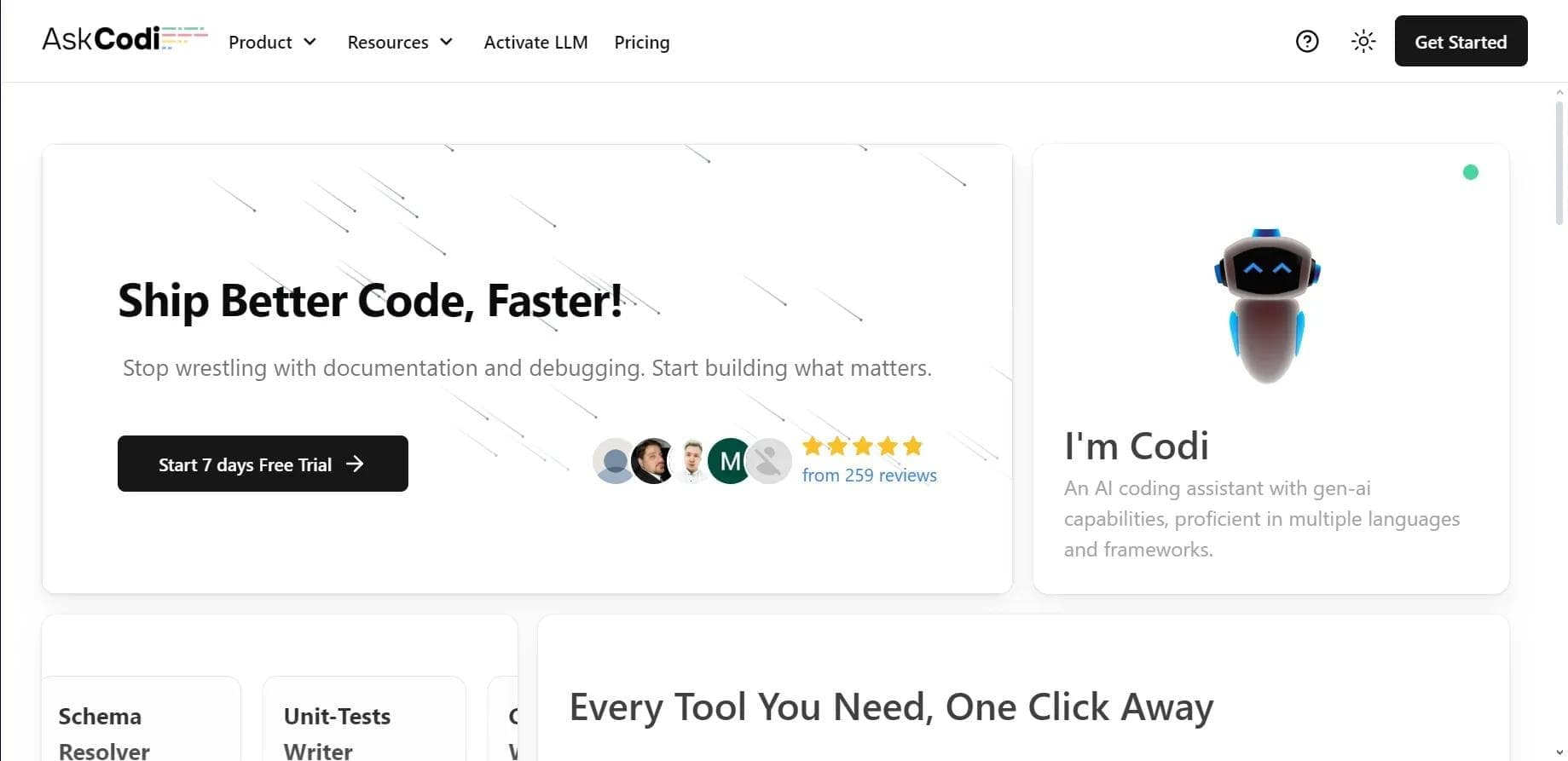

AI assistant for developers that generates, explains, and refactors code, as well as creates documentation and tests from natural language descriptions.
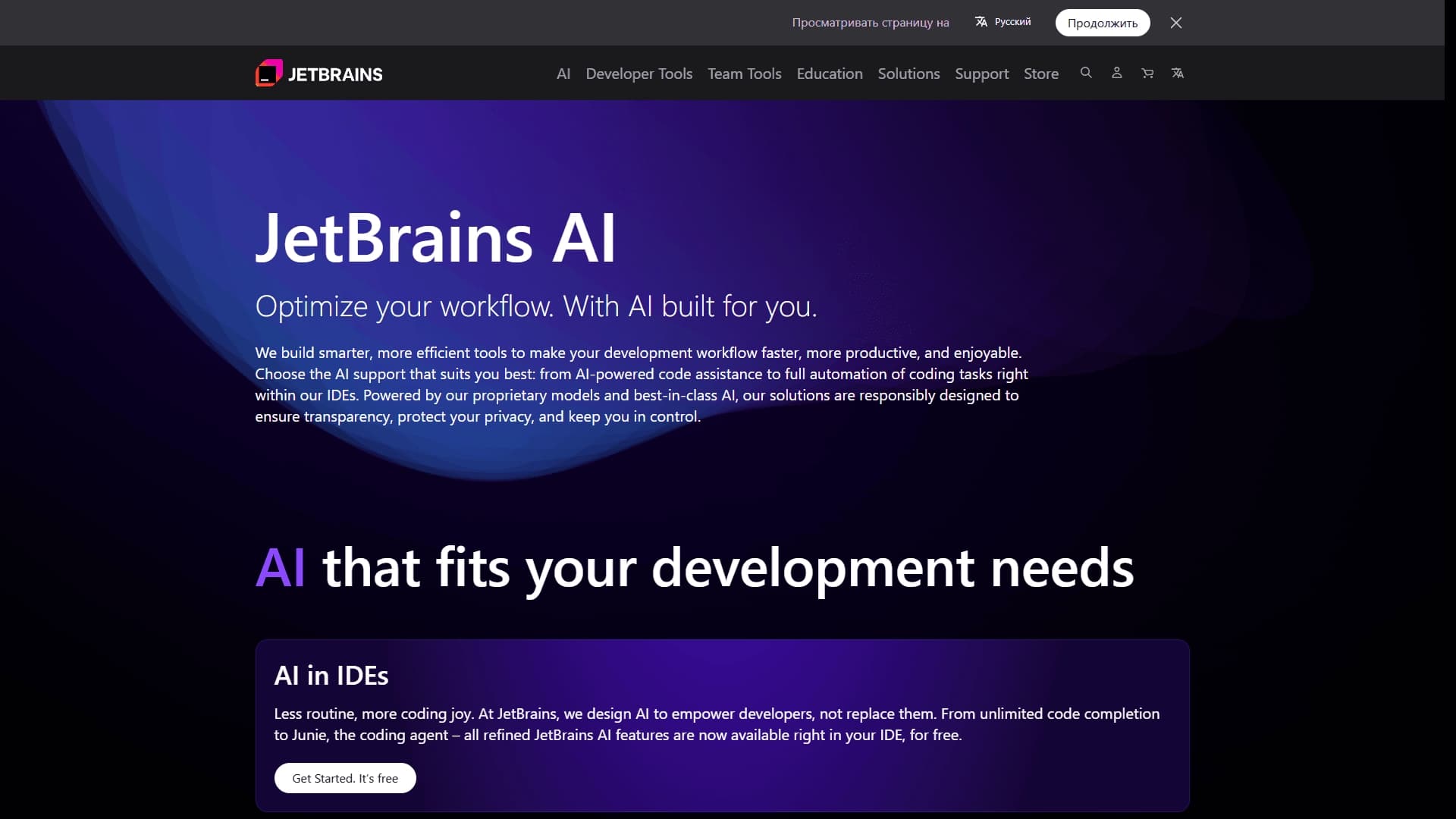
A set of AI tools built into JetBrains IDEs to help with writing, refactoring, and understanding code.
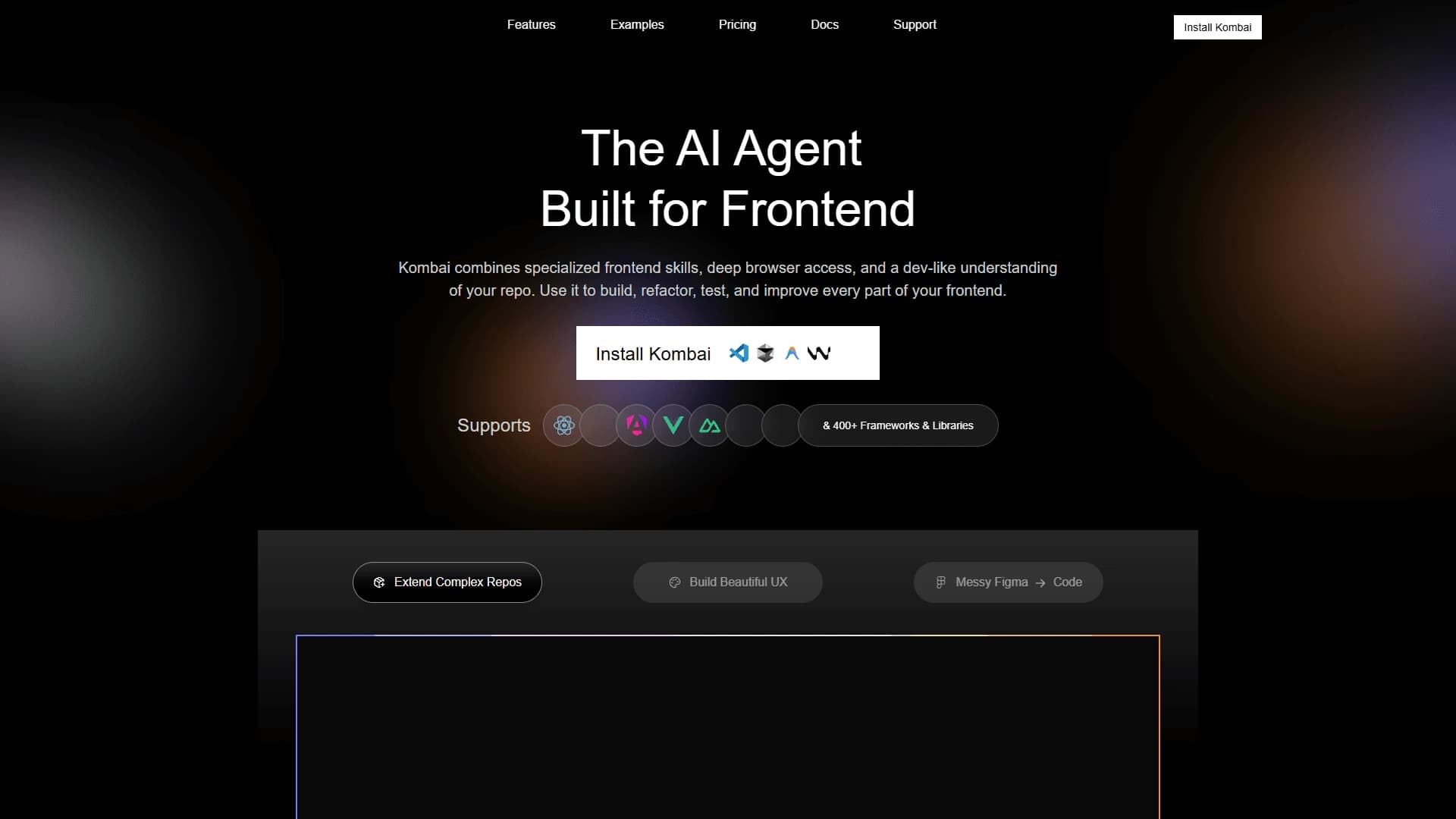
AI tool for automatically converting layouts from Figma into HTML, CSS, and React components, as well as for creating and refactoring interfaces.
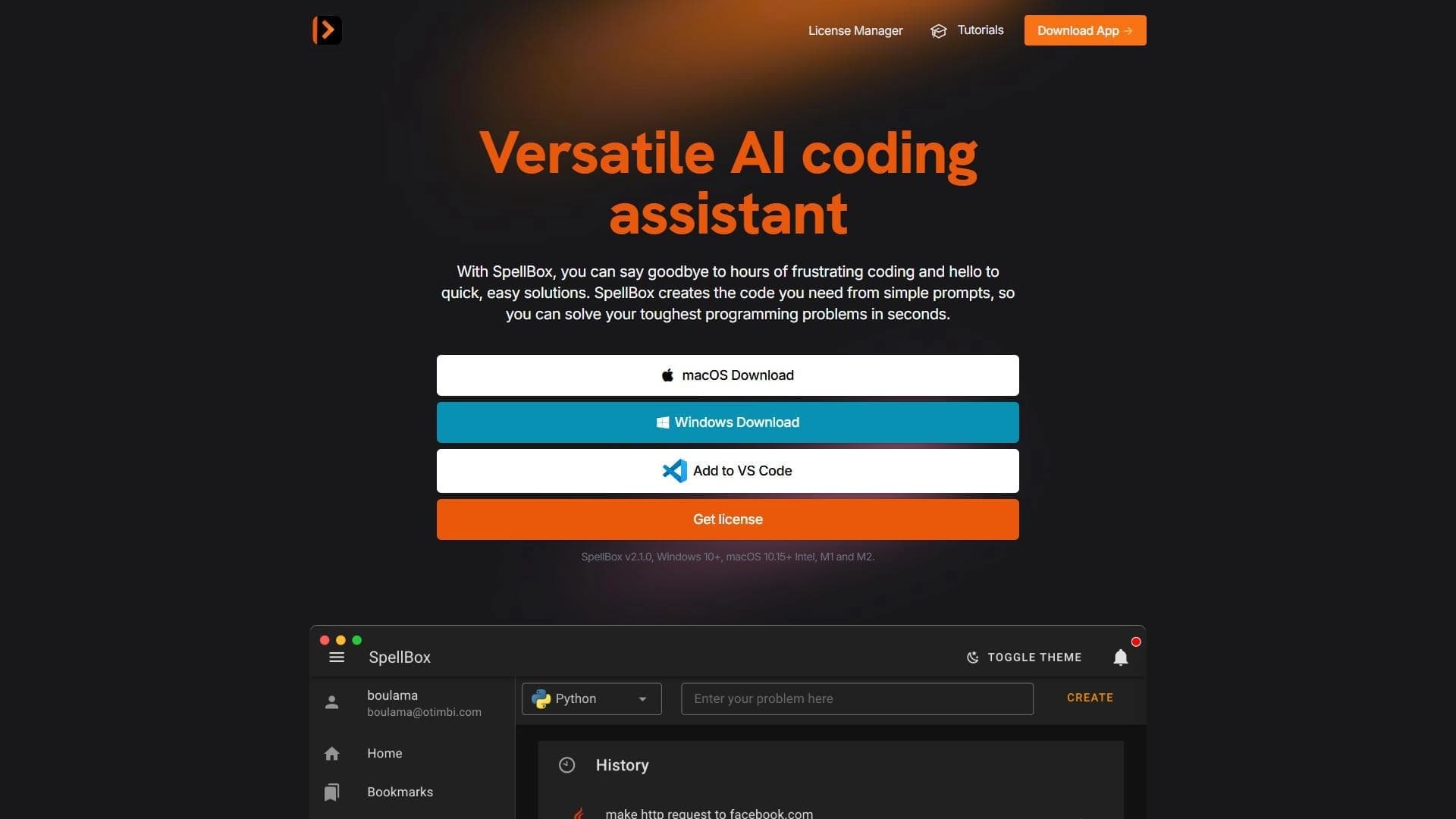

Neural network for generating, explaining, and fixing program code in various programming languages.

AI assistant for developers that automates routine programming tasks.