
AutoGen
AI agent from Microsoft that generates code, documents, and other materials based on text prompts.
Overview
AutoGen
Description of the AutoGen neural network
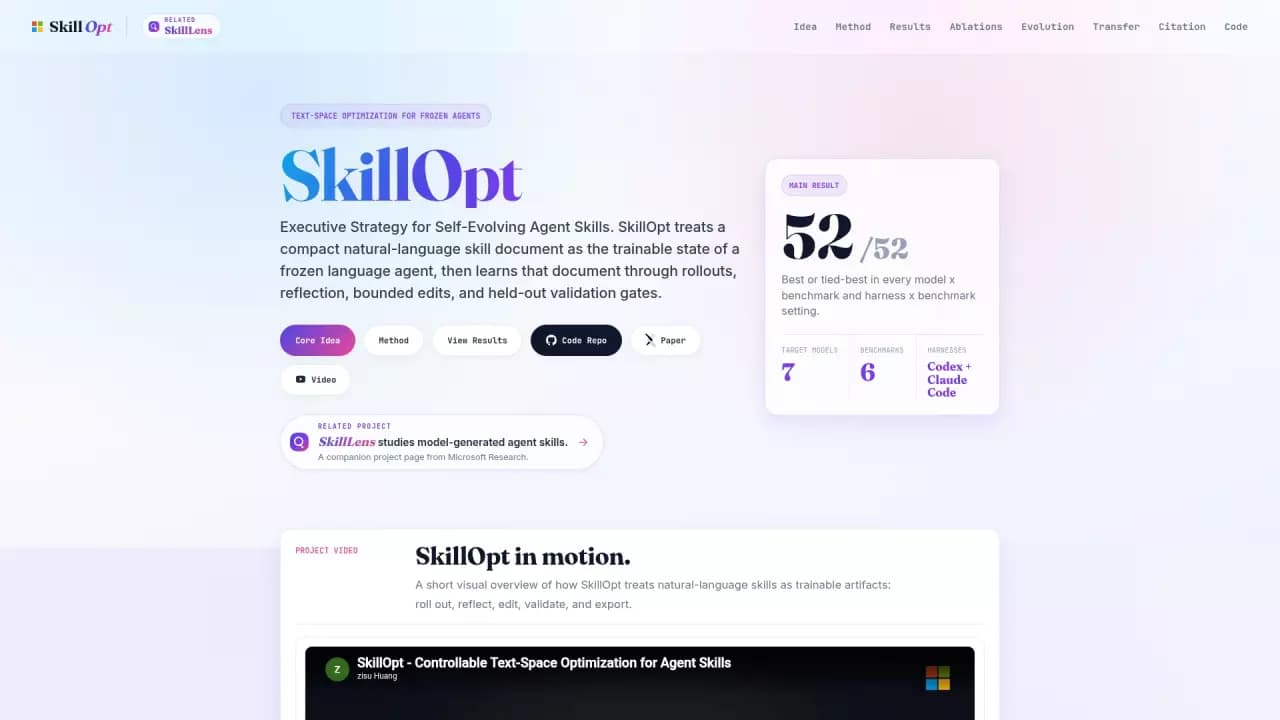
AutoGen is an AI agent from Microsoft that generates code, documents, and other content from simple text prompts. The tool allows automating routine development tasks by applying language models to fulfill user requests.
The project is directly related to Microsoft Research's work in the field of optimizing language agents. Instead of fine-tuning the model by changing its weights, AutoGen offers a different approach: the agent's text instruction (skill) is optimized based on analysis of its work results. The agent performs tasks, and a special optimizer model examines the mistakes made and suggests targeted edits, which are accepted only if they actually improve the final result.
The project's key feature is open source code. The resulting skill can be exported to a single best_skill.md file, which is then used to deploy the agent in new environments and on other models.
AutoGen characteristics
| Characteristic | Value |
|---|---|
| Type | Research project / tool for optimizing language agent skills |
| Categories | Developer tools, AI agent, Research |
| Developer | Microsoft Research |
| Code availability | Open source |
| Supported models | GPT-5.5, GPT-5.4, GPT-5.4-mini, GPT-5.4-nano, GPT-5.2, Qwen3.6-35B-A3B, Qwen3.5-4B |
| Publication date in catalog | 26-05-2026 |
| Verification date | 15.06.2026 |
| Distribution model | Not specified |
Who is the AutoGen neural network suitable for?
Developers
Suitable for developers who work with language agents and want to improve their behavior without retraining or changing model weights. The tool helps automate routine development tasks and improve agent efficiency in everyday work.
Researchers
Will be useful for researchers in machine learning and natural language processing who study ways to optimize language agents by changing text instructions. The open source code allows them to understand the algorithm in detail and adapt it to their own experiments.
How to use the AutoGen neural network?
Getting started with the project
You need to visit the project page on GitHub and get familiar with the open source code, the accompanying article, and the video overview. This will help you understand how the optimization algorithm works and what capabilities it provides.
The skill optimization process
The work revolves around an iterative loop: the agent is run on a set of tasks, results are collected, the optimizer model analyzes successes and failures, and then makes targeted edits to the instruction — adding, removing, or replacing individual elements.
Export and deployment
The final skill is exported to a single best_skill.md file. Only this file is needed to deploy the agent — no additional model weights or optimizer memory are required, which simplifies transferring the skill between execution environments.
Main functions of AutoGen
Agent instruction optimization
The project allows improving the behavior of a frozen language agent by changing only the text instruction (skill), without changing the model weights.
Iterative learning loop
A full-fledged learning algorithm with forward and backward passes is implemented: the agent works on tasks, the results are collected and analyzed by the optimizer model, which suggests targeted edits for improvement.
Edit control mechanism
Only those changes that actually improve the result on a held-out set are selected. The edit budget mechanism prevents all patterns from being completely rewritten by a single successful change, and rejected edits are used as negative feedback for the optimizer.
Skill portability
The resulting skill can be exported to a single file and transferred between different models and execution environments without loss of effectiveness.
Advantages of AutoGen
High performance
The project achieved the best or jointly best result in 52 of 52 model, benchmark, and execution environment combinations. The average gain for GPT-5.5 was plus 23.5 percentage points compared to running without a skill.
Skill portability
A skill trained for one model transfers to another — for example, when transferring from GPT-5.4 to GPT-5.4-nano, the gain was 15.2 points. A skill from the Codex environment transfers to Claude Code with a gain of 31.8 points on SpreadsheetBench.
Ease of deployment
Only one skill file is needed to deploy the agent, without additional weights or optimizer memory. The open source is accompanied by an article and video overview, which makes it easier to get acquainted with the project.
Disadvantages of AutoGen
The project is aimed primarily at a technical audience: full-fledged work with it requires knowledge in development and an understanding of how language agents work. The interface and the optimizer model are available only in English, which may limit the range of users.
Prices and registration terms are not officially specified; however, the project has open source code, which implies free use. The disadvantages section contains limited data in the source materials.
What tasks does AutoGen solve?
Improving language agent behavior
The tool allows improving the quality of a language agent's work without changing its weights, which is especially valuable when model retraining is impossible or impractical.
Optimizing text instructions
The project solves the problem of optimizing an agent's skill based on analysis of its work results, automating a process that would require significant effort and time if done manually.
AutoGen prices
The exact cost of use is not specified. The project is distributed with open source code, which implies the possibility of free use. For up-to-date pricing information, it is recommended to refer to the project page on GitHub.
AutoGen terms of use
The project has open source code and is hosted on GitHub. Whether registration is required for use is not specified in the source data. It is recommended to review the terms on the official project page.
AutoGen availability
AutoGen is available as an open Microsoft Research project on GitHub. The interface and optimizer model language is English. Use does not require a VPN. The project is available for study and running on current language models, including GPT-5.5, GPT-5.4, GPT-5.4-mini, GPT-5.4-nano, GPT-5.2, Qwen3.6-35B-A3B, and Qwen3.5-4B.
How AutoGen differs from alternatives
Unlike simple prompt self-correction, AutoGen implements a full-fledged learning algorithm with forward and backward passes, an edit budget, and negative feedback. This approach allows not just correcting the instruction, but systematically improving the agent's skill with verification of the effectiveness of each change on a held-out set.
An additional difference is the ability to transfer the resulting skill between different models and execution environments, which makes the project a flexible tool for those who work with several language models at once or plan to change them in the future.
Conclusion
AutoGen is a Microsoft Research project that allows effectively improving the skills of language agents by optimizing the text instruction rather than the model itself. It shows impressive results on benchmarks, supports skill transfer between different models and execution environments. Thanks to the open source code and accompanying materials, the project is available for study to both developers and researchers interested in the practical application of language agent optimization technology.
Frequently asked questions
See also

Autonomous cloud-based AI agent that independently plans and executes complex multi-step tasks based on a textual description of the goal.

Multimodal neural network from Google that processes text, images, code, and audio in a conversational format.
An open-source desktop AI agent that stores conversation history in a local knowledge base and automatically pulls relevant context into new discussions.

A set of built-in AI features in the Figma editor for automating routine designer tasks.
A service that translates legal documents from professional legal language into plain, easy-to-understand text.
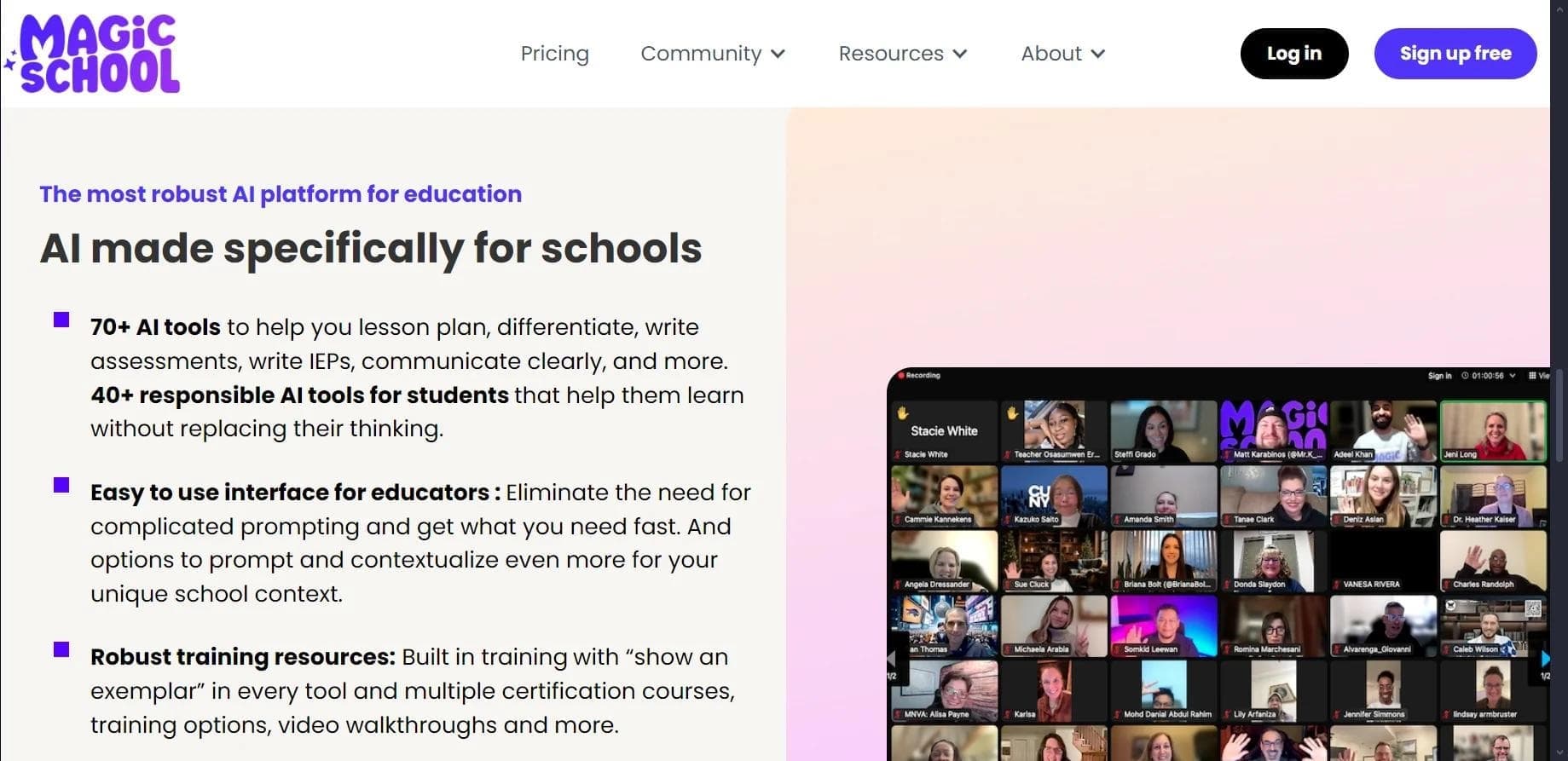

AI platform for automating educational tasks for teachers and students.

A community for daily discovery and discussion of new technology products.
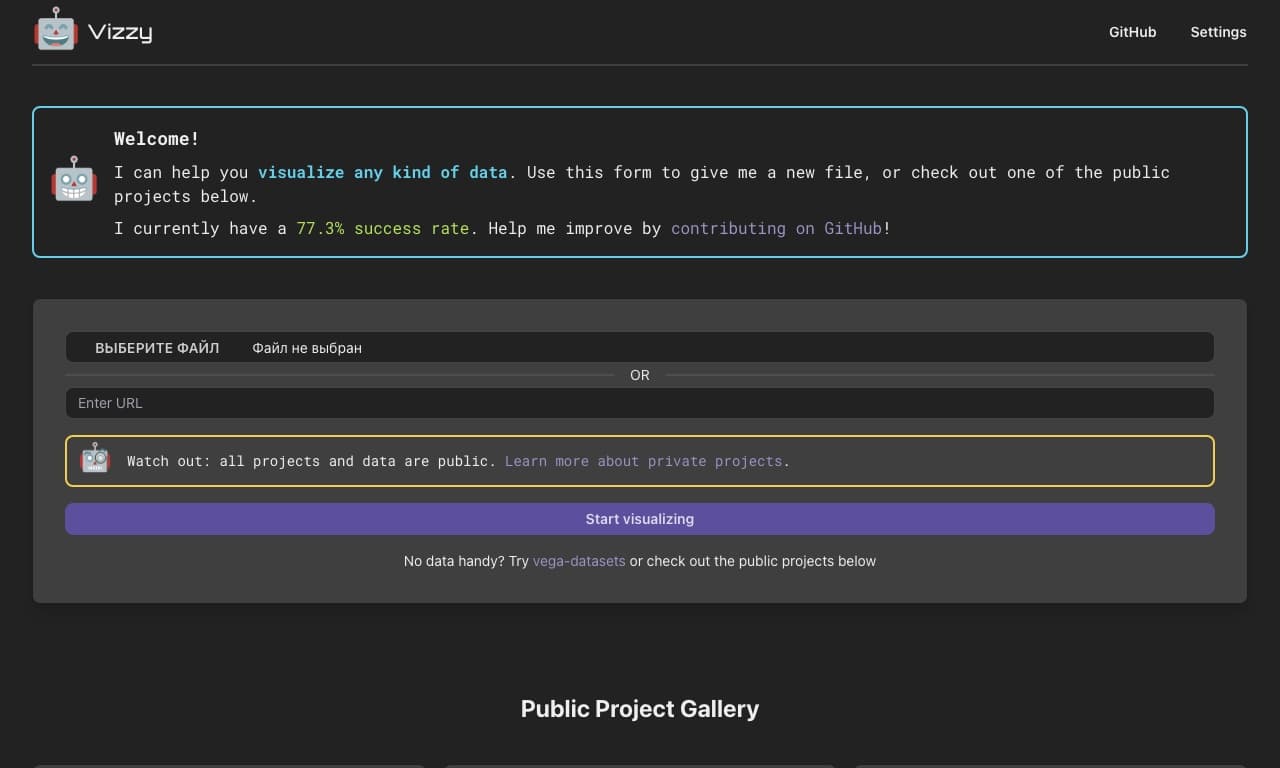
AI tool for rapid data visualization via OpenAI API, transforming heterogeneous datasets into detailed graphical representations.