

Abacus AI
A platform for creating and deploying AI applications, automating workflows, and analyzing data without deep technical knowledge.
Overview
Abacus AI
Abacus AI Overview
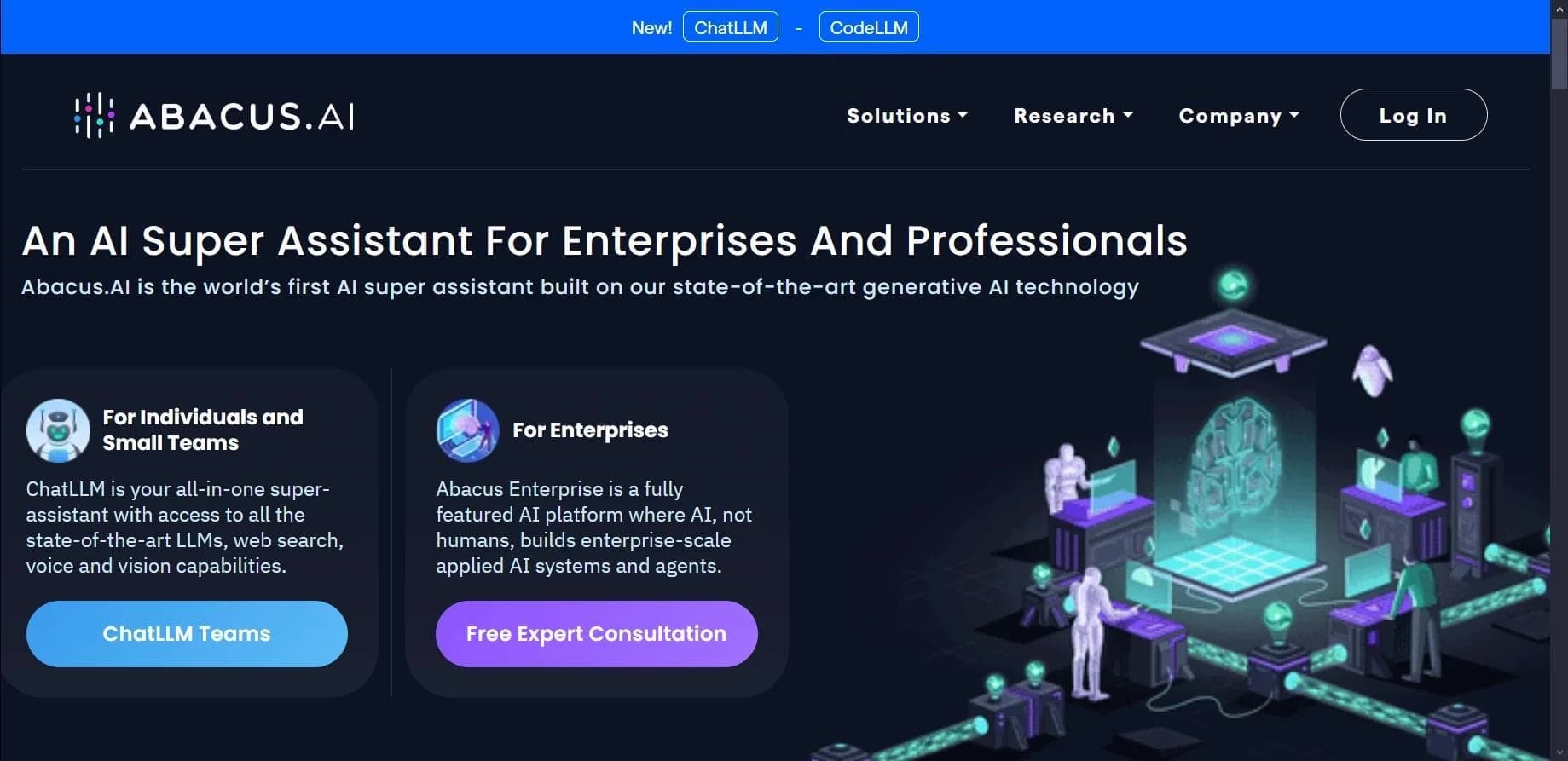
Abacus AI is an enterprise platform for building and deploying artificial intelligence systems that allows you to integrate machine learning into business processes without deep technical knowledge. The platform automates the entire MLOps lifecycle: from model design and training to refinement and integration with existing systems via APIs and SDKs.
The service's key feature is an approach where the user simply describes a task in words, and the system independently writes code, integrates services, tests the result, and delivers a ready-made solution. With Abacus AI, you can create chatbots, AI agents, recommendation and forecasting systems, as well as tools for data analysis, computer vision, and natural language processing.
The platform is available in several versions: a web interface, a desktop application for local work, and an enterprise version for large companies with extended generative AI and structured machine learning capabilities.
Abacus AI Features
| Characteristic | Value |
|---|---|
| Type | AI platform / universal assistant, platform for automating and deploying AI systems |
| Categories | AI assistants, automation, business, code generation, No-code / Low-code, data and analytics, development |
| Business model | Freemium |
| Developer | Abacus.AI |
| Platforms | Web, Linux, macOS, Windows |
| Monthly visits | 388.9K |
| Page rating | 4.4 |
| Editorial rating | 8.6 out of 10 |
| Availability | Online platform + desktop version |
| Registration required | Yes |
Who Is Abacus AI Suitable For?
Developers and Technical Specialists
The platform is primarily aimed at developers, data scientists, ML engineers, and enterprise IT teams that need a comprehensive tool for building and deploying machine learning models in a corporate environment. Model customization, Python support, and API integration make the service useful in complex technical projects.
Non-Technical Specialists
At the same time, Abacus AI is also designed for those who are not programmers. Marketers, analysts, entrepreneurs, and managers can use the platform to automate workflows, analyze data, and create ready-made products. The system handles the technical side: users only need to describe a task in words to get a working result.
Companies and Startups
The service suits enterprises and young projects that want to quickly deploy AI agents and systems for marketing, planning, or data analysis, including when resources are limited. The enterprise version offers extended capabilities for large businesses and structured machine learning.
How to Use Abacus AI?
Getting Started
To use the platform, you need to register and log in on the website, and in some cases provide bank card details. After entering the dashboard, choose the appropriate tool—for example, ChatLLM or the Abacus.AI Enterprise version. A free trial period is available to explore the functionality.
Describing a Task in Words
The key working principle is interacting with an AI agent by describing a task. The user states what needs to be done: build an application, configure a workflow, create a chatbot, analyze data, or write code. The platform itself designs, trains, and refines the model, and then delivers a ready-made solution.
Model Training and Deployment
For more advanced work, you need to prepare and upload training data (or connect to data sources). The system automatically selects a model architecture and trains it using automated tools. The model is then deployed to the desired environment, after which performance is monitored and adjusted if necessary. Python is supported for fine-tuning and training models.
Core Features of Abacus AI
Working with Language Models
The platform includes ChatLLM, a tool for communicating with top AI models. You can also create custom chatbots and develop custom LLMs and NLP applications, including sentiment analysis.
Automation and AI Agents
The platform lets you create AI agents based on large language models, configure automated workflows, and automate business processes. The AI Agent handles application creation and task automation, integrating the necessary services on its own.
Analytics and Forecasting
Abacus AI provides a broad set of analytical functions: time-series forecasting, anomaly detection, data analysis and hidden pattern discovery, personalization of recommendations and content, online demand analytics, and trend and event forecasting based on historical data.
Additional Capabilities
The platform includes image processing (classification, object detection), computer vision, real-time data visualization, and repeated connections to data sources. APIs and SDKs are available for integration with existing systems, along with a desktop version for local work and an enterprise solution for organizations.
Advantages of Abacus AI
Simplicity for the User
The main advantage is that there is no need to understand technical details. Simply describe a task in words to get a ready-made solution. The platform itself writes code, integrates services, tests the result, and delivers a working product, handling hundreds of different tasks—from building a website to analyzing financial data.
Scalability and Performance
Systems built on Abacus AI do not slow down as data volumes and user numbers grow, and they integrate easily with other services. The platform processes large volumes of data in real time and uses modern generative algorithms that improve forecast accuracy and operational stability.
Comprehensiveness
Abacus AI is a single enterprise-grade platform that supports chat, code, voice, images, and video. It covers a wide range of AI applications: forecasting, anomaly and fraud detection, personalized recommendations, customer churn prediction, and marketing optimization. Interaction is possible via APIs and SDKs in addition to the web interface.
Disadvantages of Abacus AI
Technical Learning Curve
Setting up and deploying the platform requires a good understanding of machine learning, so beginners may find it difficult to get started. Despite the promised simplicity of working through task descriptions, full use of advanced features requires technical knowledge.
Limited Transparency and Data Requirements
The AI system's decisions often remain opaque to users, making it difficult to diagnose errors. The platform has high data quality requirements: without large, high-quality datasets, model accuracy drops and the number of errors increases.
Pricing Terms and Transparency Issues
Some sources indicate there is no free plan, and pricing is not listed for all tiers. For the enterprise version, prices must be clarified with the developers, and registration may require bank card details.
What Problems Does Abacus AI Solve?
Creating AI Applications and Agents
The platform automates the creation and deployment of AI systems, allows you to develop custom LLMs and NLP applications, and build applied AI agents and systems at scale. Practical examples include building a website with Stripe integration for quick product launch and setting up a Telegram bot with multi-step scenarios.
Data Analysis and Forecasting
Abacus AI is used to analyze financial data, forecast demand and financial metrics, detect anomalies in data, and personalize recommendations. Predictive modeling, customer churn analysis, and review sentiment assessment are supported.
Business Process Automation
The service optimizes business processes with machine learning, automates routine tasks and application testing, and helps with marketing—for example, creating marketing videos with an AI presenter and compiling market research reports.
Abacus AI Pricing
Pricing Plans
The distribution model is freemium: a free basic tier with a minimal set of features is available for testing. The first month of platform use is free. For individual users and small teams, the ChatLLM subscription is available for $10 per month.
Corporate and Other Pricing
Pricing for the enterprise version with extended capabilities is available on request from the developers. Note that pricing information varies across sources and may need to be verified on the official website.
Abacus AI Terms of Use
Registration and Access
To use the platform, registration and login on the website are required. In some cases, registration requires entering bank card details, from which payment for the first two months of use will be collected (according to one source). The availability of a free trial period is not confirmed by all sources.
Business Versions
Large companies can use Abacus.AI Enterprise, the enterprise version with extended generative AI and structured machine learning capabilities. Integration with existing systems via APIs and SDKs is supported, as is assistance from a specialist in setting up the platform.
Abacus AI Availability
Platforms
The service is available online through a web browser and also supports Linux, macOS, and Windows. In addition, a desktop version is available for local work, allowing you to use the platform without staying in a browser.
Geography
The platform is available globally, with the main region of visits being the United States (21.22%).
How Abacus AI Differs from Alternatives
Versatility of Approach
The main difference of Abacus AI is the combination of enterprise-level capability and ease of use. The platform positions itself as a single “super-assistant” that covers a wide range of tasks: from communicating with top AI models and writing code to data analysis, forecasting, and process automation. This comprehensive functionality sets it apart from more specialized solutions.
Comparison with Competitors
Various sources list rather heterogeneous products as alternatives: on the one hand, enterprise platforms like H2O.ai, DataRobot, Clarifai, and IBM Watson; on the other, more niche services such as Sales Ask, Speechify, Botmother, Rows, and others. This confirms Abacus AI's positioning as a universal tool competing in several segments at once: MLOps, automation, chatbot creation, and analytics. At the same time, no obvious unique differentiators from competitors are declared in official materials.
Conclusion
Abacus AI is an enterprise platform that automates the creation and deployment of AI systems for business, combining the simplicity of describing tasks in words with powerful MLOps capabilities. The platform covers a wide range of tasks: from developing custom LLMs and chatbots to forecasting, anomaly detection, and workflow automation, with integration support via APIs and SDKs. The service suits both technical specialists and non-technical users who want to quickly implement AI in their processes, but it requires technical knowledge for full mastery and high-quality data for accurate model performance. When choosing a platform, it is worth checking the current terms and pricing on the official website, as information about plans and availability varies across sources.
Frequently asked questions

See also
A sales automation platform that combines customer prospecting, deal management, and AI-powered forecasting.
AI editor for creating, editing, and publishing content with templates and prompts.

Financial platform with an AI assistant for managing accounting, taxes, and budgets.
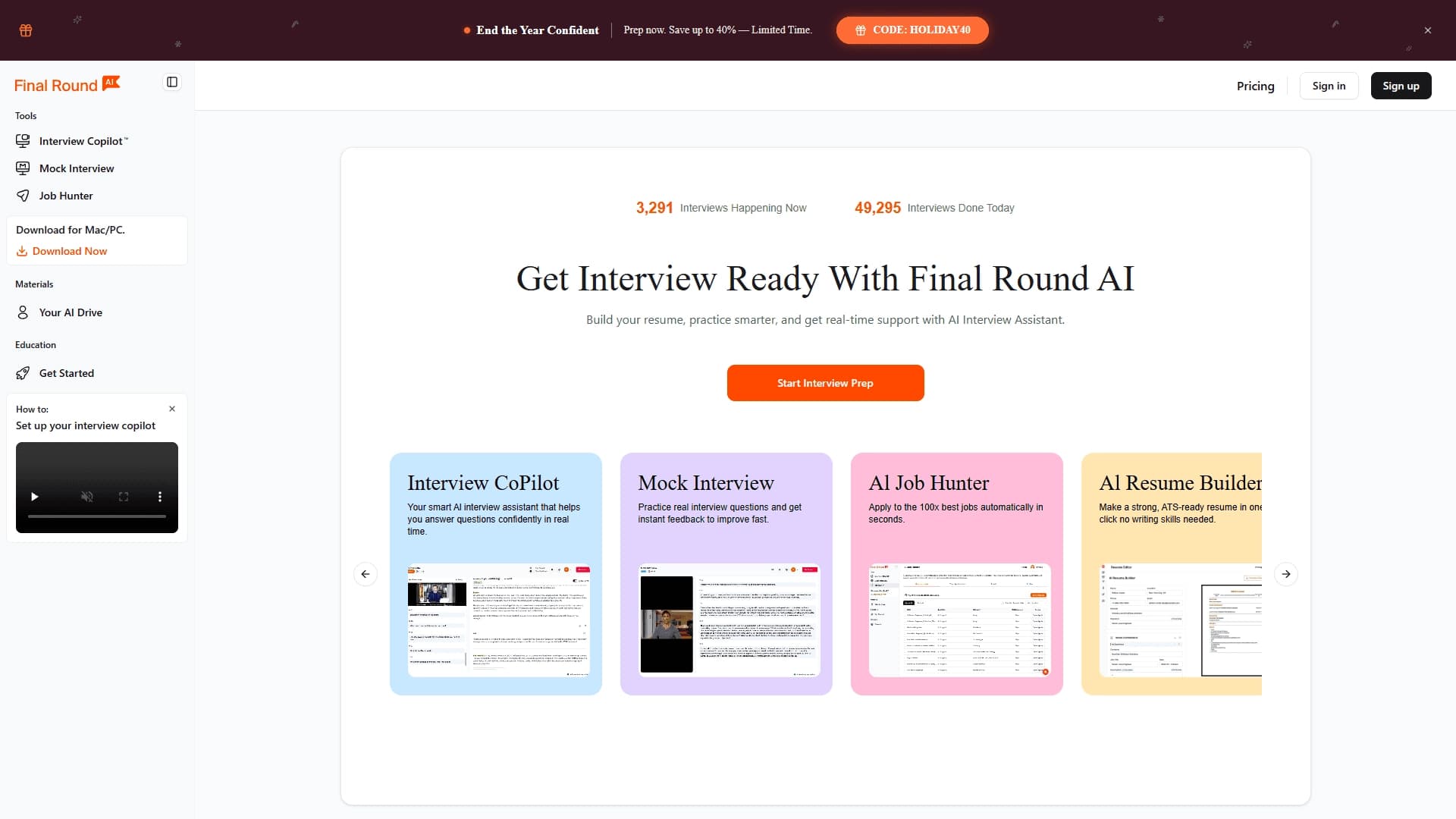
Platform for interview preparation with AI mock interviews and real-time support.
Enterprise language model platform focused on privacy and on-premise deployment.


AI assistant for creating short summaries of videos, PDF documents, and web pages.

AI email assistant that helps quickly draft messages, adapting to the user's style.

A workflow automation platform that connects thousands of apps without requiring coding.