
Interview Glitch: AI Actress Tilly Norwood Suddenly Started Speaking Chinese
During a conversation with Piers Morgan and Tom Conti, Norwood switched to Chinese after discussing digital twins, then explained it as a technical glitch. The article examines the missteps of her first press tour and asks whether the viral attention will help promote the film or undermine trust in it.

Press tour context
Tilly Norwood is an AI-generated “actress” created by Particle6 Group. The company provided her for 75 simultaneous interviews with journalists.
- According to the TechCrunch author, Norwood seemed to make mistakes in every interview.
- The author describes her first press tour as difficult for her.
This background matters: the published clip was part of a press tour that the source considers problematic.
What happened in the conversation about Misaligned
The interview with Piers Morgan and actor Tom Conti was recorded and posted online. The conversation was about the film Misaligned.
- Conti asked whether the other actors in the film were AI.
- Norwood initially answered that people had been involved in the work: screenwriters, editors, and directors.
- After being pressed, she said: “They’re all digital twins, like me. It’s a hybrid production…”
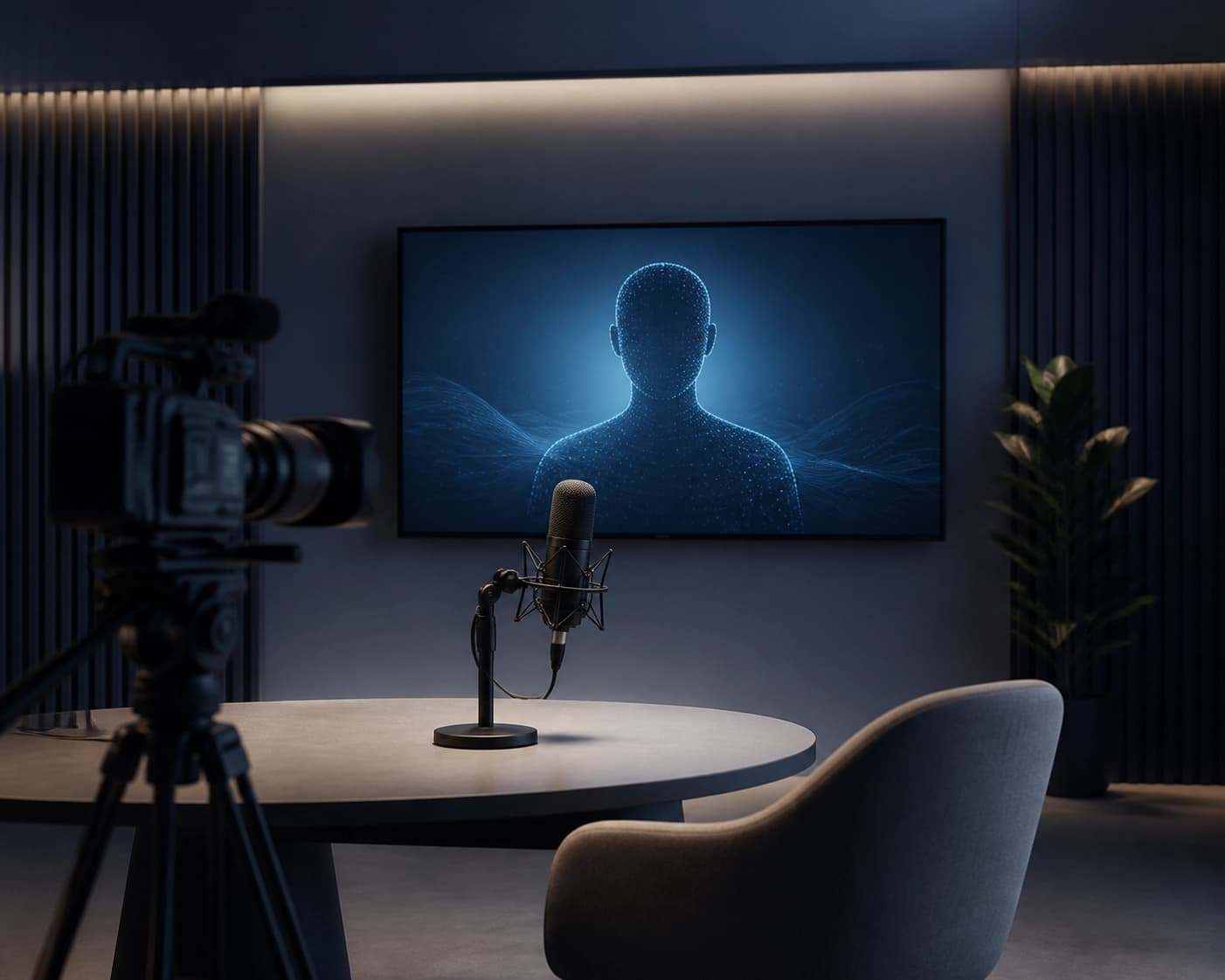
After these words, Norwood fell silent, then spoke in Chinese for more than ten seconds. The glitch occurred immediately after her answer about digital twins.
How Norwood explained the glitch
Morgan asked why she had spoken in Chinese. Norwood apologized and called what happened “a small glitch.”
- She said she hadn’t meant to speak Chinese or impersonate Morgan.
- According to her, sometimes her “wires get a little crossed.”
The TechCrunch author suggests that Particle6 Group may have been counting on extra attention if people laughed at Norwood. He also allows that no one may take the film she is promoting seriously.
When evaluating the incident, it is worth separating the interview recording and Norwood’s words from the author’s hypothesis about the company’s intentions.
Frequently asked questions
Related materials
All materials
AURA-Eval: How to Check Whether an LLM Agent Recognized a Risk and Changed Its Next Step
The framework evaluates LLM agents’ behavior not by their final verdict, but by how they respond to risk at key decision points: tool-call trajectories are interrupted, after which the model must continue reasoning and acting, while a panel of LLM judges assesses risk detection, the nature of the step, and its safety. Across 1,249 tasks drawn from 157 R-Judge trajectories, unsafe actions become more frequent among 20 models when no safe path is available, and removing oversight before execution turns 52.3% of initially safe cases into unsafe ones.
10 November 2026
Chern–Simons Reservoir Memory: Autonomous Connectivity Dynamics and Density Transport
The article explores how a reservoir preserves the history of input signals both in its density distribution and in its geometric degrees of freedom. A comparison of four mechanisms shows that current creates a separate connected component that alters the subsequent density response, while accounting for all measured features yields a small improvement in decoding pulse order.
10 November 2026
Validating Candidates Costs More Than Generating Them: Honeypots Against LLM Vulnerability Hunting
The study examines the cost asymmetry in agentic vulnerability discovery: generating candidate versions is cheap, while confirming them through reachability analysis, execution, and PoC development consumes most of the budget, making verification a potential standalone target for defense. The proposed RedHerring—repository-adapted decoys with a hidden certificate—reduced the number of real vulnerabilities found by 38.7–60.4% at equal cost across 33 OSS-Fuzz projects; even after the agent was warned, the reduction remained at 37.2%.
9 November 2026