The U.S. welding industry is in crisis: according to the American Welding Society, by 2029 the country will be short of more than 320,000 welders. Experienced specialists are retiring, and young talent is not rushing into the profession. Immigration restrictions are making things worse, cutting off the flow of workers from abroad. In these conditions, betting on robotics looks less like a whim and more like the only way to keep up the pace of construction. That is exactly the path chosen by three former SpaceX engineers who founded the startup 1872.
Startup 1872: from rocket engines to steel frames
Dan Summers, Brian Mongilio, and Michael Grant — three former SpaceX employees — decided to apply aerospace industry experience to a completely different field. Summers, who led the team responsible for integrating and manufacturing the Raptor engines for Starship, became CEO of the new venture. The official launch took place on July 22 at the Factory One plant in Cincinnati, Ohio. It is a symbolic location for a startup: the Midwest has traditionally been considered the industrial heart of America.
The startup's ambitions are impressive: by 2027, the company intends to create a prototype factory capable of automating a large part of the steel production cycle — the very steel used in critical infrastructure projects. The priority focus is the production of steel skids, i.e., rectangular frames on which modular buildings are constructed. These frames are in high demand from companies building AI data centers and small modular nuclear reactors. Demand for such structures is growing along with the artificial intelligence boom and decentralized energy.
Why skids? According to the founders, these parts have a fairly high tolerance for error. They do not require the micron-level precision of rocket engines, so automation can allow for more deviation. This makes them an ideal testing ground for technologies that can later be transferred to more complex products. In addition, skids are a mass-market product manufactured in large volumes, which means the impact of optimization will be maximized.
From manual labor to welding robots
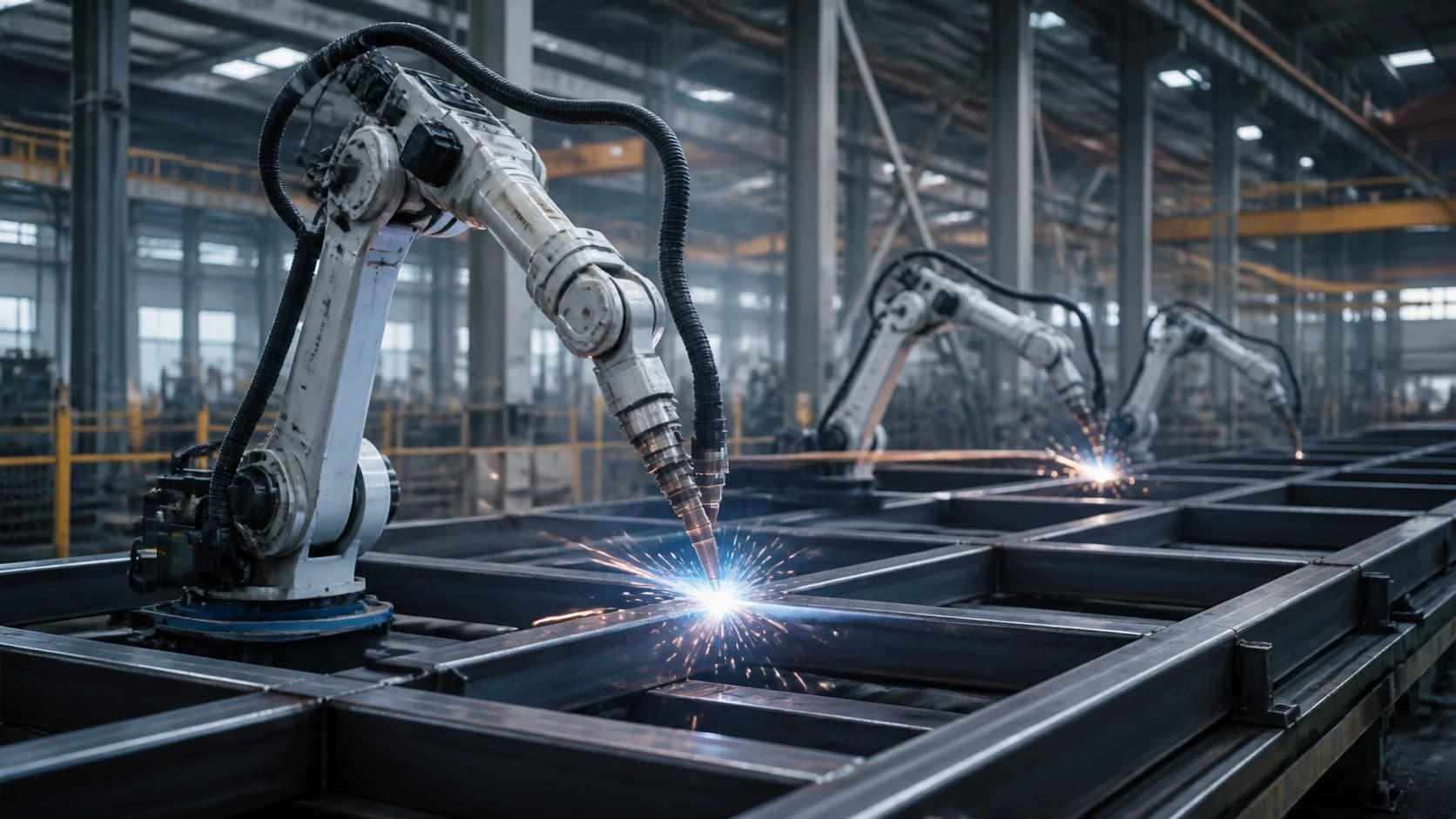
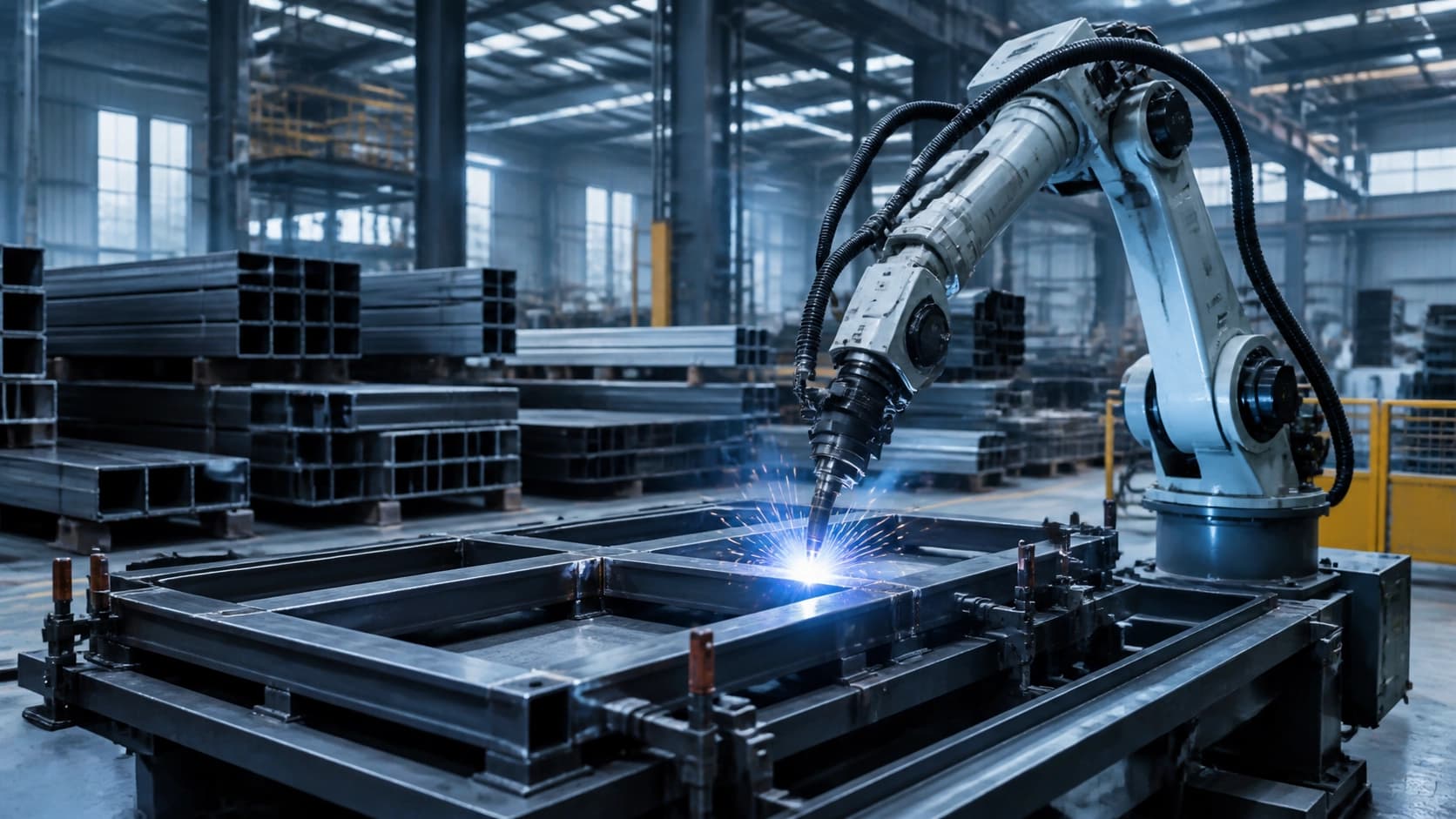
The founders of 1872 deliberately chose a phased approach. At first, regular welders worked on the production line: they refined the full skid creation cycle — from cutting parts to final assembly. Only once the process was fully dialed in did the company begin introducing robotic solutions. To this end, the company partnered with Path Robotics, a Columbus-based developer specializing in AI-driven welding.
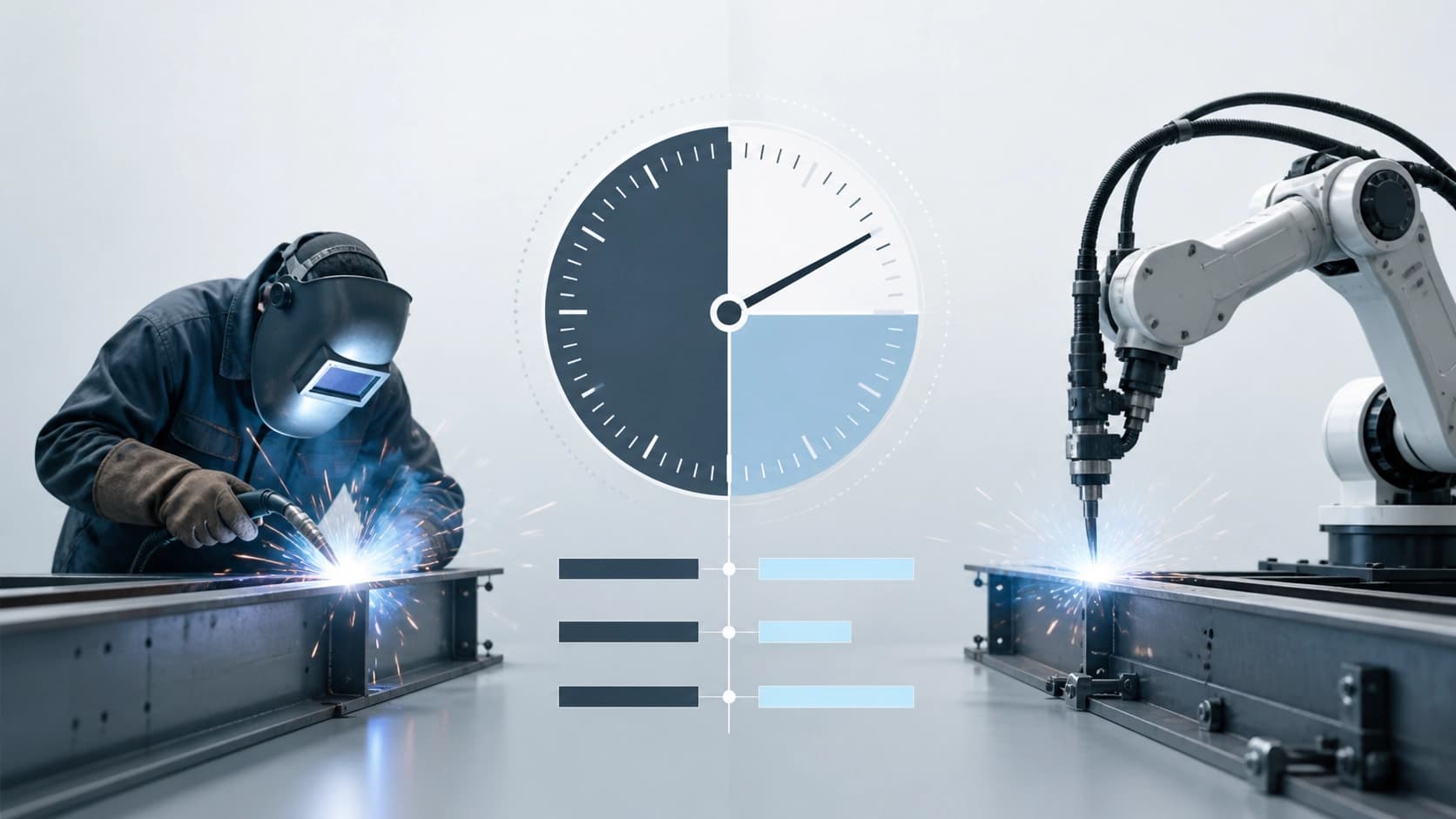
Path Robotics builds robotic systems controlled by neural networks. Their efficiency is impressive: first-pass yield reaches 95–100%. The robot's arc is active 70% of the working time, compared to just 10–12% for a human. At the same time, welding costs drop by 85%: while a human costs 78 cents per inch of weld, a robot costs just 12. These numbers quickly pay off the initial investment, especially considering that a robot can work around the clock without breaks.
That said, welding is only part of the process. Welding the skid itself takes 2–4 hours, but assembling all the cut components takes four to five days. The company has already stated that automating assembly is the top priority for the near future. If this stage can be shortened, total production time will drop dramatically, allowing more orders to be accepted without expanding the workforce.
Vision for the future: manufacturing from a single file
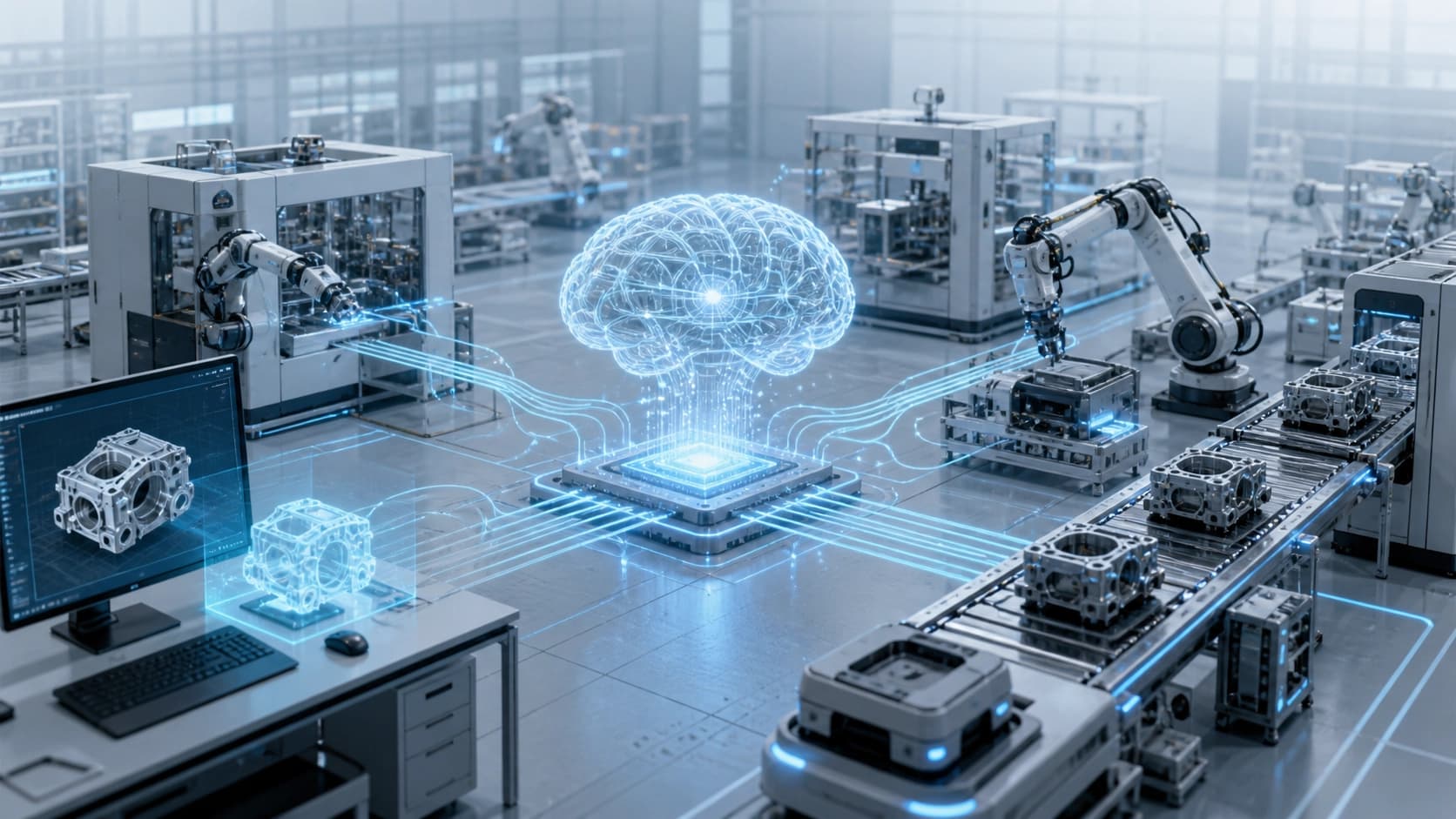
The 1872 website describes an ambitious concept. A client sends a digital file with the design of the future product. An AI system processes it, generates a complete production plan, and creates a work schedule. Robots then handle all physical operations: cutting, assembly, welding. Humans only oversee the process and handle non-standard tasks. This model allows the most monotonous and heavy work to be delegated to machines, while people remain in the role of supervisors and technicians.
At the same time, as CEO Dan Summers notes, full autonomy is not an end in itself. The company will likely settle at around 80% automation, since further increases yield diminishing returns at rising costs. This is a pragmatic approach that maintains a balance between efficiency and system complexity. The remaining 20% likely covers contingencies and delicate operations where human judgment is still irreplaceable.
SpaceX experience shows that intelligent production management software can work wonders. It was precisely such software that brought the Raptor engine to a production-ready version in just three years — while the traditional development cycle for a jet engine can take more than two decades. Startup 1872 intends to apply the same approach to metalworking. If it succeeds, the U.S. welding industry could change beyond recognition: instead of grueling manual labor, smart factories will emerge, where robots handle the heavy physical work and software manages the entire process from blueprint to finished product.