What it is and why it matters
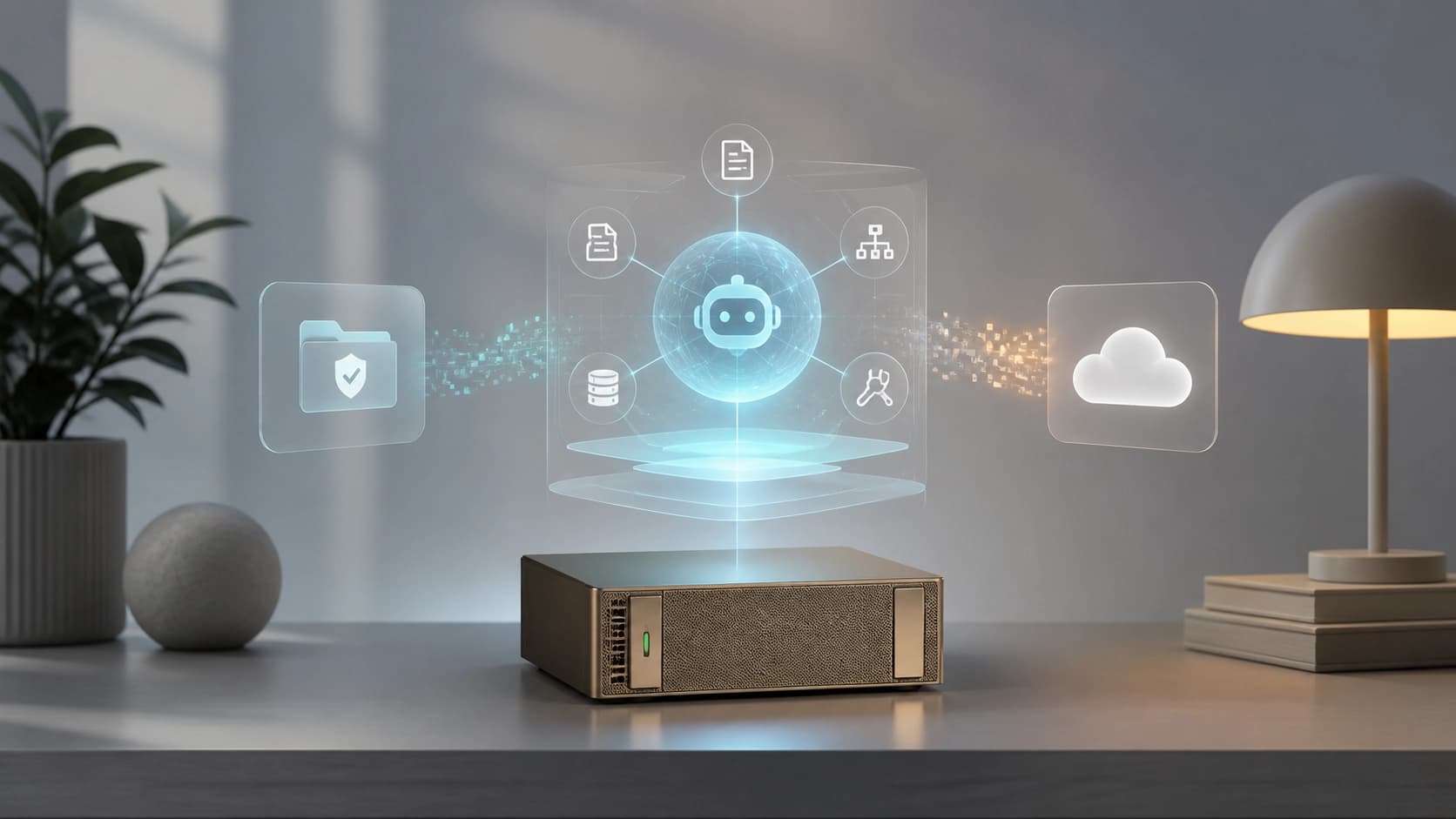
Perplexity has released Portable Computer — a local build of its Computer agent platform that now runs on the compact NVIDIA DGX Spark station. This isn't a preview or an experimental build, but full-fledged release software: the orchestrator, planner, tool router, and fine-tuned models are installed directly on the device.
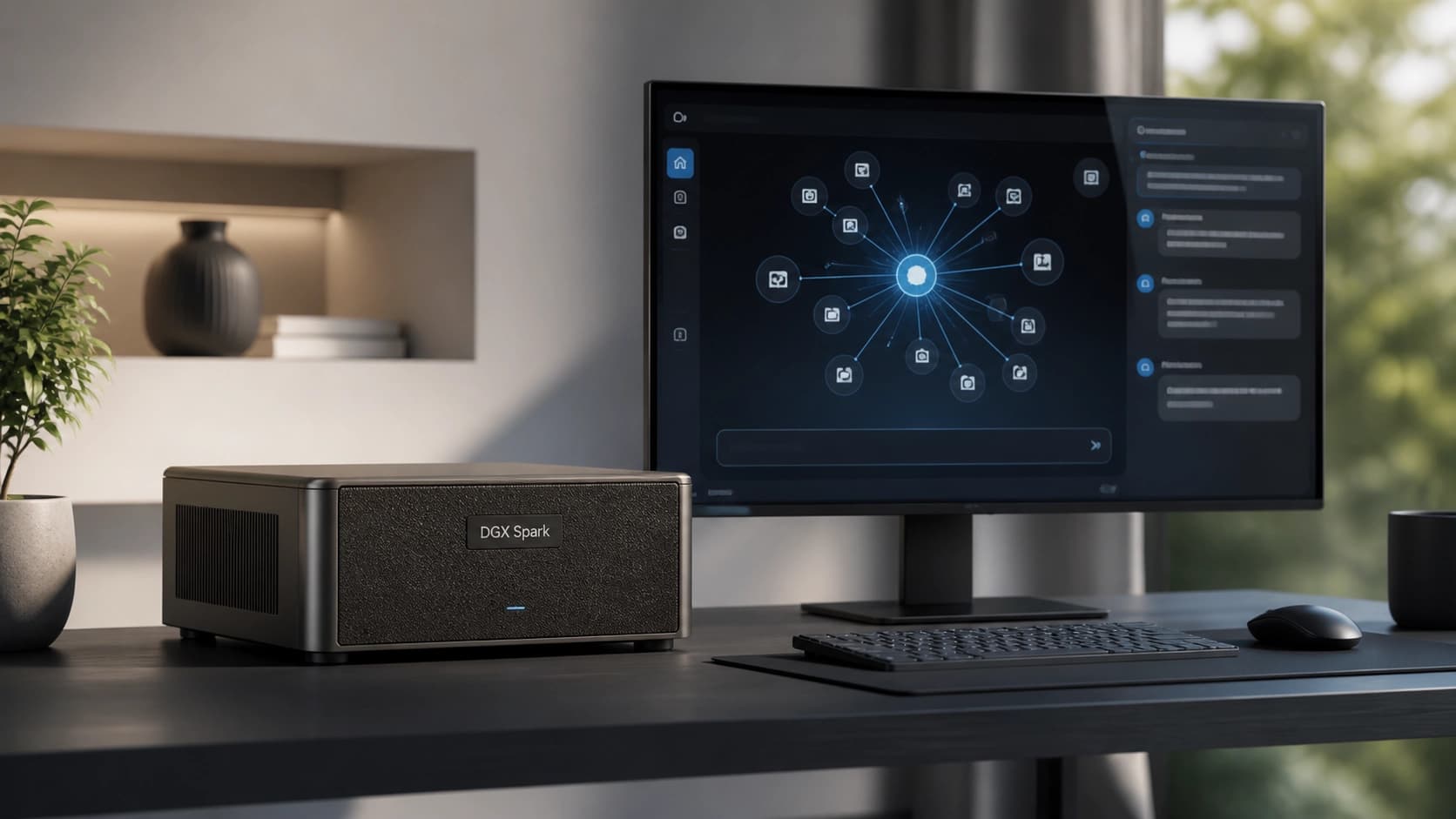
The product isn't aimed at the mass market. Primary buyers are large enterprises and mid-sized businesses that already own NVIDIA stations, plus well-funded AI-native startups. For typical small firms, such a purchase is unlikely to pay off. Judging by the positioning, the system is of interest primarily to finance, legal, healthcare, public sector, defense, and engineering teams working with sensitive intellectual property.
How the local system works
Everything needed ships as a single package: a local model, inference engine, agent harness, tool sandbox, and application connectors. The user chooses between Qwen 3.8 27B and PPLX 27B — the latter being a fine-tuned model from Perplexity itself. Soon, NVIDIA's open-source Nemotron 3.5 Lightning model with a 30-billion-parameter MoE architecture is promised as an addition. If you want to bring your own, BYO models and a custom inference server are supported.
Code and tool calls run inside a sandbox controlled by the operating system. It strictly limits processes, file system path access, and network connections. If the sandbox becomes unavailable, tool execution simply shuts off — no silent fallback to an unsafe mode.
Integrations with Gmail, Outlook, Slack, and GitHub are routed through the local orchestrator. To keep the model from drowning in context, the developers applied several tricks: the system prompt and toolset are kept small, specialized skills are loaded on demand, and connectors are built as compact CLI utilities rather than full MCP definitions. As a long run progresses, stale context is compacted. This matters because Qwen advertises a 260K token window, but in practice degradation starts after roughly 100K.
When a task goes to the cloud
Local steps aren't billed per token — charges only apply to cloud operations. Every task starts on the device. If the agent needs direct web access or genuinely complex reasoning, the orchestrator pauses and asks the user whether that single step may be sent out. More than 15 cloud models are available to choose from.
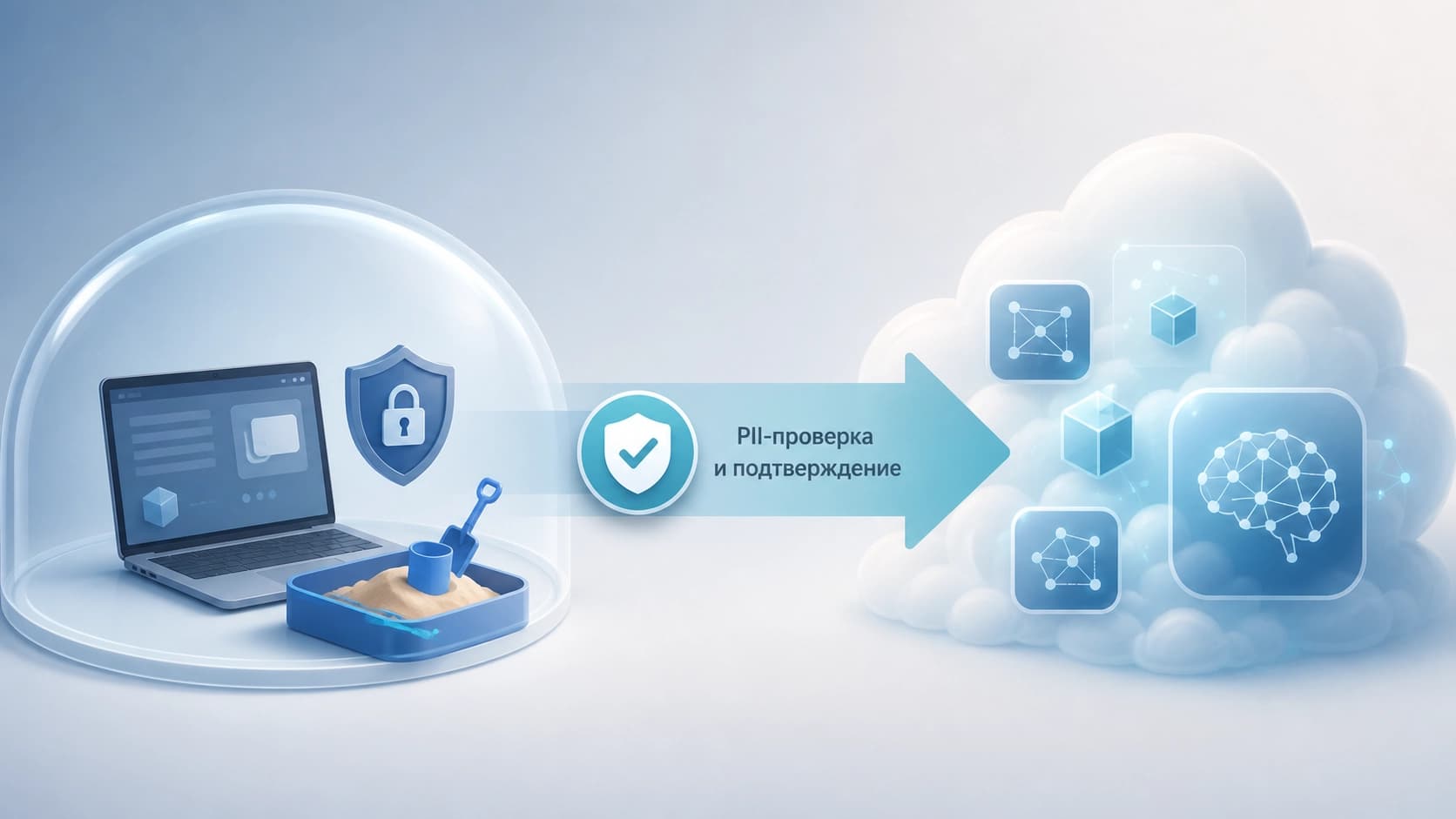
Before sending anything, the harness selects only relevant context, runs it through a PII classifier, and shows exactly what data would leave the machine. The cloud advisor receives the approved step and returns textual instructions. It has no direct access to local files, tools, or conversation history. The result is a hybrid scheme: the private part stays on the device, while heavy computation is delegated externally in a targeted manner and under the owner's control.
Benchmark results
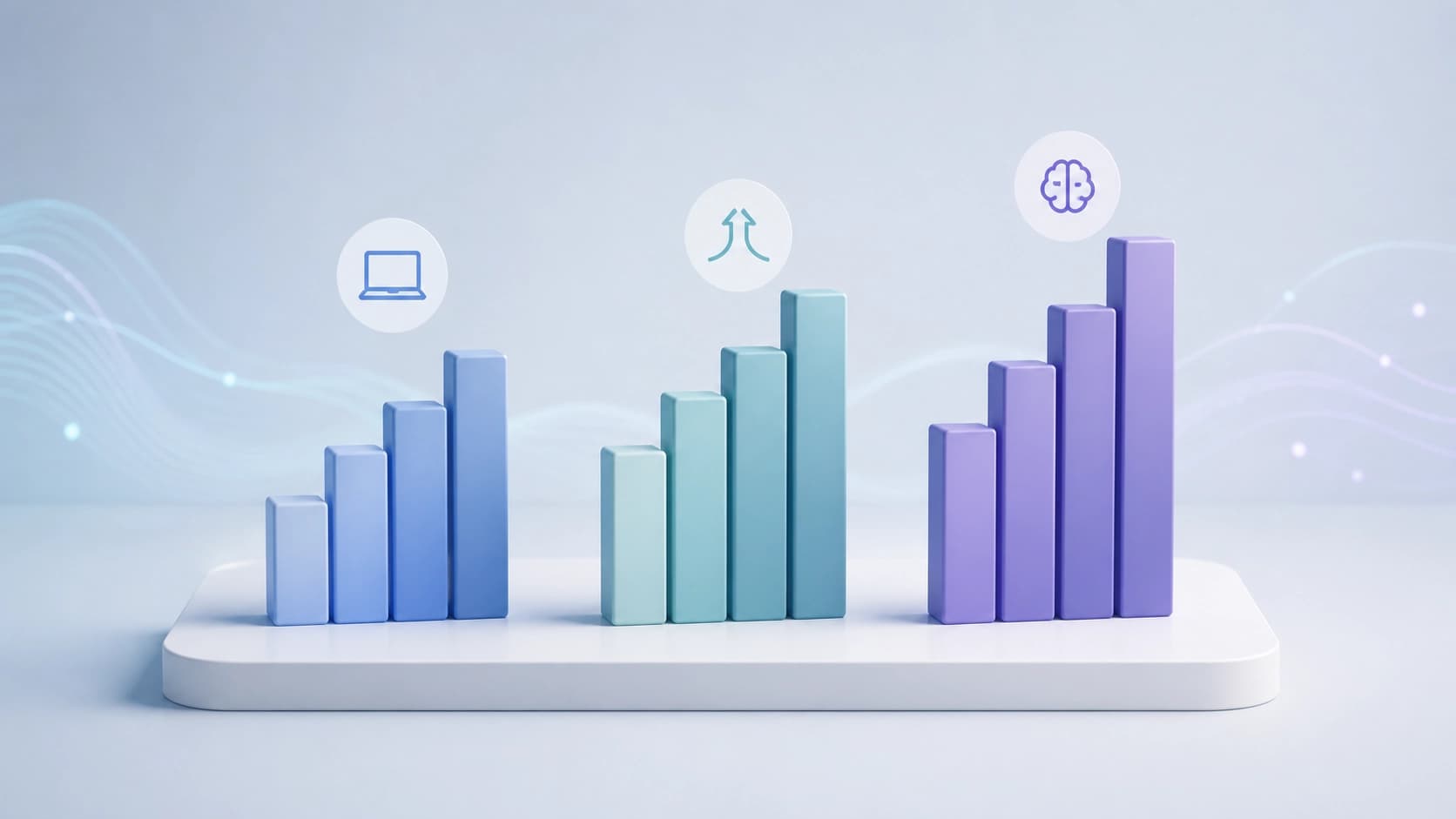
Perplexity cites its own measurements on the Local Knowledge Work Bench, a set of 53 computer-agent tasks. With the Qwen 3.8 27B model on NVIDIA DGX Spark, the local build scored 82.6%. For comparison, the open-source harness Pi achieved 77.6%, and Hermes on the same model — 74.0%. Swapping in the PPLX 27B model raises the result to 85.4%.
On the BrowseComp test, the agent platform scored 66.7% versus 50.2% for Pi and 43.9% for Hermes. It also used 51% less time and 70% fewer tokens than Pi. An even more pronounced gap appears on ParseBench-100 for visual document understanding: 65.1% versus 34.6% and 13.9%, respectively.
On Terminal Bench 2.1, a fully local run delivered 59.6% at near-zero marginal cost. Adding a cloud advisor lifts the result to 73.0%, with each rollout costing about $0.415. For reference, a standalone Claude Opus 5 model scores 82.4% on the same test but costs roughly $0.65 per run. Escalation noticeably narrows the gap with the strongest models but doesn't fully close it. The local mode, however, remains nearly free.
Technical requirements and availability
Installing on NVIDIA DGX Spark requires the GB10 superchip, 128 GB of memory, and at least 1 TB of storage. The orchestrator based on Qwen 3.8 27B ships in 3-bit quantization: a 17.4 GB download, requiring 32 GB of RAM. The version with NVIDIA Nemotron 3.5 Lightning is 4-bit, takes up 19 GB, and needs 36 GB of RAM. On other systems, you can use DGX OS or Ubuntu on ARM or x64 with an RTX GPU and at least 24 GB of VRAM. Installation is done through a standard apt repository.
At launch, the system is available Linux-first for Pro, Max, Enterprise Pro, and Enterprise Max subscribers. A Windows version is expected in September, and macOS isn't on the roadmap yet. One important caveat: only a single DGX Spark is supported at runtime; clustering multiple devices is planned for the future.
Essentially, this is an attempt to create a private agent environment that doesn't require a constant internet connection and doesn't charge for every local call, yet can still tap into powerful cloud models when it's truly justified.