
Parason: LLMs parallelize not only subtasks but also competing solution attempts
Researchers described the Parason method, which teaches language models to reason on two fronts at once — breaking a task into parts while simultaneously testing several candidate hypotheses. On the AIME24 and AIME25 math benchmarks, the approach delivers roughly a 1.7x speedup without sacrificing answer accuracy.

Latency Is the Main Enemy of Complex Tasks
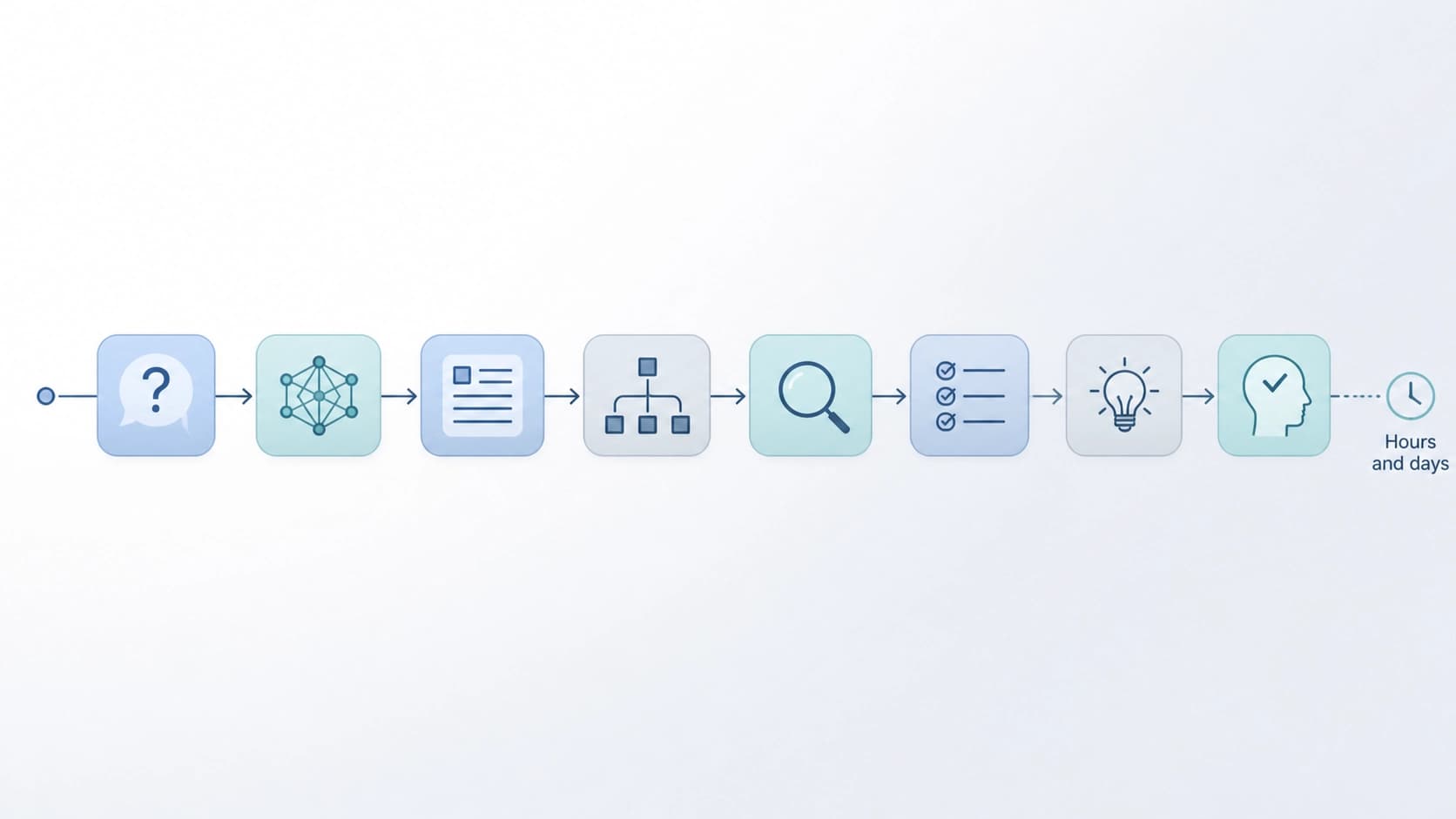
In recent years, the main source of progress in large language models has been not only the growth in parameters but also the ability to "think longer" before answering. The model unfolds a long chain of reasoning, checks itself, backtracks, tries again — and the output is a noticeably better solution. The problem is that technically this process remains strictly sequential: autoregressive decoding produces one token after another, and the entire chain is laid out in a single long line.
On easy questions this doesn't get in the way. But where a task is genuinely complex and requires many hours of search, latency becomes a barrier: the wait can stretch into days and even weeks. That is precisely why researchers are increasingly looking toward parallel reasoning — if individual parts of the process don't depend on each other, why not compute them simultaneously?
Parallelism Comes in Different Forms
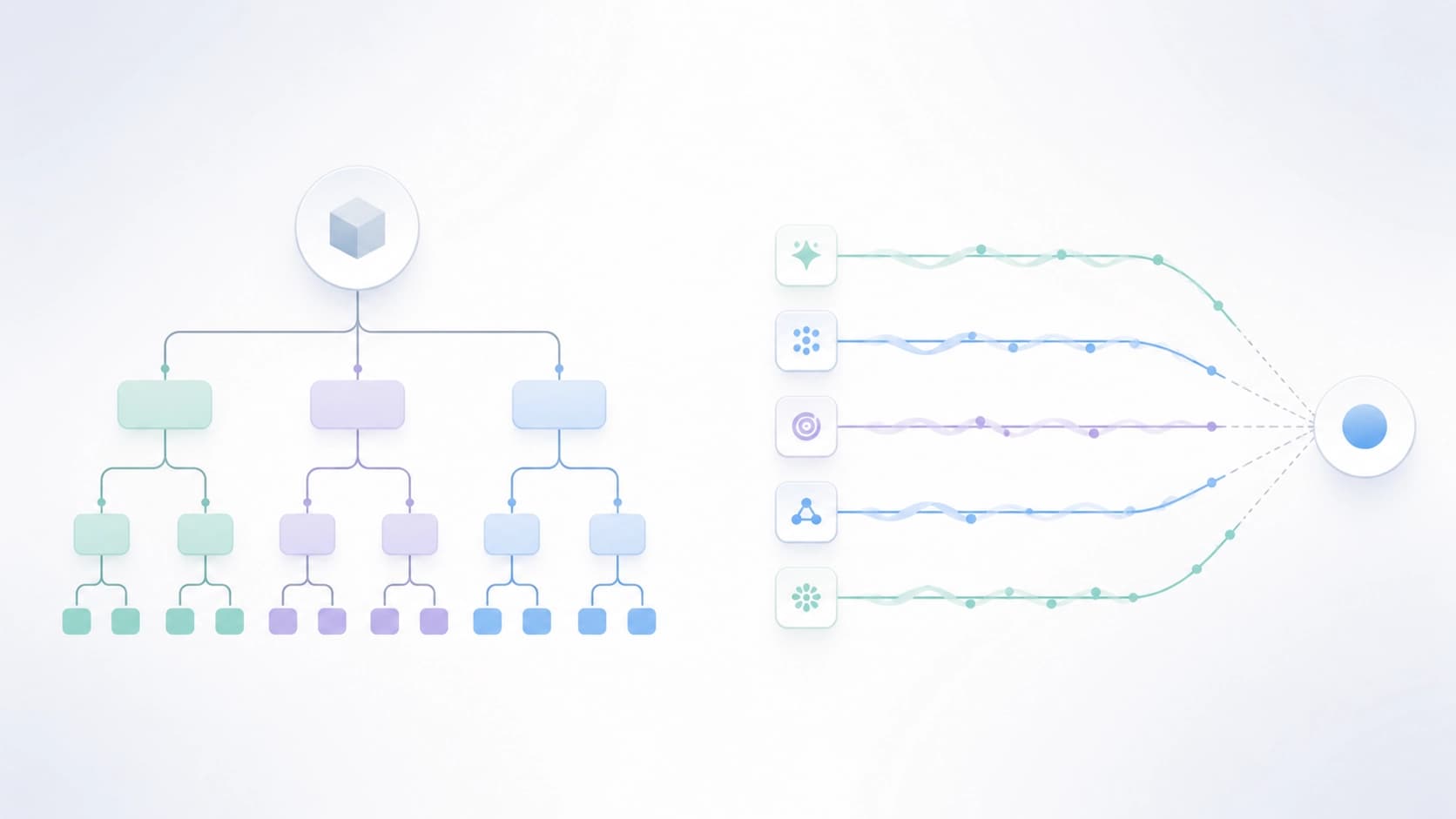
Until now, most attention has gone to subtask parallelism. The logic is simple: a large task is broken into several smaller ones, each is solved independently, and then the results are assembled together. The model learns to perform this decomposition on its own — and it really works.
But there is a second form that has gone almost unnoticed. It can be called trial parallelism: instead of splitting a task into parts, the model launches several competing hypotheses at once, checks them, and selects or combines the best ones. This is closer to how a person reasons when weighing solution options — not "divide and conquer," but "try different things and compare."
The Parason paper argues that it is precisely the second form that is undervalued — and undervalued significantly. According to the authors' estimate, on complex tasks it accounts for the bulk of all computations that can in principle be parallelized: on the HLE benchmark, for the DeepSeek-V4 model, 65.5% of reasoning steps were attributable to parallelizable trials. Moreover, the more complex the task, the more pronounced this predominance — meaning that on the hardest examples the potential for speedup is greatest.
How Parason Turns a Chain into a Structure
Parason's idea is not to choose between the two kinds of parallelism but to master both at once. The first step is to turn what the model usually generates linearly into a structured parallel trajectory. For this, a context-free grammar is used: it defines the rules by which a sequential stream of steps is rearranged into a set of branches, some of which can be executed simultaneously.
Then training begins. The authors propose the PA-GRPO method (Parallelism-Aware Group Relative Policy Optimization) — a modification of group policy optimization in which the reward is multi-component. It accounts not only for the correctness of the answer but also for latency, as well as two coefficients reflecting how actively the model uses subtask parallelism and trial parallelism. In other words, the model is rewarded for accuracy but penalized for excess time and taught to distribute work sensibly across branches.
From Theoretical Savings to Real Speedup
A separate challenge is bringing the structure to execution. A beautiful parallel scheme on paper won't speed anything up if in practice everything is again executed one after another. Therefore, at inference Parason executes the learned structure through tool calls: branches are launched as separate actions, and the time gain becomes measurable in wall-clock terms, not just in theory.
What the Experiments Showed
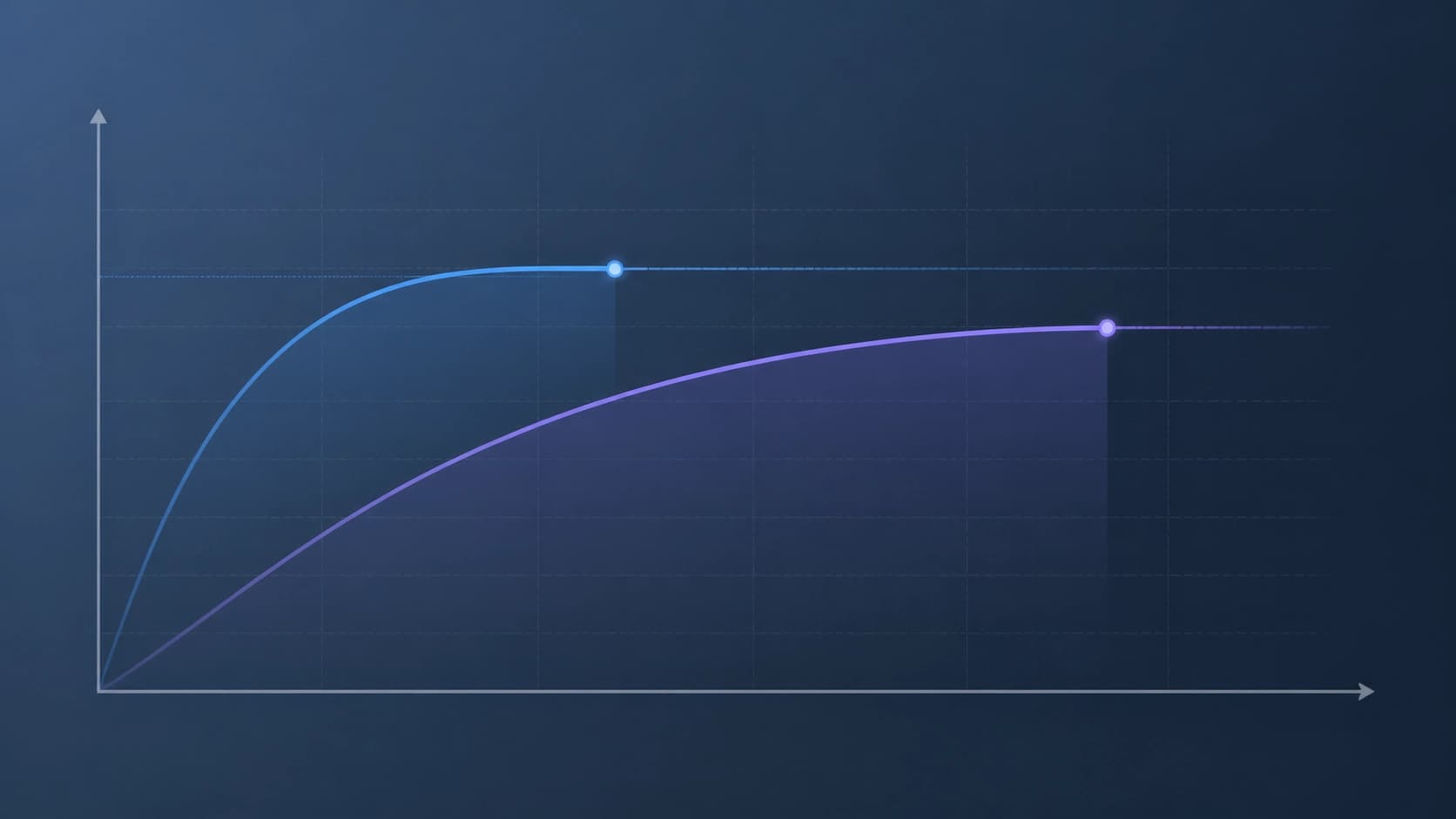
The approach was tested on mathematical reasoning benchmarks, including AIME24 and AIME25 — tasks where long chains are exactly what's needed. The result: an average speedup of roughly 1.7x while maintaining competitive accuracy. That is, the model doesn't trade quality for speed in the usual sense — it performs the same work in less time.
An important detail: this is not about quantization, not about distillation, and not about "a small fast model instead of a large one." Parason changes the very organization of computation — the way reasoning is laid out.
What This Changes
The main takeaway is broader than one specific method. The discussion of parallel reasoning has long boiled down to decomposition, and that is only half the picture. If competing trials really account for the bulk of parallelizable work on hard tasks, then architectures and training are best designed with both forms in mind at once — and then the gains will compound.
There is also a practical point. The gap between "the model can solve it" and "the model solves it in acceptable time" is often decisive when choosing whether to adopt a tool or not. Latency measured in days is not a technical detail but a boundary of applicability. An approach that turns it into hours opens up scenarios where long reasoning previously simply made no sense.
Open questions remain as well. The two parallelism coefficients in the reward are knobs that need tuning, and the balance between accuracy and speed will clearly depend on the type of task. Moreover, competing branches require careful aggregation: a wrongly chosen hypothesis out of several parallel ones can cost more than the time saved. So Parason is more a convincing demonstration of a direction than a final destination. But the direction is clearly marked: it's worth parallelizing not only subtasks but also the very attempts to solve a task.
Frequently asked questions
Related materials
All materials
Step-by-Step Evaluation of GUI Agents for Dashboard Analysis: The DashAct Benchmark
Introducing DashAct, a benchmark of 348 human-verified trajectories that breaks down GUI agents’ work with interactive dashboards into three stages and four visual conditions. The results reveal persistent issues with action prediction and visual target grounding, as well as agents’ reliance on contextual and spatial support.
11 November 2026
WILSON: combining magnifications and patient slides for pathomorphological analysis and report generation
The preprint introduces WILSON, a vision-language model that encodes images of whole slides and series of slides from a single patient at different magnifications, rather than just a single “best” slide. Without task-specific fine-tuning, it outperforms specialized and larger slide models on a range of metrics while requiring substantially less compute, and its diagnostic descriptions received higher ratings from pathologists.
11 November 2026
Canonical Polynomial Invariants for Diagnosing RL Simulator Failures: Where Are They Actually Useful?
The study examines whether incorporating physical laws into learnable dynamics models is justified: invariants extracted from trajectories and reduced to canonical form using Gröbner bases yield modest forecasting gains, but prove powerful for diagnostics, enabling the localization of violated constraints and identification of specific erroneous parameters.
10 November 2026