
OpenAI and psychologists have joined forces to protect teenagers from AI risks
An alliance of mental health experts and AI developers aims to create safe recommendations for young people. Joint efforts will help integrate evidence-based safeguards into AI products.
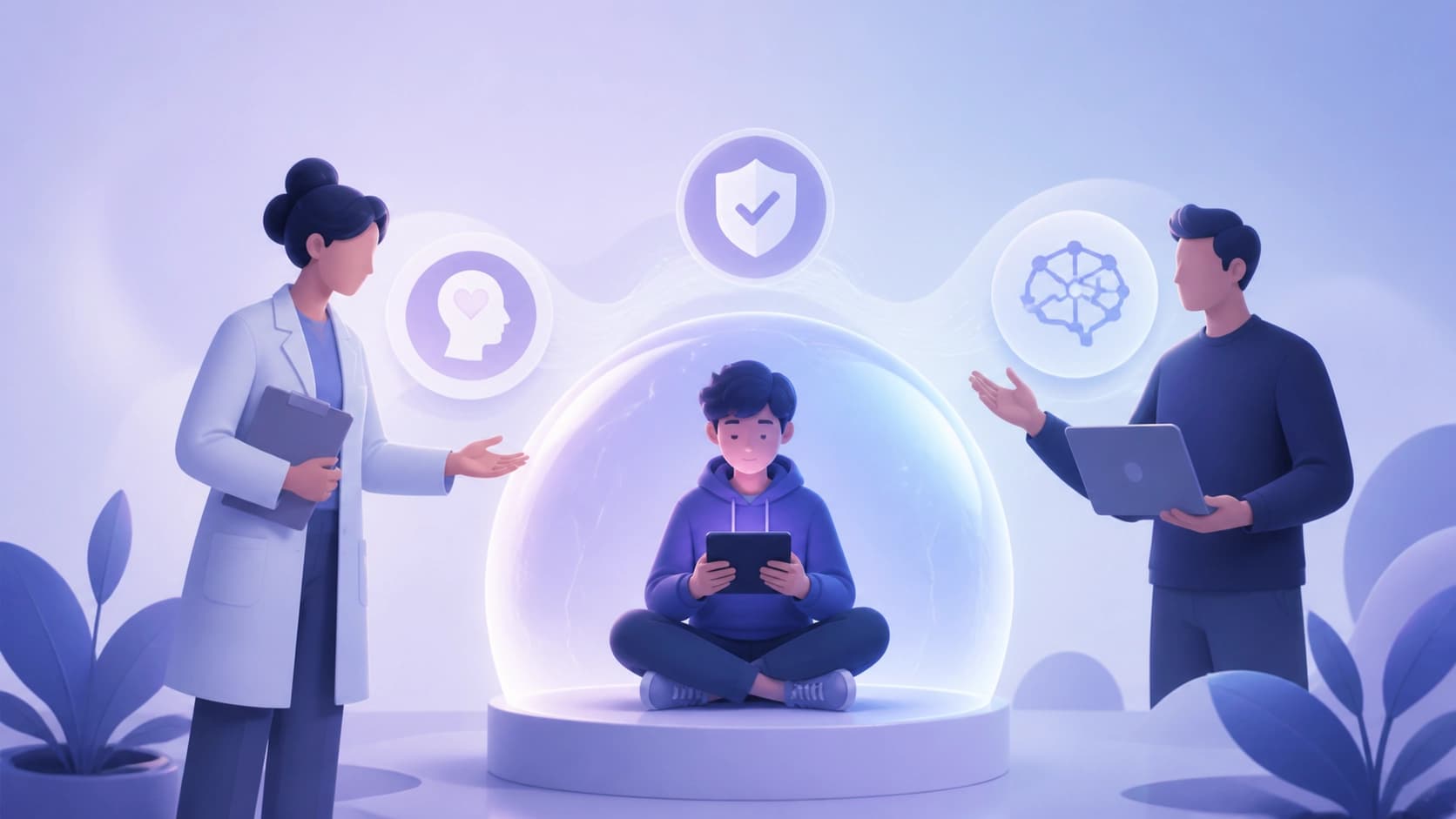
Teenagers are among the most active users of generative models. For them, AI is not just a tool but a conversational partner and advisor. At the same time, it is teenagers who are most at risk: their psyche is still forming, and their trust in smart algorithms is almost boundless. That is why OpenAI has joined forces with child psychologists to reduce potential harm and make interaction with AI safer. In this article, we will break down how this collaboration works and what it changes in practice.

Teenagers and AI: why special protection is needed
During adolescence, the brain undergoes intense restructuring: areas responsible for self-control, critical thinking, and assessing long-term consequences are developing. Until these processes are complete, young people are especially trusting of authoritative sources—and AI is often perceived as exactly such a source. A model that responds in a confident tone can easily convince a teenager of anything, even if the information is incorrect or harmful.
Add to this the need for acceptance and the fear of judgment. A teenager may use a chatbot as a training ground for social skills or a place where there is no risk of being ridiculed. But danger lurks here too: if the algorithm does not know how to gently decline dangerous requests, it can reinforce destructive thoughts. Particularly sensitive topics include self-harm, eating disorders, bullying, and depression. That is why developing "emotional safety" in AI requires the involvement of professional psychologists.
What researchers and developers are actually doing
OpenAI involves psychologists at every stage—from gathering requirements to testing finished solutions. Specialists help identify scenarios in which model responses could cause harm and suggest how to reframe responses so they are beneficial. For example, if a teenager directly or indirectly mentions suicidal thoughts, the model should not simply provide reference information or change the subject—it should show empathy, suggest talking to an adult, and remind them of available support services.
How the models themselves are changing
Psychologists participate in fine-tuning the neural network's behavior. Instead of hard prohibitions, the model is taught to ask clarifying questions, redirect the conversation, and not play along with harmful fantasies. It is important that the model does not come across to a teenager as a "walking encyclopedia" but can acknowledge the limits of its own knowledge. This approach reduces the risk that users will treat its answers as the ultimate truth.
In addition, the impact of prolonged interaction with assistants on attachment formation is being studied. The psychologists' task is to determine where healthy use ends and dependency begins, and to advise developers on which signals should trigger a "care mode" or a recommendation to take a break.
What this means for parents and educators
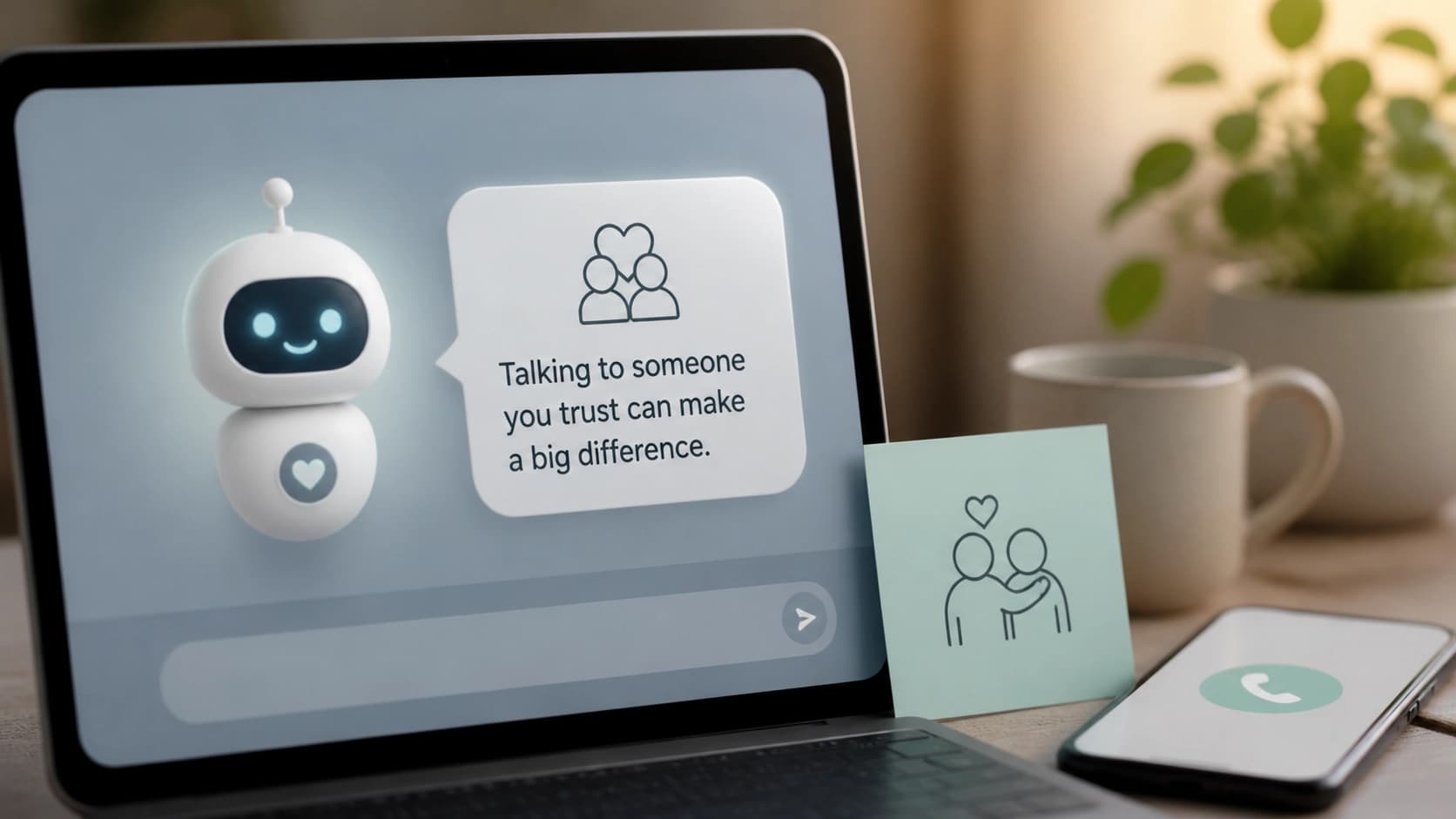
OpenAI's collaboration with psychologists is not just about internal algorithm settings. The results of this work are gradually appearing on the user side too: in the form of clearer safety settings, built-in warnings about possible AI errors, and educational materials for adults. Parents need to understand: no technical safeguard can replace real-life communication. Banning a child from using chatbots is not a solution, but exploring the boundaries of AI together with them certainly is.
For educators, this partnership provides ready-made scenarios for conversations about digital literacy. A teenager learns to verify facts, question the algorithm's "confident" tone, and recognize manipulation. If a teenager knows that even smart assistants can make mistakes and are created by humans, they become less vulnerable to their influence.
It is important that this work does not remain a one-off study. Psychologists note that the teenage environment changes rapidly, and what was safe a year ago may carry new risks today. Regularly updating guidelines and actively involving independent experts is the only way to keep up with these changes. And for teenagers themselves, the main takeaway is simple: AI remains a tool, not a replacement for real-life communication—and it is worth remembering that in any conversation with an algorithm.
Frequently asked questions
Related materials
All materials
Toollery: Choose tools for LLM agents from tens of thousands of options without fine-tuning
Toollery builds a search index from descriptions of skills and tools, then passes the model only a limited set of candidates for each query. In experiments with libraries containing tens of thousands of functions, the approach helps maintain selection quality at a fixed top-K, although the overall effect depends on the workload profile and the provider’s caching.
11 November 2026
Step-by-Step Evaluation of GUI Agents for Dashboard Analysis: The DashAct Benchmark
Introducing DashAct, a benchmark of 348 human-verified trajectories that breaks down GUI agents’ work with interactive dashboards into three stages and four visual conditions. The results reveal persistent issues with action prediction and visual target grounding, as well as agents’ reliance on contextual and spatial support.
11 November 2026
WILSON: combining magnifications and patient slides for pathomorphological analysis and report generation
The preprint introduces WILSON, a vision-language model that encodes images of whole slides and series of slides from a single patient at different magnifications, rather than just a single “best” slide. Without task-specific fine-tuning, it outperforms specialized and larger slide models on a range of metrics while requiring substantially less compute, and its diagnostic descriptions received higher ratings from pathologists.
11 November 2026