What lies behind the initiative
OpenAI has announced its readiness to help government bodies build systems of democratic oversight for artificial intelligence. This is not about abstract support, but about transferring technologies and expertise that will allow citizens and officials to jointly influence how algorithms make decisions. The initiative is a response to long-standing criticism: models are increasingly intervening in socially significant processes, but most people have no idea what rules they operate by.
For the state, this step means a lot. If earlier discussions about AI were held in a narrow circle of developers and regulators, now there is a chance to bring a wide audience into the dialogue. This not only increases trust in technology, but also creates a feedback mechanism: people can point out errors or unfair decisions before they turn into a systemic problem.
Why AI oversight has become a matter of democracy
What democratic oversight is
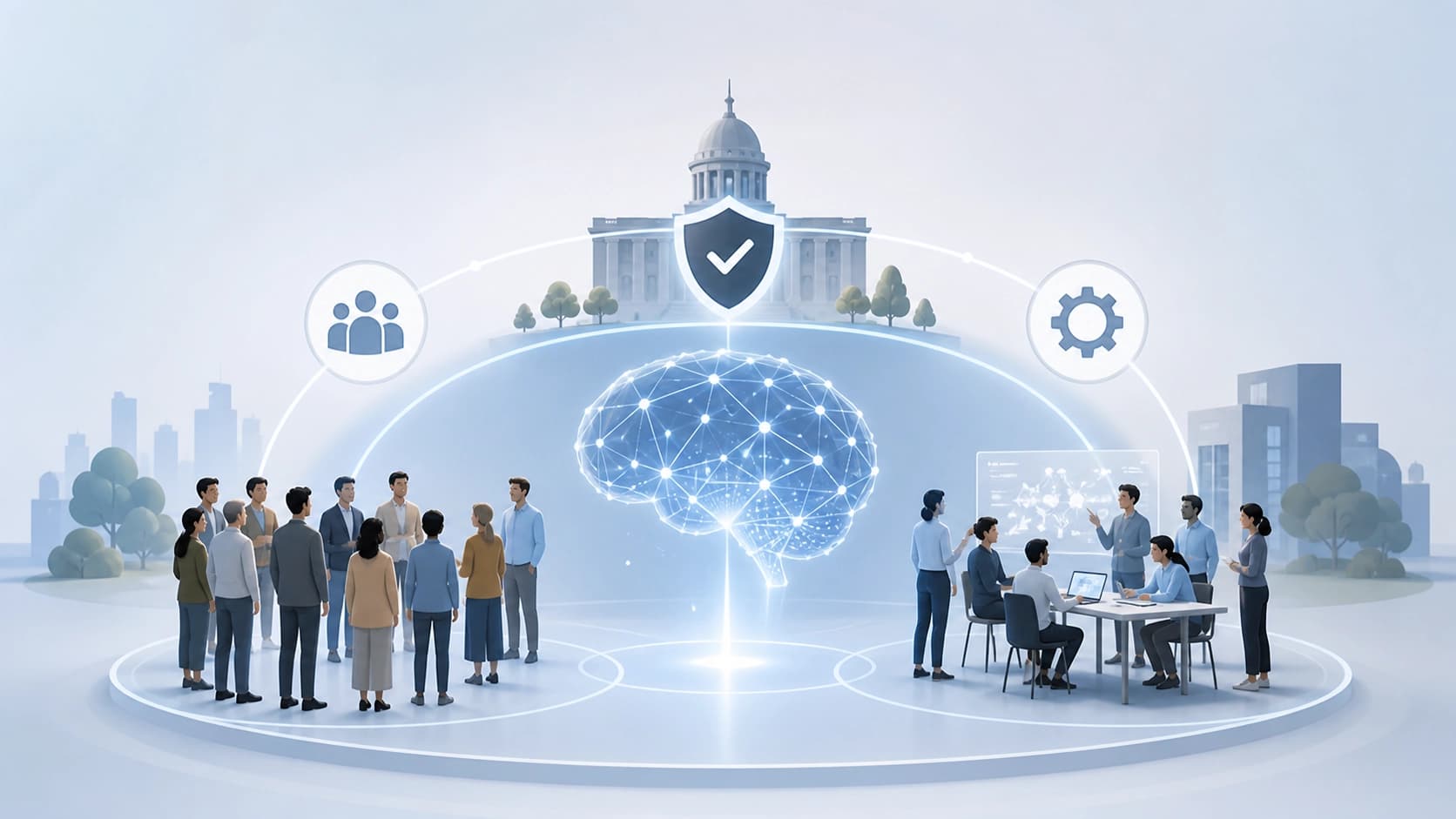
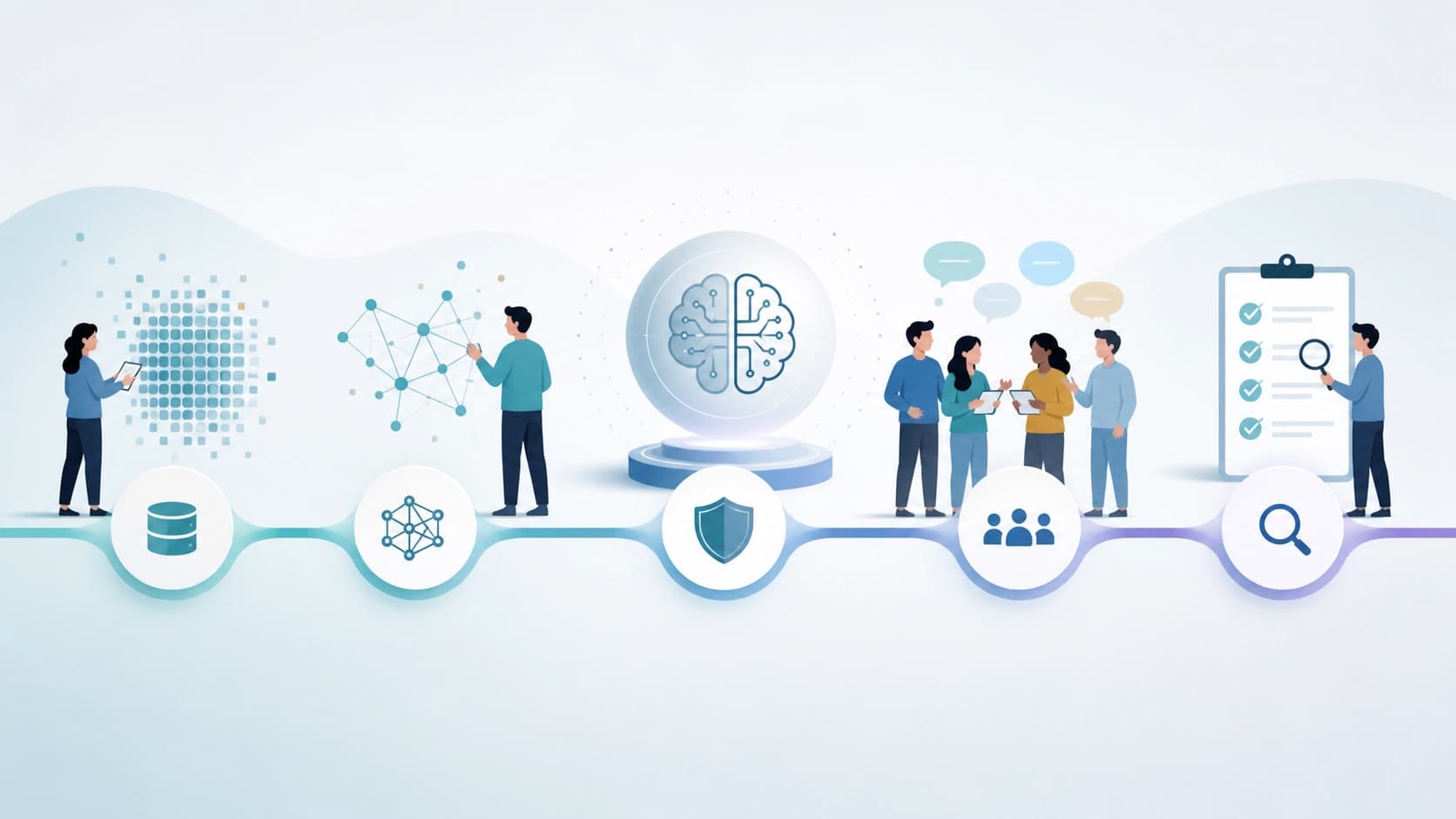
Democratic oversight of AI is a process in which decisions about the use of algorithms are made not behind closed doors, but with the participation of all stakeholders. Citizens, independent experts, and government representatives jointly determine which tasks can be entrusted to models, how to verify their results, and what to do if the system makes a mistake. Technical audit remains an important part of this, but it ceases to be the only control tool.
The main difference from ordinary monitoring is the right to a voice. If earlier dissatisfaction with an algorithm's work could only be expressed through court or complaints, democratic oversight makes it possible to influence the rules in advance. This turns the user from a passive observer into a co-author of technology policy.
Why this is especially important for the state
Government bodies are already actively using AI: from processing citizen requests to supporting court decisions. In such areas, the cost of an error is especially high, so transparency becomes a necessity, not a luxury. When an algorithm denies a benefit payment or suggests a preventive measure to a judge, a person has the right to know on what basis the decision was made.
Moreover, public institutions exist at the expense of taxpayers and are obliged to explain their actions. If officials use opaque AI systems, this undermines trust in the entire governance system. Democratic oversight allows this credit of trust to be restored by showing that even complex technologies are under public control.
How the developer plans to help
Training and methodological framework
OpenAI plans to train government employees to work with models, but not in the usual sense of running scripts. The point is for officials and members of public councils to understand how to interpret an algorithm's responses, where to look for bias, and when to stop an automated decision. The company is also ready to share methodologies for technical specifications for external vendors so that the state does not depend on a single supplier.
A platform for public audit
A separate area is the creation of tools that allow tracking model behavior in real time. Imagine a representative of a civil council being able to log into a secure page and see why AI made a particular decision, what data it considered, and what alternatives it rejected. Previously, such a level of access was a privilege of developers; now it is being adapted for oversight bodies.

Sharing practices with other countries
Successful experience gained in some government structures can become the basis for universal recommendations. OpenAI is ready to act as a link so that regional and municipal bodies do not reinvent the wheel, but use proven scenarios. This is especially important for small agencies that do not have their own AI specialists.
What challenges the initiative will face
The risk of simulated oversight
The most likely problem is the transformation of democratic control into a formal procedure. Commissions will meet, reports will be approved, but real influence on algorithms will be zero. To avoid this, public representatives must receive real powers: the right to request data, stop questionable experiments, and initiate a review of rules.
The barrier of technical complexity
Most citizens are not trained to work with neural networks. Without an intermediate link — independent technical experts — oversight will remain the domain of a select few. Therefore, it is important to simultaneously train not only officials, but also a pool of public advisers who can translate complex technical issues into language everyone can understand.
Data security concerns
Government bodies operate with sensitive information: personal data, medical records, income details. Transferring this data to AI systems for audit purposes requires strict encryption protocols and access controls. A leak can not only compromise individuals, but also discredit the very idea of cooperation with private developers.
What this will change for the state
If the initiative works, government bodies will get two results at once. First, safer and more predictable AI systems, since external control disciplines both developers and officials. Second, a tool for dialogue with society: instead of protests against incomprehensible algorithms, a platform for civilized discussion of trade-offs will appear.
For ordinary people, democratic oversight means the ability to influence technologies that intrude into their lives. This is not about blocking innovation, but about ensuring that innovation takes into account the values of the majority. For example, city residents can voice their opinions on how a video surveillance system uses their data, and officials can adjust the settings before the issue becomes a scandal.
Instead of a conclusion
The cooperation between OpenAI and government bodies is a precedent that could change the rules of the game. For the first time, a major developer of commercial models voluntarily opens its technologies to public control, rather than waiting for this to be done through legislative restrictions. Of course, many difficulties lie ahead: from political resistance to technical failures. But the direction is right.
Democratic oversight is not a brake on progress, but insurance against AI starting to serve the interests of a narrow group of people. If the mechanisms proposed by OpenAI prove themselves well in the public sector, other countries and industries will be able to adopt them. Then the question of who controls algorithms will cease to be elitist — everyone will decide it.