
First Meta Quest freed from Meta: new bootloader opens full root access
Enthusiasts have released an exploit that gains root access to the original Quest headset via its web interface. This removes dependence on Meta's servers and allows installing apps without a developer account.
Returning to Life: The Original Meta Quest Is Back in Action
When Meta (then still Oculus) introduced its first wireless VR headset, Quest, in 2019, it was a true breakthrough for the standalone virtual reality market. However, by 2023, the manufacturer had officially ended support for the device, focusing all efforts on the Quest 2 and Quest 3 models. For many owners, this meant a slow decline for the device: without updates and servers, the headset gradually lost functionality. Now, enthusiasts have found a way to bring it back to full life — through a new bootloader that opens up full root access.
The QuestStack Project: How It Works
Developers from the community have released a tool that gives "developers and enthusiasts full control over the hardware" of the first Quest. The project is called QuestStack, and its main idea is to combine known vulnerabilities in the Android fastboot process into a single privilege escalation chain. The result is full root access, and the procedure is as simple as possible: after connecting the headset to a computer, the process runs through a web interface, with no need to download or configure anything manually.
The main value of such a solution lies not even in technical curiosity, but in independence. Since the device is no longer tied to Meta's servers and cloud services, it becomes a truly open platform. There is no longer any need to register a Meta developer account, activate developer mode in a special app, or interact with the company's infrastructure in any way. Moreover, owners will be able to perform initial setup and sign in on the headset even after Meta finally shuts down its servers.
What Opens Up After Unlocking
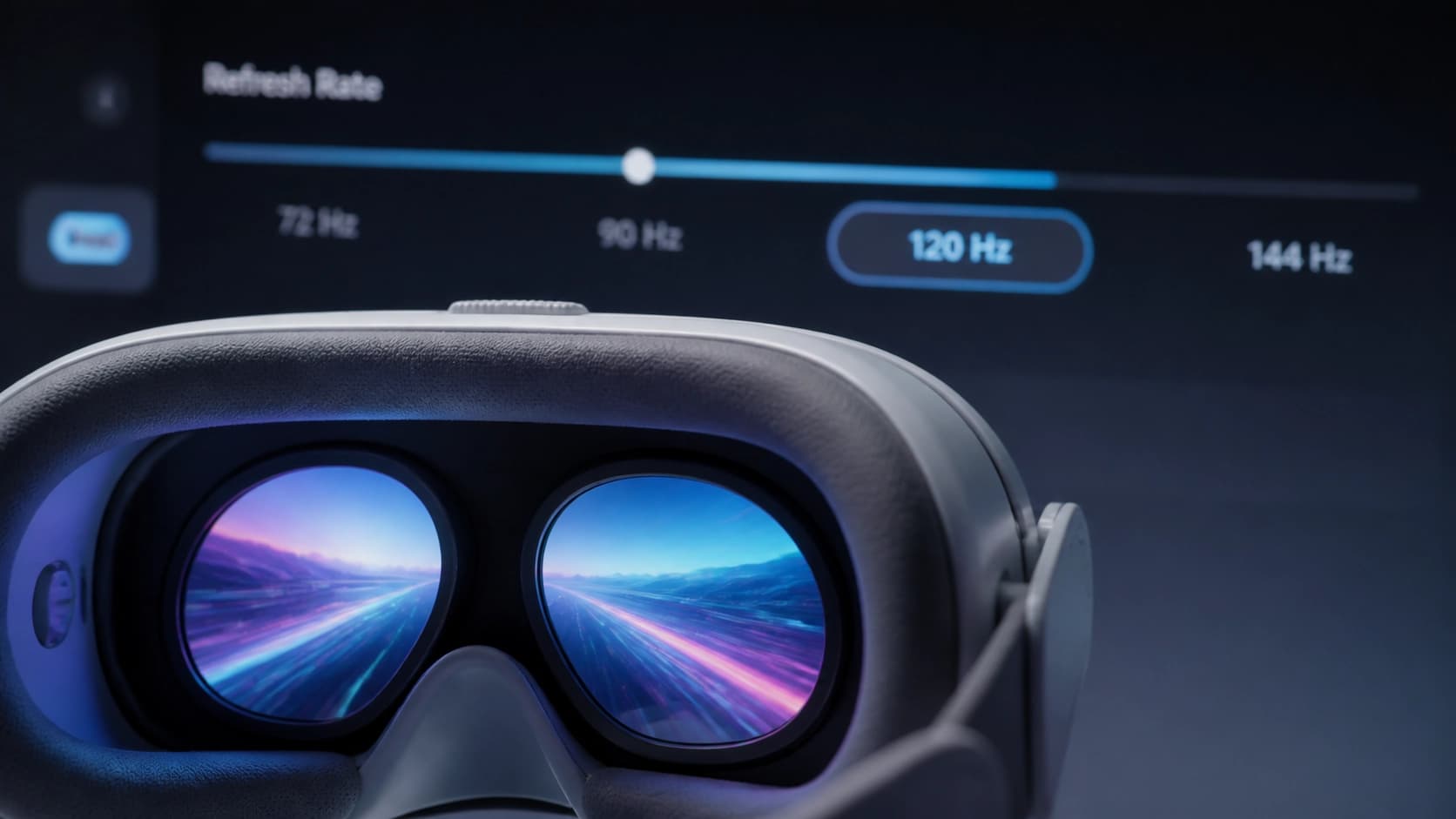
Root access is not just about being able to dig through system files. For regular users, it means the device can be used the way they want, not the way the manufacturer allowed. For example, the project opens the door to experiments with display refresh rates. Back in 2019, the company's CTO John Carmack admitted that the refresh rate on Quest was capped at 72 Hz for performance reasons, even though the hardware could handle more. Now enthusiasts are doing early work on activating 90 Hz mode — that very "hidden" feature owners had long dreamed of.
There are also projects emerging to connect third-party VR controllers to the original Quest. This could significantly expand the headset's compatibility with accessories from other manufacturers, which were previously ignored due to the closed ecosystem.
Looking Back at the Oculus Go Experience
The story of unlocking the Quest 1 is following a familiar pattern. In 2021, Meta officially released an update with "full root access" for another of its headsets — the Oculus Go. Meta's then-CTO John Carmack publicly expressed hope that such a move would allow owners to repurpose the device for new tasks. He even dreamed that the sealed Go headset, twenty years later, could "update to the final software version" once update servers ceased to exist. It seems that the philosophy of openness is gradually reaching even newer — albeit discontinued — devices.
Prospects for the Quest 2: Hope Exists, but Cautiously
The QuestStack project author, going by the handle starseed12345, suggests in GitHub comments that a similar exploit could likely also grant root access on the Quest 2 — but only on older firmware versions. However, there is the risk of "bricking": if something goes wrong, the device could turn into a useless piece of plastic. According to the developer, at this point the potential benefit of unlocking the bootloader on the Quest 2 does not outweigh that risk. So there is no need to rush — first, the technology should be tested on the older first-generation headset, which is no longer officially supported and would be less of a loss.

Enthusiasts, it seems, are not deterred. Every such project brings devices the manufacturer has already written off back to life, and also serves as a reminder: if you want to truly own your gadget, sometimes you have to take matters into your own hands.
Frequently asked questions
Related materials
All materials
Validating Candidates Costs More Than Generating Them: Honeypots Against LLM Vulnerability Hunting
The study examines the cost asymmetry in agentic vulnerability discovery: generating candidate versions is cheap, while confirming them through reachability analysis, execution, and PoC development consumes most of the budget, making verification a potential standalone target for defense. The proposed RedHerring—repository-adapted decoys with a hidden certificate—reduced the number of real vulnerabilities found by 38.7–60.4% at equal cost across 33 OSS-Fuzz projects; even after the agent was warned, the reduction remained at 37.2%.
9 November 2026
Checking LLM Hallucinations via SQL-Based Source Representation Without Fine-Tuning
The study examines whether an LLM can apply a basic symbolic skill—building a SQL database from source documents—to ground its outputs in sources without supervision when detecting hallucinations. On RAGTruth and DiaHalu, this neuro-symbolic pipeline proves more accurate than direct prediction and comparable to state-of-the-art methods, without requiring domain-specific fine-tuning.
9 November 2026
MathAdv: What the Final Accuracy of Machine-Generated Proofs Conceals
A diagnostic suite of tasks spanning 13 undergraduate and graduate mathematics topics evaluates machine-proving systems in Lean 4 not only by their final results, but also by their subject-matter mastery, the quality of their informal reasoning, and their robustness to rephrased conditions. A component-by-component analysis shows that translating a problem into formal form remains the main obstacle, and that success depends heavily on the area of mathematics and how the problem is framed.
9 November 2026