
What is Muse Glimmer
Meta has released a new model, Muse Glimmer, as open source — a 30-billion-parameter agent designed to run directly on user GPUs rather than in cloud clusters. The release is distributed under the Apache 2.0 license, and the model weights were published by Superintelligence Labs on Hugging Face. The open license means developers can freely embed the model into their applications, fine-tune it, and use it in commercial products without mandatory royalties.
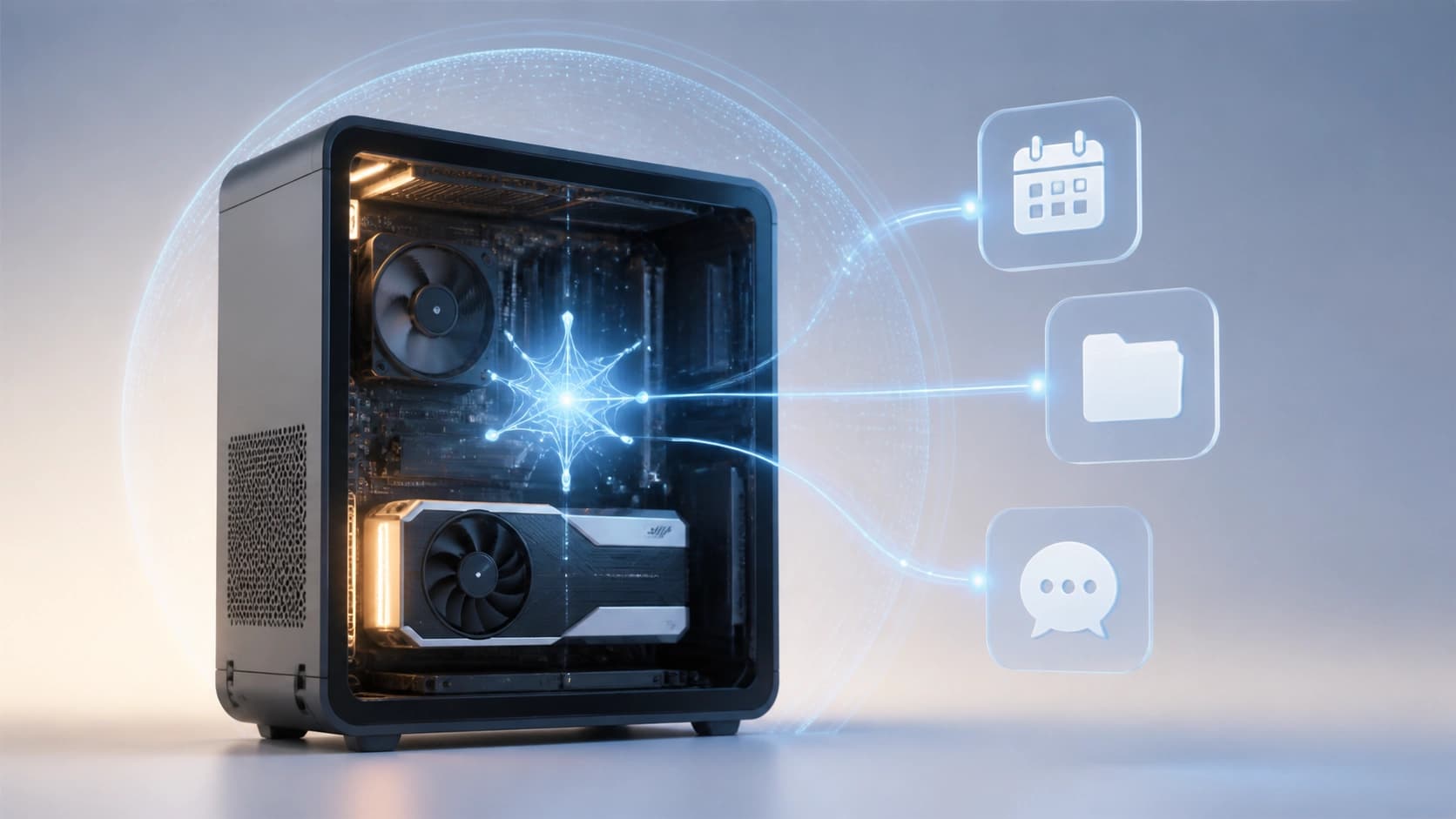
The main bet is on on-device scenarios, i.e., processing data locally on the user's device. This is especially important for personal agents that need access to schedules, messages, files, and other private context. When none of this leaves the device, it's easier to ensure both privacy and responsiveness. Muse Glimmer is positioned as a versatile workhorse: it can be used for local code generation, function calling, building autonomous agents, and even evaluating other language models' responses in an LLM-as-a-judge mode.
Agentic level: wins and caveats
On agentic benchmarks, Meta claims that Muse Glimmer outperforms two competitors — Gemma4-31B from Google and Qwen3.6-27B from Alibaba — in five out of eight general tests. For example, in MCP Atlas (a test of working with external tools), it scores 75.5 versus 54.2 and 62.5 for its rivals. In DeepSearch QA — 74.6 versus 61.7 and 71.1. There's also a noticeable gap in tests simulating banking operations (τ²-Banking): 23.5 versus 15.1 and 16.7. Muse Glimmer also pulls ahead in WildClawBench (47.6 versus 37.6 and 43.2) and GAIA2 (43.3 versus 36.4 and 40.0).
Meanwhile, Qwen3.6-27B takes three tests: GDPval-AA (1141 versus 953 for Muse Glimmer), SkillsBench with Skills (46.6 versus 44.3), and OSWorld-Verified (75.6 versus 65.9 and 58.5). The review authors rightly note that such benchmarks measure fairly narrow skills and don't show how the model will actually behave in combination with files, calendars, messengers, and internal organizational tools. So the gaps in numbers are more of a guideline than a guarantee of success in real-world conditions.

Coding and tool use
In programming, Muse Glimmer also looks confident. On the SWE-Bench Pro benchmark, which tests solving real GitHub issues, it scores 51.2 — noticeably higher than Gemma4-31B's 36.9 and even Qwen3.6-27B's 50.2. On SciCode, results are nearly equal: 43.6 for Muse Glimmer versus 43.4 for Gemma and 39.8 for Qwen. But on SWE-Bench Verified and TerminalBench 2.1, Qwen takes the lead: 77.2 versus 76.0 and 60.7 versus 51.7, respectively.
Muse Glimmer supports OpenClaw, a popular framework for orchestrating agents, as well as other agent management patterns; custom scaffolds are described in the official documentation. An important nuance: the model includes retry training — it can re-request tools after failed calls. For a developer, this is a plus, but it's also a responsibility: retries need to be controlled, especially if the agent gets access to a codebase or external systems, otherwise you can quickly accumulate unwanted side effects.
OpenClaw — is exactly about this: an open ecosystem where the model becomes the brain, not just a text generator.
Multimodality out of the box
Muse Glimmer can accept interleaved text and images through a dedicated perceptual encoder. On the Charxiv Reasoning benchmark, it scores 78.8 — slightly above Gemma4-31B (77.7) and Qwen3.6-27B (78.4). On ScreenSpot Pro, which evaluates GUI understanding, Qwen leads with 76.1, while Muse Glimmer gets 75.4 (Gemma — 75.9). In document recognition on OmniDocBench v1.5, Qwen again leads (77.8), while Muse Glimmer scores 75.8 and Gemma 72.5. On the complex MMMU Pro exam, results are close: 75, 74, and 73 in Qwen's favor.
The practical takeaway: the model confidently handles mixed inputs, which is critical for an agent that needs to "see" screenshots, scans, and images in chats.

Safety: trade-offs
The safety picture is mixed. On the CI Memories test, which checks how well the model retains private data in long-term memory, Muse Glimmer has 26.4% violations at 64.8% coverage. Gemma4-31B has nearly half the violations (12.1%), but also lower coverage (53.0%). Qwen turns out to be the riskiest: violations at 53.4% with maximum coverage of 66.9%. On the Siren AgentDojo test, which evaluates resilience to attacks, Muse Glimmer shows a 28.4% attack success rate and 94.2% utility. For Gemma, attacks succeed slightly less often (25.6%), while for Qwen — much more often (40.3%).
So Muse Glimmer offers a balance between functionality and protection: it's noticeably safer than Qwen but falls behind Gemma in this particular scenario. For local use, this is not critical, but it's worth considering when deploying in real systems.
Conclusions: a bet on local sovereignty
Muse Glimmer is not just another open model — it's an attempt to shift the weight of agentic tasks to the user's side. It shows convincing results in agentic and coding benchmarks, handles multimodal data, and offers a reasonable safety compromise. Losses to Qwen in several tests remind us that there's no such thing as universality, and model choice depends on the specific task.
But the main change is philosophical. Previously, AI agents were associated with powerful servers and huge API bills. Now, a 30-billion-parameter model capable of performing complex actions lives on an ordinary GPU — and that opens the door to applications where privacy matters more than cloud's fleeting power. And the open code and Apache 2.0 license allow any developer to run such an agent locally — and from here begins a new wave of local software.