
Kylie Jenner’s X account hack reportedly helped Solana token kylie briefly reach $1.19 million
Attackers posted links to the memecoin on Jenner's profile, after which it surged to a market valuation of around $1.19 million, then quickly lost some of its value. Imitation tokens using similar names and designs immediately appeared on Solana.
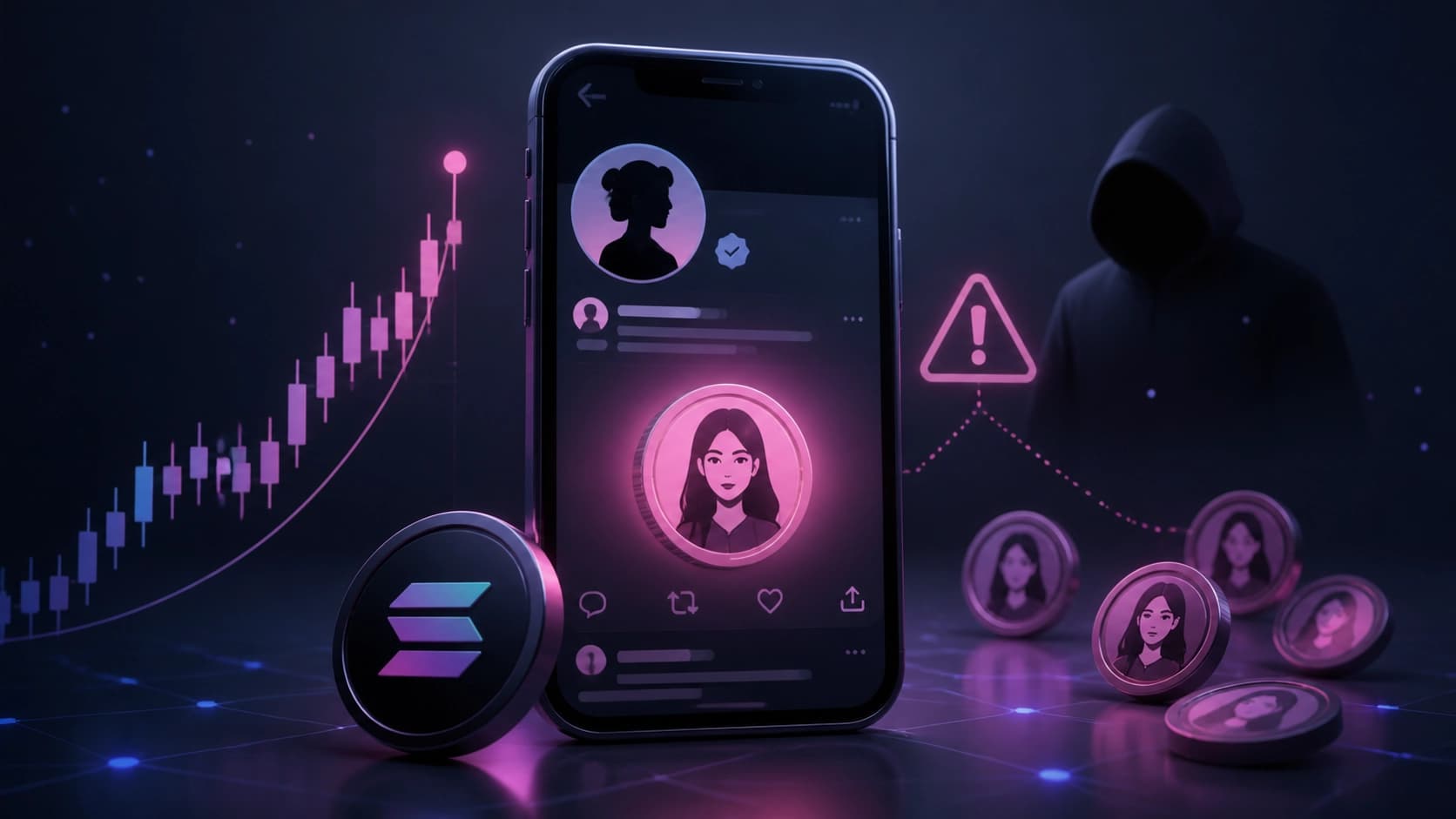
Kylie Jenner's Account Hack Sends Memecoin Kylie on a Rollercoaster Ride
Social media has once again become a launchpad for scam schemes. This time, Kylie Jenner found herself at the center of the story: her X account, apparently, fell into the hands of malicious actors. The consequences for the crypto market were immediate — a token appeared on the Solana blockchain that skyrocketed to millions of dollars in market capitalization within minutes.
The attack on the celebrity's account, with an audience of nearly 39.5 million followers, happened suddenly. First, a message about a certain "trading opportunity" appeared in the feed, with a link to a Pump.fun profile — a popular platform for launching memecoins. After some time, the publication was supplemented or replaced: the new post featured the ticker kylie and the token's contract address on Solana.
Notably, followers quickly noticed a sharp change in the style of posts, which became the first red flag. Quite quickly, commenters began to speculate that the account had been hacked, but this did not stop the wave of speculative demand.
Instant Surge and an Equally Rapid Fall
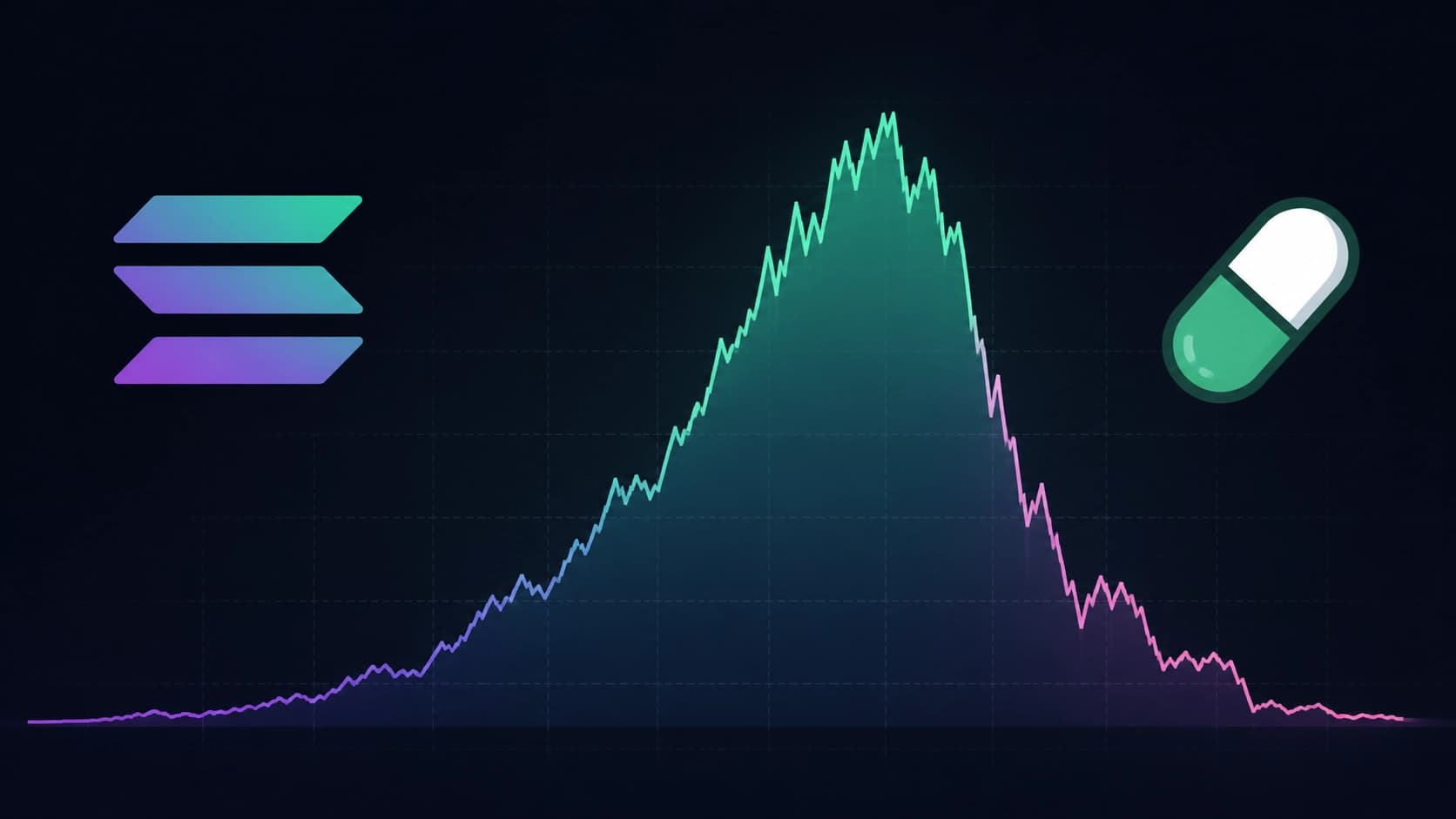
The price dynamics of Kylie resembled a classic pump. According to analytics services, the token's market capitalization peaked at $1.19 million. At one point, the asset was trading on the decentralized exchange PumpSwap, and interest was fueled by views: the first post garnered around 50,000 views, the second — about 33,000.
However, the holders' joy was short-lived. As soon as the promotional posts disappeared from the account, the coin crashed. The decline amounted to approximately 68% from peak values. By the time data was recorded, Kylie's market capitalization had already fallen to about $378.5 thousand.
Nevertheless, even at these levels, the asset showed high activity. Over 24 hours, trading volume exceeded $6.1 million, indicating a huge number of speculative trades. At the same time, the pool's liquidity was extremely modest — about $58.9 thousand, and the number of holders reached approximately 3.7 thousand addresses. Such a disproportion between turnover and liquidity is a sure sign of extreme volatility and risk.
A Legion of Imitators
The story didn't end there. After the hack, a whole wave of copycat tokens literally emerged on Solana. Some of them used similar profile images to deceive inattentive buyers.
One of the clones turned out to be particularly "successful": it managed to attract $1.04 million in market capitalization, securing a trading volume of $6.72 million. The other imitators were noticeably more modest — their valuations ranged from $29.8 thousand to $370.3 thousand.
Notably, none of these doppelganger tokens had been trading for more than seven hours at that point. This suggests that most of the activity was fleeting and built solely on the hype generated by the news of the hack.
A Familiar Pattern: A Series of Account Hacks to Promote Coins
The case with Kylie Jenner is not an isolated one. Similar attacks occur with alarming regularity. Malicious actors have clearly bet on hacking the accounts of well-known personalities and brands to promote dubious crypto assets.
The scheme is nearly identical in each case: an account with a large audience is taken over, a post about a new "promising" token is published, and then the appearance of a frenzy is created. Some buyers enter the asset before the scammers drain the liquidity, ultimately left holding devalued coins.
Recent examples come to mind. Over the summer, the SpaceX and Starlink accounts were used to promote the SCATMAN coin, whose market value peaked at only $125 thousand. The account of Robinhood CEO Vlad Tenev was also used — it was hacked to promote the Vladhood token, which managed to grow to about $1.2 million.
The hack of Senator Cynthia Lummis's account was used to advertise a fake USA token. And actor Dean Norris, known for his roles in TV series, was forced to publicly distance himself from the DEAN coin, which was promoted from his page in January 2025.
A Lesson for Investors
These stories share one common thread: trusting promotional posts on social media, even from big names, is extremely risky. Such assets have no real value, and their price depends almost entirely on the news cycle and the influx of new buyers.
In the case of Kylie, the token quickly lost two-thirds of its value as soon as the news catalyst disappeared. For inexperienced traders, this could be an expensive lesson. If you're offered "crypto" through celebrity communities, it's worth remembering: most often, it's fraud, not a concern for someone else's financial well-being. A sharp change in an account's tone, links to anonymous contracts, and hype-driven views are typical signs of compromise.
While enthusiasts continue to hunt for "quick profits," scammers will keep refining their methods. The only effective defense remains critical thinking and verifying information from independent sources, rather than blindly following links from hacked profiles.
Frequently asked questions
Related materials
All materials
Canonical Polynomial Invariants for Diagnosing RL Simulator Failures: Where Are They Actually Useful?
The study examines whether incorporating physical laws into learnable dynamics models is justified: invariants extracted from trajectories and reduced to canonical form using Gröbner bases yield modest forecasting gains, but prove powerful for diagnostics, enabling the localization of violated constraints and identification of specific erroneous parameters.
10 November 2026
AURA-Eval: How to Check Whether an LLM Agent Recognized a Risk and Changed Its Next Step
The framework evaluates LLM agents’ behavior not by their final verdict, but by how they respond to risk at key decision points: tool-call trajectories are interrupted, after which the model must continue reasoning and acting, while a panel of LLM judges assesses risk detection, the nature of the step, and its safety. Across 1,249 tasks drawn from 157 R-Judge trajectories, unsafe actions become more frequent among 20 models when no safe path is available, and removing oversight before execution turns 52.3% of initially safe cases into unsafe ones.
10 November 2026
Chern–Simons Reservoir Memory: Autonomous Connectivity Dynamics and Density Transport
The article explores how a reservoir preserves the history of input signals both in its density distribution and in its geometric degrees of freedom. A comparison of four mechanisms shows that current creates a separate connected component that alters the subsequent density response, while accounting for all measured features yields a small improvement in decoding pulse order.
10 November 2026