Physical AI moves on board
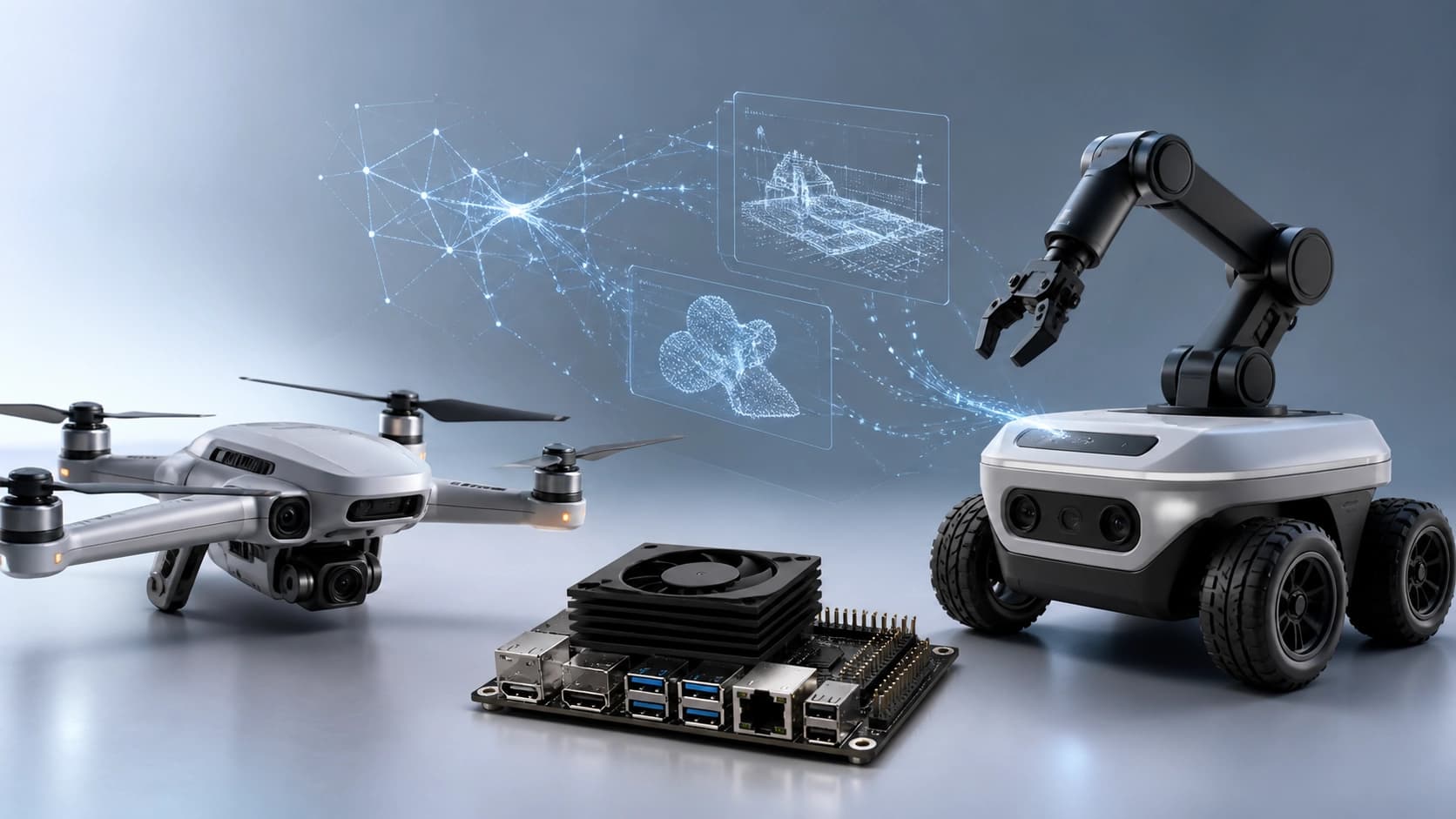
NVIDIA has released the Jetson Orin Nano 2 — an edge computer built for robotics that the company is promoting under the banner of "physical AI." The target scenarios are drones, home robots, and computer vision systems — that is, hardware that needs to make decisions on the spot, without a trip to the cloud. Formally, this is an entry-level device, but it is precisely on it that developers are meant to gain the ability to run generative models right on board.
The premise behind the release is simple. According to NVIDIA's estimate, compact and mid-sized AI models over the past year have reached an accuracy that until recently was considered the privilege of the largest frontier systems. That means, the vendor reasons, intelligence that once required a server rack now fits inside the body of a drone or a cleaning robot. Deepu Talla, NVIDIA's vice president of robotics and edge AI, puts it this way: cutting-edge models that a year ago lived in data centers today run in real time on entry-level devices in the Jetson line.
Hardware: 78 TOPS and 8 GB of memory
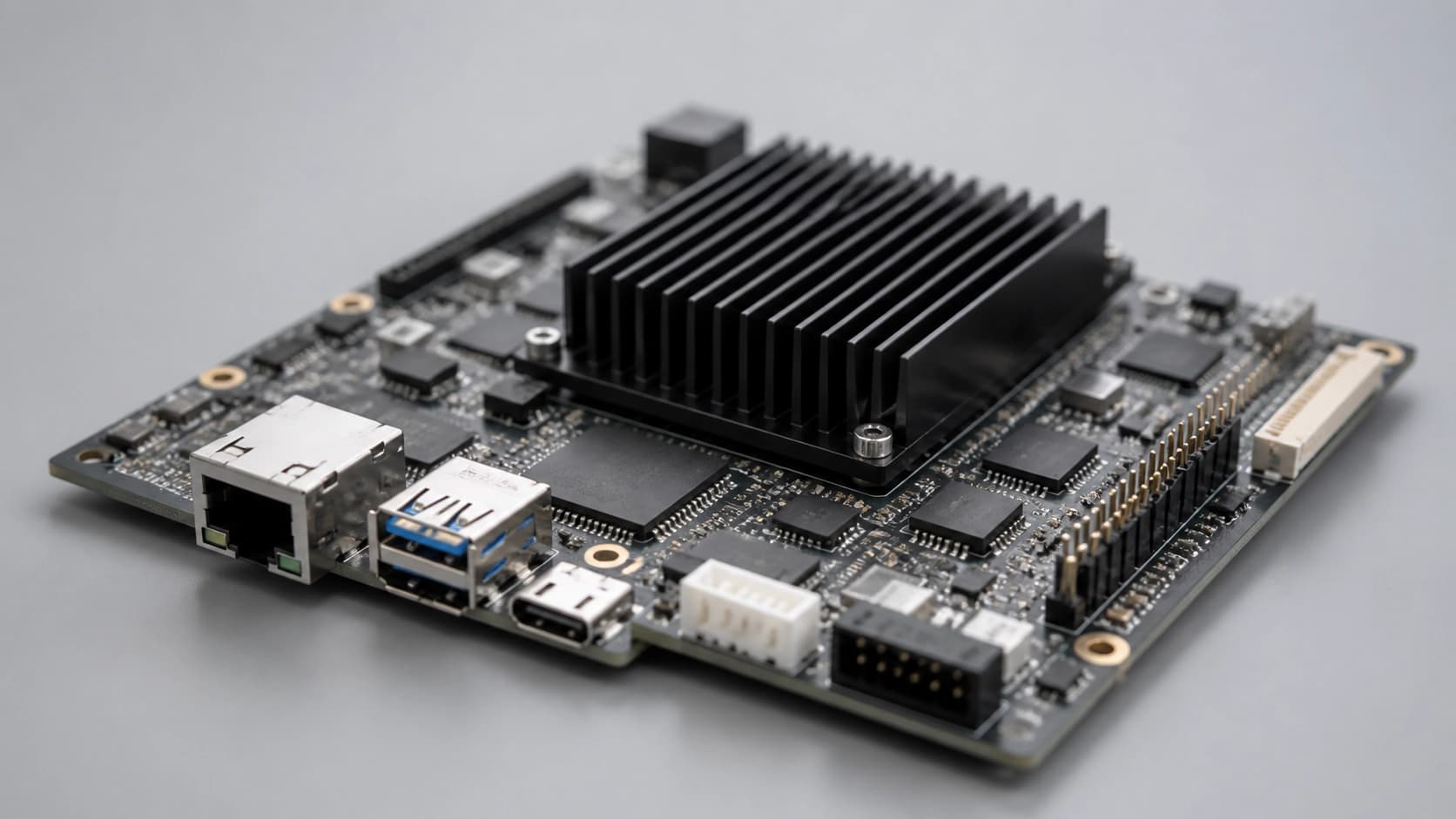
The Jetson Orin Nano 2 is rated at 78 TOPS of AI compute, 8 GB of memory, and an eight-core Arm-architecture processor. Inference performance is twice that of the Jetson Orin Nano Super: the gain comes from improved Tensor Cores and higher memory bandwidth, while the board's dimensions remain unchanged. Energy efficiency is emphasized separately — in 15-watt mode, the new product consumes roughly 40% less than its predecessor while delivering comparable results.
For on-board hardware, that last point matters more than it might seem at first glance. Every watt on a drone is either minutes of flight time or extra battery weight, and a home robot has no use for heat and fan noise. So the energy savings here are not a marketing line but a condition under which the product makes sense to release at all.
Software: models run locally
The software side relies on NVIDIA's open stack and Jetson agent skills together with the Jetson AI ecosystem. The main constraint is memory: 8 GB is not much, so models have to be run in a memory-efficient mode rather than "as is." This applies primarily to language and vision-language models, which need to fit within the budget while still responding in real time.
As examples of suitable models, NVIDIA names its own Cosmos and Nemotron, as well as third-party Gemma 4 and Qwen 3. The lineup is telling: video generation and reasoning models — things that just a couple of years ago were not run at the edge even for demonstration purposes.
Who is already testing it
Among the first companies adopting and exploring the Jetson Orin Nano 2 are Cognex, Doosan Bobcat, and Matic. NVIDIA also claims that more than three million developers work on its robotics stack — a figure that speaks more to the scale of the ecosystem than to sales of a specific board.
Delivery drones
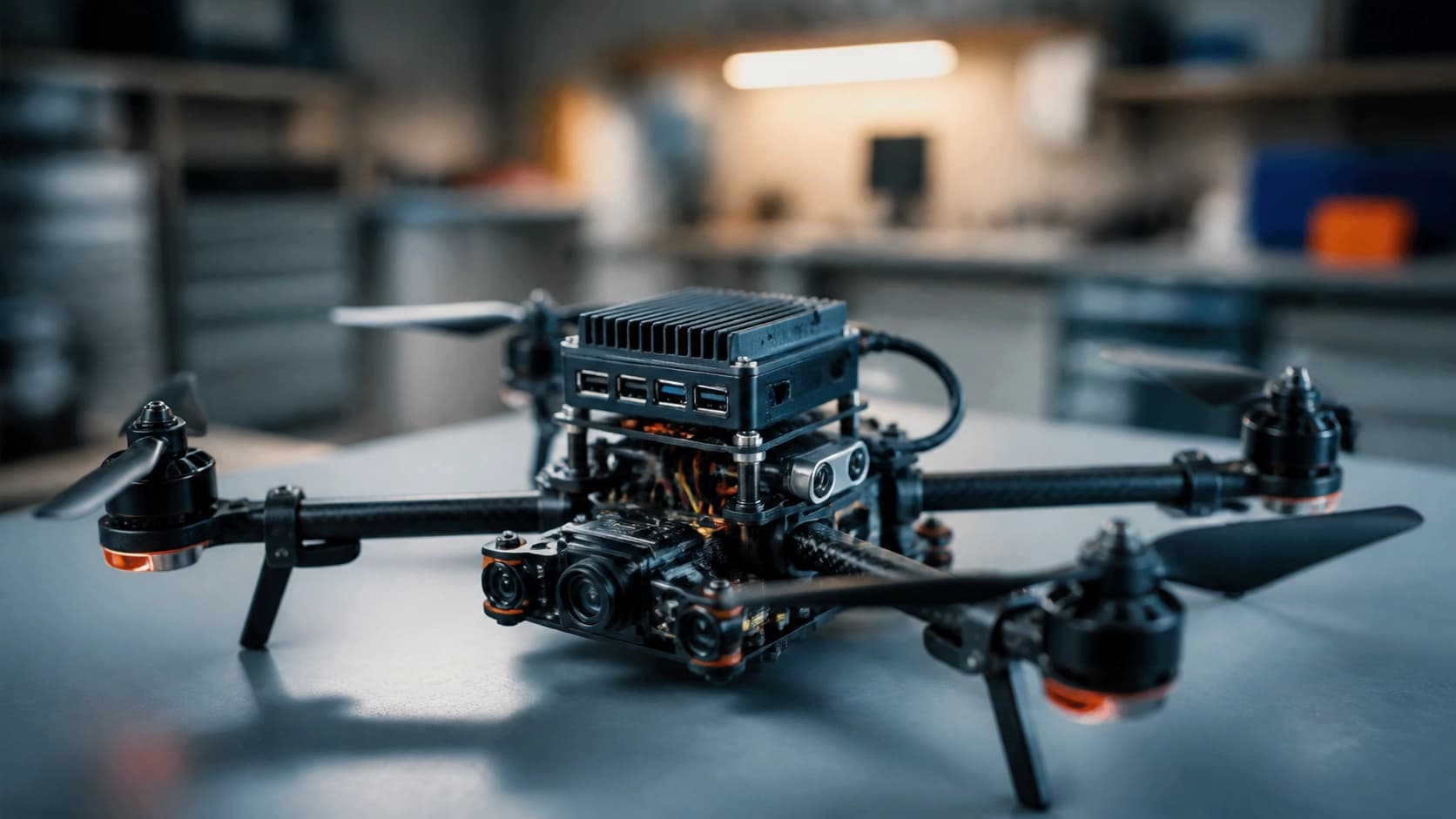
Wing, an Alphabet subsidiary, already uses the Jetson Orin Nano Super and NVIDIA's software stack across its entire drone fleet. The company plans to evaluate the new product to advance in real-time perception and reasoning: the goal is to make delivery from local businesses to residential courtyards faster and more reliable. Dinuka Abeywardena, head of perception at Wing, explains that autonomous delivery depends on AI capable of quickly and reliably understanding the surrounding world, and that the company sees in the new board a path to more responsive and energy-efficient aircraft. There is no public timeline for moving from evaluation to regular flights on the new board.
Home robots
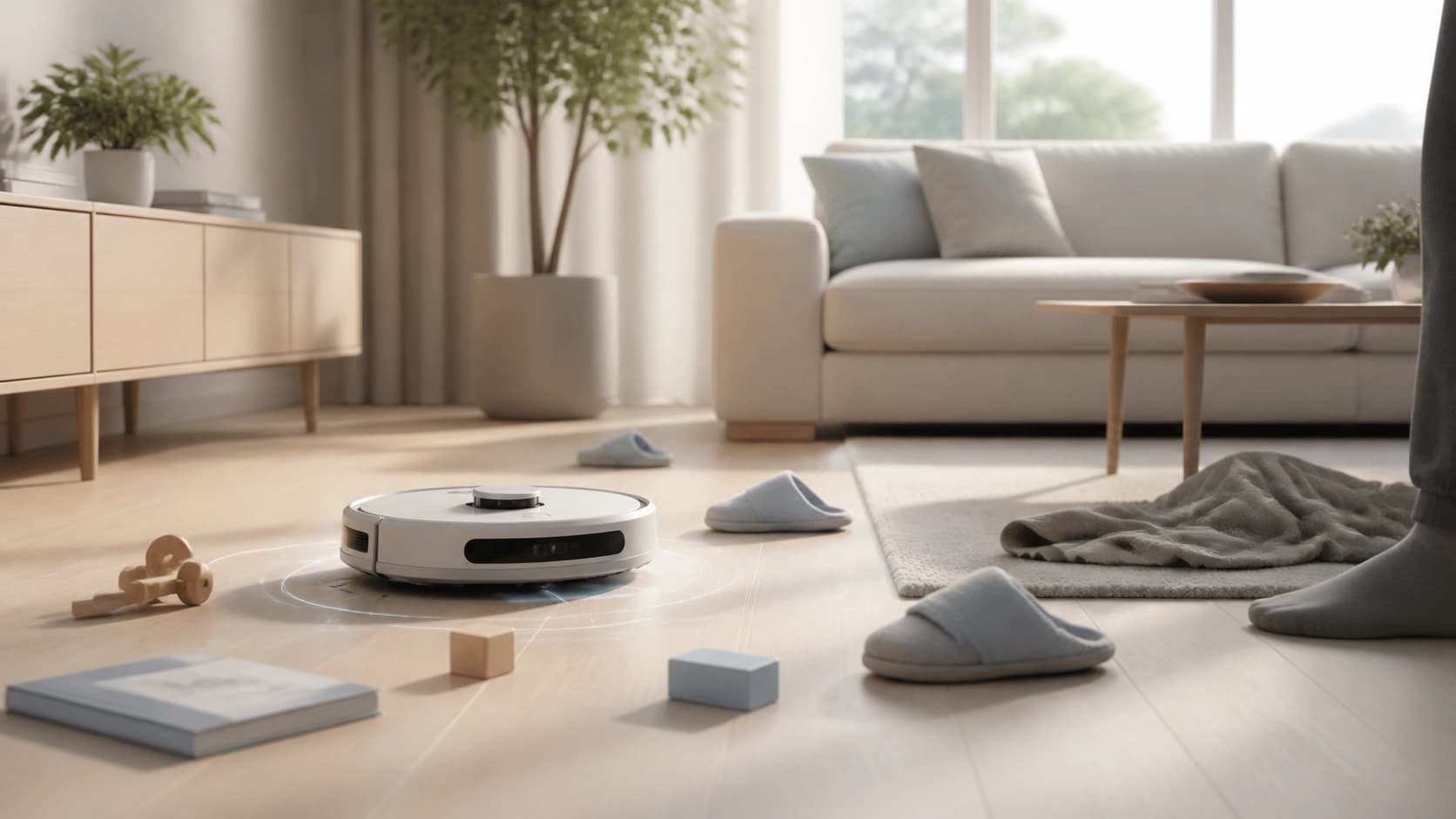
Matic Robots is putting the Jetson Orin Nano 2 into its home cleaning robots. According to NVIDIA, the board makes it possible to add conversational AI, gesture recognition, precise mapping, and semantic understanding of the home, and along with them, autonomous cleaning behavior. Navnit Dalal, co-founder and CEO of Matic Robots, describes the task this way: a home robot has to simultaneously understand people, accurately map the space, make sense of where objects are located, and clean in a constantly changing environment, and the new board makes it possible to run cutting-edge models locally.
Manufacturer ecosystem
A broad circle of partners has been built around the board. AAEON, ADLINK, Advantech, and Aetina are named among the makers of carrier boards and ready-made hardware systems. Antmicro, Aptiv, Auvidea, and AVerMedia are working on customized AI software and reference designs together with Chuanglebo, Connect Tech, ForeCR, and JWIPC. Rounding out the list are Neurealm, Plink, Realtimes, RidgeRun, RS, Seeed Studio, Tauro Tech, Twowin, TZTEK, and YUAN — according to NVIDIA, all of them help customers bring products to market faster.
The point of such a list is simple: a ready-made board is only half the battle. For most teams that need AI on board, what matters more than the module itself is the enclosure, cooling, connectors, drivers, and predictable support. The denser the network of integrators around a platform, the less time it takes to go from prototype to a mass-produced device.
What this means
The positioning of the Jetson Orin Nano 2 is not about benchmark records but about a change in where AI actually lives. Local inference delivers what you cannot buy in the cloud: latency without network spikes, operation where there is no connectivity, and data that never leaves the device. For a home robot, this is also a matter of privacy — the video feed from an apartment stays in the apartment.
The limitations do not go away either. Eight gigabytes of memory mean that the largest models will not make it on board, only their trimmed-down and quantized versions, and the quality of responses will differ from server-grade. On top of that, neither Wing nor the other partners have yet given a timeline for when evaluation of the new board will turn into mass production. So what we have is more an open door than a ready-made scenario: the hardware for physical AI has become accessible, and exactly what will be built on it is a question for the coming seasons.
The announcement was accompanied by Physical AI Expo events in Amsterdam, London, and North America; the release coverage was published on August 26, 2026.