
The cost of switching control: why changing models mid-task eats up the benefit
A study of what happens when a long coding-agent task is picked up by another model: full context continuity when switching to a stronger model rarely pays off and yields only part of the quality gain. But the reverse maneuver — dropping to a cheap model after heavy reasoning — looks cost-effective.

A long coding agent task is not a single request but dozens: model calls, tool invocations, file edits, repeated test runs. And on almost every such run, the thought arises: should I switch models right now?
Why switching on the fly looks advantageous
The economics here are simple. A strong model costs more per token but reasons better. A weak one is cheaper but stalls on hard problems. Hence two natural maneuvers:
- Escalation — when the cheap model gets stuck, we bring in the expensive, powerful one.
- Downgrading — when the hard part is behind us, we return to the cheap one so as not to overpay for routine work.
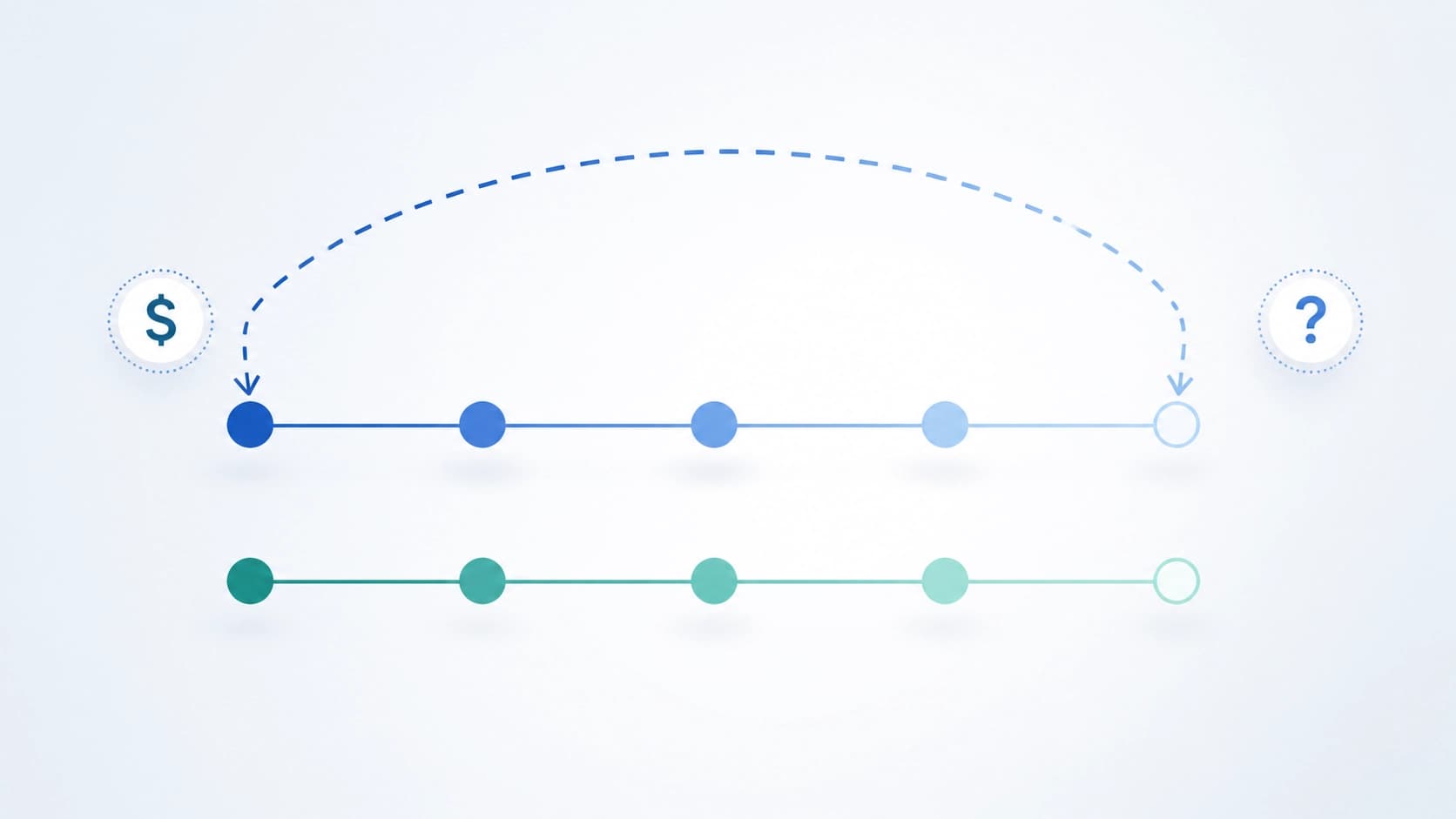
On paper, a hybrid route looks ideal: the expensive model is paid for only where it is truly needed. But the agent passes on to the next model not just files and repository state. It passes on the history: the chain of reasoning, tool outputs, dead ends, intermediate decisions. The receiving side continues a trajectory built by another model — with a different style, a different level of detail, different habits. This is precisely the point examined by the authors of the preprint "The Handoff Tax: Continuing Non-Native Trajectories in LLM Agents" (arXiv:2608.24358, August 25, 2026).
How the experiment is structured
The work relies on pairs of models: cheap and less capable (referred to in the paper as LC, low cost) versus expensive and stronger (HC, high cost). The pairs are drawn from two families — Claude and GPT, meaning the test ran not on a single vendor but on two at once, which notably increases the value of the conclusions.
Three things were varied:
- Direction of transfer — upward, to a stronger model, and downward, to a weaker one.
- Timing of the switch within a long task.
- Format of context transfer — what the authors call the interface.
The last point is the most interesting. Three options were compared: full transfer of the entire trajectory, compaction (a condensed digest of the history), and deletion of the trajectory while preserving only the repository state. In other words, the question posed was: how much of someone else's "thinking" is even worth showing to the new model?

Main result: the handoff tax
The conclusion turned out to be sobering. During escalation, full history transfer closes less than half of the quality gap between the weak and strong model — and comes with a noticeable cost premium. That is, you pay the expensive model's rate but get only part of its advantage. The authors called this difference the handoff tax.
Moreover, this is not an artifact of a single vendor: the pattern repeated across both families. The logical explanation is that the strong model spends context parsing someone else's labyrinth, partially inherits its predecessor's faulty assumptions, and starts not from a clean slate but with baggage. Part of its capability goes into "reading someone else's diary" instead of solving the task.
Asymmetry: downward — yes, upward — with caveats
The most useful observation is that the tax is not symmetric. Downgrading, on the contrary, produced a favorable price-to-quality point: switching to the cheap model after a complex reasoning stage is complete works.
Even more interesting is that the preferred context transfer format flips to the opposite depending on direction:
- During escalation, reducing information about the weak model's trajectory helps more. Less noise — a cleaner start.
- During downgrading, deleting the strong model's trajectory reduces quality. Here the history works as a support, and it is worth preserving.
The explanation suggests itself: the weak model leaves a trail of dead ends, and for the strong one it only gets in the way. Whereas the strong one leaves a well-calibrated plan and correct decisions that the weak one can follow like rails. This is my interpretation rather than a literal conclusion of the paper, but it aligns well with the numbers.
What to do in practice
The practical takeaways are as follows:
- Switch less often than you'd like. Every switch is not a free operation but a transaction with an unknown price.
- Escalate at a boundary, not "when stuck." A good point is a completed cycle with a clear failure (for example, tests consistently failing), not the middle of reasoning.
- Upward — compress, downward — preserve. Before handing off to the strong model, assemble a compact digest: what has already been done, what didn't work, what the constraints are. Keeping the full transcript of attempts is not worth it.
- Downward you can hand off generously. The weak model benefits from seeing the plan and edits left by the strong one.
- Measure your own tax. The difference between "full history" and "compaction" during escalation is a ready-made A/B test worth running on your own tasks: it's cheap and quickly shows whether you're paying the tax or not.
A separate thought: sometimes it's cheaper not to change the model mid-task at all. If the strong one is needed only for planning, it makes more sense to separate the roles in advance — plan from the strong one, execution by the weak one — than to arrange a handoff within a single trajectory.

Conclusion
Switching models mid-task is not a free lever for budget optimization but an operation with its own price. Transferring someone else's trajectory eats into part of the advantage you're paying for. Escalation in this sense is riskier than it seems; downgrading, on the contrary, works predictably. And the main practical technique lies not in choosing a model but in choosing what exactly you show that model. The results were obtained on coding agents and specific model pairs, so they shouldn't be transferred one-to-one to all scenarios — but as a working hypothesis for your own measurements, they are quite suitable.
Frequently asked questions
Related materials
All materials
Canonical Polynomial Invariants for Diagnosing RL Simulator Failures: Where Are They Actually Useful?
The study examines whether incorporating physical laws into learnable dynamics models is justified: invariants extracted from trajectories and reduced to canonical form using Gröbner bases yield modest forecasting gains, but prove powerful for diagnostics, enabling the localization of violated constraints and identification of specific erroneous parameters.
10 November 2026
AURA-Eval: How to Check Whether an LLM Agent Recognized a Risk and Changed Its Next Step
The framework evaluates LLM agents’ behavior not by their final verdict, but by how they respond to risk at key decision points: tool-call trajectories are interrupted, after which the model must continue reasoning and acting, while a panel of LLM judges assesses risk detection, the nature of the step, and its safety. Across 1,249 tasks drawn from 157 R-Judge trajectories, unsafe actions become more frequent among 20 models when no safe path is available, and removing oversight before execution turns 52.3% of initially safe cases into unsafe ones.
10 November 2026
Chern–Simons Reservoir Memory: Autonomous Connectivity Dynamics and Density Transport
The article explores how a reservoir preserves the history of input signals both in its density distribution and in its geometric degrees of freedom. A comparison of four mechanisms shows that current creates a separate connected component that alters the subsequent density response, while accounting for all measured features yields a small improvement in decoding pulse order.
10 November 2026