
Groq raises $350M and pivots from its own chips to a neocloud with Nvidia GPUs
A company that once bet on its own LPU processors is now developing cloud infrastructure for AI: the new funding will go toward expanding data centers and clusters on Nvidia hardware. Groq is now valued at $3.5 billion — lower than before, but the company attributes this to a new structure following a licensing deal with Nvidia.
Pivoting Course: From Chipmaker to Neocloud
Groq, a company previously known as developing specialized processors for artificial intelligence, has announced raising $350 million. These funds will fuel its transformation into a so-called neocloud — a provider of computing infrastructure based on Nvidia graphics processors. The round was led by investment firm Disruptive, with Nvidia itself planning to participate. The symbolism is obvious: not long ago, Groq was Nvidia's competitor in AI inference, and now it is becoming its partner and customer.
The company's valuation after the round stood at $3.5 billion. This is noticeably lower than the $6.9 billion recorded in September — before Nvidia hired Groq's founder and CEO Jonathan Ross along with other leading specialists. The deal, under which Nvidia obtained licenses to Groq's technologies, was valued at $20 billion. Groq does not consider the valuation drop a down round, explaining it as a reassessment of the "company's value after the Nvidia deal." Formally, this is logical: Groq is now a different organization with a different strategy, so comparing the old and new valuations directly is incorrect.
Why Groq Abandoned Its Own Chips
Previously, Groq's strategy revolved around its own LPU chips — language processors tailored for running models. They were meant to compete with Nvidia's accelerators in inference, i.e., in running already-trained neural networks. However, after Nvidia licensed key technologies and poached the development team, including the CEO, continuing this path became nearly impossible: Groq no longer had the people who could develop its own hardware.
The way out was a pivot toward the cloud provider model. In essence, Groq no longer manufactures chips but purchases ready-made Nvidia systems and offers them to customers as a service. This is the classic neocloud model that other companies have already tested. Groq took its first step in this direction in June, raising $650 million. The fresh $350 million allows it to continue the transformation and expand infrastructure.
How Groq's Business Works Now
Today, Groq operates 13 data centers in North America, Europe, the Middle East, and the Asia-Pacific region. Total capacity is 54 megawatts, but by 2027 the company plans to increase it to over 200 megawatts. Such expansion requires significant capital investment, and that is exactly where the new money will go.
Groq's customer base includes more than 6 million developers, enterprises, and AI-focused companies. Based on statements from company representatives, the main customers are those who need medium and large clusters of Nvidia accelerated computing for training and inference. Demand for such resources is enormous: training large models requires thousands of GPUs, and running these models in production requires even more.
Groq's Chairman and Disruptive's CEO Alex Davis sees the future precisely in inference. According to him, the company is building "the world's leading AI inference cloud," as inference will become the largest and most critical layer of AI infrastructure. Indeed, many companies that have trained models already face the problem of expensive operation. If Groq can offer affordable inference capacity, this could become its main competitive advantage.
Neoclouds: Risks and Prospects
The term "neocloud" has become attached to young cloud providers that specialize in GPU infrastructure for AI. Their main advantage is flexibility and speed of deployment, but there are also serious risks. An example is CoreWeave — one of the leaders in the segment. The company shows rapid revenue growth and signs multi-billion-dollar contracts with Meta and Anthropic, yet investors point to high capital expenditures, growing debt, and the risk that equipment will quickly become obsolete.

Nvidia, in turn, is interested in the prosperity of neoclouds because they create demand for its GPUs. The company invests billions in such clouds, including CoreWeave, Lambda, and Nebius. Groq, with its new focus, becomes part of this ecosystem. However, the question remains open as to how profitable this business will be in the long term. If demand for AI computing slows down or more efficient chips emerge, neoclouds will face tough times.
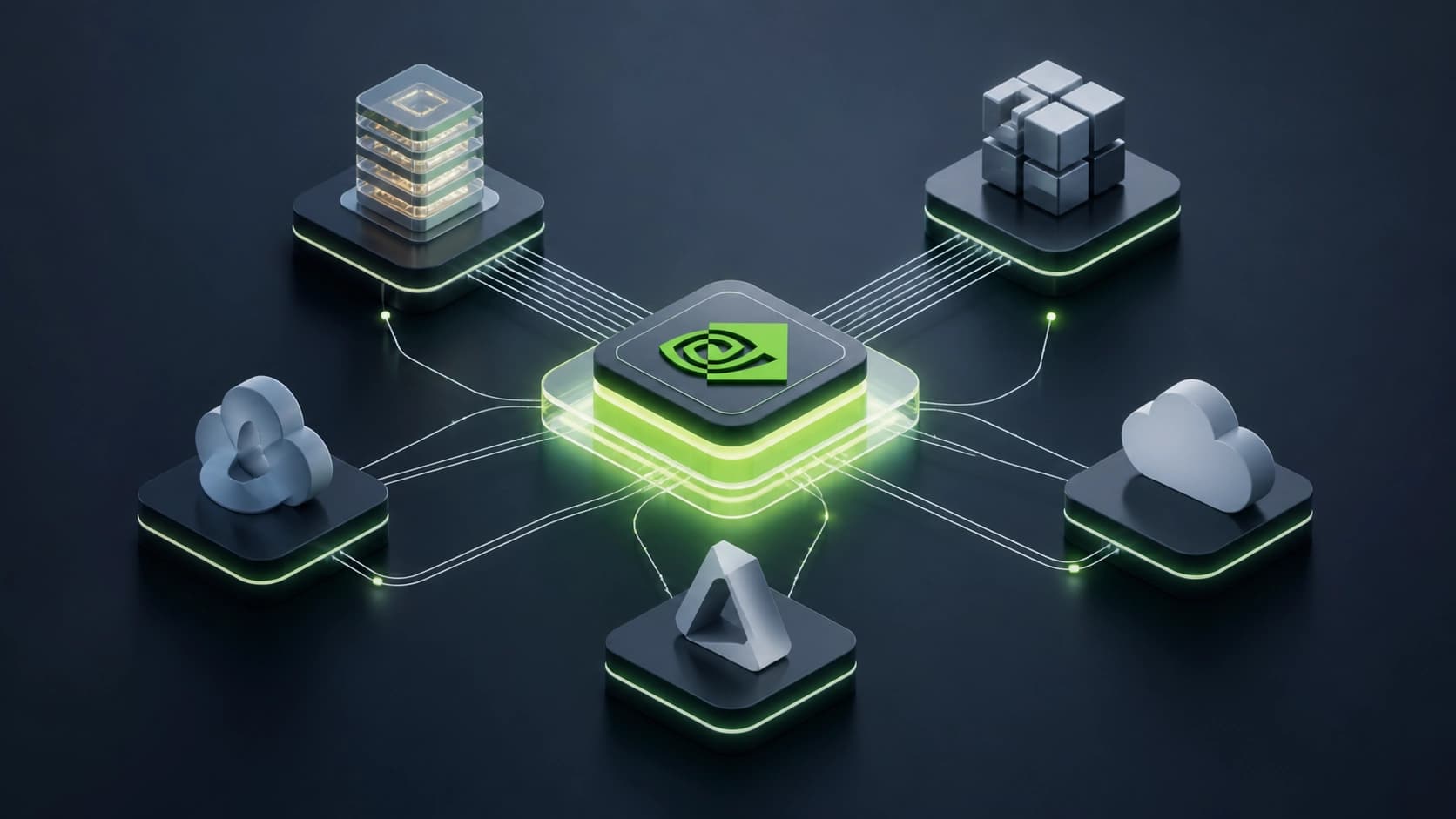
For now, Groq is betting that inference will become the main driver of AI infrastructure. The company's story is a vivid example of how quickly priorities change in the AI industry: just a year ago, Groq was an ambitious chipmaker, and today it is a data center operator running on someone else's GPUs. Time will tell how successful this maneuver turns out to be.
Frequently asked questions
Related materials
All materials
Validating Candidates Costs More Than Generating Them: Honeypots Against LLM Vulnerability Hunting
The study examines the cost asymmetry in agentic vulnerability discovery: generating candidate versions is cheap, while confirming them through reachability analysis, execution, and PoC development consumes most of the budget, making verification a potential standalone target for defense. The proposed RedHerring—repository-adapted decoys with a hidden certificate—reduced the number of real vulnerabilities found by 38.7–60.4% at equal cost across 33 OSS-Fuzz projects; even after the agent was warned, the reduction remained at 37.2%.
9 November 2026
Checking LLM Hallucinations via SQL-Based Source Representation Without Fine-Tuning
The study examines whether an LLM can apply a basic symbolic skill—building a SQL database from source documents—to ground its outputs in sources without supervision when detecting hallucinations. On RAGTruth and DiaHalu, this neuro-symbolic pipeline proves more accurate than direct prediction and comparable to state-of-the-art methods, without requiring domain-specific fine-tuning.
9 November 2026
MathAdv: What the Final Accuracy of Machine-Generated Proofs Conceals
A diagnostic suite of tasks spanning 13 undergraduate and graduate mathematics topics evaluates machine-proving systems in Lean 4 not only by their final results, but also by their subject-matter mastery, the quality of their informal reasoning, and their robustness to rephrased conditions. A component-by-component analysis shows that translating a problem into formal form remains the main obstacle, and that success depends heavily on the area of mathematics and how the problem is framed.
9 November 2026