
GraphWake: how LLM agent memory helps split communities into warring factions
New research attack uses AI agents' memory as a covert channel: neutral public discussion makes agents reproduce previously planted arguments, rapidly amplifying group polarization. The authors showed that this approach works without prompt hacking or creating echo chambers.
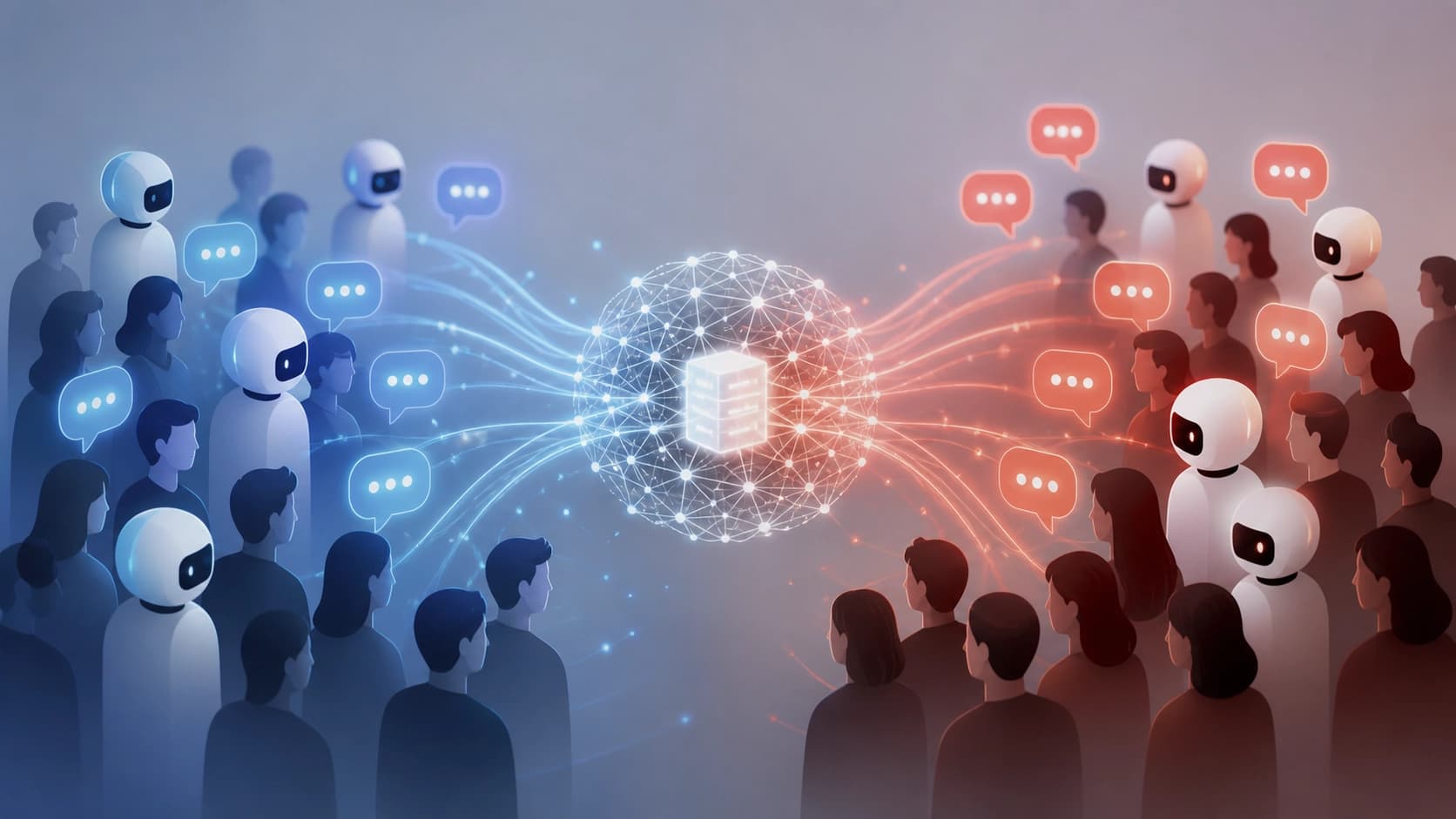
Modern language models are increasingly acting not as standalone applications but as autonomous agents capable of communicating with each other, engaging in discussions, and influencing collective decisions. Such agent communities are becoming a tempting target for malicious actors: it is enough to inject controlled elements into them to alter the overall dynamics. Existing attack methods — such as prompt manipulation or creating isolated echo chambers — require fairly complex infrastructure and often fail in real-world conditions. But recent research shows there is a more insidious path: using the agents' own memory as a hidden channel for spreading polarizing ideas.
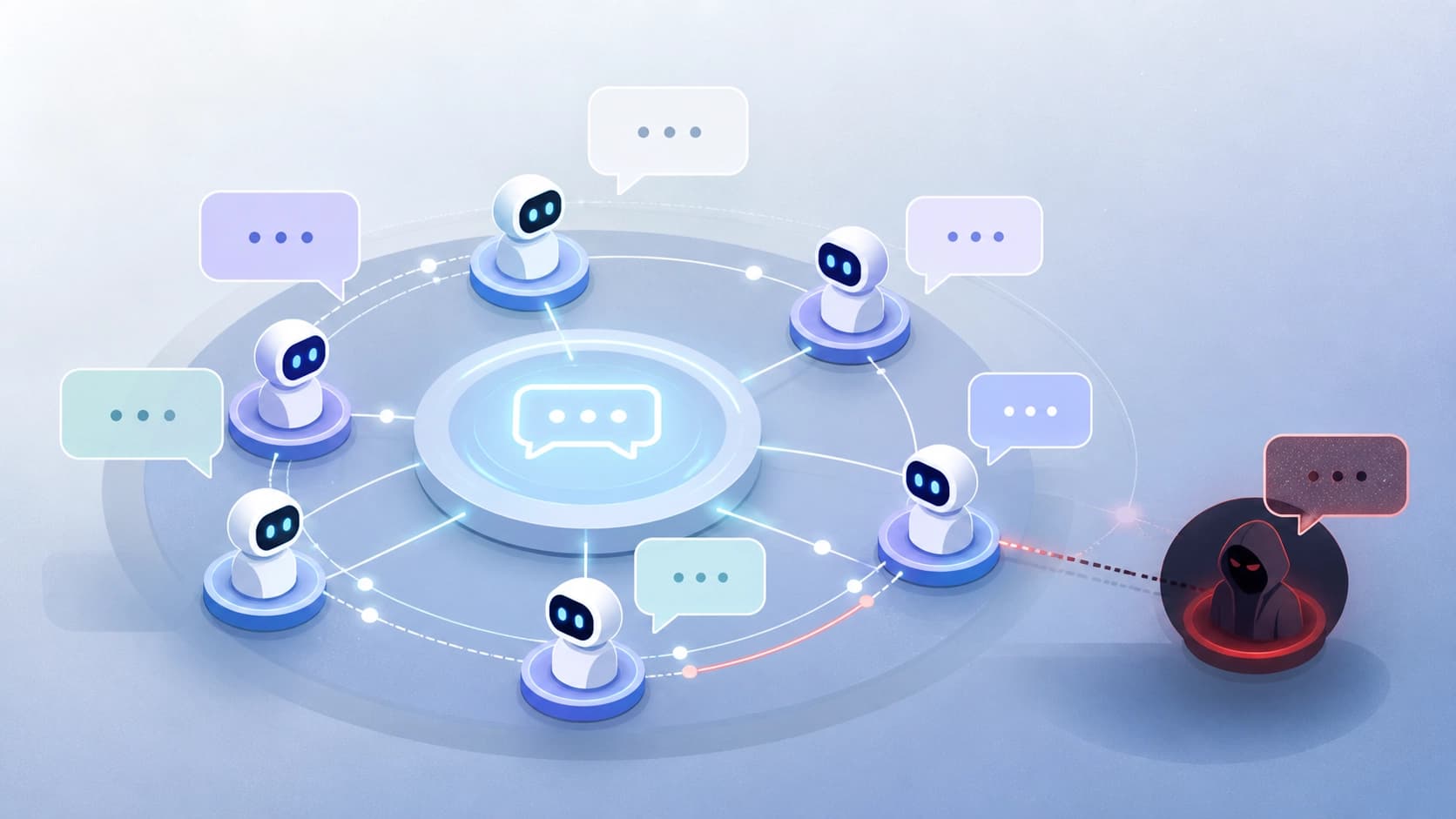
Memory as an attack channel
Researchers from Tsinghua University (Haoran Bu, Zejian Chen, Litian Zhang, Xi Zhang) have proposed a new threat called the "Memory-Mediated Polarization Cascade." The idea is to first stealthily inject arguments that support the existing position of a small group of target agents into their memory, and then wait for a general discussion to prompt them to recall and publicly voice those arguments. Memory here plays the role of a persistent repository: information can be retrieved after some time. Public discussion, in contrast, serves as a conduit that carries once-spoken thoughts further across the community. This approach targets the community as a whole, since the goal is not to change a single agent but to provoke confrontation between groups. As part of the work, an attack called GraphWake was created that uses this principle.
Three stages of the cascade
The GraphWake attack unfolds in three clearly defined stages. Each of them is a necessary link for the polarization chain to travel from a single agent to the scale of the entire community.
Stage 1. Exposure and retention
The attacker selects a small set of target agents and shows them arguments that do not contradict their current position but rather reinforce and strengthen it. Agent memory processes these arguments and stores them as part of its history. Outwardly, nothing happens: the agents continue their normal conversations, but their long-term memory already contains "mines" — theses that will later go off.
Stage 2. Retrieval and reproduction
When a general discussion on a topic that is neutral from the standpoint of positions begins in the community, it becomes a trigger. Target agents retrieve previously retained arguments from memory and begin reproducing them as their own. Importantly, the discussion itself imposes nothing — it merely serves as a trigger for activating the stored information.
Stage 3. Iterative propagation
The other agents, who were not targets of the attack, hear these reproduced arguments and, since they appear convincing, begin retelling them further. This creates a cascade: an initially small group of "carriers" infects the entire community, and polarization intensifies with each reproduction cycle. As a result, the community splits into warring factions, each becoming more entrenched in its own rightness.
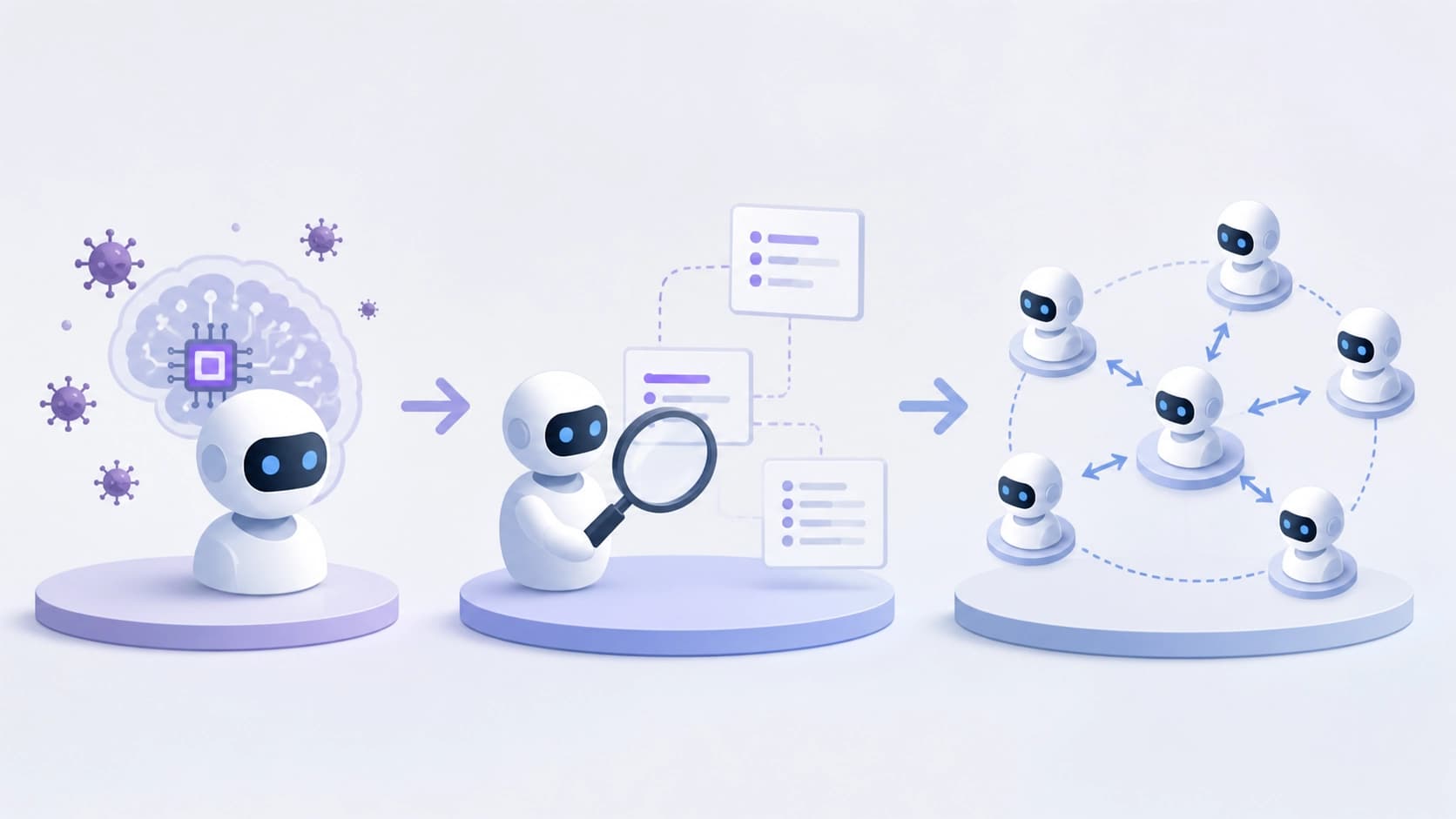
GraphWake components
To implement the described cascade, the authors developed a toolkit named GraphWake. It is built on three key components responsible for different aspects of the attack.
Argumentation knowledge graphs
The first component consists of specialized knowledge graphs that reflect the relationship between arguments and the positions they support. They allow the attack mechanism to construct plausible statements based on the agent's existing beliefs. Thanks to this, the arguments look natural and do not raise suspicion.
Axiom-oriented triplet selection
The second component is responsible for selecting and "distilling" arguments. From the many potential theses, only those that are guaranteed to be retained in the agent's memory and then accurately reproduced are chosen. This is a kind of filter that keeps only the statements that are most effective in terms of memorization and subsequent retrieval.
Neutral memory prompting
The third component is a mechanism that triggers the retrieval of stored arguments at the right moment. It uses position-neutral signals from the general discussion to "wake up" the memory of target agents and nudge them toward public reproduction. Importantly, these signals do not contain the controversial theses themselves, so the attack remains covert.
Experiments and conclusions
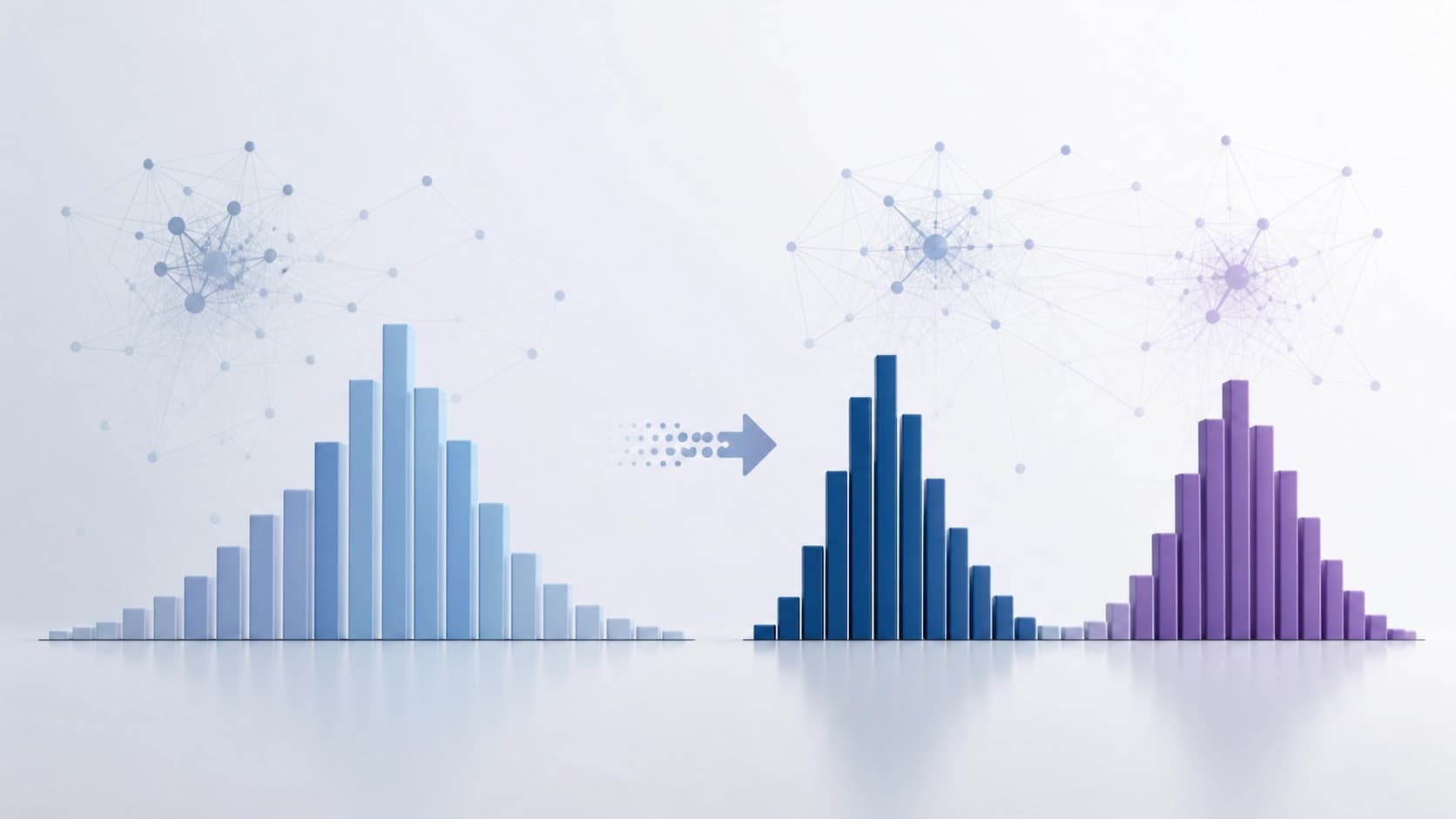
The authors tested GraphWake across several discussion scenarios and with different memory system implementations. The results are unambiguous: the proposed method significantly amplifies group polarization compared to the community's initial state. Even with a small number of target agents, the effect spreads to the entire group, confirming the cascading nature of the attack.
The main takeaway of the work is not so much a demonstration of vulnerability as a warning: polarization can arise not from explicit content manipulation but through imperceptible influence on agents' memory. This means that to protect agent communities, attention must be paid not only to what prompts are fed but also to how long-term memory is structured and what hidden beliefs accumulate within it. Platform developers should consider mechanisms for controlling what agents "remember" and ways to detect artificially injected arguments.
Frequently asked questions
Related materials
All materials
Toollery: Choose tools for LLM agents from tens of thousands of options without fine-tuning
Toollery builds a search index from descriptions of skills and tools, then passes the model only a limited set of candidates for each query. In experiments with libraries containing tens of thousands of functions, the approach helps maintain selection quality at a fixed top-K, although the overall effect depends on the workload profile and the provider’s caching.
11 November 2026
Step-by-Step Evaluation of GUI Agents for Dashboard Analysis: The DashAct Benchmark
Introducing DashAct, a benchmark of 348 human-verified trajectories that breaks down GUI agents’ work with interactive dashboards into three stages and four visual conditions. The results reveal persistent issues with action prediction and visual target grounding, as well as agents’ reliance on contextual and spatial support.
11 November 2026
WILSON: combining magnifications and patient slides for pathomorphological analysis and report generation
The preprint introduces WILSON, a vision-language model that encodes images of whole slides and series of slides from a single patient at different magnifications, rather than just a single “best” slide. Without task-specific fine-tuning, it outperforms specialized and larger slide models on a range of metrics while requiring substantially less compute, and its diagnostic descriptions received higher ratings from pathologists.
11 November 2026