
GPT-5.6 Luna on Replit: create software for free with no token costs
Replit has added the GPT-5.6 Luna model to its free tier: users describe a task, and the platform builds a working app. Token billing has been removed, so you can now experiment with ideas without financial limits.
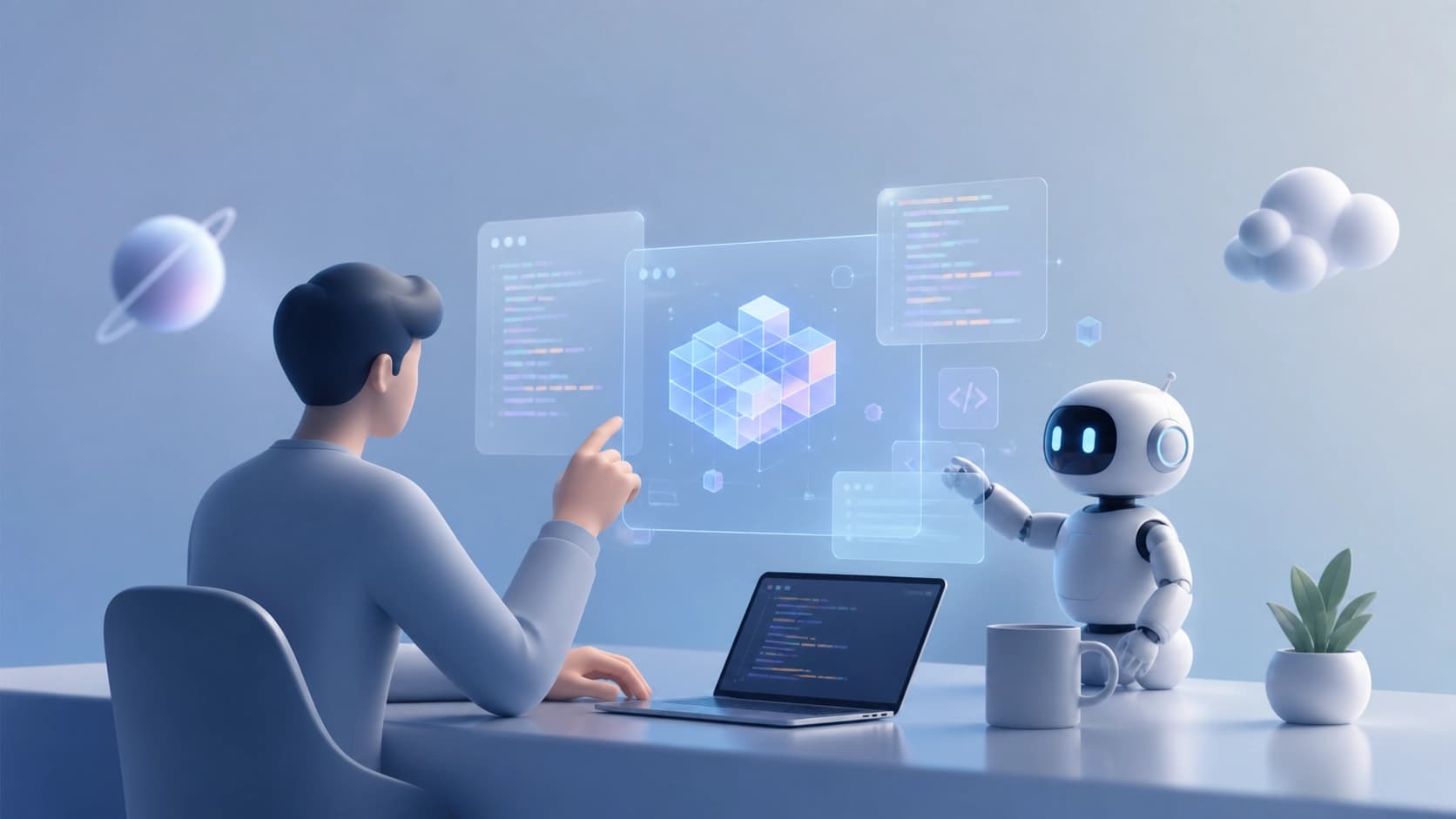
What changed with the arrival of GPT-5.6 Luna
For a long time, development with neural networks hit the same barrier: even if the tool itself is available, each code generation or request to the model "consumes" tokens. For a beginner or a student, this meant either constant economizing or an inevitable switch to a paid plan. GPT-5.6 Luna breaks this logic — the model is built into the development environment in such a way that token consumption stops being the user's headache.

The main difference from its predecessors is not just improved response quality, but a fundamentally different cost model. Tokens stop being a limited resource you have to pay for out of your own pocket. Instead, code generation, explanations, refactoring, and debugging work as a built-in editor feature, not as an external paid service.
In practical terms, this means: you can freely experiment, write drafts, rewrite entire modules, and ask "dumb" questions without keeping an eye on the counter. For learning programming, this format is even more valuable than generation speed itself.
How it works in Replit
Replit has transformed from a simple online editor into a full-fledged platform where writing code, running it, and deploying happen in a single window. The integration of GPT-5.6 Luna makes this process even more seamless: the assistant understands the context of the entire project, not just the current file.
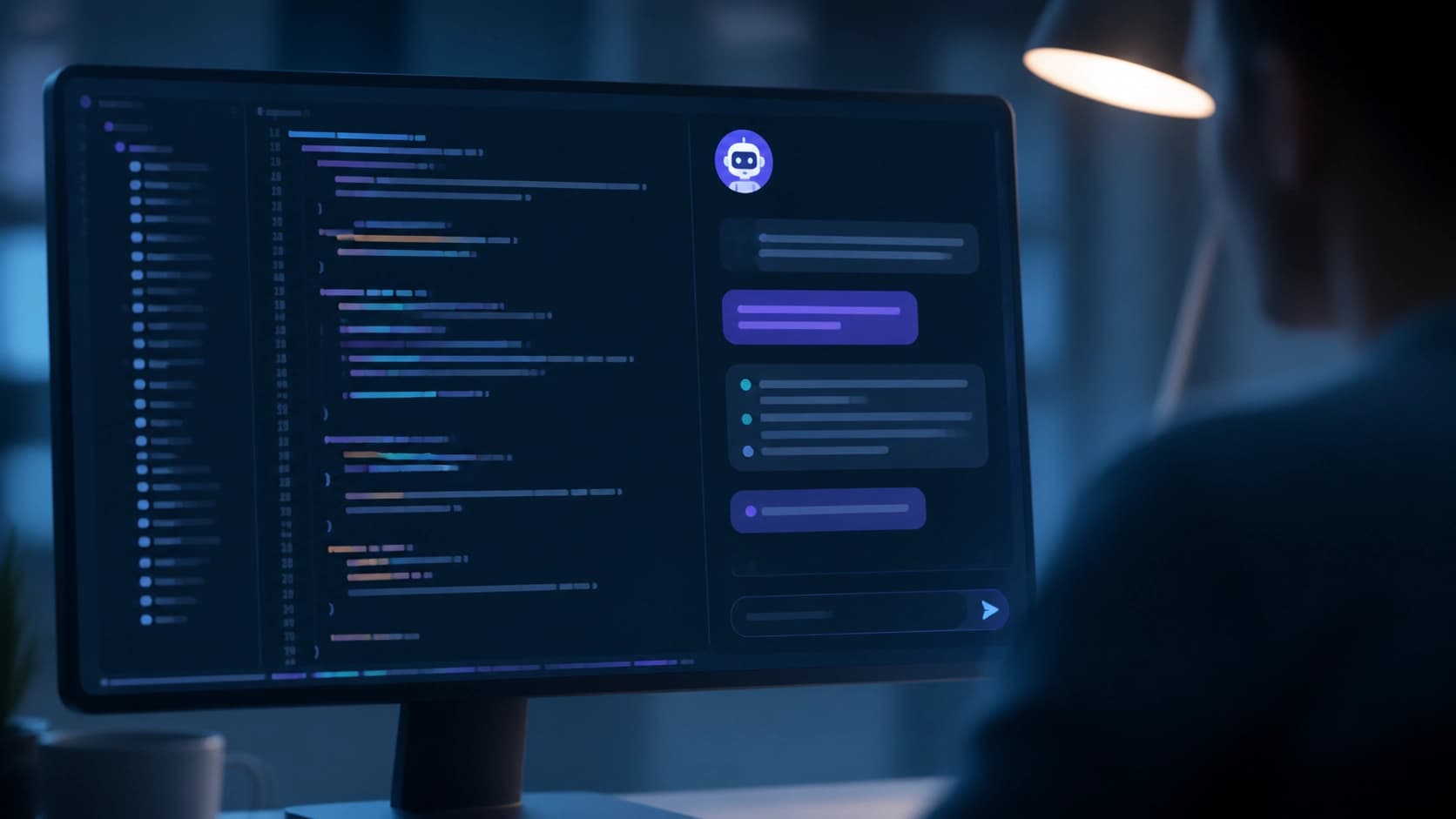
GPT-5.6 Luna is built right into the interface, so there's no need to switch between tabs and copy code into a chat. Select a snippet — get an explanation or a suggestion for improvement. Describe in words what's missing — the model proposes an implementation on its own.
What free access gives in practice
The absence of token costs removes several psychological barriers at once:
- You can make mistakes. Previously, every failed attempt burned resources. Now even a series of failed decisions costs nothing.
- You can study someone else's code. Asking the assistant to break down an unfamiliar function is free and safe.
- You can generate large chunks of code. No need to compress requests into short commands to save resources.
- You can keep the assistant on at all times. It suggests, warns about errors, and offers options before you even notice them.
For those just entering development, this removes the main problem — the fear of "asking an expensive question." Learning stops hitting financial limits.
Practical scenarios: from idea to working prototype
GPT-5.6 Luna in Replit handles not only tasks like "write a sorting function" but also larger goals. For example, you can describe an app idea, and the model will propose a file structure, write a project skeleton, and suggest which libraries to use.
A typical workflow looks roughly like this:
- You describe in words what the app should do.
- The model creates the project scaffold and core modules.
- You run the code and see errors or shortcomings.
- You ask the assistant to fix the issue — and run it again.
- You repeat until the result works.
Previously, such a cycle would have been costly in tokens, especially if the model didn't understand the task right away. Now iterations cost nothing, so you can refine requirements gradually without trying to formulate everything perfectly on the first try.
Replit in this combination acts not just as a code host, but as an environment where all tools are connected: the file system, terminal, database, and artificial intelligence work on a single task. This greatly shortens the path from idea to an app running in the browser.
Who benefits most from this
First and foremost — self-directed learners. If you're learning to program, having constant explanations and examples at hand is like a personal mentor who never gets tired and never charges for a consultation.
It's also convenient for prototyping. Product managers, designers, and analysts often want to test a hypothesis but don't have the time or budget for full-scale development. With GPT-5.6 Luna, you can put together a working mockup in an evening without buying paid AI subscriptions.
Experienced developers shouldn't be overlooked either. For them, free generation is useful for routine tasks: writing tests, generating boilerplate code, and drafting documentation. This frees up time for genuinely complex architectural decisions.
Limitations and pitfalls
To be fair, it's worth mentioning: free tokens don't mean the model is always perfect. GPT-5.6 Luna can make mistakes, suggest outdated approaches, or misunderstand the specifics of a particular library version. But since errors cost nothing, they're easy to spot and fix — just ask the model to redo the code or look for the problem elsewhere.
It's also important to understand: free access within Replit usually applies to using the model in that environment, not to external APIs. If you decide to take GPT-5.6 Luna outside the platform, the terms may be completely different.
Another nuance is code privacy. When sending a project to a cloud environment, it's worth checking what data ends up in the model's context and how it's stored. For learning tasks and prototypes, this isn't critical, but for commercial products with sensitive data, caution is advisable.
Why this changes developer habits
The main shift isn't that the model got smarter, but that the "cost of thinking" disappeared. Previously, every call to a neural network was a deliberate action you wanted to minimize. Now, turning to the assistant is as natural a part of work as pressing Tab.
Over time, this fosters a different coding culture: the programmer doesn't try to memorize everything but learns to formulate tasks and verify the proposed solution. It's like the shift from writing letters by hand to using messengers — not just more convenient, but a fundamentally different approach to communication.
In the future, this kind of "free access" will likely become the standard for development environments. But right now, it's the combination of GPT-5.6 Luna and Replit that shows what modern democratization of programming should look like: without financial barriers, without complex setup, and without the need to count every request.
Frequently asked questions
Related materials
All materials
Validating Candidates Costs More Than Generating Them: Honeypots Against LLM Vulnerability Hunting
The study examines the cost asymmetry in agentic vulnerability discovery: generating candidate versions is cheap, while confirming them through reachability analysis, execution, and PoC development consumes most of the budget, making verification a potential standalone target for defense. The proposed RedHerring—repository-adapted decoys with a hidden certificate—reduced the number of real vulnerabilities found by 38.7–60.4% at equal cost across 33 OSS-Fuzz projects; even after the agent was warned, the reduction remained at 37.2%.
9 November 2026
Checking LLM Hallucinations via SQL-Based Source Representation Without Fine-Tuning
The study examines whether an LLM can apply a basic symbolic skill—building a SQL database from source documents—to ground its outputs in sources without supervision when detecting hallucinations. On RAGTruth and DiaHalu, this neuro-symbolic pipeline proves more accurate than direct prediction and comparable to state-of-the-art methods, without requiring domain-specific fine-tuning.
9 November 2026
MathAdv: What the Final Accuracy of Machine-Generated Proofs Conceals
A diagnostic suite of tasks spanning 13 undergraduate and graduate mathematics topics evaluates machine-proving systems in Lean 4 not only by their final results, but also by their subject-matter mastery, the quality of their informal reasoning, and their robustness to rephrased conditions. A component-by-component analysis shows that translating a problem into formal form remains the main obstacle, and that success depends heavily on the area of mathematics and how the problem is framed.
9 November 2026