
Google Home confused all the cats: Pet Memory failed in the test
The Pet Memory feature from Gemini for Home was supposed to teach Nest cameras to distinguish between pets, but in practice, all the cats in the house turned into one Smokey. A two-week test showed that personalized feeding automation is still a long way off.
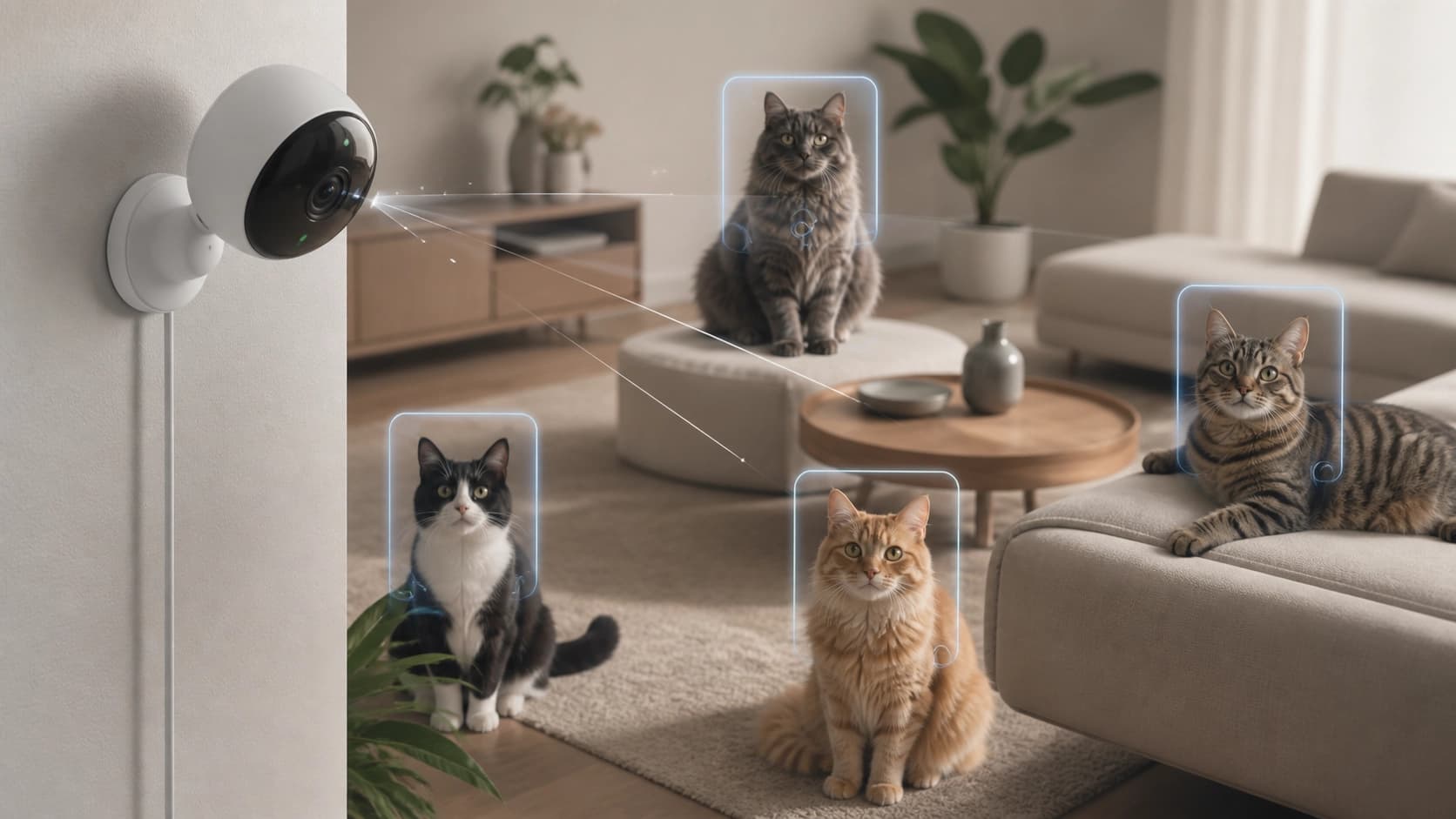
Pet Memory: a beautiful idea
Google is actively promoting smart homes, and it seems the turn has now come for our furry friends. The new Pet Memory feature within Gemini for Home was supposed to teach cameras to recognize each pet in the house by name. The idea was that this would unlock a wealth of possibilities: from automatically adjusting lighting or temperature for a specific animal to a smart feeder that wouldn't mix up whose portion is due.
Journalists at The Verge, including senior smart home reviewer Jennifer Pattison Tuohy, greeted this idea with great enthusiasm. She has three cats at home — Smoky, Boone, and Wasp, plus a dog named Gus and free-ranging chickens. You'll agree, with a menagerie like that, the ability to tell animals apart becomes not just a fun toy, but a working tool.
The article's author planned to use Pet Memory for quite practical tasks: for example, having the camera report which specific cat is asking to go outside, not reacting to a neighbor's cat or a chicken that wandered into the yard, and helping ensure by evening that all pets are home. Plus personalized feeding — so Boone doesn't eat Smoky's breakfast.
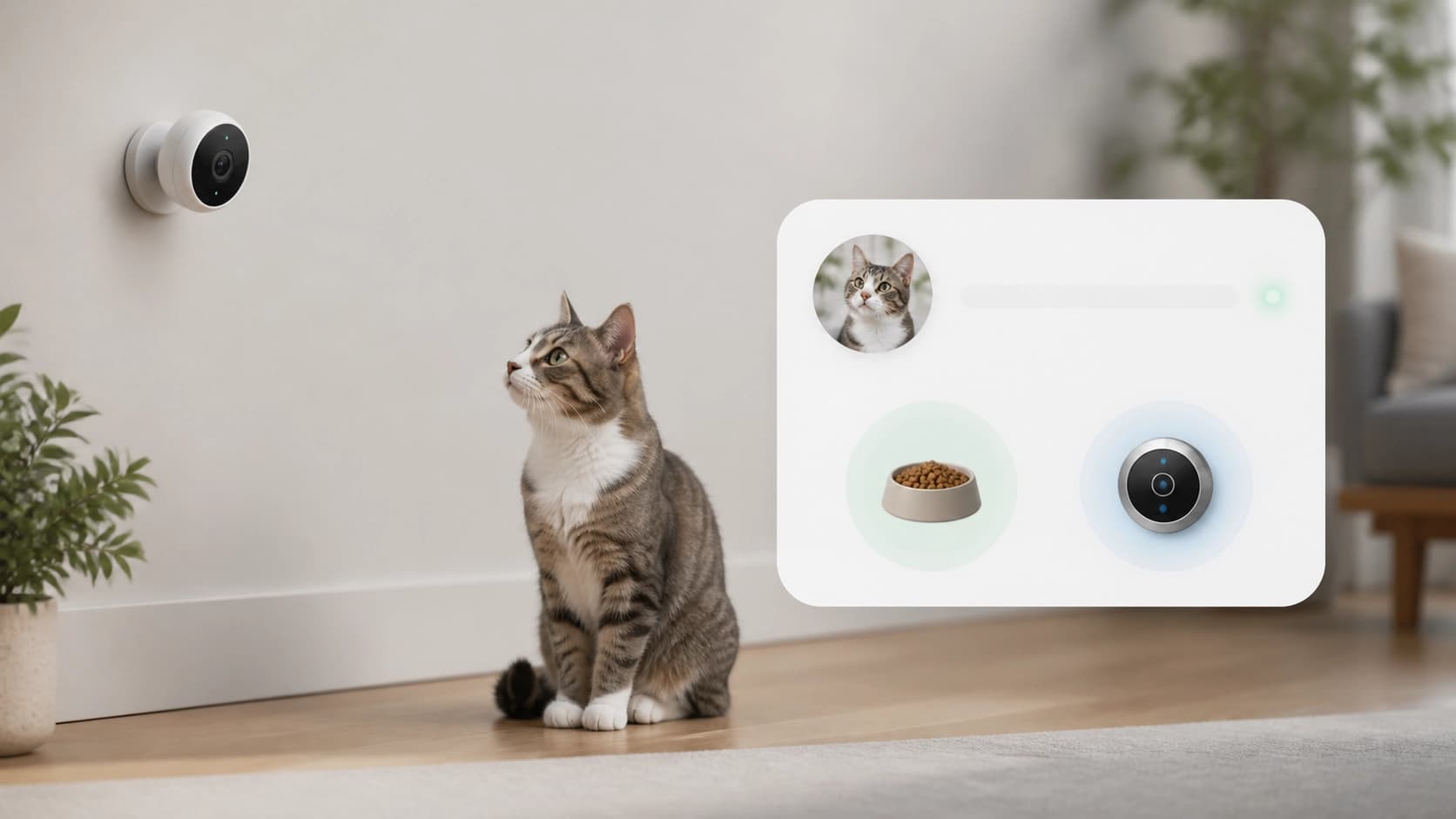
Two weeks of testing: cats all alike
As often happens with promising AI features, reality turned out to be far more mundane. After two weeks of intensive testing, Google Home still couldn't tell the cats apart. The system only managed to remember the cat Smoky — and that's where its knowledge ended.
Every cat that came into the Nest camera's field of view was automatically labeled Smoky. Naturally, Boone was not at all pleased with this, but even his striking appearance didn't help the algorithm. All three turned into one "average" cat. And this despite the animals clearly looking different!
Instead of a helpful assistant, the feature turned into a source of comical notifications. Instead of reporting "Boone at the door," the camera sent an alert saying "Smoky is in the kitchen again." The author quips that out of all the pets, the system picked the one cat and saw the universe in him. By the way, the kitten Wasp apparently remained completely invisible to the AI — she was likely lumped in with Smoky too.
Why does AI confuse cats?
It might seem like a simple flaw, but in reality, the task of recognizing specific animals is much harder than it looks. Cameras learned to distinguish a person from a pet back in 2017 — that's when the Nest Cam IQ came out. But telling apart several cats of the same breed is a whole different level.
Humans do this based on a multitude of micro-features: ear shape, spot patterns, gait, posture. Cats often look very similar, especially if they share the same coloring. The camera only sees a limited set of angles: a tail, a side, a face from an unusual perspective. Machine learning needs thousands of examples of each cat in different poses and lighting, and in real life they just don't always end up in frame.
Modern cameras with generative AI and machine learning can already produce detailed event descriptions — for example, "a person in a blue jacket walked onto the porch." But recognizing an object class is one thing; identifying a specific individual is another. When it comes to feline "faces," the system still falls short.
How will this end?
Honestly, nothing catastrophic. Stories like this are a normal part of smart device evolution. Many features work poorly at launch and then gradually become useful thanks to constant data collection and algorithm updates. Perhaps in a few months Google Home will actually learn to tell cats apart, but for now owners have to put up with amusing bugs.
The main takeaway from The Verge's test is not to expect magic from Pet Memory in the first few days. If you want to automate feeding for three cats, you'll probably have to wait for updates. But you'll have a great excuse for some fun: "Smoky on the windowsill" notifications will arrive every time any cat walks past the camera, even the neighbor's.
So smart home innovations continue to be a bit rough around the edges. But it's precisely these "rough patches" that show the feature is still evolving, and early users effectively become its testers. And if you want cameras to tell your cat apart from the neighbor's — maybe it's worth just putting a bright collar on your pet until the neural networks figure it out on their own.
Frequently asked questions
Related materials
All materials
Validating Candidates Costs More Than Generating Them: Honeypots Against LLM Vulnerability Hunting
The study examines the cost asymmetry in agentic vulnerability discovery: generating candidate versions is cheap, while confirming them through reachability analysis, execution, and PoC development consumes most of the budget, making verification a potential standalone target for defense. The proposed RedHerring—repository-adapted decoys with a hidden certificate—reduced the number of real vulnerabilities found by 38.7–60.4% at equal cost across 33 OSS-Fuzz projects; even after the agent was warned, the reduction remained at 37.2%.
9 November 2026
Checking LLM Hallucinations via SQL-Based Source Representation Without Fine-Tuning
The study examines whether an LLM can apply a basic symbolic skill—building a SQL database from source documents—to ground its outputs in sources without supervision when detecting hallucinations. On RAGTruth and DiaHalu, this neuro-symbolic pipeline proves more accurate than direct prediction and comparable to state-of-the-art methods, without requiring domain-specific fine-tuning.
9 November 2026
MathAdv: What the Final Accuracy of Machine-Generated Proofs Conceals
A diagnostic suite of tasks spanning 13 undergraduate and graduate mathematics topics evaluates machine-proving systems in Lean 4 not only by their final results, but also by their subject-matter mastery, the quality of their informal reasoning, and their robustness to rephrased conditions. A component-by-component analysis shows that translating a problem into formal form remains the main obstacle, and that success depends heavily on the area of mathematics and how the problem is framed.
9 November 2026