
New Thinking Machines deal with Google Cloud
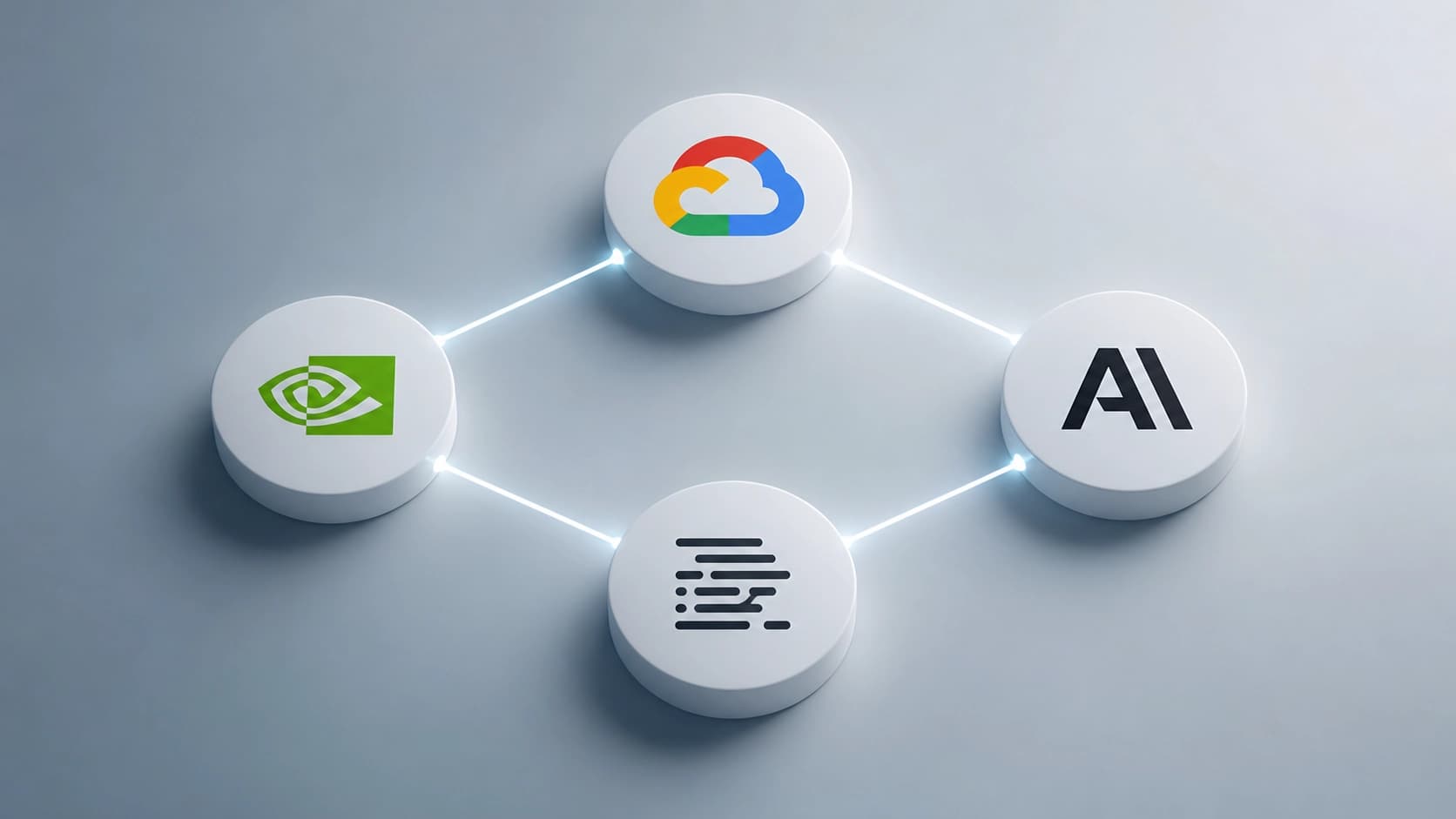
The company of Mira Murati, former CTO of OpenAI, has signed a multi-billion-dollar contract with Google Cloud. According to TechCrunch, the agreement is valued in the single-digit billions of dollars. The deal gives the startup access to Google's computing capacity for training and running AI models, including systems based on Nvidia's latest GB300 graphics processors.
Beyond the hardware, the package includes cloud services needed for the full model lifecycle. In effect, Google Cloud becomes the technological foundation on which Thinking Machines can develop its products faster and without having to build its own computing infrastructure.

Why this matters for the startup
Thinking Machines' first product — Tinker — launched in October. It is a tool that automates the creation of custom AI models tailored to client tasks. At its core is reinforcement learning — the approach behind breakthroughs at DeepMind and OpenAI. These are precisely the workloads that require enormous computing power, and Google Cloud is clearly betting on that.
The company said Thinking Machines is among the first customers to gain access to systems based on GB300. According to Google, these chips deliver a twofold increase in training and serving speed compared with the previous generation of GPUs. For a startup that depends on rapid model iterations, that is a serious advantage.
Miles Ott, founding researcher at Thinking Machines, noted that Google Cloud "onboarded us at record speed and with the reliability we require." It seems what matters most to the startup is not just raw power, but also the predictability of the infrastructure.
Context: Google strengthens its position in the AI cloud
The Thinking Machines deal is part of a broader Google strategy. The cloud provider is actively signing contracts with AI developers, combining compute resources with other services — storage, the Kubernetes engine, and the Spanner database. This makes the offering more comprehensive than simply renting GPUs.
Earlier this month, Anthropic tested a similar approach: it reached agreements with Google and Broadcom for several gigawatts of capacity based on TPUs, Google's custom chips. At the same time, Anthropic signed a deal with Amazon for up to 5 gigawatts to train and deploy its own models. The market is clearly moving toward AI labs diversifying their cloud partners.
The Thinking Machines agreement, however, is not exclusive: the startup can bring in other providers in the future. This is the company's first cloud deal, but it had already attracted investment from Nvidia before. It is reasonable to expect the partnership portfolio to expand — depending on terms and computing needs.
Murati's strategic move
Murati left her post as CTO of OpenAI and founded Thinking Machines in February 2025. Soon after, the company raised a seed round of $2 billion at a valuation of $12 billion — a rare case for such an early stage. Now it has a reliable computing partner.
The choice of Google Cloud looks natural, since this provider has accumulated extensive experience in training models: DeepMind has used its infrastructure for years. For Thinking Machines, this is a way not only to gain compute capacity, but also to integrate into an ecosystem where proven practices for scaling AI workloads already exist.
The question remains how the deal will affect the balance of power among AI labs. On the one hand, access to GB300 gives Murati's startup a serious resource for competing. On the other hand, dependence on a single cloud provider, even a large one, always carries risks. That said, the non-exclusive nature of the agreement leaves room for maneuver.