
GLM-5.3 without a new base model: how Z.ai squeezed growth in coding and cybersecurity from post-training
The update works on the same 743B base, and all improvements come from expanded post-training: complex long-horizon tasks have become noticeably more accessible, and safety benchmark results have exceeded expectations. Weights are expected to be released in about two weeks; the model is currently available via API, GLM Coding Plan, and ZCode.

Introduction: without a new base model
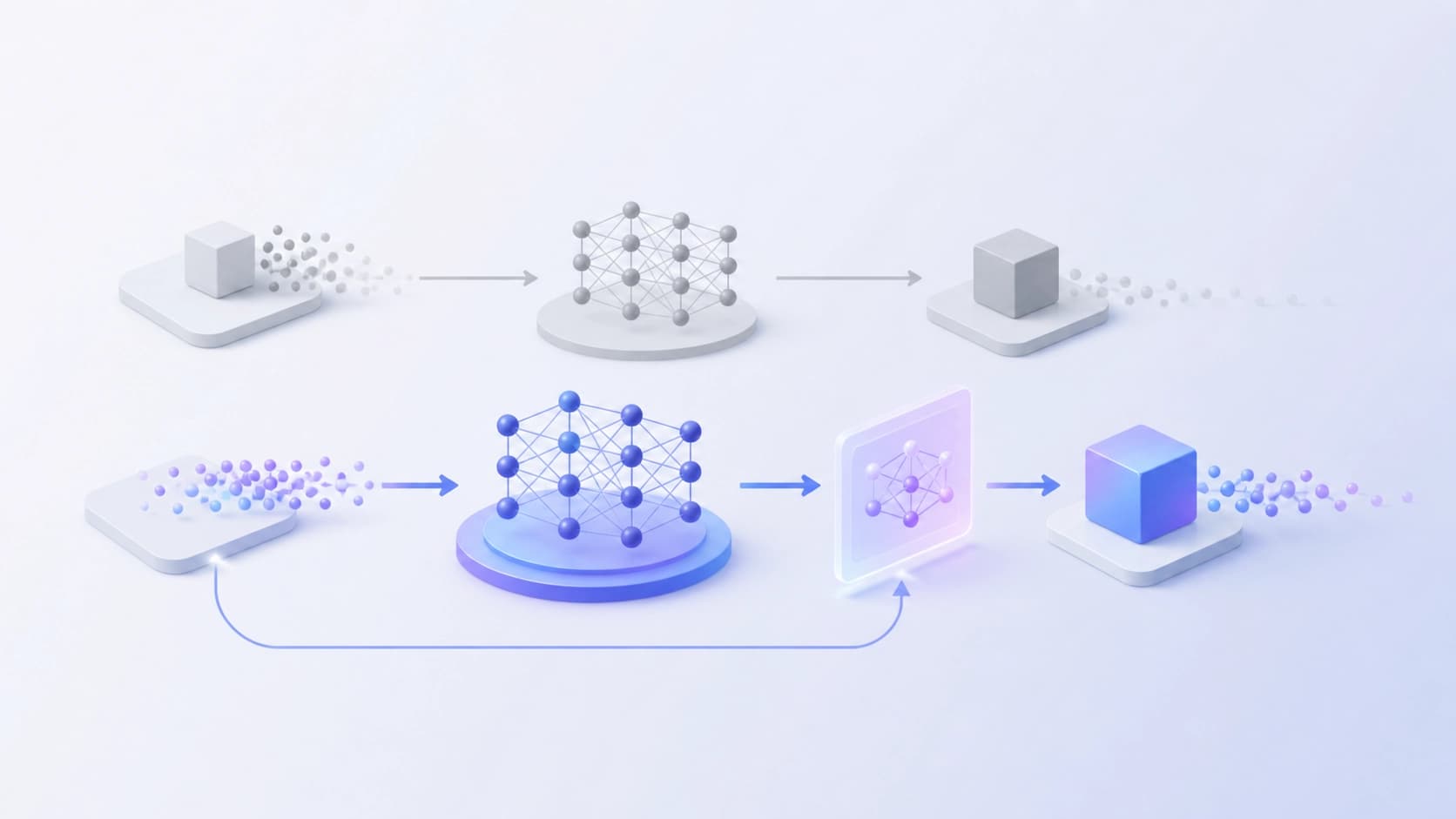
When a new version of a large language model comes out, you'd typically expect it to have been retrained on an even larger dataset. But Z.ai takes a different approach: the released GLM-5.3 runs on the same base model with 743 billion parameters as GLM-5.2. All improvements are the result of scaled-up post-training. The model was run on more environments, new types of environments were added, and training lasted longer than for the previous version. Essentially, this is an experiment showing how much more can be squeezed out of an existing architecture with proper task-specific tuning.
743 billion parameters is a colossal model, and its pre-training costs a fortune. Post-training is significantly cheaper, though it requires careful data curation and a long time. This approach matters not only for Z.ai: it hints that the industry has a safety margin. You don't always have to spend resources on training from scratch — sometimes smart post-training is enough.
Coding: the biggest leap
On programming tasks, GLM-5.3 makes a real breakthrough. On the Terminal-Bench 3.0 benchmark, the score jumped from 4.6 to 28.3 — a nearly sixfold improvement. On DeepSWE v1.1, the score rose from 46.2 to 66.9, and on Agents' Last Exam (CLI) — from 23.8 to 28.5. Also noted is the GDPval-AA v2 test, which involves 44 professions: here GLM-5.3 scores 1769 points.
Z.ai's internal Code Bench benchmark shows a 50% improvement over GLM-5.2. The model solves 31.4% of tasks at roughly 50,000 output tokens per task. For context: Claude Opus 4.8 achieves 29.5% but spends 120,000 tokens, while Claude Fable 5 hits 39.5%, albeit with maximum effort. Z.ai notes that a private benchmark is less prone to contamination — an important argument, since on public datasets GLM-5.3 still loses to GPT-5.6 Sol and Fable 5 on a number of complex coding evaluations. Keep in mind that all figures are provided by the vendor itself, albeit with documented settings, so independent verification is still ahead.
Terminal-Bench 3.0 is a test where the model needs to work in a terminal, run commands, and handle files and the environment. A nearly sixfold increase sounds fantastic, but it's worth noting these are synthetic tasks, and the risk of contamination can't be ruled out. In practice, this means the model has become noticeably more useful in autonomous code writing and debugging: it holds context longer, plans steps better, and requires human intervention less often.

Cybersecurity: an unexpected effect
An even more surprising story unfolds in cybersecurity. Z.ai engineers added vulnerability detection examples to the training data and expected the model to get better at reasoning about individual bugs. However, as training scaled, capabilities began to accumulate, and at some point the model started forming coherent, multi-step plans for full exploit chains. This happened emergently — without explicitly programming such skills.
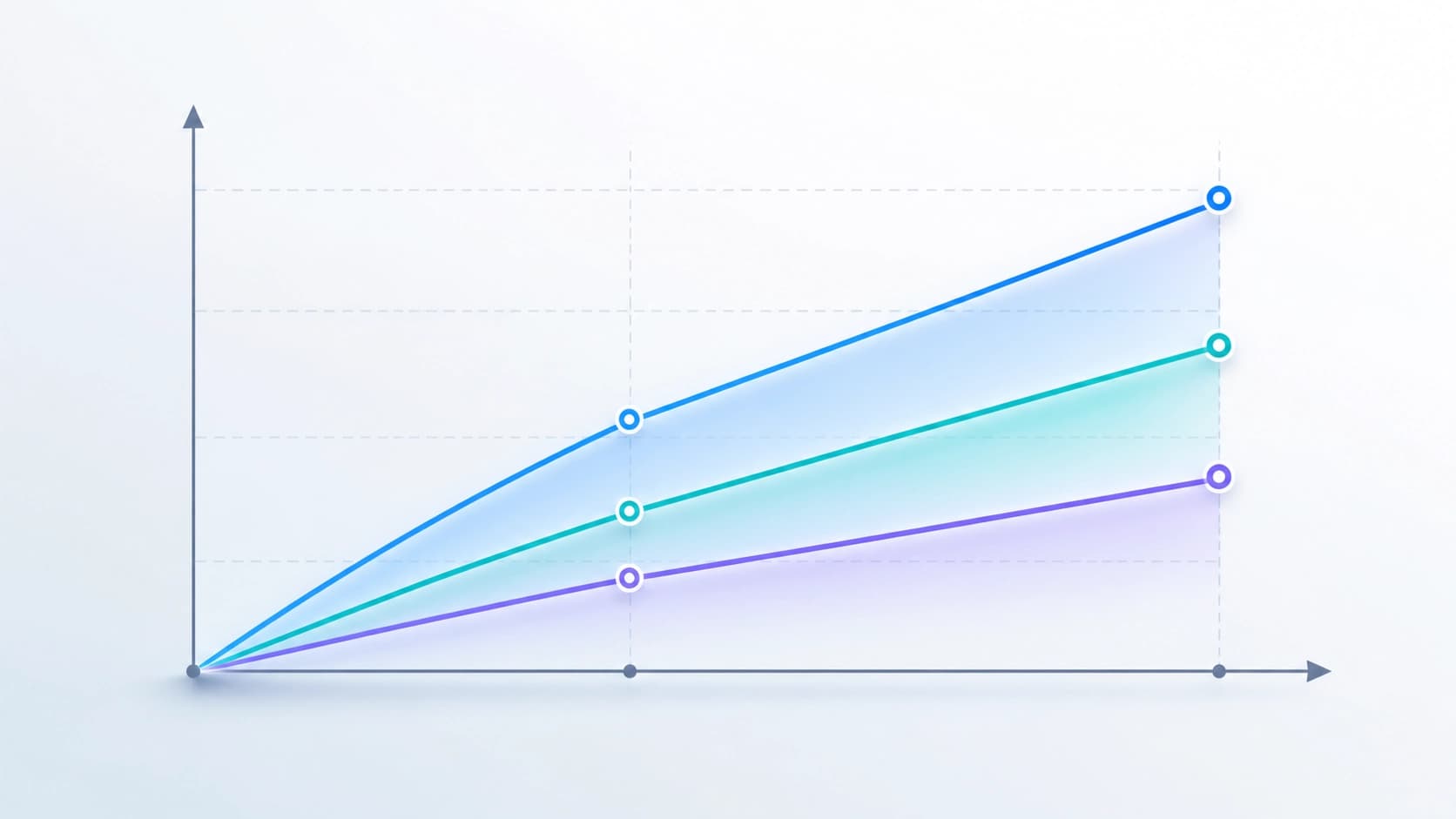
The results are impressive. On CyberGym, GLM-5.3 scores 84.5% versus 77.2% for GLM-5.2, beating Mythos 5 (83.8%) and GPT-5.6 Sol (83.6%). On ExploitBench, success rates doubled: from 24.4% to 54.4%. But here Mythos 5 remains the leader at 78.0%. On ExploitGym, the model solves 105 tasks in two hours and 130 in six. GLM-5.2's numbers are more modest: 29 and 39 tasks. Mythos 5 handles 181 and 247 tasks, respectively.
An interesting detail: the deeper the task in the exploit chain, the greater GLM-5.3's gain over the previous version. At the same time, however, the gap with closed frontier models widens, so it's too early to talk about full parity. The ExploitBench numbers illustrate this well: despite the twofold increase, the gap behind Mythos 5 remains significant.
Such emergent behavior also raises security concerns: if a model can plan attacks, its open distribution could be risky. This may be exactly why the weights aren't published immediately.
Availability and outlook
Currently, the model weights are not public. GLM-5.3 is available via the Z.ai API, GLM Coding Plan, and ZCode. The company plans to open the weights roughly two weeks after launch — following a security assessment and model hardening. Given its capabilities in vulnerability exploitation, such caution is quite reasonable.
For startups and mid-sized engineering organizations, this means the model can be integrated right now via cloud services. Enterprises with data residency requirements or strict vendor vetting, however, should wait for the weights to appear — then it will be possible to deploy the model in their own infrastructure and fully control its use.
Bottom line: GLM-5.3 is a striking example of how post-training can significantly strengthen a model without changing the base architecture. But final conclusions are premature: independent tests and analysis of the open weights are needed. It's quite possible this approach will become a new trend: if other companies see that improvements can be achieved quickly and relatively cheaply this way, model update cycles will accelerate, and the focus will shift from massive pre-training to targeted tuning for specific scenarios.
Frequently asked questions
Related materials
All materials
OpenCollab: programmable agent coordination, controlled execution environment, and policy compliance metric
The framework brings together the specification of agent interaction structures, a shared environment for experiments, and detailed event tracing, while the newly introduced Adherence metric reflects how closely actual execution follows the declared schema. In benchmarks, the Duo configuration achieves a new state of the art, while the single-agent variant uses the fewest tokens.
11 November 2026
Toollery: Choose tools for LLM agents from tens of thousands of options without fine-tuning
Toollery builds a search index from descriptions of skills and tools, then passes the model only a limited set of candidates for each query. In experiments with libraries containing tens of thousands of functions, the approach helps maintain selection quality at a fixed top-K, although the overall effect depends on the workload profile and the provider’s caching.
11 November 2026
WILSON: combining magnifications and patient slides for pathomorphological analysis and report generation
The preprint introduces WILSON, a vision-language model that encodes images of whole slides and series of slides from a single patient at different magnifications, rather than just a single “best” slide. Without task-specific fine-tuning, it outperforms specialized and larger slide models on a range of metrics while requiring substantially less compute, and its diagnostic descriptions received higher ratings from pathologists.
11 November 2026