
ChatGPT for macOS now remembers your actions: what that means
OpenAI added a feature to ChatGPT for Mac that tracks how a person works on the computer: clicks, text input, keyboard shortcuts, and app switches are recorded. The feature is disabled by default, available to Pro, Business, and Enterprise subscribers, and lets the AI find recent work or resume interrupted tasks, although some data is sent to the company's servers.
The desktop version of ChatGPT for macOS has received a notable update: the AI can now remember what you were doing on your computer. The feature is called Computer History and is gradually rolling out to some users. Let's break down what it can do, how it works, and why it's so controversial.
What it is and why it matters
Computer History turns a person's interaction with a Mac into a history that AI can read. It doesn't capture screenshots, but rather events: clicks, typed text, hotkeys, and transitions between apps and websites. All of this is compiled into a log that ChatGPT and Codex rely on.
The practical value lies in solving the nagging problem of lost context. The AI can remind you what you were working on before a break, find a recently opened document, bring back an unfinished task, or notice that you keep repeating the same sequence of actions — which means it can be automated.
How the memory works
A key detail: instead of screenshots, Computer History uses events collected through macOS accessibility system mechanisms. The program "understands" that the user opened a document, switched to a messenger, returned to a spreadsheet, or repeated the same scenario several times. The events are then turned into text summaries and local memory files.
Technically, the process looks like this:
- events first live as temporary files on the computer — for up to 48 hours, after which ChatGPT and Codex delete them;
- to create permanent memories, data goes to OpenAI servers, but the company claims it doesn't keep the source data or use it for model training;
- ready-made memories return to the Mac as regular Markdown files and are stored until the user deletes them manually.
There's an important nuance: Computer History doesn't add its own encryption to these files. Other programs running under the same user could theoretically read them. That's why OpenAI advises against enabling recording for apps with medical, financial, or other sensitive data, and recommends pausing collection during conversations with people without their prior consent.
What the user can control
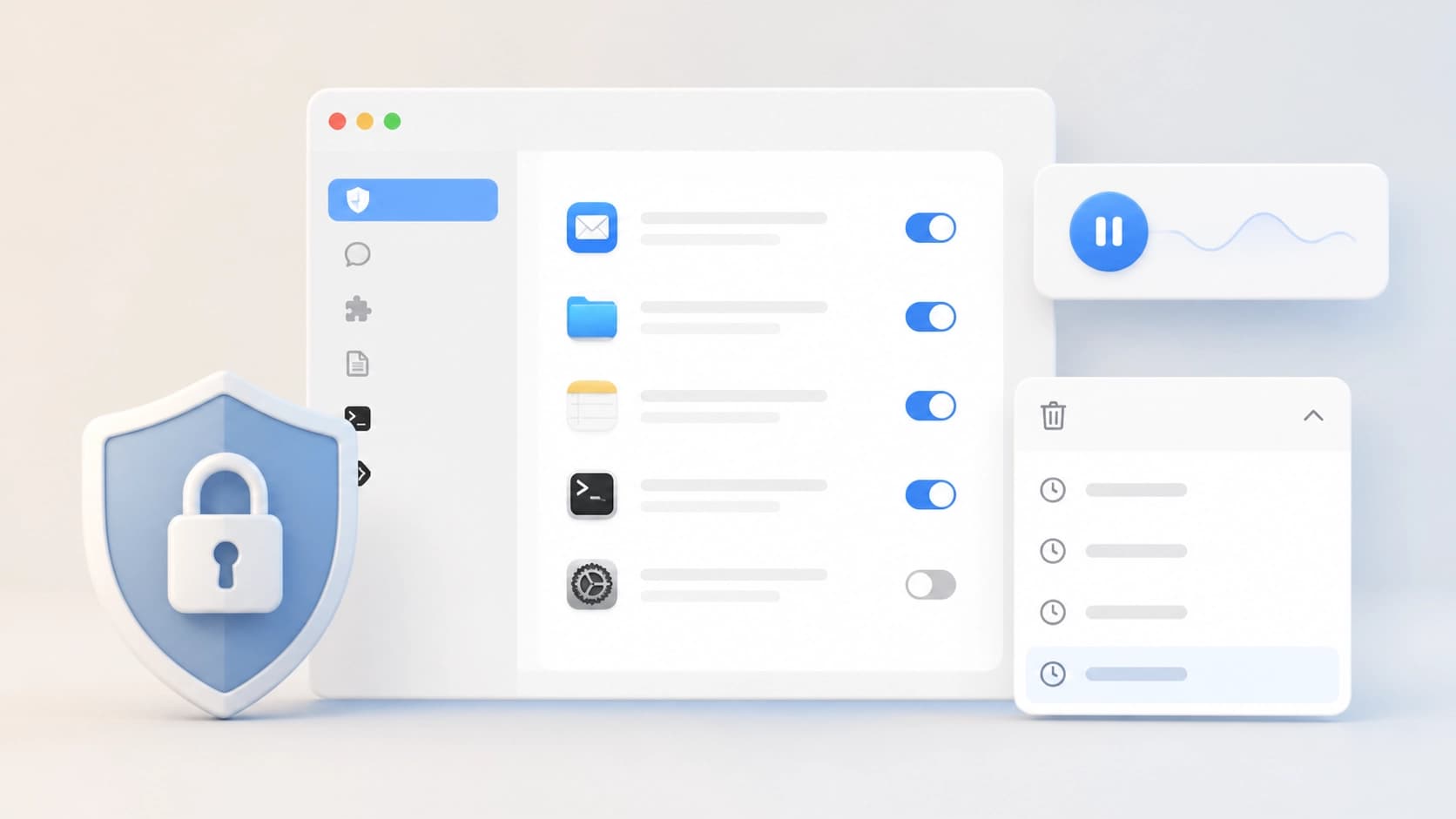
History collection is off by default — the feature only activates explicitly and is currently available to ChatGPT Pro, Business, and Enterprise subscribers. On corporate accounts, administrator approval is required first, and then each employee decides for themselves. From there, control is flexible:
- you can choose which apps and websites are included in the history;
- you can exclude specific sources or allow only a designated list;
- recording can be paused from the macOS menu at any time;
- history can be erased for the last 10 minutes, hour, or day — or cleared entirely;
- activity in private browser mode doesn't end up in the log.
Risks and user reactions
The main technical risk is the expanded attack surface. Website or app content can include a hidden instruction for AI, a so-called prompt injection. Malicious text that enters the context can influence the decisions of ChatGPT or Codex: for example, pushing the model toward unwanted actions.
There's also plenty of skepticism around the very idea of constant collection. Supporters of the feature see real time savings in it: it's convenient to return to work without remembering where you left off, find documents, and automate routine tasks. Skeptics, meanwhile, point out that users are gradually being conditioned to voluntarily install surveillance over their own activity — disguised as personalization and care for their time. The predecessor of Computer History was the research prototype Chronicle, which relied entirely on screenshots. Moving away from screen captures reduces the level of intrusion, but doesn't resolve the main question: are you ready to trust AI with a detailed map of your computer work.
Frequently asked questions
Related materials
All materials
OpenCollab: programmable agent coordination, controlled execution environment, and policy compliance metric
The framework brings together the specification of agent interaction structures, a shared environment for experiments, and detailed event tracing, while the newly introduced Adherence metric reflects how closely actual execution follows the declared schema. In benchmarks, the Duo configuration achieves a new state of the art, while the single-agent variant uses the fewest tokens.
11 November 2026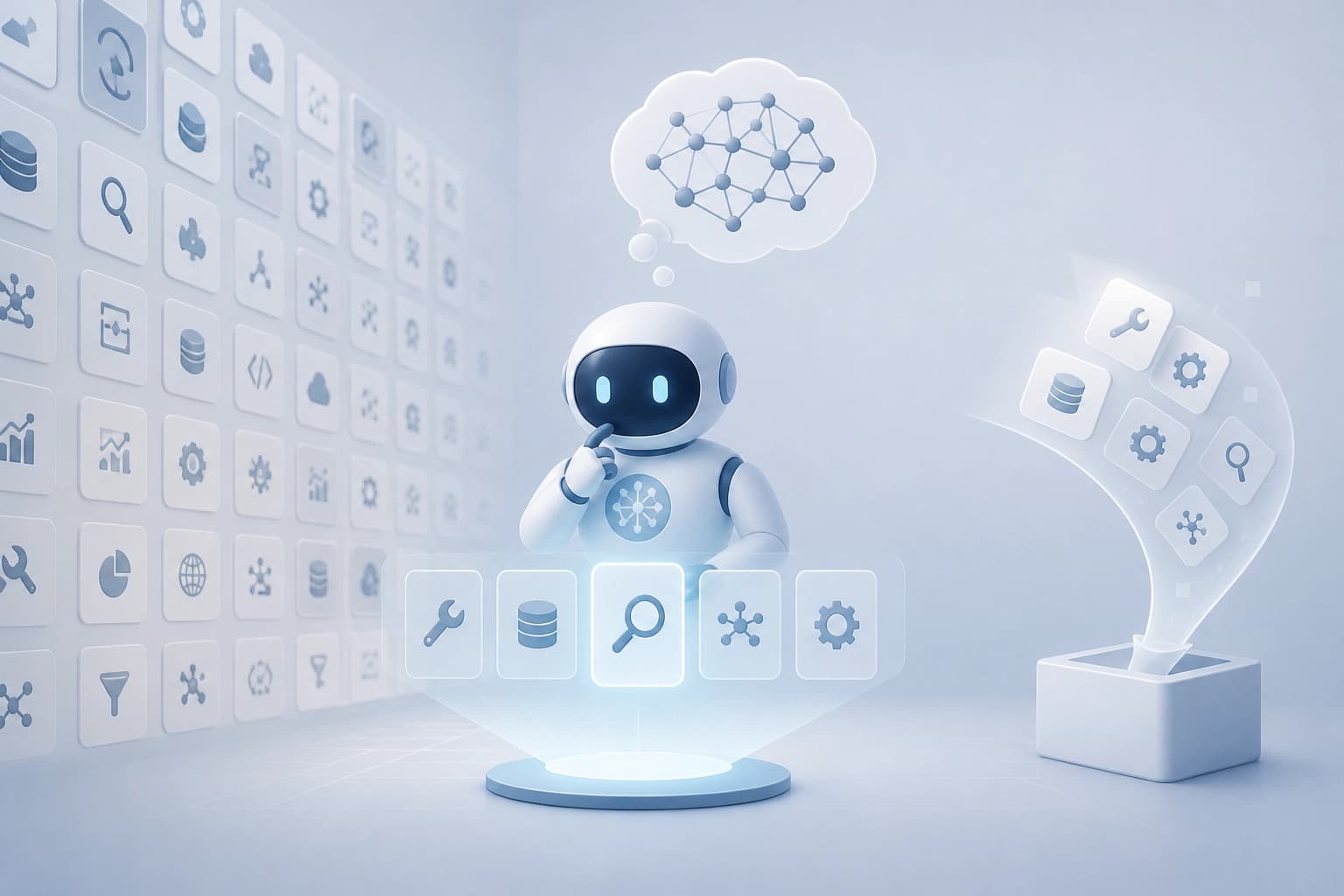
Toollery: Choose tools for LLM agents from tens of thousands of options without fine-tuning
Toollery builds a search index from descriptions of skills and tools, then passes the model only a limited set of candidates for each query. In experiments with libraries containing tens of thousands of functions, the approach helps maintain selection quality at a fixed top-K, although the overall effect depends on the workload profile and the provider’s caching.
11 November 2026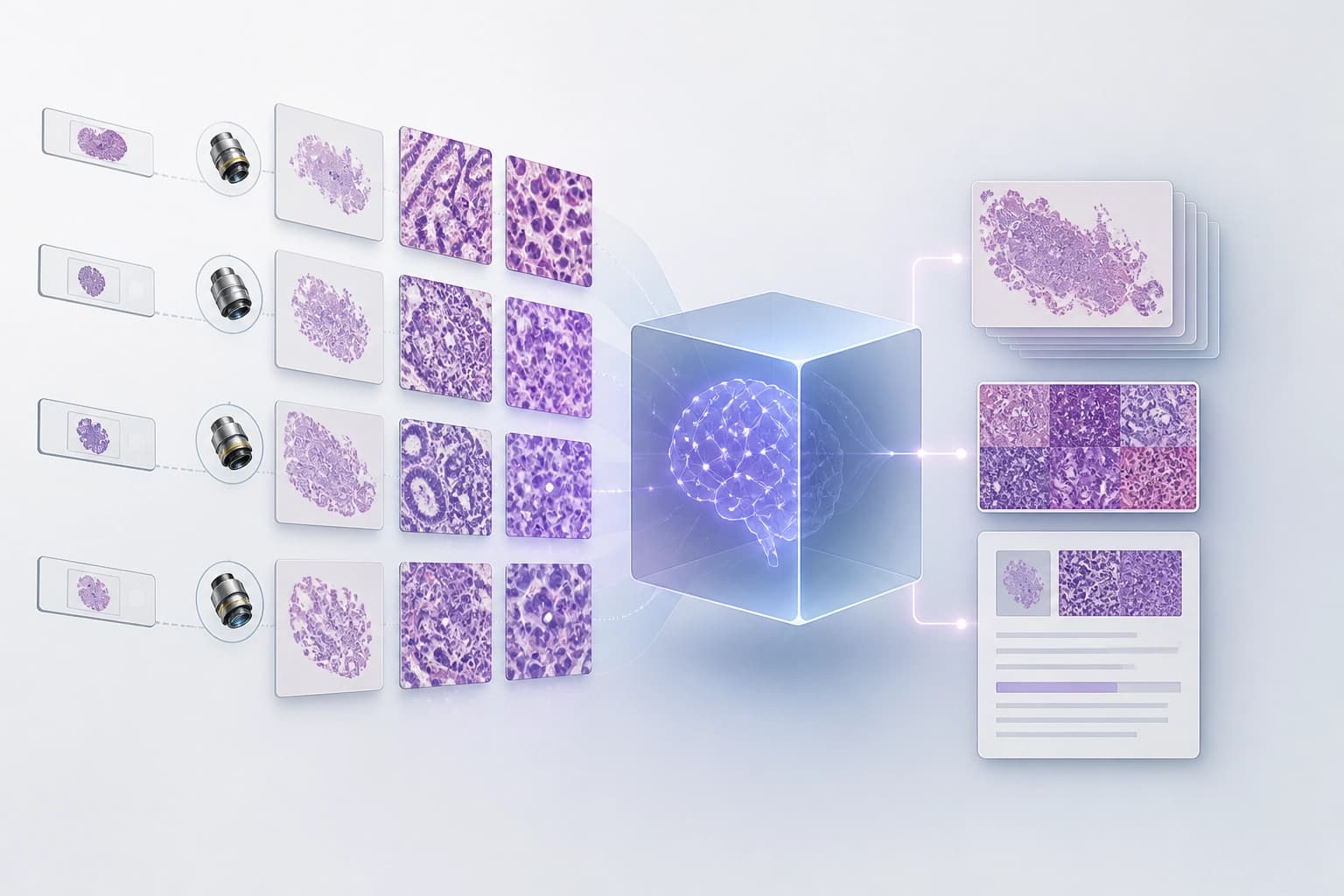
WILSON: combining magnifications and patient slides for pathomorphological analysis and report generation
The preprint introduces WILSON, a vision-language model that encodes images of whole slides and series of slides from a single patient at different magnifications, rather than just a single “best” slide. Without task-specific fine-tuning, it outperforms specialized and larger slide models on a range of metrics while requiring substantially less compute, and its diagnostic descriptions received higher ratings from pathologists.
11 November 2026