
ChatGPT Go: what’s included and what are the limits of OpenAI’s new plan
OpenAI has launched a budget-friendly ChatGPT Go plan based on GPT-5.2 Instant for users worldwide: it offers more daily messages, file uploads, and image generation, but without Codex and the extended Deep Research mode. The subscription costs $8 per month, while certain features remain available only in more expensive plans.
What is ChatGPT Go
In late summer 2025, OpenAI began testing a new budget-friendly tier in India, and by now it has rolled out to all countries where ChatGPT is available. This is the ChatGPT Go subscription — an intermediate step between free access and full ChatGPT Plus. The key here isn't the cost but the balance of features.
The new tier is built on the GPT-5.2 Instant model — a lightweight version designed for fast everyday tasks. OpenAI is clearly targeting those who use the chatbot daily but don't want to overpay for Pro features. In essence, Go occupies the same niche ChatGPT Plus once filled at launch, only cheaper and with a somewhat trimmed set of tools.
ChatGPT Go isn't just a discount on Plus — it's a standalone product with its own philosophy: more messages than a free user gets, but without top-tier models and exclusive features. Still, for most scenarios — from work notes to content preparation — this is more than enough.
What's included in the subscription
The main advantage of Go is an increased daily message limit. While on the free tier you have to ration every request, here you can comfortably hold long conversations without worrying about the bot "running out" at the worst possible moment.
Here's what else subscribers get:
- File uploads and image generation. You can attach documents, spreadsheets, and images, as well as ask the neural network to create an illustration from a description.
- Improved memory and long context. The model better remembers conversation details and handles large texts — for example, you can upload an entire book chapter and ask questions about it.
- Advanced data analysis via Python. The built-in execution environment lets you process CSV files, build charts, and run calculations without switching to external services.
- Projects support. You can organize tasks and materials into separate spaces to keep context across sessions.
- Creating custom GPT versions. Go users can build their own bots tailored to their needs, though likely with limitations compared to more expensive tiers.
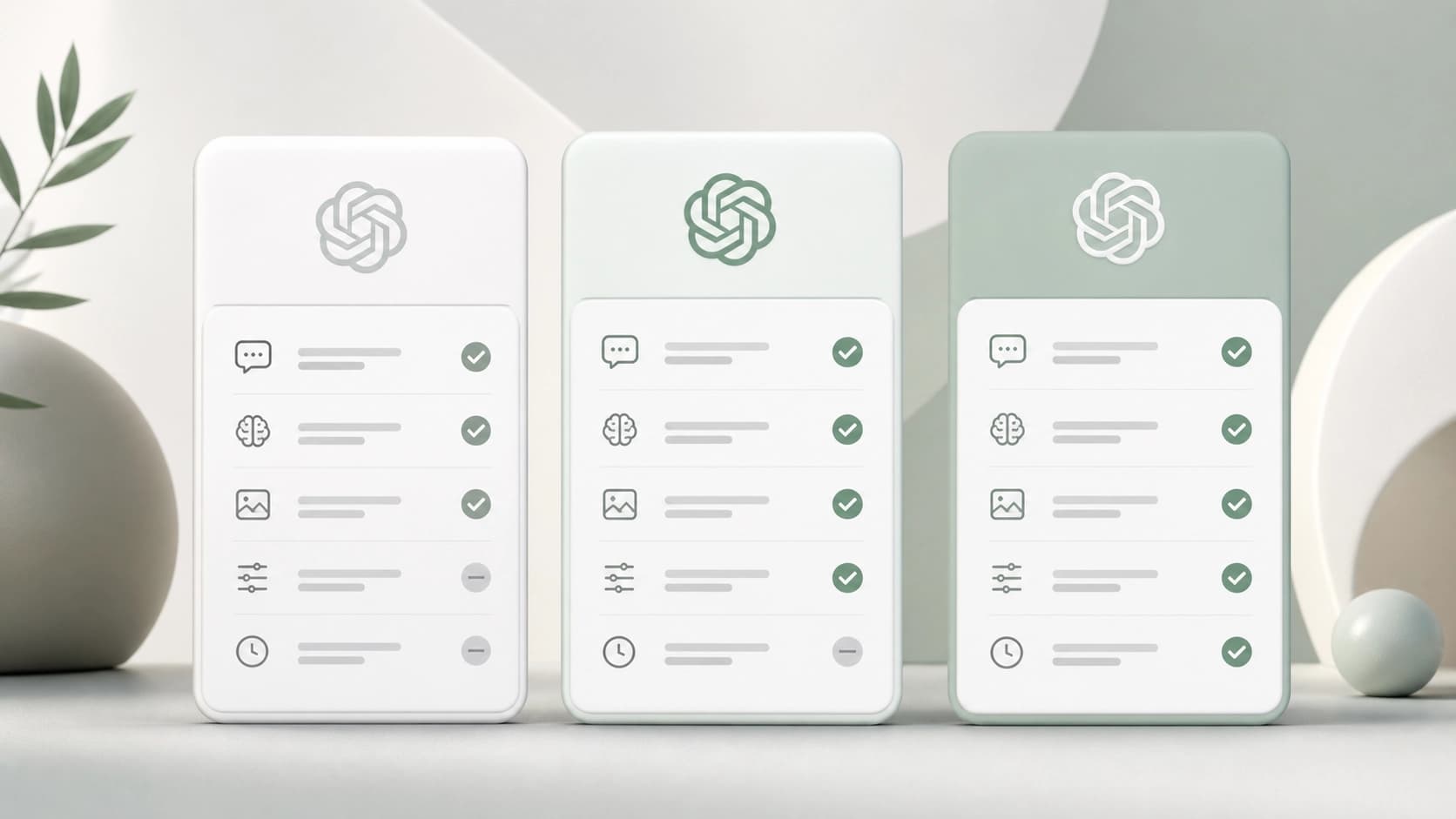
This set covers nearly all basic scenarios. The only thing missing is access to the newest and heaviest models — but more on that below.
What are the limitations
OpenAI deliberately kept a number of features out of the budget subscription. First and foremost, Go users don't have access to GPT-5.2 Pro or the older GPT-4 family models. That means you can't switch to a "smarter" version if a task seems too complex for Instant mode.
Additionally, two tools are excluded from the tier:
- Codex — an AI coding environment that helps write and debug code. It remains available only in Plus and above.
- Extended version of Deep Research — an agent capable of independently gathering and analyzing information from multiple sources over extended periods.
So Go is more of a tier for communication, data analysis, and light creativity, rather than professional development or deep research tasks. That said, the company itself positions it as an option for daily active use, so the limitations seem logical.
It's also worth mentioning technical hiccups: complaints about issues with subscription sign-up and plan switching are already appearing on OpenAI forums. The company has confirmed it's aware of the problems and is working to fix them. So if you can't activate Go on the first try — it might not be your fault, just a temporary glitch.

Ads in the tier: what's known
A separate topic is OpenAI's plans to monetize the free level and Go. The company intends to test advertising on these two tiers. For now, it sounds cautious: ads will be clearly labeled, separated from bot responses, and shouldn't affect their content. Additionally, OpenAI promises not to show ads on topics related to health and politics.
Plus, Pro, Business, and Enterprise subscribers won't see ads — that's a firm stance to avoid alienating paying audiences. The question of how comfortable this model will be for Go users remains open. On one hand, the monthly price is modest; on the other, even tasteful ads could get annoying if they appear in every session.
While initial technical trials are underway, it's hard to say how aggressive these ads will be. But the very fact that OpenAI is seeking additional revenue streams signals a desire to keep the cheap tier sustainable without raising the price.
Overall, ChatGPT Go looks like a solid compromise: it noticeably expands what free users can do, yet doesn't reach the professional level of Plus. For most everyday tasks — from studying to working with documents — it's more than sufficient, and the monthly price is quite reasonable for that convenience.
Frequently asked questions
Related materials
All materials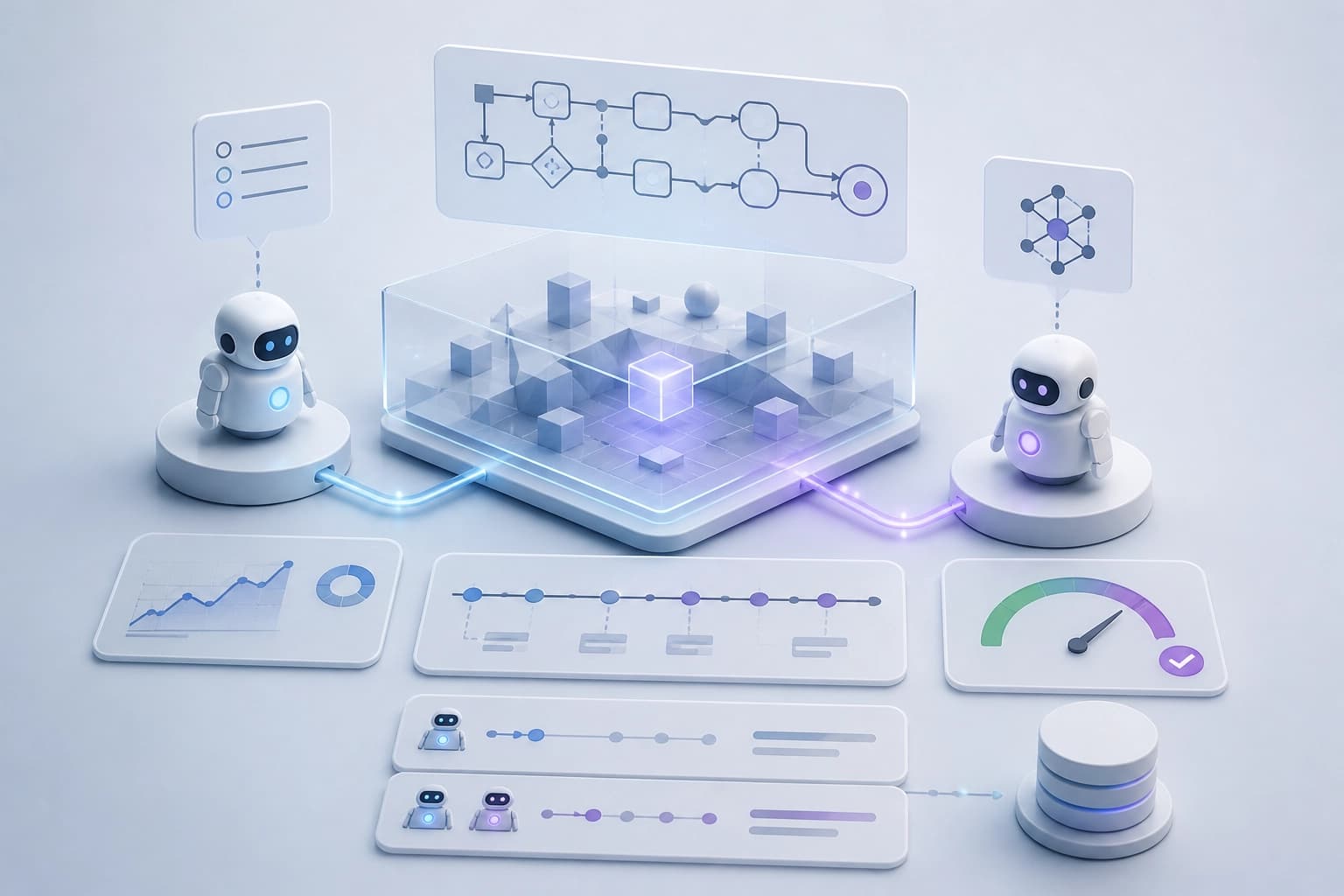
OpenCollab: programmable agent coordination, controlled execution environment, and policy compliance metric
The framework brings together the specification of agent interaction structures, a shared environment for experiments, and detailed event tracing, while the newly introduced Adherence metric reflects how closely actual execution follows the declared schema. In benchmarks, the Duo configuration achieves a new state of the art, while the single-agent variant uses the fewest tokens.
11 November 2026
Toollery: Choose tools for LLM agents from tens of thousands of options without fine-tuning
Toollery builds a search index from descriptions of skills and tools, then passes the model only a limited set of candidates for each query. In experiments with libraries containing tens of thousands of functions, the approach helps maintain selection quality at a fixed top-K, although the overall effect depends on the workload profile and the provider’s caching.
11 November 2026
WILSON: combining magnifications and patient slides for pathomorphological analysis and report generation
The preprint introduces WILSON, a vision-language model that encodes images of whole slides and series of slides from a single patient at different magnifications, rather than just a single “best” slide. Without task-specific fine-tuning, it outperforms specialized and larger slide models on a range of metrics while requiring substantially less compute, and its diagnostic descriptions received higher ratings from pathologists.
11 November 2026