
Apple proposes reference photos to verify photo authenticity on iPhone
As part of the Apple Reference Image announcement, the company described a mechanism that captures signed sensor data and creates an immutable reference through Private Cloud Compute. The article explains how to use it to detect edits, including AI manipulations, and which APIs and the SynthID standard will be available to developers.

What Apple announced
On Wednesday, at the Surprise and Shine event, Apple announced the Apple Reference Image feature. It verifies the authenticity of a photo taken on an iPhone 18 Pro.
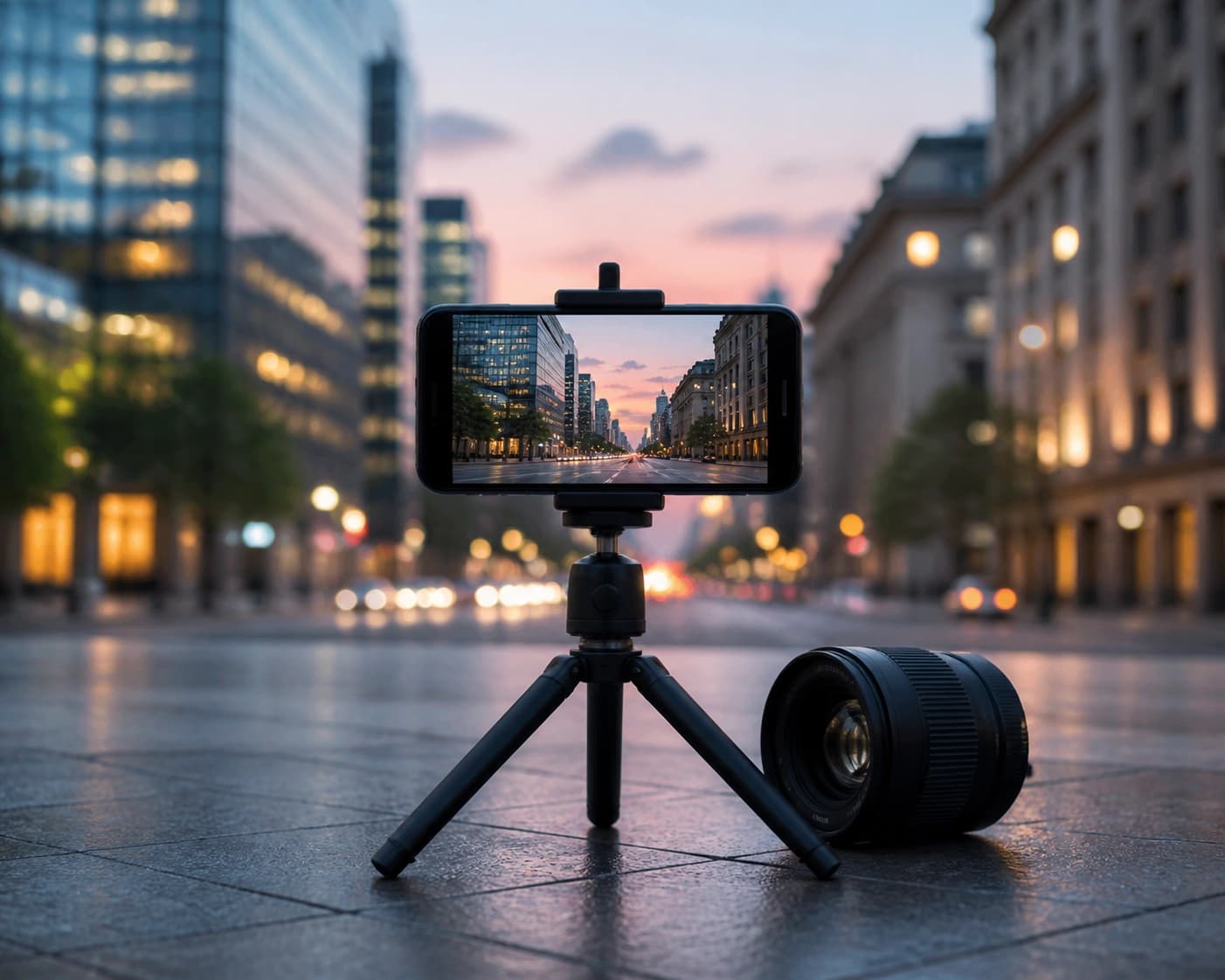
The company calls this kind of verification critical for photojournalists and photographers. Apple compares a reference image to a “digital negative.”
The feature is part of a set of new capabilities and updates that Apple has focused on the camera. In practical terms, a photo gets a reference image that can be used to compare other versions of the file.
How authenticity verification works
The mechanism is based on data recorded at the moment the photo is taken.
- Capture. The camera’s main sensor records signed sensor data along with the photo.
- Processing. The Private Cloud Compute service turns this data into an “immutable image.”
- Viewing. The finished image opens in the Photos app.
- Comparison. The reference copy is compared with other versions of the same photo.
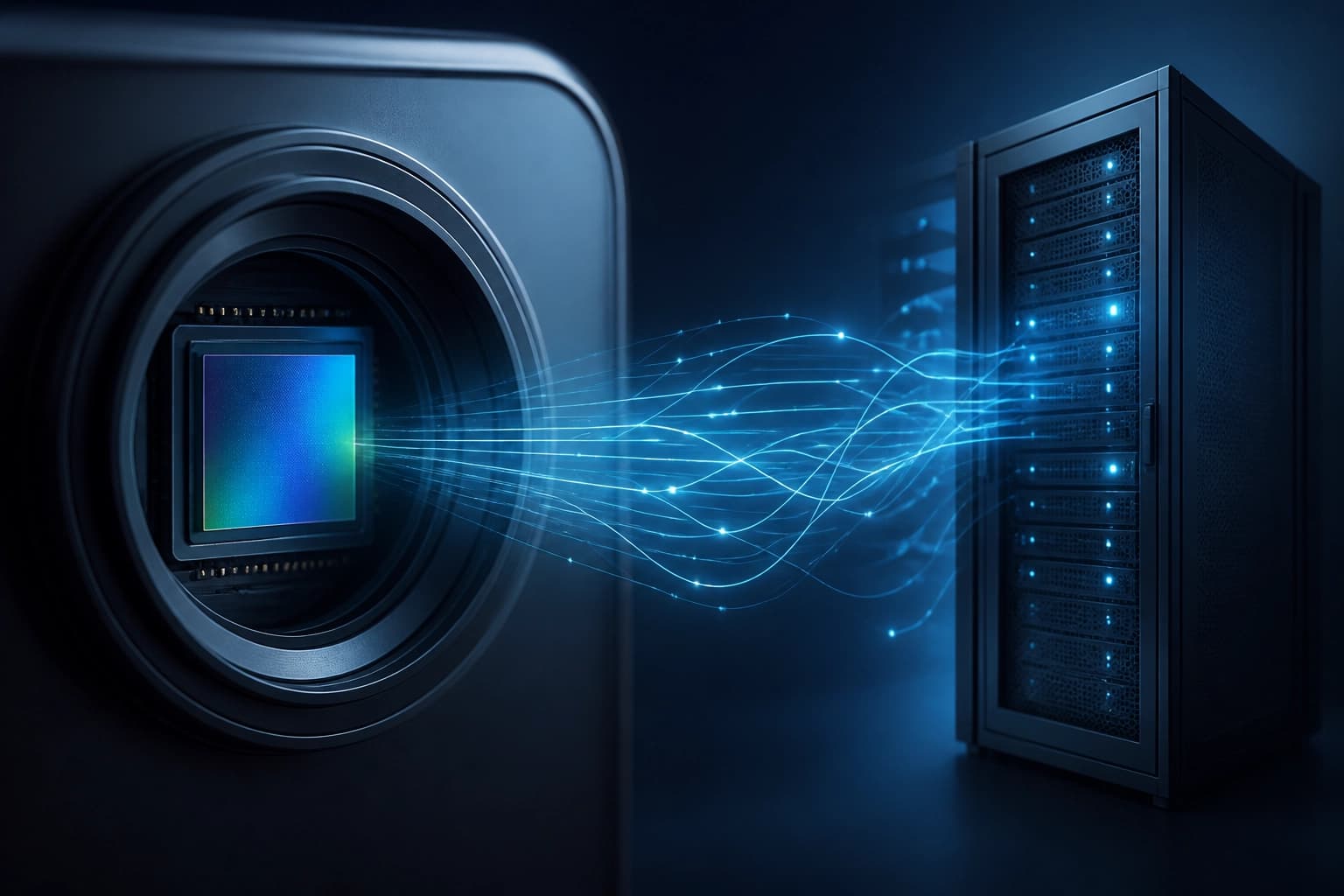
Changes are identified by discrepancies between the reference and the version being verified. The key detail: verification is based on signed sensor data.
Practical criterion: only a photo with an existing reference copy can be verified.
Where the feature is available
Initially, reference images can only be viewed in the Photos app. The feature does not yet work outside this app.
Apple is opening an API to developers. Teams will be able to integrate the feature into their own apps.
Practical criterion: if verification is needed within a third-party service, look for support for the open API from that service.
Verifying AI provenance
Apple said it will support the SynthID standard. It helps determine whether an image was created or modified using AI.
This is a separate mechanism and does not replace the reference image. Apple Reference Image verifies the authenticity of a camera photo, while SynthID support verifies the file’s AI provenance.
| Mechanism | What question does it answer? |
|---|---|
| Apple Reference Image | Is this an authentic camera photo, and has it been altered? |
| SynthID | Was the image created or modified using AI? |
The selection criterion is simple: a reference image addresses the question of whether a photo taken on an iPhone 18 Pro is authentic, while SynthID support addresses the question of the finished file’s provenance.
Frequently asked questions
Related materials
All materials
Canonical Polynomial Invariants for Diagnosing RL Simulator Failures: Where Are They Actually Useful?
The study examines whether incorporating physical laws into learnable dynamics models is justified: invariants extracted from trajectories and reduced to canonical form using Gröbner bases yield modest forecasting gains, but prove powerful for diagnostics, enabling the localization of violated constraints and identification of specific erroneous parameters.
10 November 2026
AURA-Eval: How to Check Whether an LLM Agent Recognized a Risk and Changed Its Next Step
The framework evaluates LLM agents’ behavior not by their final verdict, but by how they respond to risk at key decision points: tool-call trajectories are interrupted, after which the model must continue reasoning and acting, while a panel of LLM judges assesses risk detection, the nature of the step, and its safety. Across 1,249 tasks drawn from 157 R-Judge trajectories, unsafe actions become more frequent among 20 models when no safe path is available, and removing oversight before execution turns 52.3% of initially safe cases into unsafe ones.
10 November 2026
Chern–Simons Reservoir Memory: Autonomous Connectivity Dynamics and Density Transport
The article explores how a reservoir preserves the history of input signals both in its density distribution and in its geometric degrees of freedom. A comparison of four mechanisms shows that current creates a separate connected component that alters the subsequent density response, while accounting for all measured features yields a small improvement in decoding pulse order.
10 November 2026