
When a large language model needs to handle multiple tasks, fine-tuning it separately for each one is expensive. That's why efficient fine-tuning (PEFT) comes into play, and its gold standard is the LoRA method. But classic LoRA is primarily designed for a single task. When researchers try to extend it to multi-task scenarios, they usually add separate adapters and heads to the architecture, and to keep them from interfering with each other, they add a router that distributes requests. This solution looks logical, but as a recent paper, "From Isolation to Alignment: Unified LoRA for Efficient Multi-Task Learning" (arXiv:2508.05078), shows, it may be unnecessary.
The study's authors — Jinda Liu, Yi Chang, and Yuan Wu — proposed rethinking the approach itself. Instead of isolating knowledge for each task, they bet on a unified LoRA adapter and aligning representations across tasks. The method is called Align-LoRA.
From knowledge isolation to unification
A typical multi-task LoRA looks like a construction kit: its own modules for each task, dynamic request routing, and often separate "heads" at the output. The assumption is that architectural isolation protects tasks from mutual interference and helps preserve specialized knowledge. But this approach has a serious cost — routing prevents merging weights into a single model. As a result, inference turns into expensive branched computation: you need to determine the route each time and run only certain components. Latency grows, and production deployment becomes more complicated.
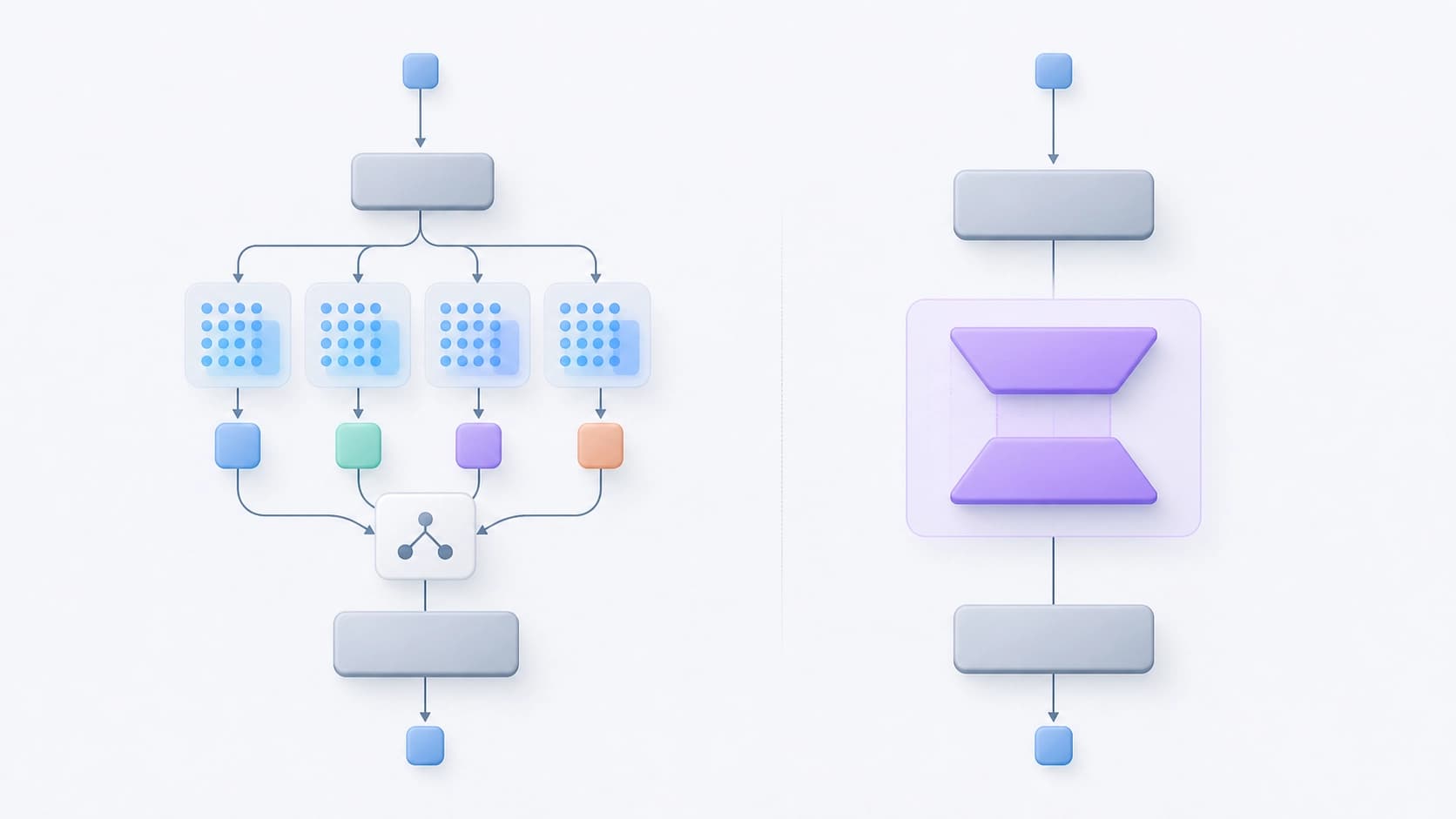
The paper's authors found a curious contradiction in this picture. A simplified version of the model, with multiple heads but no routing and no forced separation of competencies, performs better than complex diversity-oriented baselines. Moreover, the heads in such a model are highly redundant: they barely differ from each other in their internal representations. Instead of seeing this as a drawback, the researchers decided that redundancy might be a sign that the tasks are more closely related than they seem.
The paradox of multi-task LoRA
Even more telling was an experiment with a single LoRA adapter whose rank was simply increased. This homogeneous module, with no heads or branching, nearly matched the performance of elaborate multi-component systems. This means complex designs don't provide a decisive quality advantage — but they do create additional complications in training and deployment. A single adapter with the same dimensionality as several separate ones performs just as well, and sometimes better.
This paradox calls into question not only specific architectures but also the very philosophy of "isolation." Perhaps trying to spread tasks across different subspaces of the model deprives them of the ability to reinforce each other. Multi-task learning then turns into a set of parallel single-task fine-tunings hidden in one body, while all the overhead of maintaining multiple branches remains.
Align-LoRA: alignment instead of separation
The solution proposed in the paper looks elegant. The authors keep standard LoRA: one adapter, a regular architecture, no routing. The main change is in the loss function. The Align-LoRA method adds a special term — alignment loss — that encourages the model to form a shared hidden space for all tasks. Instead of rigidly pushing representations into different corners, training seeks their consistency, common patterns, and mutually useful features. Tasks stop competing for parameters — they learn to use the same representations in different contexts.
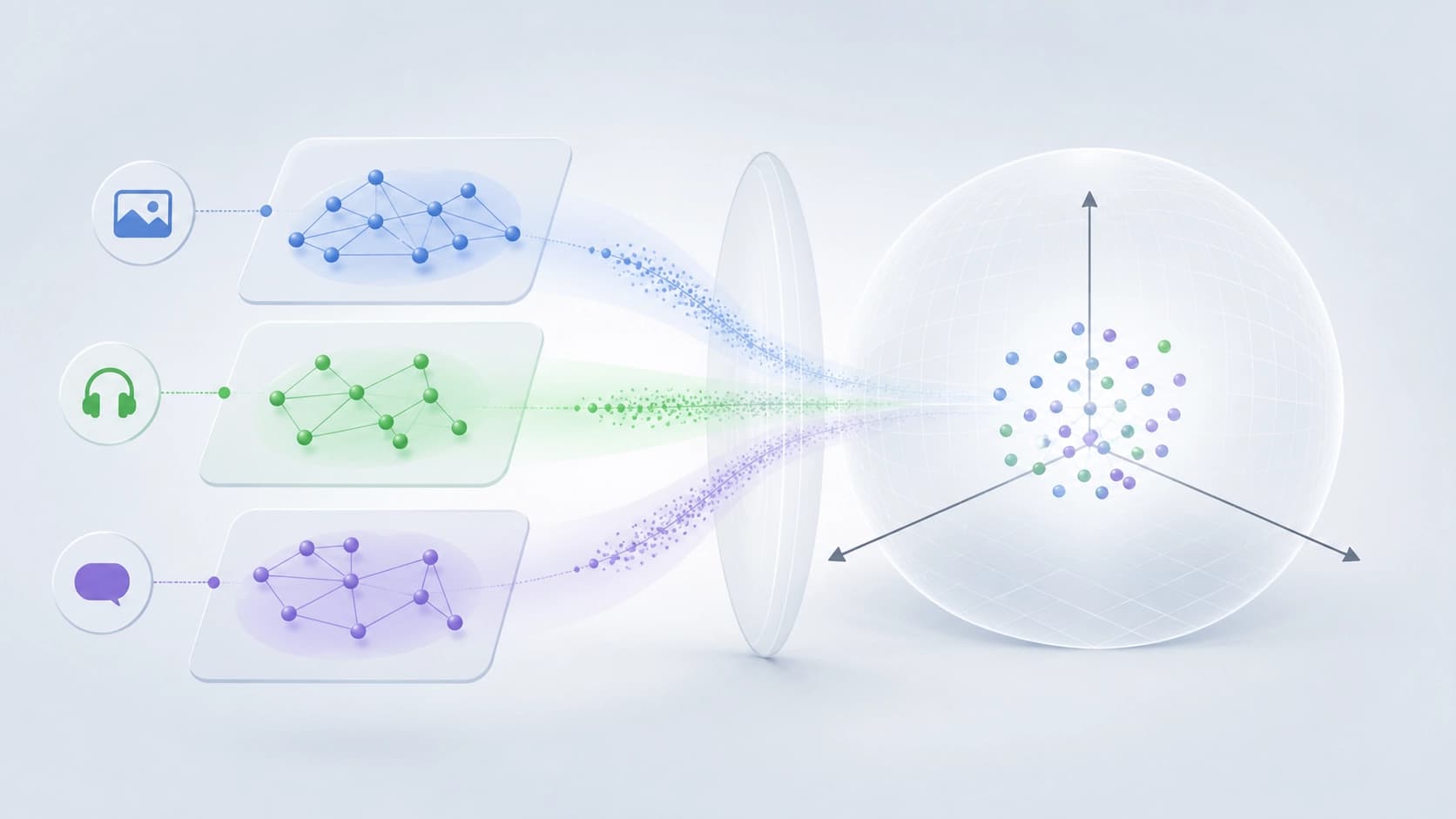
At the same time, the adapter itself remains fully compatible with the standard weight merging procedure. After training, the low-rank matrices are added to the original weights of the large model without any additional layers. Inference runs at exactly the same speed as the base network — zero added latency. This sharply contrasts with routed systems, which require additional computation at every step.
The authors emphasize that what matters is not how modules are separated, but how well representations are aligned. Alignment through loss works more effectively than any formal architectural separation because it doesn't constrain the model with predefined patterns. The shared hidden space is shaped for a specific set of tasks, extracting maximum benefit from them.
What the experiments showed
The theoretical analysis in the paper is backed by extensive experiments. Align-LoRA consistently outperforms existing approaches to multi-task efficient fine-tuning. The method's simplicity doesn't prevent it from being more accurate: on a number of tasks, it improves results compared both to classic multi-head LoRA variants and to newer diversity-oriented solutions.

Interestingly, the effect doesn't come down to increasing the rank or the number of parameters. Control experiments show that it's the explicit alignment loss that provides the main gain. A large rank helps a single adapter absorb more knowledge, but it's the alignment loss that turns a knowledge store into a coherent multi-task representation.
As a result, Align-LoRA fits into a simple and practical paradigm: one adapter, a shared hidden space, no routing. For applied scenarios, this means a model can be quickly adapted to a new set of tasks without sacrificing inference speed or requiring complex engineering solutions.
Conclusions
The new paper not only proposes a concrete method but also forces a rethink of established ideas about multi-task LoRA. Judging by the results, the pursuit of architectural isolation was more of an engineering habit than a necessity. A single adapter with proper representation alignment performs just as well, and often better, while remaining far more convenient for use in real-world systems.
The research is already available on arXiv, and the authors have also published the code, so the results can be reproduced and tried on your own tasks. Perhaps Align-LoRA will be that simple solution that moves multi-task efficient fine-tuning from the category of experimental novelties into the standard of industrial practice.