
A correct answer doesn't guarantee a correct drawing: a fresh benchmark tests AI's geometric diagrams
Researchers presented an open dataset of 954 olympiad geometry problems, where the key is not solving an equation but constructing a correct figure. It turned out that even strong mathematical models perform notably worse on drawings: on average, only about 36% of diagrams are successfully assembled.

A correct answer is not yet a diagram
Modern large language models confidently solve olympiad-level math problems. In geometry, this is especially noticeable: the model produces a numerical answer, and it seems as though it can visualize the problem. However, there is a big difference between being able to solve a problem and being able to draw a correct diagram. An answer can be obtained through algebraic transformations, while a diagram requires accounting for the relative positions of points, lines, and auxiliary constructions. For example, GPT and Claude show high results on standard math tests, but until recently, there was no test that separately assessed their ability to create diagrams.
The authors of the new paper (preprint arXiv:2608.18111, presented at the AI4MATH workshop as part of ICML 2026) note that existing benchmarks, including the popular MathVista and MathVerse, primarily evaluate the final answer. None of them, they argue, isolates diagram construction as an independent skill. This became the starting point for the new dataset.
What's inside the benchmark
The researchers compiled an open set of 954 olympiad geometry problems. Each problem is fully self-contained: its statement requires no external references and allows for unambiguous interpretation. Additionally, the set includes a challenging subset of 297 problems that require particularly careful work with the diagram.
For each problem, the authors prepared a reference solution and a high-precision diagram created by a human in Asymptote code. This format makes it possible to render the diagram and compare it with what the model generates.

To evaluate diagrammatic reasoning, the developers propose several types of metrics. They check the result by text, by code, by the final image, and also involve vision-language models and individual constraint checks. This makes it possible to see not only whether a figure was rendered, but also how well it matches the original geometric conditions.
What the first tests showed
The authors ran several foundation models through the benchmark. The results confirmed the initial hypothesis: models are noticeably better at solving problems than at creating diagrams for them. The average successful compilation rate for generated diagrams was only 36.14%. This means that in most cases, the model either fails to handle the code or constructs a geometrically incorrect figure.
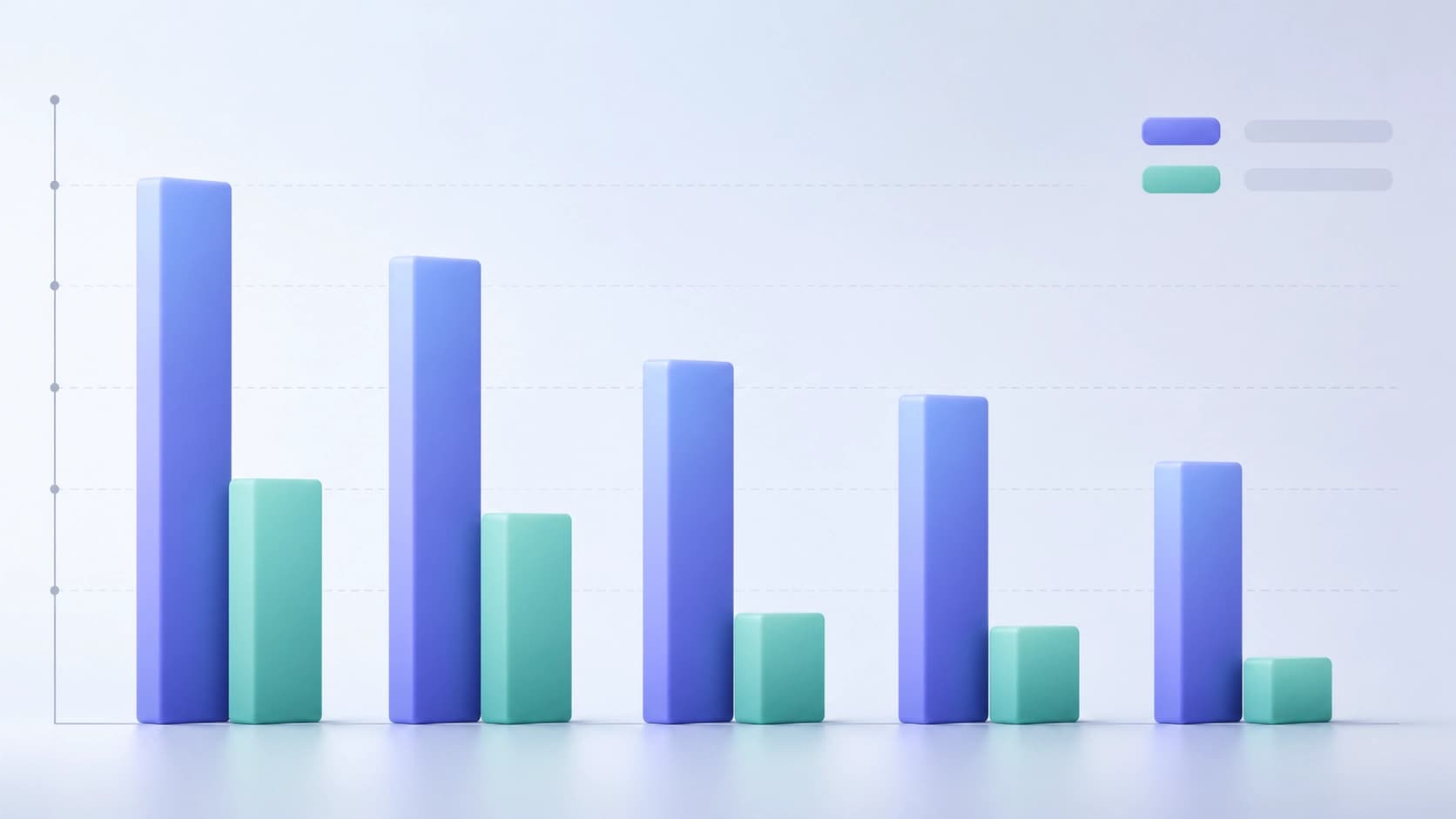
Moreover, the low result cannot be explained solely by the complexity of the Asymptote language: for some problems, models produce the correct answer but cannot draw even an approximate diagram of the problem. It seems that spatial thinking and mathematical reasoning in modern AI develop independently, and current training methods do not connect them.
Why this matters
An accurate diagram is an important part of olympiad geometry. Often, it is the auxiliary construction—a drawn circle, a segment, or a symmetric point—that hints at the solution. If a model cannot construct such auxiliary elements, its "success" in geometry cannot be considered a full understanding of the problem.
The created benchmark allows researchers to separate the ability to solve from the ability to visualize. This is a first step toward developers purposefully training models to work with graphical representations. The open data of 954 problems is available via the link in the abstract, so anyone can use the new test.
The takeaway is simple: a correct answer is no guarantee of a correct diagram. The new dataset helps make this clearly visible and may become the foundation for more "spatial" AI training.
Frequently asked questions
Related materials
All materials
Canonical Polynomial Invariants for Diagnosing RL Simulator Failures: Where Are They Actually Useful?
The study examines whether incorporating physical laws into learnable dynamics models is justified: invariants extracted from trajectories and reduced to canonical form using Gröbner bases yield modest forecasting gains, but prove powerful for diagnostics, enabling the localization of violated constraints and identification of specific erroneous parameters.
10 November 2026
AURA-Eval: How to Check Whether an LLM Agent Recognized a Risk and Changed Its Next Step
The framework evaluates LLM agents’ behavior not by their final verdict, but by how they respond to risk at key decision points: tool-call trajectories are interrupted, after which the model must continue reasoning and acting, while a panel of LLM judges assesses risk detection, the nature of the step, and its safety. Across 1,249 tasks drawn from 157 R-Judge trajectories, unsafe actions become more frequent among 20 models when no safe path is available, and removing oversight before execution turns 52.3% of initially safe cases into unsafe ones.
10 November 2026
Chern–Simons Reservoir Memory: Autonomous Connectivity Dynamics and Density Transport
The article explores how a reservoir preserves the history of input signals both in its density distribution and in its geometric degrees of freedom. A comparison of four mechanisms shows that current creates a separate connected component that alters the subsequent density response, while accounting for all measured features yields a small improvement in decoding pulse order.
10 November 2026