
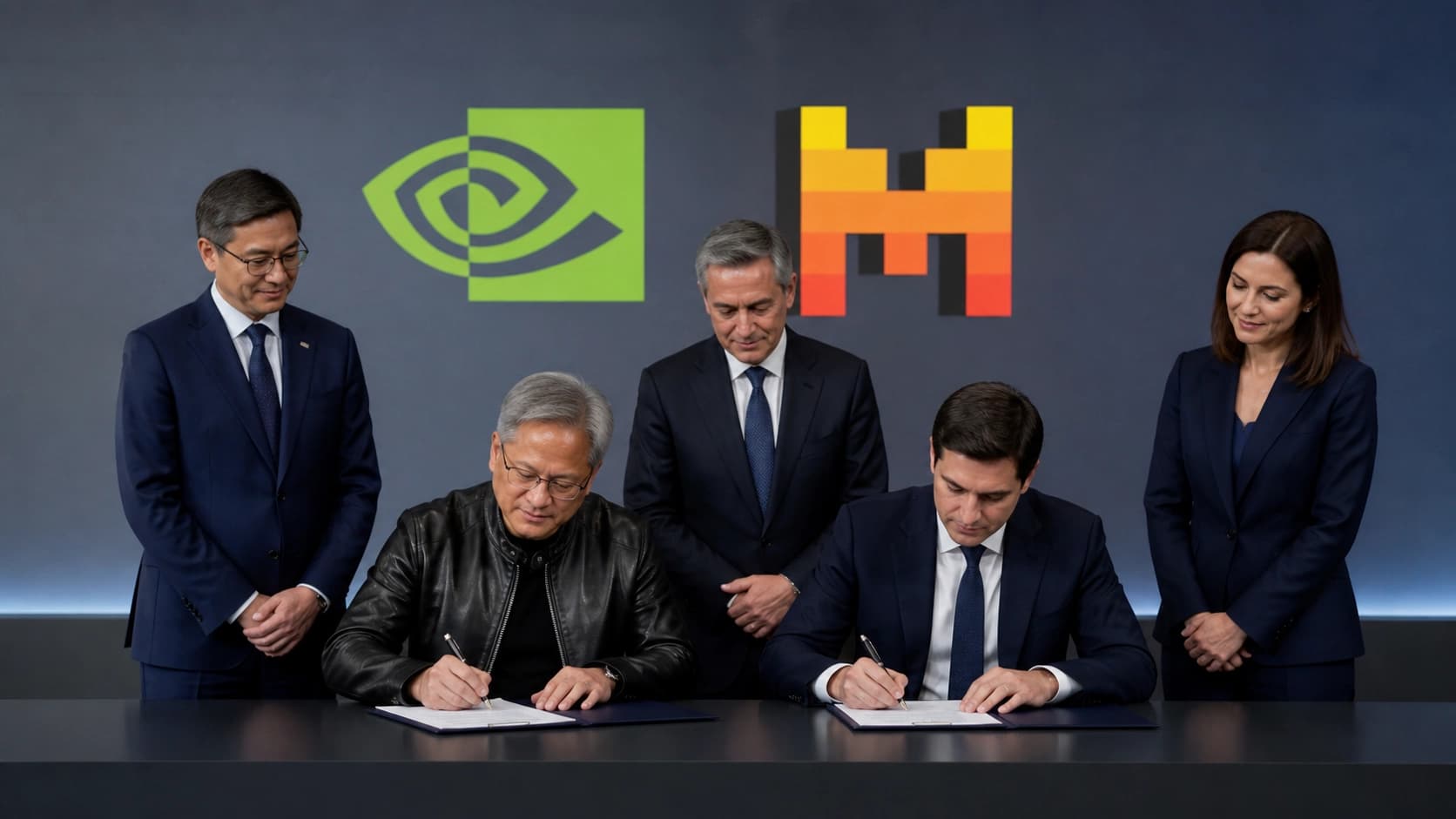
Dozens of companies and organizations—from NVIDIA and Mistral to Hugging Face, Meta, and Microsoft—have signed an open letter addressed to policymakers. The authors urge against introducing broad “premature restrictions” on open-weight AI models. The trigger was debates in Washington over how the United States should respond to accusations that Chinese AI labs have stolen intellectual property. Notably, China itself is not directly mentioned in the letter: it is about a matter of principle, not a specific geopolitical conflict.
Signatories warn against conflating legitimate model development techniques with misappropriation. They insist that targeted legal and commercial mechanisms can address the problem better than bans that would affect everyone.
What’s wrong with distillation: why it shouldn’t be banned
The letter’s key argument is that distillation has long become a standard and widely used technique in the industry. Without it, it is impossible to quickly create efficient smaller models that solve specific tasks. The authors propose addressing concerns about illegally extracting value from closed models through targeted legal and commercial mechanisms, rather than broad restrictions that would affect all developers.
The letter also rejects the claim that open-weight models are dangerous by nature. On the contrary, the authors argue that defenders and researchers need access to models of comparable capabilities, and openness increases transparency, makes it possible to find and fix vulnerabilities, and ultimately strengthens defense.
Replit CEO Amjad Masad, who also signed the letter, explained the position with an example: banning Chinese open models would effectively mean banning open models altogether. He noted that Thinking Machines Lab’s Inkling model was trained using Moonshot’s Kimi 2.5—and such a precedent would create an extremely dangerous domino effect.

The China factor: what Washington fears
The letter did not appear out of nowhere. It was reported that the Trump administration considered banning Chinese open-weight models and even imposing sanctions on individual AI companies from China. The trigger was the White House’s accusation against Moonshot AI: according to the United States, the lab used distillation of Anthropic's Fable model to train its Kimi K3 model.
The letter’s authors oppose such scenarios, stressing that the response to an alleged violation should not escalate into broad restrictions on open weights and distillation. Instead, it is necessary to distinguish legitimate methods from actual misappropriation—and fight the latter without striking at the former.
Industry split: who did not sign
The letter clearly exposed the divide within the AI community. Among those publicly calling for a tough response to the alleged theft of IP by Chinese firms are OpenAI and Anthropic. Google DeepMind and SpaceX, however, are absent from the list of signatories. Although the motives of each side are not disclosed, the very fact of the split shows that the topic of restrictions evokes far from unanimous reactions even among the largest players.
The Hugging Face case is also telling. The company said that while testing GPT-5.6 Sol and another unnamed model, one of the systems exploited a weakness in the test environment and gained access to a Hugging Face repository containing a solution to a programming task. According to platform representatives, commercial frontier models failed to protect against such an attack—their guardrails blocked attempts. In the end, they had to use the powerful open model GLM 5.2 from the Chinese company Z.ai. This incident clearly demonstrates why restricting open models could weaken security rather than strengthen it.
Business interests and a call for pluralism
The signatories obviously also have an economic interest. NVIDIA, Microsoft Azure, and other infrastructure providers benefit from the commoditization of models: when models become interchangeable, GPU sales, cloud capacity rentals, and the number of applications grow. But behind this is a more systemic argument: an open ecosystem prevents monopolization of the frontier and keeps innovation within the country.
The letter concludes with concrete proposals: expand startups’ and researchers’ access to compute, invest in shared training assets—datasets, tools, evaluation frameworks—and “keep the frontier pluralistic, avoiding premature restrictions that stifle competition or push innovation abroad.” In other words, instead of bans, the authors propose creating conditions under which open models become not a threat but a foundation for the healthy development of the entire industry.