

Veo
Neural network from Google DeepMind for generating videos from text prompts and images.
Overview
Veo
Description of the Veo neural network
Veo is a generative neural network from Google DeepMind designed to create videos based on text descriptions and images. The model can generate videos up to two minutes long, understands the physics of object movement, and supports cinematic terms for controlling camera angles. In June 2025, an updated version — Veo 3 — was released, featuring improved quality and enhanced detail in output video.
The neural network works with both text prompts (up to 100 words) and uploaded images, allowing animated video sequences to be created from them. Each generated frame is marked with a digital SynthID watermark, helping to identify content created by artificial intelligence.
Veo characteristics
| Characteristic | Value |
|---|---|
| Type | Generative neural network for video creation |
| Developer | Google DeepMind |
| Release date | December 16, 2024 |
| Maximum resolution | 4K (4096×2160 pixels) |
| Maximum video duration | 128 seconds (2 minutes) |
| Prompt support | Up to 100 words |
| Number of visual styles | 12 (realism, animation, and others) |
| Watermark | SynthID in every frame |
| Integration | YouTube Shorts (up to 15 seconds), Vertex AI (in 2025) |
Who is the Veo neural network suitable for?
Creative professionals and video producers
Veo will be useful for video editors, directors, and creative directors who want to quickly create conceptual video materials, storyboards, or rough cuts without involving a film crew. The ability to control camera angles and styles allows experimentation with visual solutions at early stages of production.
Marketers and social media content creators
For content marketing specialists and SMM managers, Veo is suitable as a tool for generating short videos for YouTube Shorts (up to 15 seconds) and other platforms. Support for text prompts simplifies the creation of advertising or informational videos without the need to edit them manually.
Designers and artists
Artists and graphic designers can use Veo to animate static images or implement complex visual ideas based on text descriptions. Understanding movement physics helps achieve more natural object animation.
AI researchers and enthusiasts
Specialists studying the capabilities of generative models will appreciate Veo as a platform for testing the boundaries of AI video generation and analyzing the quality of the neural network's performance compared with alternatives.
How to use the Veo neural network?
Registration and access
To start working with Veo, you need to register on the labs.google platform. After logging into your account, the user is taken to the VideoFX web application, where all video generation features are available. Registration has been open since December 2024.
Video generation process
Working with the neural network involves several steps: enter a text prompt (up to 100 words), select the desired parameters — camera angle and one of 12 available visual styles (realism, animation, and others) — then start generation. Creating an 8-second clip takes about 20 seconds. The finished video can be downloaded to your device right away.
Integration with other services
Veo integrates with YouTube Shorts, allowing short videos to be created directly for the platform. In addition, integration with Vertex AI is expected in 2025, which will open access to the model for enterprise users of Google cloud services.
Key features of Veo
4K video generation
The neural network supports creating videos with a maximum resolution of 4K (4096×2160 pixels), providing high image detail. At launch, the VideoFX web interface offers a 720p limit — full resolution may be delivered later or through other access channels.
Creating video from text and images
Veo works in two modes: from text descriptions (up to 100 words) and from uploaded images. In the second case, the neural network animates a static picture or uses it as a reference for generating a video sequence.
Camera angle control and movement physics
The model understands cinematic terms — parameters such as "low-angle shot" or "close-up" can be specified. In addition, the neural network simulates physical laws: gravity, object collisions, and other basic interactions, making generated videos more realistic.
Visual style support
Users have access to 12 different visual styles — from photorealism to animation. This allows the result to be adapted to specific tasks and visual preferences.
Advantages of Veo
Generation quality
According to MovieGenBench tests, 85% of users note that Veo outperforms Sora by OpenAI in video quality. The model demonstrates a high level of detail and accuracy in fulfilling prompts.
Physics accuracy and realism
In tests, the accuracy of physical process simulation reaches 92%. The neural network correctly handles object movement, interaction, and compliance with the laws of physics, reducing the number of unnatural artifacts.
Speed
Generating short 8-second clips takes about 20 seconds. This allows ideas to be tested quickly and results obtained without long waits.
Free access to core features
Currently, key Veo capabilities are available free of charge to registered users, making the neural network attractive to a wide audience.
Disadvantages of Veo
Limited resolution at launch
At launch, the VideoFX web application only offers 720p resolution, even though the model technically supports 4K. Full use of high resolution may be implemented later.
English-only support
Currently, Veo supports prompts exclusively in English, which limits its use for Russian-speaking and other non-English-speaking users.
No paid version
A paid version of Veo is not expected before 2026, and its price has not yet been announced. This means pricing and expanded commercial use options remain uncertain.
What tasks does Veo solve?
Video generation from text descriptions
The neural network's main task is turning text scripts or descriptions into a finished video sequence. This is suitable for creating concept videos, advertising materials, and idea visualization without a video production team.
Creating video from images
Veo allows uploaded photos or drawings to be animated, turning static images into short video scenes. This is useful for bringing archival materials to life, creating social media content, or visual experimentation.
Preparing content for YouTube Shorts
Thanks to YouTube Shorts integration, the model is convenient for quickly creating short vertical videos up to 15 seconds long — a popular format for mobile platforms.
Veo pricing
Currently, Veo 3 is available free of charge to early users. Google plans to launch a paid version in 2026, but the specific price and subscription terms have not yet been announced. All core video generation features remain free at this stage.
Terms of use for Veo
To work with Veo, registration on the labs.google platform is required, and it has been open since December 2024. Access to the neural network is available through the VideoFX web application. All generated content undergoes additional safety review in accordance with Google's policy. Each generated frame is marked with the SynthID watermark for transparency about content origin.
Veo availability
The neural network works exclusively in English and is available through the VideoFX web interface at labs.google. Use requires a stable internet connection and a Google account. Currently, registration has no regional restrictions, but supported prompt languages are limited to English.
How Veo differs from alternatives
Superiority over Sora by OpenAI
According to MovieGenBench test results, 85% of users rate Veo video quality higher than Sora by OpenAI. The Google DeepMind model demonstrates better detail, physics accuracy, and understanding of complex text prompts.
Understanding cinematic terms
Unlike some competitors, Veo can interpret professional cinematic concepts — camera angles, shot types, and camera movements. This gives users finer control over the result.
Built-in SynthID labeling
Every frame generated by Veo contains the SynthID digital watermark, making it possible to identify content as AI-generated. This is an important difference that increases the transparency of model use.
Conclusion
Veo by Google DeepMind is one of the most advanced neural networks for generating video from text prompts and images. The high quality of output material, accurate physics simulation, support for resolutions up to 4K, and understanding of complex cinematic prompts make the model a powerful tool for creative professionals and marketers. Core features are available free of charge, with a paid version expected in 2026. Currently, the neural network works only in English, but it already represents a serious alternative to leading competitors, including Sora by OpenAI.
Frequently asked questions
See also
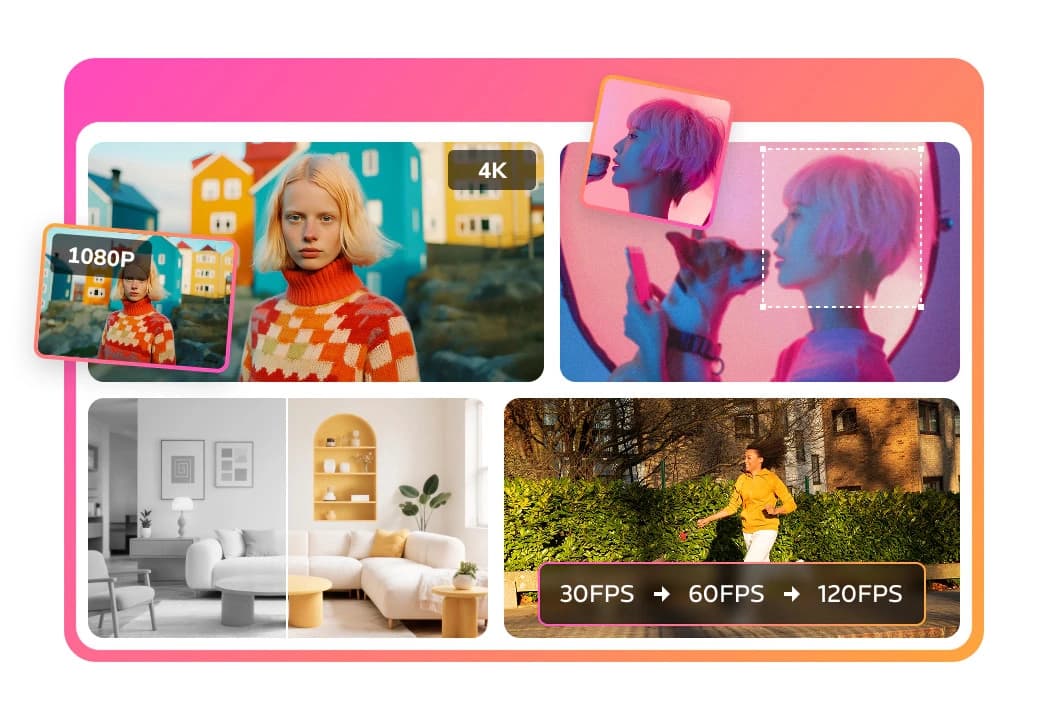
A multimedia AI toolkit for editing and enhancing photos, videos, and PDF documents.

Cloud platform for creating videos using AI avatars, synthesized speech, and automatic translation of clips into dozens of languages.
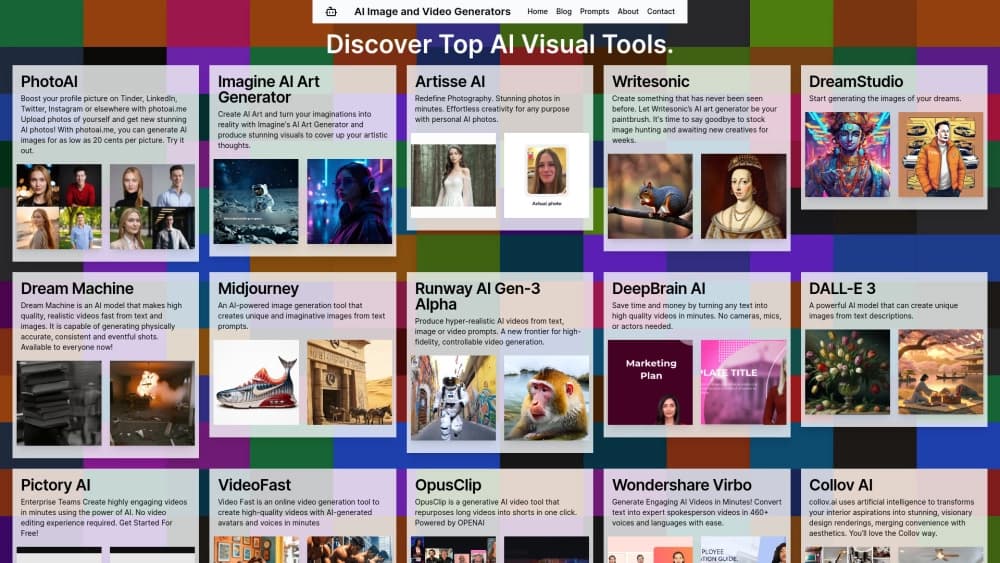
Catalog of neural networks and online tools for generating images, animations, and videos.
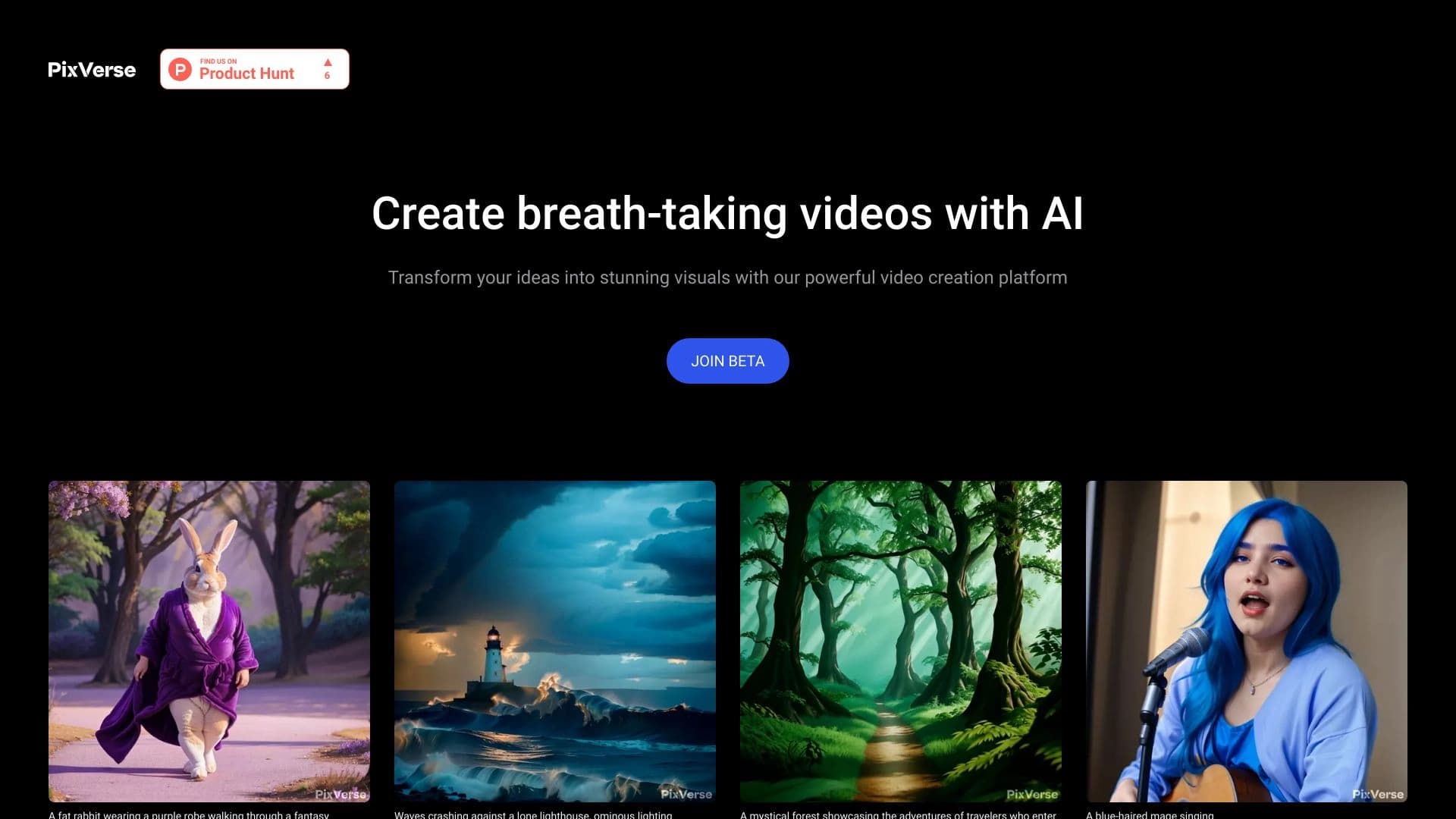

A neural network for generating short videos from text descriptions or images.

Catalog of free video editors without watermarks for creating and editing videos.


A multifunctional platform for creating and editing media content using artificial intelligence.

AI toolkit for video generation and editing, including avatars, lip-sync, and voice cloning.

Web service for generating images from text prompts and converting photos and videos into artistic artworks.