

Speeek
A platform for automatic video translation and voice-over into more than 20 languages with voice cloning capability.

Overview
Speeek
Description of the Speeek neural network
Speeek is a platform designed for automatic translation and dubbing of video content using neural networks. The service can recognize speech, translate it into more than 20 languages, and voice the result with a synthesized voice, preserving the natural sound of the original recording.
The platform works through a web interface, so no additional software installation is required. It is aimed at content localization for YouTube channels, podcasts, interviews, and other video formats where the goal is to translate material into foreign languages without involving professional recording studios.
The service combines speech recognition, semantic text analysis, machine translation, and voice synthesis — the entire process is automated.
Speeek characteristics
| Characteristic | Value |
|---|---|
| Type | Neural network for video translation |
| Business model | Freemium |
| Pricing | from $10/mo |
| Number of languages | more than 20 (English, German, French, Spanish, Chinese, etc.) |
| Maximum number of speakers | up to 5 |
| Maximum video size | 1.5 GB |
| Supported formats | MP4, MOV, AVI, MKV, MP3, WAV, M4A |
| Maximum quality | 4K |
| Speech recognition accuracy | 94—97% |
| Free plan | Yes, 5 minutes per month |
| Platforms | Web |
| Editor's rating | 8.2 out of 10 |
Who is the Speeek neural network for?
Video content creators
Speeek will be useful for video bloggers and YouTube channel authors who want to reach an international audience. The service allows translating and voicing videos into dozens of languages without hiring professional voice actors and recording studios.
Companies and marketing teams
Organizations involved in content localization for foreign markets can use the service to quickly prepare voiceovers for promotional videos, presentations, and training materials. Companies can request additional test minutes.
Podcast and interview creators
Audio and video podcast creators can use Speeek to dub their episodes into foreign languages. Since the service recognizes up to five speakers in a single video and assigns an individual voice to each, dialogue formats preserve participant recognizability.
How to use the Speeek neural network?
Web interface without installation
Speeek works through a web interface, so all you need to get started is to open the service website in your browser. No software installation is required — the entire translation process happens in the cloud.
Uploading and configuring video
To translate a video, the user uploads a file in a supported format (MP4, MOV, AVI, MKV, and others), specifies the target languages, and starts processing. The service automatically recognizes speech, translates the text, and creates a new audio track.
Editing the result
After automatic processing, the translation can be adjusted in the built-in editor. Finished subtitles are available for download in SRT format, allowing them to be used outside the platform as well.
Key features of Speeek
Automatic video translation
The service translates video content into more than 20 languages, including English, German, French, Spanish, Chinese, Japanese, Korean, and others. Two-way translation from any language to any other is supported.
Speech recognition and speaker management
Speeek recognizes up to five speakers in a single video and automatically assigns an individual voice to each. If there are more than five speakers in a video, the system merges them into five main voice parts.
Voice cloning
The platform supports voice cloning based on a sample of at least three seconds of clear speech. This makes the translation sound as close as possible to the speaker's original voice. The feature is available on the paid Pro and Business plans.
Subtitles and editing
The service can download subtitles in SRT format and includes a built-in editor for correcting translations. This allows manual refinement of wording if the automatic result requires adjustments.
Speeek advantages
Affordable pricing
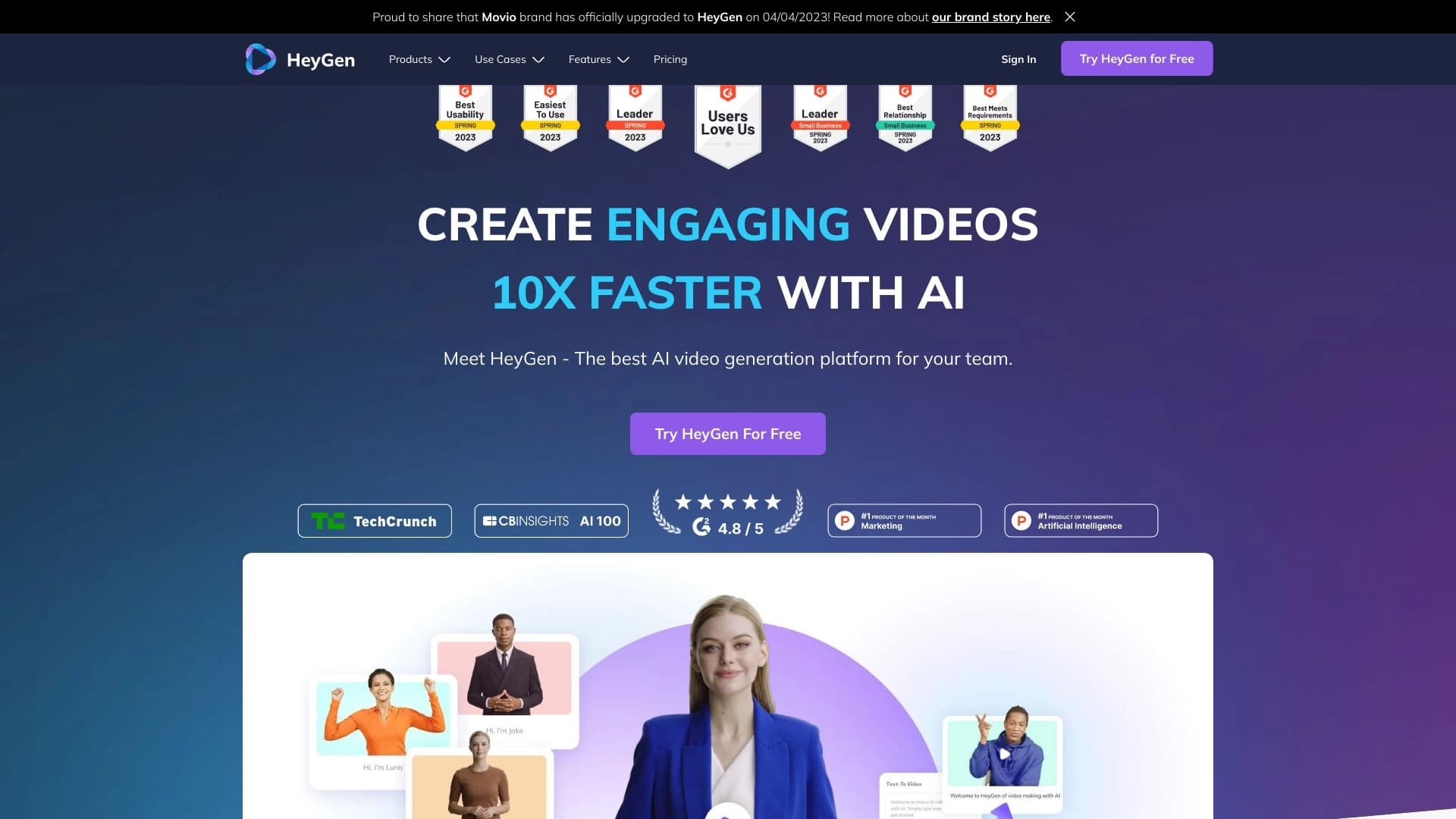
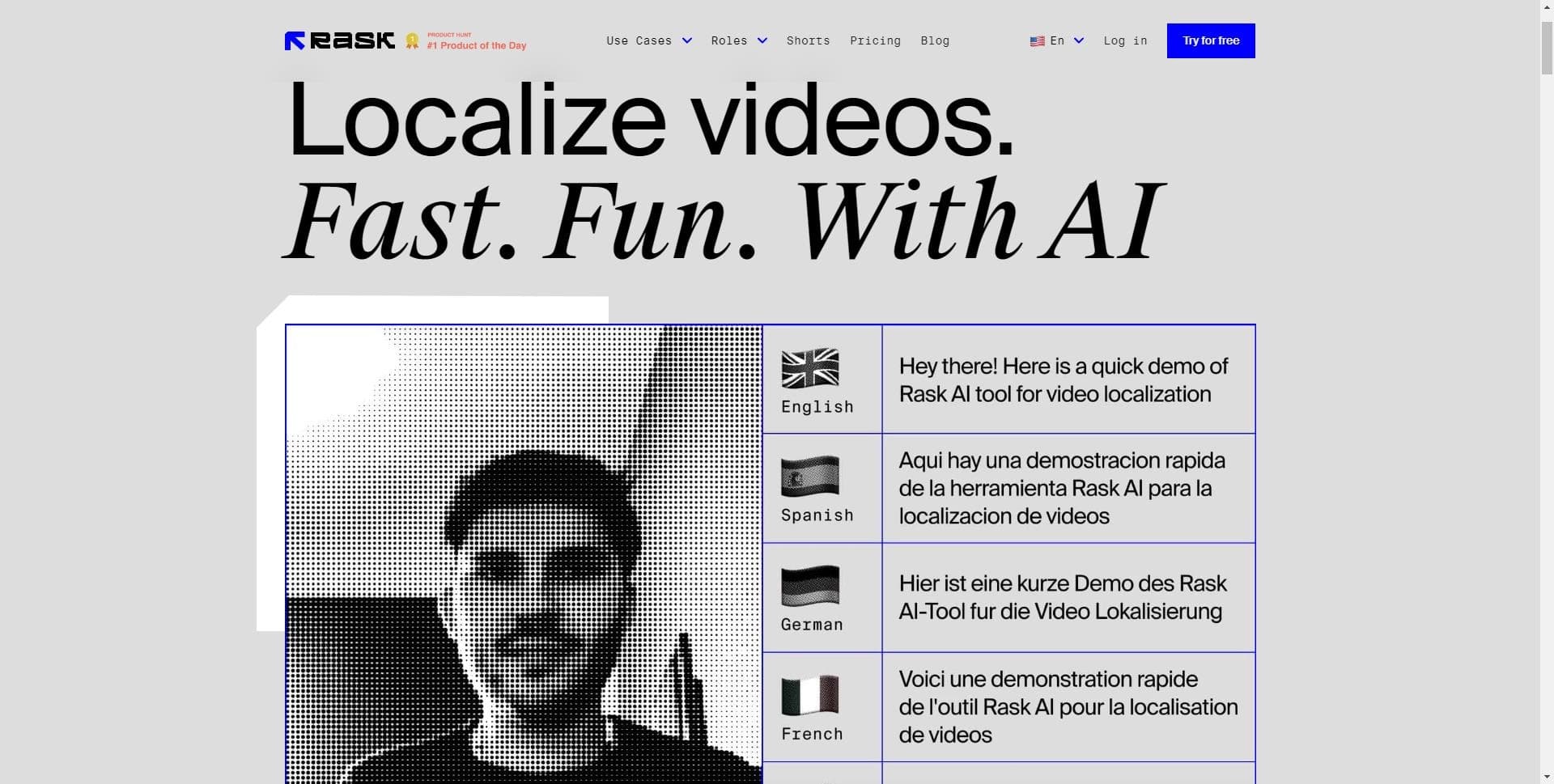
Speeek's prices are 2—5 times lower than foreign alternatives such as HeyGen and Rask AI, while video processing is faster thanks to GPU usage.
Convenient payment
The platform accepts major international bank cards. No credit card is required for the free plan, and all payments go through secure payment systems.
High-quality results
With speech recognition accuracy of 94—97% and support for more than 20 languages with natural AI voices, the service delivers professional-grade dubbing without the need for recording studios.
Speeek disadvantages
The obvious disadvantages of the service include the speaker limit — only up to five speakers in a single video are automatically recognized and given a separate voice. Users with a larger number of participants must take this limitation into account.
In addition, voice cloning is only available on the paid Pro and Business plans, and the free plan is limited to five minutes of translation per month — enough for evaluation, but clearly insufficient for regular work with long content.
What tasks does Speeek solve
The main task of the service is translating videos into foreign languages while preserving speakers' voices. This is primarily in demand when localizing content for an international audience: videos recorded in one language automatically receive high-quality voiceovers in others.
Speeek also solves the task of automatic dubbing creation without involving a recording studio and post-production. Instead of hiring voice actors and lengthy post-processing, the user gets a finished result in minutes: according to the service, processing a 10-minute video takes about five minutes.
Finally, the platform simplifies subtitle preparation: speech recognition with 94—97% accuracy and SRT file downloads allow the translation to be used not only as dubbing but also in text form.
Speeek pricing
Service plans
Speeek operates on a freemium model and offers three pricing plans. The Start plan is free and includes 5 minutes of translation each month. The Pro plan costs $10 per month and provides 10 minutes of translation, while the Business plan at $100 per month includes 200 minutes.
Cost per minute
Calculated per minute, translation costs start from $0.5 per minute of video. Compared to foreign competitors, this is significantly more affordable: for example, HeyGen starts at $29 per month, and Rask AI at $60.
Additional terms
Voice cloning is available on the Pro and Business plans. No credit card is required for the free plan, and companies can request additional test minutes by contacting support@speeek.io.
Terms of use for Speeek
The free Start plan does not require a bank card — simply register and receive 5 minutes of translation each month. This is a convenient way to evaluate dubbing quality before purchasing a paid plan.
Voice cloning is a paid feature available only to users on the Pro and Business plans. To use it, you need to upload a voice sample of at least three seconds of clear speech, based on which the system will create a digital copy for voicing the translation.
Corporate clients can request additional test minutes through customer support. Companies can also benefit from the service's high level of data security and compliance with personal data protection regulations.
Speeek availability
Speeek is a web-based service accessible from anywhere in the world without the need for VPN connections. Unlike some foreign alternatives that may have regional restrictions, the platform works directly both locally and internationally.
The platform accepts major international bank cards for payment. Payments go through secure payment systems without the risk of blocking, making payment simple and reliable for users worldwide.
The platform is available through a web interface and requires no software installation: all work is done in the cloud in the browser.
How Speeek differs from alternatives
The main difference between Speeek and foreign competitors such as HeyGen and Rask AI is the cost. According to the service, the subscription price is approximately 2—5 times lower: about $10 per month versus $29—60 for foreign platforms, with comparable functionality.
An important advantage is the focus on the international market. Speeek supports payment with major international cards, offers fast processing, and provides a high level of data security. Foreign alternatives are less convenient in this regard for users outside their home markets.
From a technical standpoint, Speeek stands out with fast GPU-based video processing, support for more than 20 languages with natural AI voices, and the ability to recognize up to five speakers. The service also offers high-level corporate security.
Conclusion
Speeek is a neural network for automatic video translation and dubbing that supports more than 20 languages, recognizes up to five speakers, and allows voice cloning for natural sound. The service is convenient for content creators and companies: it accepts payment with major international cards and costs several times less than foreign alternatives with comparable quality. The free plan with 5 minutes of translation per month allows you to evaluate the service's capabilities without investment, and the editor's rating of 8.2 out of 10 confirms its reliability and polish.
Pricing
Frequently asked questions



See also

Online tool for quickly uploading videos and swapping faces in clips using AI.

Platform for creating custom AI chats trained on your own business data.

AI-powered platform for generating, editing images, and creating advertising creatives.

A platform for automating software development using a visual builder for AI agents.

AI-powered platform for generating and editing images and videos.
Free online text-to-speech service with over 200 voices in multiple languages.
Free open-source language model specializing in reasoning, mathematics, and programming.
Online platform for creating interactive AI twins based on the user's biography, personality, and personal experience.