
Phi 4
Open-source Microsoft language model with 14.7 billion parameters for reasoning, coding, and knowledge-based tasks.
Overview
Phi 4
Description of the Phi 4 neural network
Phi 4 is an open-source language model developed by Microsoft. The model has 14.7 billion parameters and is designed for advanced reasoning, programming, and knowledge-related tasks. Phi 4 was trained on a combination of synthetic data and filtered web data, achieving a good balance between performance and compactness. The model supports a context of up to 16 thousand tokens, is available via API, and is published on the Hugging Face platform.
Phi 4 specifications
| Specification | Value |
|---|---|
| Developer | Microsoft |
| Number of parameters | 14.7B |
| Context | 16.0K tokens |
| Release date | December 12, 2024 |
| Last updated | July 19, 2025 |
| Training tokens | 9.8T |
| Knowledge cutoff | June 1, 2024 |
| License | MIT |
| Average score | 66.0% |
| Price per input (1M tokens) | $0.07 |
| Price per output (1M tokens) | $0.14 |
| Max input tokens | 16.0K |
| Max output tokens | 16.0K |
Who is Phi 4 suitable for?
Developers and engineers
Phi 4 will be useful for developers looking for an open language model to integrate into their projects. Thanks to API support, function calling, and batch processing, the model is suitable for embedding in applications that require code generation, logical inference, or knowledge processing. The MIT license also simplifies commercial use.
Researchers and data specialists
For professionals working on mathematical and logical reasoning tasks, Phi 4 offers strong results in relevant benchmarks. The ability to fine-tune the model allows it to be adapted to highly specialized tasks.
Teams working with limited budgets
Thanks to its low usage cost ($0.07 per million input tokens and $0.14 per million output tokens) and open-source nature, Phi 4 suits teams that want a high-quality model without significant infrastructure expenses.
How to use Phi 4?
Via API
Phi 4 is available through an API, allowing you to get started quickly without deploying the model on your own servers. The API supports function calling, structured output, code execution, web search, and batch processing.
Local deployment
Thanks to the open MIT license, the model can be downloaded from Hugging Face and deployed locally. This gives you full control over your data and allows you to adapt the model to specific tasks through fine-tuning.
Key features of Phi 4
Advanced reasoning
The model demonstrates strong results in tasks that require logical inference and mathematical analysis. This makes it suitable for complex scenarios that require multi-step reasoning.
Programming
Phi 4 supports writing and analyzing code, making it useful as a development assistant. The ability to execute code combined with function calling expands the range of possible use cases.
Knowledge work
The model can answer factual questions and process information within the scope of its knowledge (cutoff — June 1, 2024). This suits tasks involving data extraction and summarization.
Phi 4 advantages
Open model with an MIT license
One of the key advantages of Phi 4 is the open MIT license, which allows the model to be freely used, modified, and distributed in both personal and commercial projects.
Strong benchmark results
Despite its relatively small number of parameters (14.7B), the model delivers solid results in reasoning and math benchmarks, making it competitive with similar solutions.
Extended functionality support
Phi 4 supports a range of additional capabilities: function calling, structured output, code execution, web search, batch processing, and fine-tuning. This makes it a flexible tool for various use cases.
Phi 4 limitations
Limited context
With a context size of 16 thousand tokens, the model falls behind some modern solutions that support 128K tokens or more. This can be a constraint when working with large documents or long conversations.
Outdated knowledge cutoff
The model's knowledge cutoff is June 1, 2024. For tasks requiring up-to-date information about events after that date, results may be inaccurate or incomplete.
What tasks does Phi 4 solve?
Advanced reasoning tasks
The model is suitable for solving logic puzzles, math problems, and scenarios that require multi-step reasoning.
Programming and code writing
Phi 4 can be used as a code assistant: generating snippets, explaining algorithms, refactoring, and debugging.
Knowledge work and factual Q&A
The model can answer questions on a wide range of topics within its knowledge base, as well as summarize and analyze provided information.
Phi 4 pricing
Using Phi 4 via the API costs $0.07 per 1 million input tokens and $0.14 per 1 million output tokens. This pricing makes the model one of the most affordable among solutions of comparable size.
Phi 4 terms of use
The model is distributed under the MIT license, which is one of the most permissive licenses for software and models. It permits use, copying, modification, and distribution for both non-commercial and commercial purposes, provided that the copyright notice is preserved.
Phi 4 availability
Phi 4 is available openly on the Hugging Face platform. In addition, the model can be used via an API that supports batch processing, function calling, and web search. The model has been available since December 12, 2024, and continues to be updated — the latest update is dated July 19, 2025.
How Phi 4 differs from alternatives
Phi 4 stands out from many competitors through its combination of an open MIT license and strong performance at a relatively small size of 14.7 billion parameters. Unlike larger models such as Llama 3.1 70B Instruct or Hermes 3 70B, Phi 4 requires fewer computing resources to deploy. At the same time, it offers strong results in reasoning and math benchmarks. Direct alternatives include Phi 4 Reasoning Plus, Phi 4 Reasoning, Phi-3.5-MoE-instruct, and Codestral-22B. The main limitation compared with some modern models is the 16K token context.
Conclusion
Phi 4 is an open language model from Microsoft with 14.7 billion parameters, designed for reasoning, programming, and knowledge processing tasks. Thanks to the MIT license, affordable pricing, and support for extended functionality (function calling, batch processing, fine-tuning), the model is a practical choice for developers and researchers who need a powerful yet accessible open-source neural network. The main limitations — a 16K token context and a knowledge cutoff in mid-2024 — should be considered when choosing it for specific tasks.
Frequently asked questions
Similar AI tools
See also
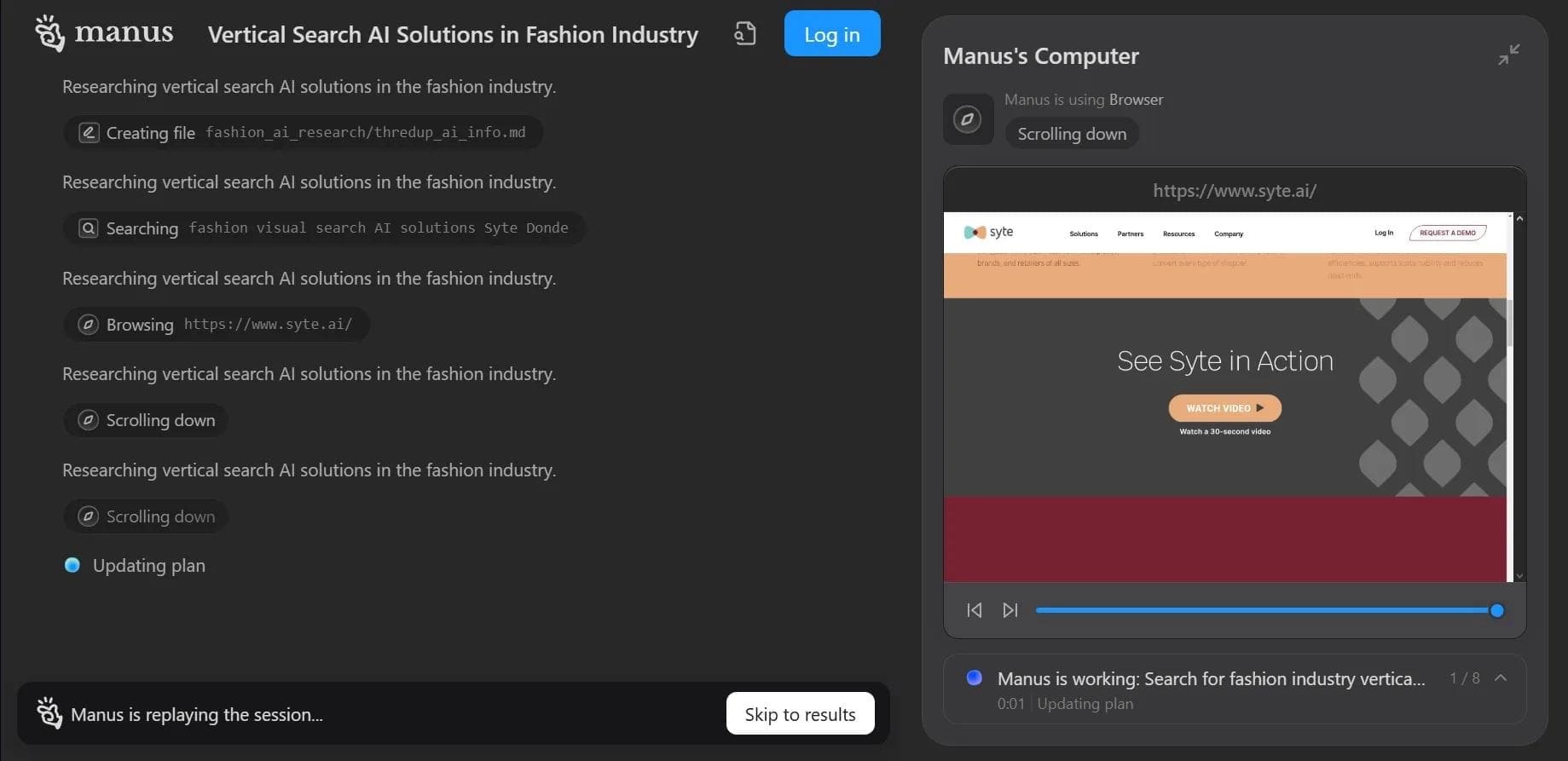

Autonomous cloud-based AI agent that independently plans and executes complex multi-step tasks based on a textual description of the goal.


Multimodal neural network from Google that processes text, images, code, and audio in a conversational format.
An open-source desktop AI agent that stores conversation history in a local knowledge base and automatically pulls relevant context into new discussions.

A set of built-in AI features in the Figma editor for automating routine designer tasks.
A service that translates legal documents from professional legal language into plain, easy-to-understand text.
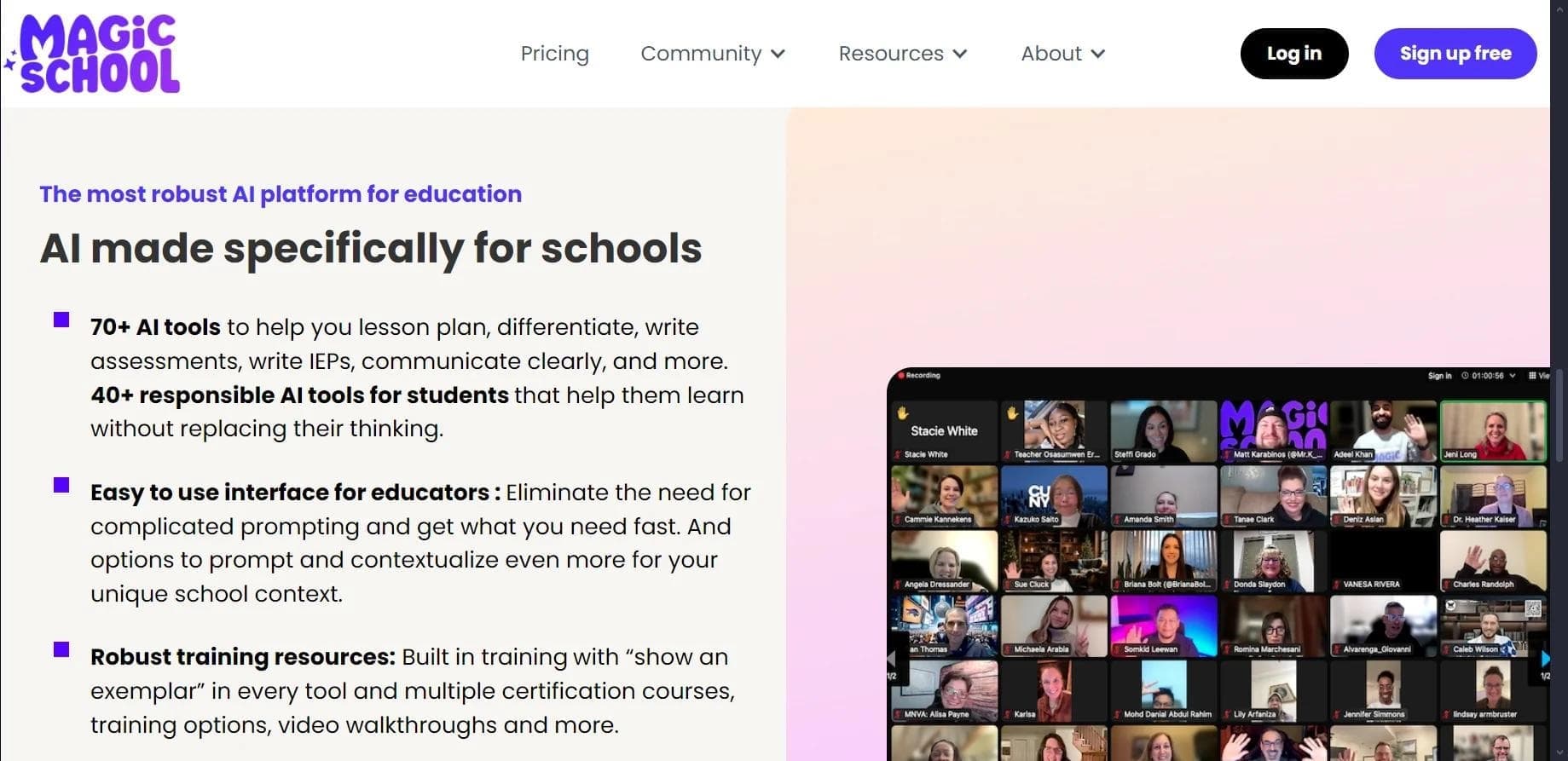

AI platform for automating educational tasks for teachers and students.

A community for daily discovery and discussion of new technology products.
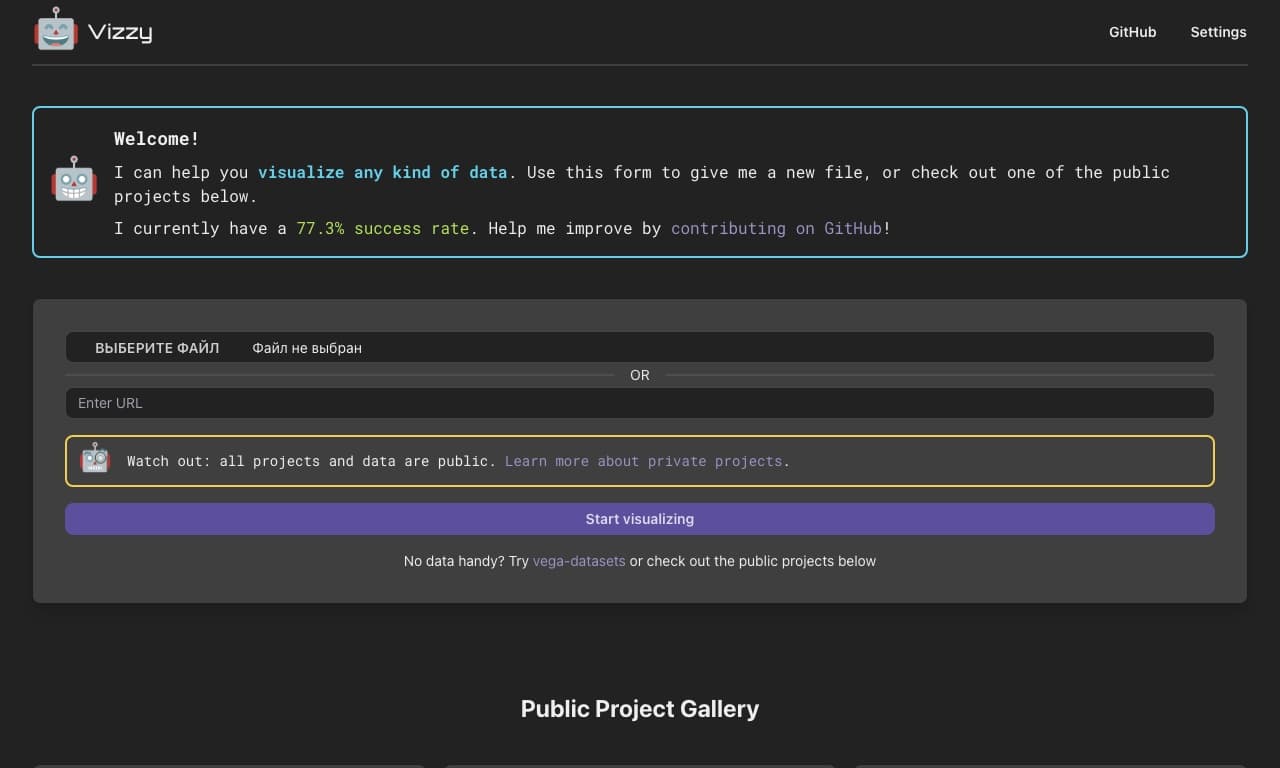
AI tool for rapid data visualization via OpenAI API, transforming heterogeneous datasets into detailed graphical representations.