
MiMo Code
Open-source AI agent for development from Xiaomi, working in the terminal, desktop app, and IDE extension.
Ranked in
Overview
MiMo Code AI Description
MiMo Code is an open-source AI agent for development created by Xiaomi, designed to automate complex, multi-step programming tasks. Unlike typical assistants that generate code snippets on demand, MiMo Code works autonomously: it analyzes the project structure, creates an action plan, makes changes to the code, and verifies the results. The tool is available in three formats: a terminal interface (CLI), a desktop application, and an IDE extension, allowing it to be integrated into any workflow.
A distinguishing feature is long-term memory based on checkpoints, notes, and progress logs. This allows the agent to conduct extended work sessions on a project without losing context, even after a restart. The system uses SQLite FTS5 for full-text search across saved states.
The tool supports three operating modes: build (direct code writing and editing), plan (analysis and change planning), and compose (working with text/documentation tasks). MiMo Code is also compatible with MCP servers and supports connecting third-party AI providers via an OpenAI-compatible API.
MiMo Code Specifications
| Specification | Value |
|---|---|
| Developer | Xiaomi (MiMo division) |
| Tool type | Open-source AI coding agent |
| License | MIT |
| Current version | v0.1.0 (as of June 10, 2026) |
| Platforms | macOS, Linux, Windows |
| Work formats | CLI, desktop app, IDE extension |
| Agent modes | build, plan, compose |
| Memory | MEMORY.md, checkpoints, temporary notes, progress logs (SQLite FTS5) |
| MCP support | Yes (Model Context Protocol) |
| Supported models | MiMo-V2.5-Pro, MiMo-V2-Pro, MiMo-V2-Flash, plus external ones (Claude Opus 4.6, Gemini 3.1 Pro, GPT-5.4, and others via OpenAI-compatible API) |
| MiMo model architecture | Mixture-of-Experts (MoE) |
| MiMo model parameters | From 309B (15B active) to 1.02T (42B active) |
| Context window | From 256K to 1M tokens (depending on the model) |
| Business model | Freemium |
| Russian language | Supported (interface is in English) |
| GitHub stars | 7,565 |
| GitHub forks | 602 |
| Release date | June 10, 2026 |
Who is MiMo Code for?
Developers and Tech Leads
The tool is primarily aimed at developers and technical specialists working with large codebases and complex projects — from writing compilers to building applications from scratch. MiMo Code can analyze a repository, plan changes, perform refactoring, and write tests.
Researchers and Engineers
Thanks to support for multiple models (from the fast MiMo-V2-Flash to the powerful MiMo-V2.5-Pro with a 1M token context), the tool is suitable for tasks requiring deep reasoning: designing analog circuits, solving mathematical problems, and working with security. The open MIT license allows studying and adapting the codebase.
Automation Specialists
MiMo Code is designed for multi-step automation: it can execute hundreds and thousands of sequential steps, fix errors on its own, and bring a task to a working state. This makes it useful for anyone looking to delegate routine and lengthy operations to an agent.
How to Use MiMo Code
Installation and First Run
To work with MiMo Code, you need to install the CLI client via the official script or the @mimo-ai/cli npm package. After installation, open the target repository and run the mimo command, then /init. The agent will analyze the project structure and create an AGENTS.md file describing the architecture and a plan for further actions.
Setting Tasks
Tasks can be set in natural language. The agent supports file navigation via the @ symbol for quickly mentioning specific files or directories. To control changes, the /undo (undo last action) and /redo (redo action) commands are available. Long-term memory allows you to interrupt a session and return to it later without losing context.
Working with Providers
Registration on the Xiaomi MiMo platform is required to use paid features. Several authorization options are supported: an API key (sk-... for MiMo API or tp-... for Token Plan) or OAuth login. You can also connect your own provider via an OpenAI-compatible API or import authorization from Claude Code.
Key Features of MiMo Code
Analysis and Planning
The agent performs a deep analysis of the project structure: it examines files, dependencies, and logic. Based on this analysis, an AGENTS.md file is created, serving as a project map for subsequent sessions. This allows the agent to understand what changes need to be made before implementing them.
Long-Term Memory and Checkpoints
The main feature of MiMo Code is a multi-layered state storage system. In addition to the standard MEMORY.md, the agent maintains checkpoints, temporary notes, and progress logs. Search across saved data is performed via SQLite FTS5, ensuring fast access to the needed information even during extended work.
Three Operating Modes
- build — code writing and editing mode. The agent makes changes to files, runs checks, and fixes errors.
- plan — analysis and planning mode. Used for refactoring, complexity assessment, and architecture design.
- compose — mode for working with text tasks (documentation, comments, descriptions).
Integrations
MiMo Code supports the Model Context Protocol (MCP), allowing connection of external tools and services. Integration with various AI models from Xiaomi (MiMo-V2.5-Pro, MiMo-V2-Pro, MiMo-V2-Flash) and third-party providers via an OpenAI-compatible API is built in.
Advantages of MiMo Code
Openness and Accessibility
The tool is distributed under the permissive MIT license, allowing use in both commercial and personal projects without restrictions. The source code is publicly available on GitHub, and SGLang and vLLM are supported for model deployment.
Long Sessions Without Context Loss
MiMo Code's memory system solves a problem common to many agents: context loss during extended work. Checkpoints and progress logs allow multi-step tasks to be carried out over days and weeks while retaining complete information about previous actions.
Flexibility in Choosing Models and Providers
The user is not tied to a single model. You can use the free MiMo Auto plan, pay-as-you-go (MiMo API), a fixed subscription (Token Plan), or your own provider. This gives control over cost and quality of work.
High Speed and Model Power
MiMo-V2 family models demonstrate impressive metrics: inference speeds of up to 150 tokens/sec for MiMo-V2-Flash, and a context window of up to 1M tokens for MiMo-V2.5-Pro. The Mixture-of-Experts architecture activates only a portion of parameters, improving efficiency.
Disadvantages of MiMo Code
Early Development Stage
Version 0.1.0 was released on June 10, 2026, so caution is required when using it in production projects. Bugs, unstable IDE extension behavior, and other issues typical of a first release are possible.
Cost Uncertainty
The cost of long-running tasks depends on many factors: the chosen model, cache size, MCP context, and plan. Although there is a free tier, it is time-limited. Exact prices for paid plans must be checked in the platform console — they are not published in open sources.
English Interface
Although the tool supports Russian for setting tasks, the interface and documentation are only in English. This may be a limitation for users who do not have a sufficient command of English.
What Tasks Does MiMo Code Solve?
Writing and Editing Code
The agent can generate new files, modify existing ones, fix errors, and bring results to a working state. It is suitable for writing compilers, building applications from scratch, and adding new features to existing projects.
Analysis and Refactoring
MiMo Code analyzes the codebase, identifies problem areas, suggests improvements, and performs refactoring. It also writes tests to verify the correctness of changes.
Long Sequential Automation
The tool is designed for tasks requiring hundreds and thousands of steps. It can execute complex multi-step scenarios without human intervention, independently verify results, and adjust its actions. This includes solving mathematical problems, technical engineering challenges, and designing analog circuits.
Working with Large Volumes of Information
Thanks to a context window of up to 1M tokens (in the MiMo-V2.5-Pro model), the agent can hold large amounts of information in memory — entire repositories, documentation, logs — and use them when performing tasks.
MiMo Code Pricing
Free Plan
MiMo Code operates on a freemium model. There is a free MiMo Auto plan that provides an agent with limited usage time. It allows you to explore the functionality and test the tool on small projects.
Paid Plans
For regular use, two paid options are available:
- MiMo API — pay-as-you-go. You only pay for the operations actually performed.
- Token Plan — a fixed subscription with a limit on the number of calls. Suitable for teams with predictable workloads.
Exact pricing figures are not published in available sources — they must be checked in the Xiaomi MiMo platform console. You can also connect your own provider via an OpenAI-compatible API, allowing you to use existing licenses for other models.
Terms of Use for MiMo Code
License Agreement
The tool is distributed under the MIT license, which permits free use, modification, and distribution of the code without restrictions, including commercial use. The MiMo-V2 family models themselves (including the flagship MiMo-V2.5-Pro) are also available under a permissive open license: weights, tokenizer, and documentation are published on Hugging Face.
Registration and Access Keys
Access to paid features requires registration on the Xiaomi MiMo platform and obtaining an API key. Keys have prefixes: sk-... for MiMo API and tp-... for Token Plan. OAuth login via a Xiaomi MiMo Platform account is also possible.
System Requirements
macOS, Linux, or Windows is required. For the latest client version, it is recommended to follow updates in the project's GitHub repository.
MiMo Code Availability
Platforms and Formats
MiMo Code is available for macOS, Linux, and Windows. It can be used via CLI (terminal), a desktop application, or an IDE extension. This allows you to choose the most convenient way to integrate it into your workflow.
MiMo Models
MiMo-V2 family models are available in several ways:
- Via the Xiaomi API platform — just switch the model tag to
mimo-v2.5-pro. - Via Xiaomi's AI Studio.
- For self-deployment — weights, tokenizer, and documentation are published on Hugging Face; SGLang and vLLM frameworks are supported.
Compatibility with Other Models
MiMo Code is not tied exclusively to Xiaomi models. It supports working with various providers via an OpenAI-compatible API, including Claude Opus 4.6, Gemini 3.1 Pro, and GPT-5.4. Importing authorization from Claude Code is also available.
How MiMo Code Differs from Alternatives
Approach to Memory
Unlike many alternatives that use simple chat summarization to preserve context, MiMo Code employs an explicit state storage system. Multi-layered memory (MEMORY.md, checkpoints, temporary notes, progress logs) with full-text search via SQLite FTS5 allows truly long multi-step sessions without losing details.
Execution Autonomy
MiMo Code is focused not on single autocomplete or snippet generation, but on full agentic sessions. It can execute hundreds and thousands of steps without human intervention, independently fix errors, and bring tasks to a working state. This brings it closer to tools like Claude Code, with the difference that MiMo Code is fully open source (MIT license).
MiMo Ecosystem
A unique advantage of MiMo Code is its tight integration with MiMo-V2 models: from the fast MiMo-V2-Flash (309B parameters, 150 tokens/sec) to the flagship MiMo-V2.5-Pro (1.02T parameters, 1M token context). At the same time, flexibility is maintained: any other OpenAI-compatible models can be used.
Openness and Community
The tool is distributed under the MIT license, making it one of the few fully open coding agents. The project is quickly gaining popularity — it already has over 7,500 stars on GitHub. The community actively participates in the tool's development, considering its early stage (v0.1.0).
Conclusion
MiMo Code is a new open-source AI coding agent from Xiaomi that focuses on long autonomous sessions, multi-layered memory, and flexible integration with various models. The tool is at an early stage (version 0.1.0), but it already demonstrates significant community interest and has clear advantages over alternatives: a permissive MIT license, MCP support, three operating modes, and a built-in checkpoint system. The main limitations are the freshness of the version, which requires caution in production projects, and pricing policy uncertainty. Nevertheless, MiMo Code's potential for automating complex multi-step programming tasks is evident, and the open ecosystem of MiMo-V2 models with a context of up to 1M tokens makes it a serious competitor to proprietary solutions.
Frequently asked questions
See also


Automates content creation for product cards in online stores and marketplaces.


AI-based platform for creating and editing product images and videos for e-commerce sellers.

Open. platform for creating and interacting with AI characters in role-playing roles play-chat uncensored.


No-code platform for creating and configuring neural networks without writing code.

AI dating assistant that helps improve profiles and conversations in dating apps.
A service for creating applications, neural networks, and AI clones, as well as a neural network for text generation and processing.
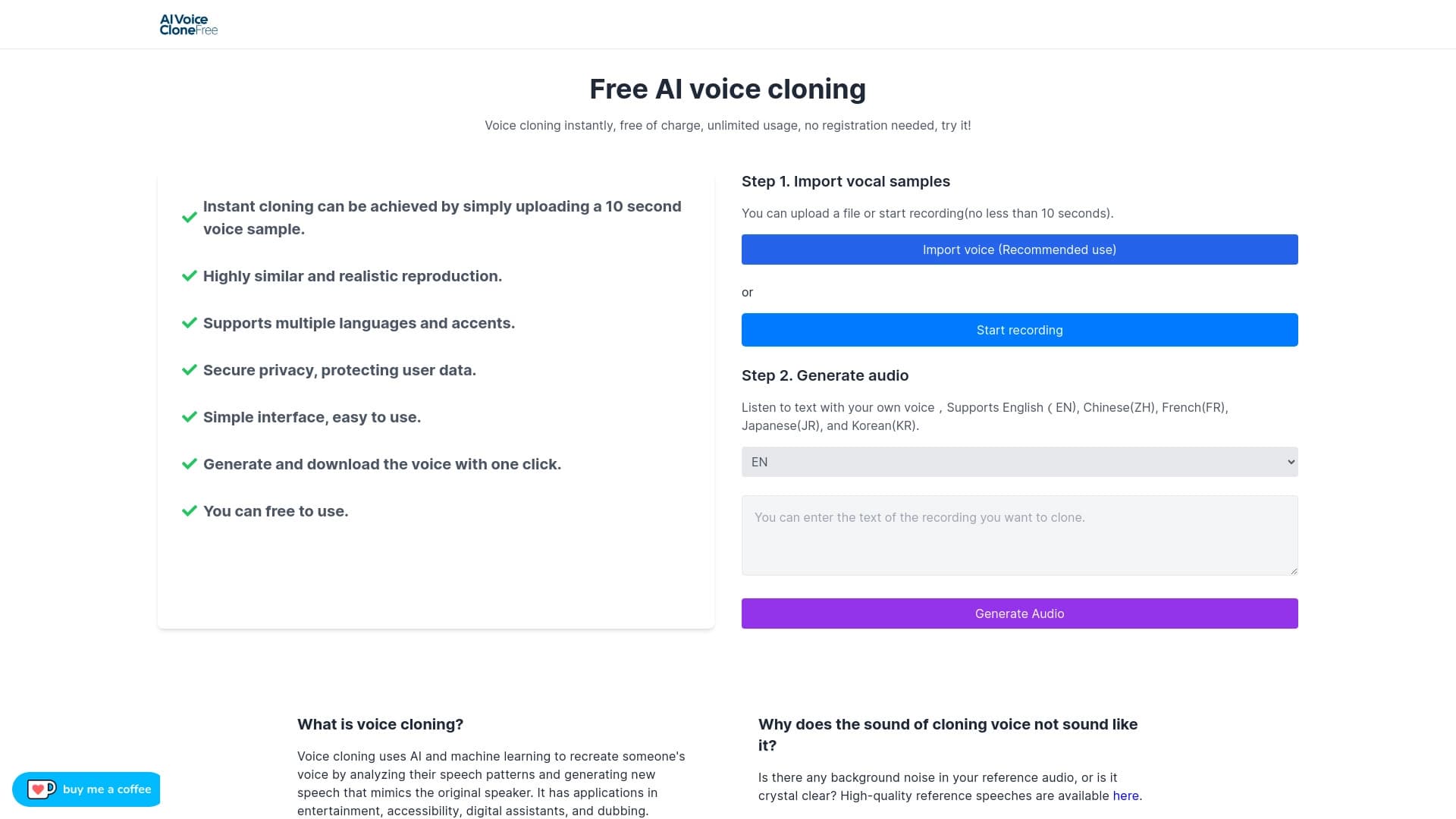
Online service for creating a realistic voice clone from a short audio recording and text-to-speech.

A platform combining over 200 AI tools for content generation and workflow automation.