
MeiGen
Web service with a library of ready-made prompts and an interface for generating images and videos through popular neural networks.
Ranked in
Overview
MeiGen AI Description
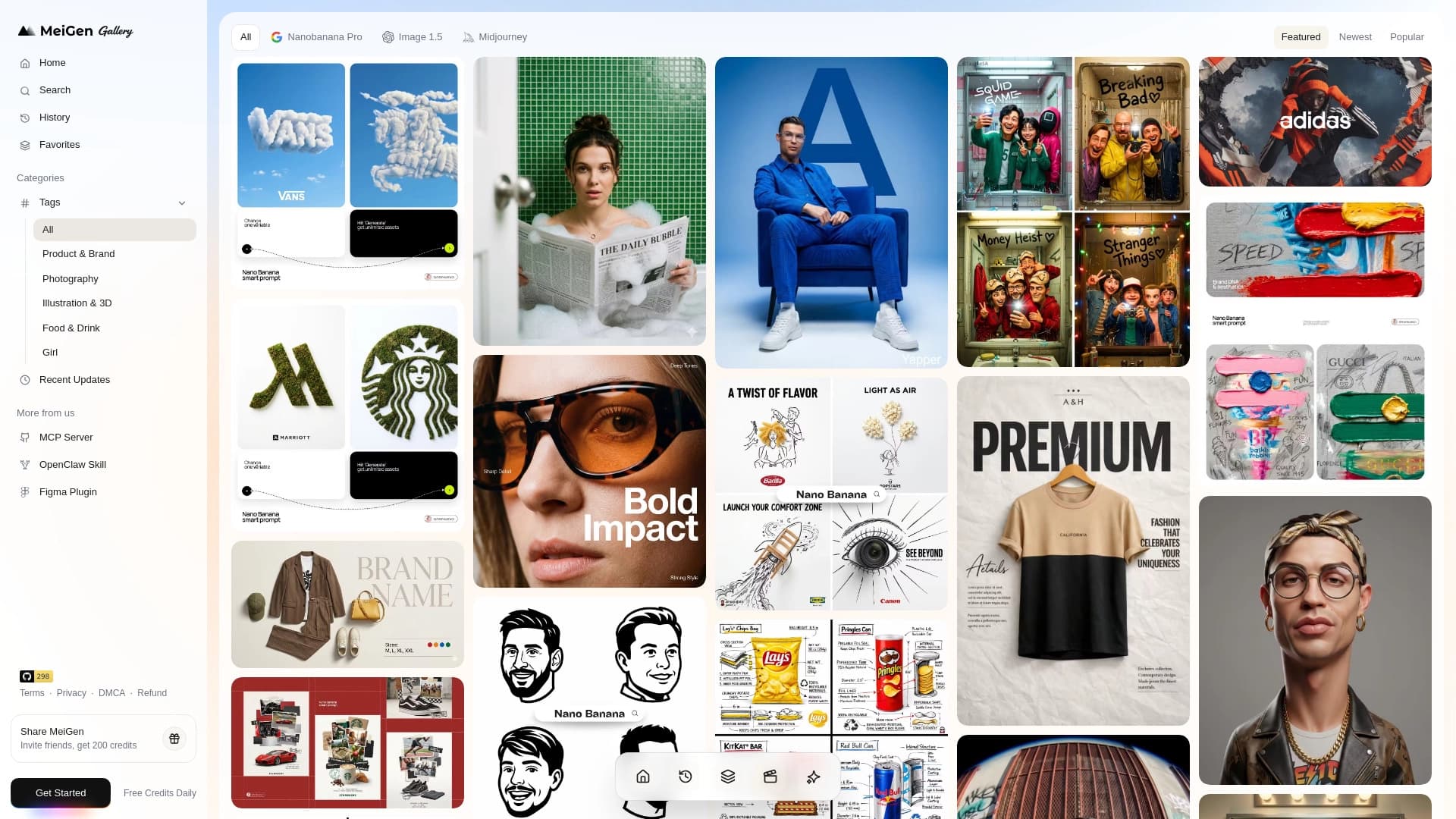
MeiGen is a web service that combines several functions: a library of ready-made prompts, an interface for generating images and videos, and tools for editing queries. The platform does not operate as a standalone neural network, but rather as a working shell on top of popular models — Midjourney, Stable Diffusion, Kling, GPT Image, and others. The core idea of the service is to let users find a suitable prompt in the collection, copy it, or launch generation directly in the MeiGen window without switching between separate services.
The prompt library is organized by use case: advertising posters, covers, anime characters, food photography, fashion campaigns, and children's posters. Each query contains a detailed description of the composition, lighting, typography, and overall mood of the future image. For video content, there are dedicated prompts, including those for the Seedance 2.0 model.
The platform offers free access to basic functionality with daily credits for generation.
MeiGen Features
| Feature | Value |
|---|---|
| Product type | Prompt gallery + web service for generation |
| Category | Image generation, video generation, prompt engineering |
| Supported models | GPT Image, GPT Image 2, Nano Banana, Midjourney, Seedance 2.0, Veo 3.1, Kling, Vidu, Flux, Stable Diffusion, Seedream, ChatGPT, Gemini |
| Format | Website |
| Distribution model | Freemium (free + paid credits) |
| Business model | Free basic access, daily credits |
| Interface | Multilingual |
| Additional | REST API, MCP plugin, prompt editor |
Who is MeiGen AI for?
Designers and marketers
The service is designed for those who regularly create commercial graphics but don't want to spend hours crafting query formulations. Designers can use ready-made prompts as a starting point for experiments, while marketers can quickly get visuals for ad campaigns and social media posts.
Content creators and short-form video authors
People who run blogs or shoot videos will find video prompts in MeiGen and the ability to generate content through a unified interface. This is convenient when you need to try out several styles in a short time.
Beginners with neural networks
For those just starting out with AI generation, MeiGen helps avoid the typical problem of not being able to formulate a query. The ready-made prompt collection serves as learning material: you can study how quality queries are structured and apply that knowledge later.
How to use MeiGen AI?
Quick start through the gallery
The simplest scenario: go to the website, pick a style you like from the gallery, copy the prompt, and run it in one of the supported neural networks. For images, GPT Image, Midjourney, and other models are supported; for video, Seedance 2.0.
Generation through the MeiGen interface
The platform lets you launch generation directly in its own window without switching to external services. Users can choose a model, apply a ready-made prompt, or edit it to suit their task.
Editing and remixing prompts
The built-in editor suggests formulations, supports variables and references. Even video prompts can be remixed: take a ready-made query as a base, change details, and get a new version for a specific task.
Key MeiGen features
Ready-made prompt gallery
The core of the service is a collection of tested queries for various models. Prompts are structured by category: advertising posters, game covers, anime characters, fashion campaigns, children's posters, food photography. Each prompt includes a description of composition, lighting, typography, and mood.
Search and filtering
Navigation through the library is supported by filters for models, categories, and prompt availability. This helps quickly find a suitable query among a large number of options.
Unified generation interface
MeiGen supports working with several neural networks in one window. Users don't need to open separate tabs for Midjourney, Stable Diffusion, or Kling — all operations are performed on the platform.
Developer tools
REST API and MCP plugin are available for integration into workflows. This allows connecting MeiGen to external tools and automating content generation.
MeiGen advantages
Time savings. The main benefit of the service is eliminating the need to painstakingly choose words and learn the syntax of each model. The prompts in the library are already polished and written like design briefs.
Free access. Basic functionality requires no payment. Users receive daily free credits for generation. This allows evaluating the service without financial investment.
Everything in one place. MeiGen brings together ideas and formulations for many models — from Midjourney to Veo 3.1. Instead of searching across different resources, you just open one platform.
MeiGen disadvantages
MeiGen is not a standalone generator, so the final quality of results directly depends on the chosen model, source materials, and prompt accuracy. The platform acts more as an intermediary and idea library rather than a guarantor of final quality.
Additionally, working with expensive models requires paid credits. Specific amounts and pricing plans are not disclosed on the site, which may raise questions for users before starting full-scale work.
What tasks does MeiGen solve
Fast image generation. The main task of the service is to help get quality visuals without deep prompt-writing skills. The user picks a style, launches generation, and gets a result within minutes.
Creating commercial graphics. Posters, covers, ad layouts, food photography — the library covers the main formats designers and marketers need in daily work.
Accelerating prompt selection. Instead of experimenting with dozens of formulations, users can find a ready-made working option in the gallery and adapt it to their needs.
Video generation. For those working with video content, prompts for Seedance 2.0 and other models are available, along with the ability to remix video queries.
MeiGen pricing
MeiGen operates on a freemium model. Basic functionality, including access to the prompt library, is provided for free. Daily free credits are issued for generation.
Expensive models, such as advanced versions of video generators, require paid credits. Exact pricing plans and credit costs are not specified in public sources — for details, you need to refer to the information on the service's official website.
MeiGen terms of use
The service requires no additional software installation — a web browser is sufficient. Registration is necessary to track credits and save prompts in a personal account.
Free credits are accrued daily, allowing regular use of the service without constant payments. For intensive use and access to expensive models, purchasing paid credits will be required.
REST API and MCP plugin are available for integration, but their terms of use and possible tariff limitations are not detailed in public sources.
MeiGen availability
MeiGen is a web service that works through a browser. The platform has a multilingual interface, making it convenient for a global audience.
The service supports a wide range of neural networks: GPT Image, GPT Image 2, Nano Banana, Midjourney, Seedance 2.0, Veo 3.1, Kling, Vidu, Flux, Stable Diffusion, Seedream, ChatGPT, Gemini. As of June 2026, the service is available on the AILibri website.
How MeiGen differs from alternatives
Library instead of standalone generation
The main difference between MeiGen and services like Midjourney or Google Flow is the platform's role. MeiGen does not create its own models but provides an interface and a prompt collection for working with third-party ones. Dreamina and AI Prompt Library use a similar approach, but MeiGen stands out with the number of supported models and free access.
Single entry point
Unlike Google Flow or Midjourney, where users work with only one ecosystem, MeiGen allows switching between a dozen models in one window. This significantly saves time when comparing results from different neural networks on the same prompt.
Developer tools
The presence of REST API and MCP plugin distinguishes MeiGen from simple prompt libraries like Caveduck or Video2Recipe. The service can be embedded into company workflows that automate content creation.
Conclusion
MeiGen is a practical tool for anyone working with generative neural networks. The service solves two key tasks: it provides a collection of tested prompts, saving time on formulations, and unifies work with multiple models in a single interface. The platform is not a standalone generator, so the quality of the final result depends on the chosen model, source materials, and query accuracy. However, as an idea library and working shell around popular neural networks, MeiGen performs its function effectively — with free access and daily credits making the service accessible to a wide audience of designers, marketers, and content creators.
Frequently asked questions
See also
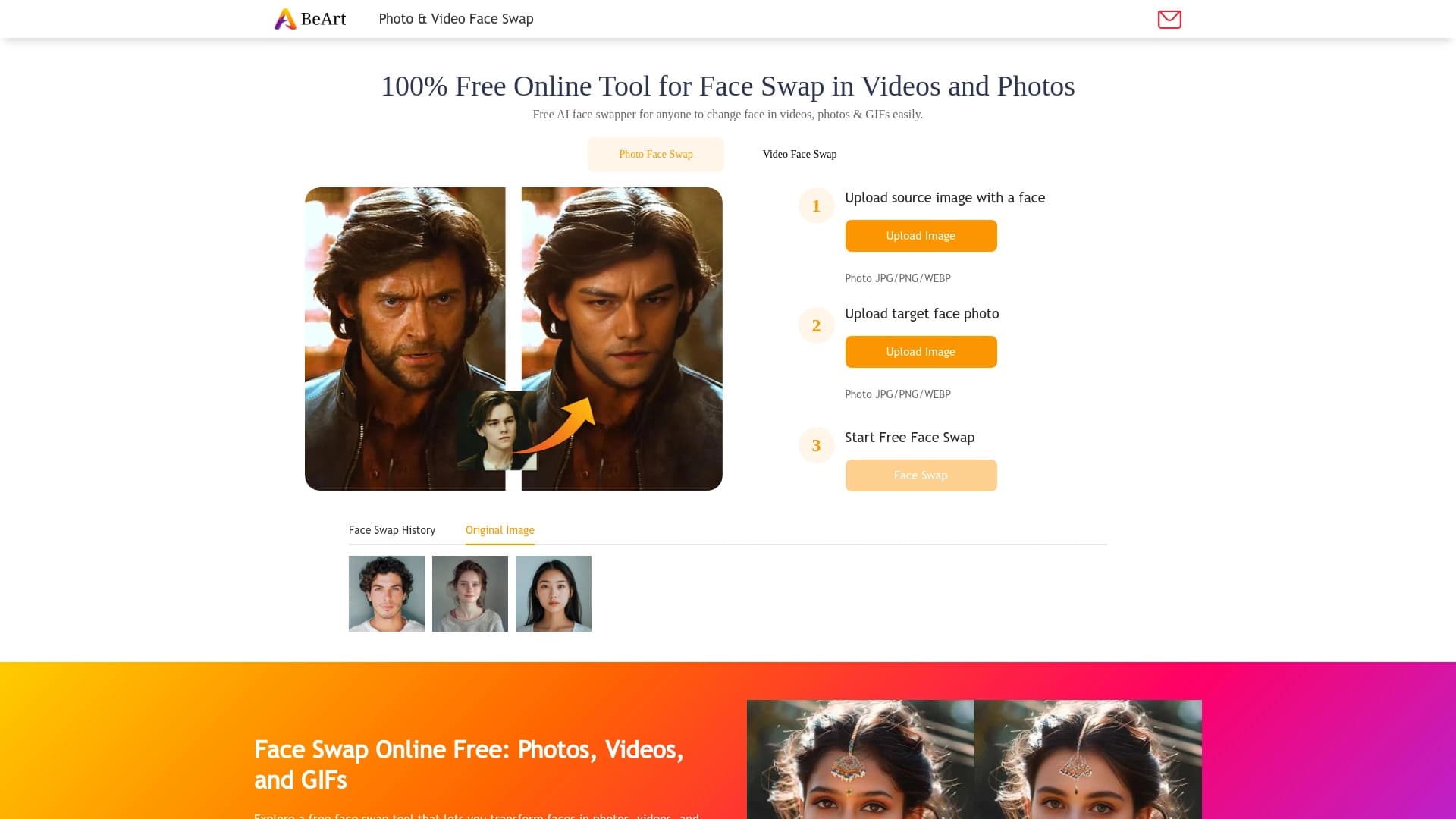
Online tool for swapping faces in photos, videos, and GIFs without registration or watermarks.
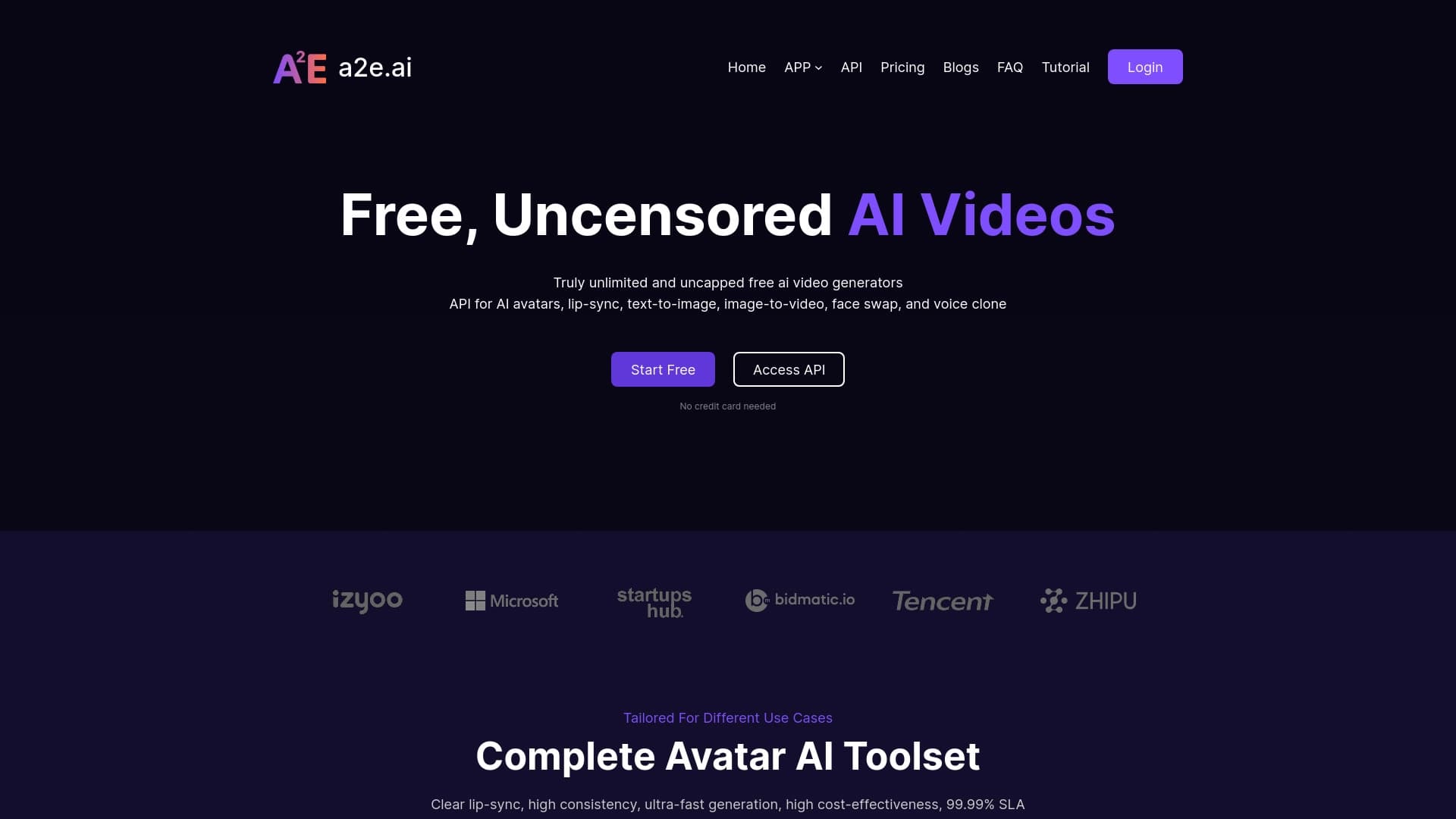

AI toolkit for video generation and editing, including avatars, lip-sync, and voice cloning.
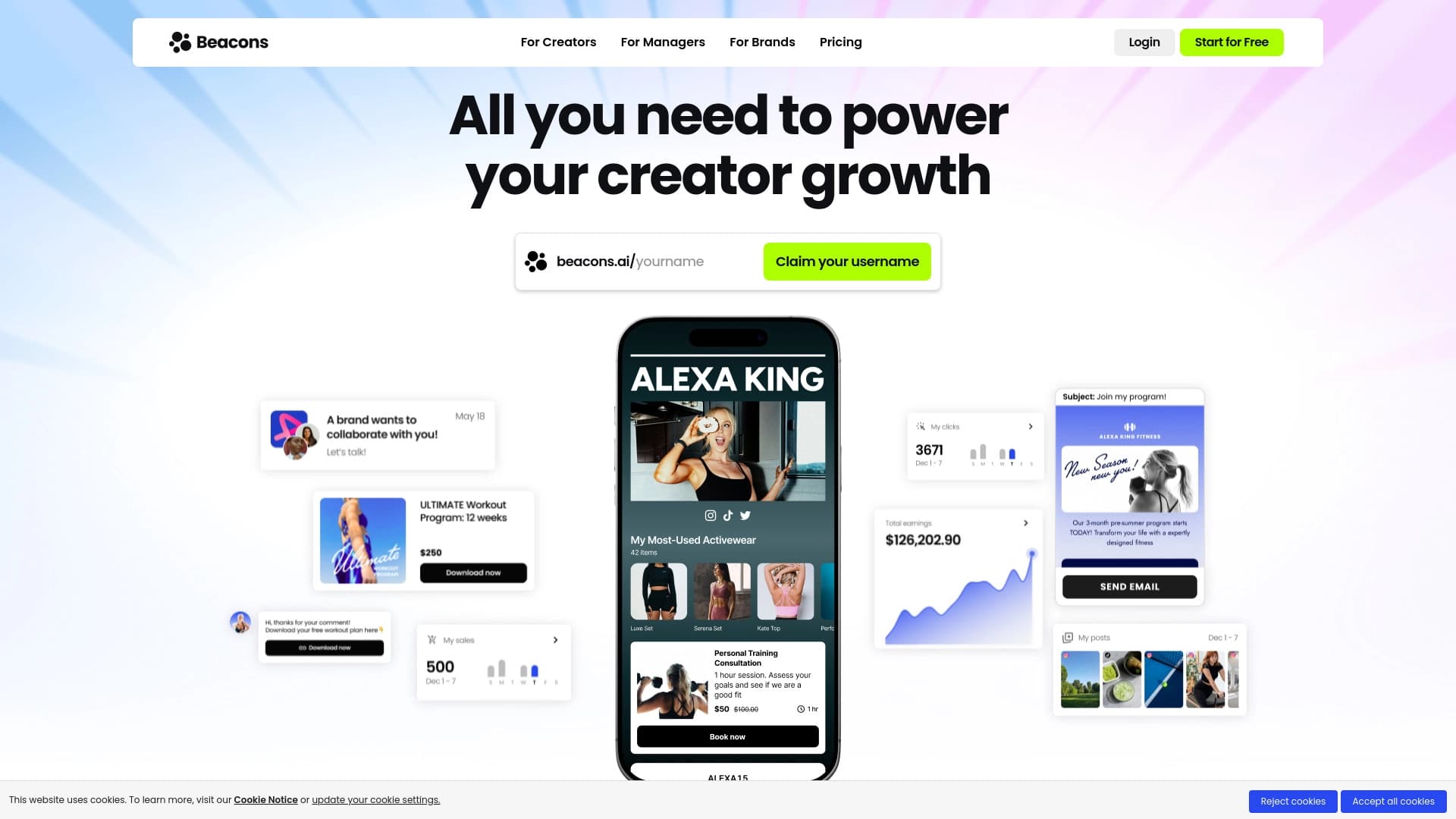
A platform for content creators that combines link management, email marketing, an online store, and analytics in a single visual editor without coding.
AIJOURNEY is a catalog and search platform for discovering AI tools, updated daily.

Joineo is an AI-powered web video editor that automates adding b-roll, emojis, and subtitles.

AI-powered service for automatically creating “faceless” short videos for TikTok, YouTube Shorts, and other platforms.

Online AI-powered service for quickly creating presentations based on a given topic or an uploaded document.


Platform for increasing organic traffic and creating content with the help of AI and expert participation.