
GPT-5.1 Codex High
Multimodal AI model from OpenAI with improved capabilities for programming, reasoning, and long context processing.
Overview
GPT-5.1 Codex High
GPT-5.1 Codex High Overview
GPT-5.1 Codex High is a multimodal AI model from OpenAI, announced in November 2025 and optimized for solving complex programming tasks. It is a specialized version of the flagship GPT-5.1 model, aimed at developers and engineers working on architectural planning, deep code analysis, and multi-step logical reasoning.
The model supports a context of up to 400,000 tokens, allowing it to process large codebases, technical documentation, and complex multi-component requests. GPT-5.1 Codex High works with text and images and comes with a set of tools for function calling, structured output, code execution, and web search. The model’s average test score is 97%, confirming its high performance on complex tasks.
GPT-5.1 Codex High Specifications
| Specification | Value |
|---|---|
| Developer | OpenAI |
| Type | Multimodal LLM model |
| Announcement date | November 11, 2025 |
| Last update | January 22, 2026 |
| Context | 400,000 tokens |
| Max input tokens | 400,000 |
| Max output tokens | 128,000 |
| Average score | 97.0% |
| Input token price (1M) | $1.25 |
| Output token price (1M) | $10.00 |
| License | Proprietary |
| Operating modes | Instant (fast), Thinking (analytical) |
| Access | ChatGPT, API (gpt-5.1 and gpt-5.1-codex-high versions) |
| Distribution model | Paid |
Who is GPT-5.1 Codex High for?
Developers and software engineers
The model is designed primarily for developers who need to solve complex programming tasks. Its large context and advanced reasoning capabilities make it possible to work efficiently with large projects, analyze existing code, and uncover non-obvious errors.
Software solution architects
Professionals involved in architectural planning can use GPT-5.1 Codex High to design application structures, choose optimal patterns, and assess potential technical risks. The model can examine a system as a whole, taking into account many interrelated components.
Data analysts and researchers
Thanks to its multimodality and code execution support, the tool is suitable for data analysis, statistical calculations, and building visualizations. The long context allows loading and processing significant amounts of information in a single session.
How to use GPT-5.1 Codex High
Access via ChatGPT
GPT-5.1 Codex High is available in the ChatGPT interface. To get started, go to the OpenAI website and select the appropriate model in the chat settings. Users can interact with the AI model in two modes: the fast Instant mode and the analytical Thinking mode.
Access via API
For software integration, the model is available through the OpenAI API under versions gpt-5.1 and gpt-5.1-codex-high. Developers can connect it to their applications, development environments, and CI/CD pipelines. API documentation is available on the official OpenAI website.
Access through third-party services
Some third-party services offer access to GPT-5.1 Codex High through alternative payment methods, making it easier for users without direct billing options to get started.
Key features of GPT-5.1 Codex High
Operating modes: Instant and Thinking
The model offers two interaction modes. Instant mode is speed-oriented and suitable for simple requests that do not require deep analysis. Thinking mode activates advanced reasoning, dynamically adapting the time spent on reflection based on task complexity. The model itself determines how much time is needed for a high-quality answer.
Multimodality and code execution
GPT-5.1 Codex High supports text and image input, allowing it, for example, to analyze code screenshots or architecture diagrams. Code Execution lets you run code inside the model environment and return execution results, which is especially useful for debugging and testing.
Integration tools
The model supports Function Calling, Structured Output, Web Search, Batch Inference, and Fine-tuning. This makes it possible to embed it into complex workflows and adapt it to an organization’s specific tasks.
Advantages of GPT-5.1 Codex High
High performance on complex tasks
The model’s average score of 97% indicates its ability to handle programming, reasoning, and analysis tasks well. Compared with the base GPT-5.1 versions, Codex High provides deeper analysis and more thorough answers.
Flexibility and adaptability
Two operating modes let you choose between processing speed and depth. Adaptive thinking in Thinking mode dynamically adjusts reasoning time — for a simple question, the model responds quickly, while for a complex one it spends more time on analysis.
Large context and multimodality
The 400K token context significantly exceeds the capabilities of many other models, allowing it to process entire code repositories, technical specifications, and multi-page documents. Multimodality expands use cases through image support.
Disadvantages of GPT-5.1 Codex High
High output token cost
The price per million output tokens is $10.00, noticeably higher than for some other OpenAI models. With intensive use and large generation volumes, costs can be significant. For comparison, input token cost is $1.25 per 1M.
Proprietary license and access restrictions
The model is distributed under a proprietary license, meaning there is no access to the underlying weights and no possibility of local deployment. Users are fully dependent on OpenAI’s infrastructure or third-party intermediary services.
Availability limitations in some regions
Despite the emergence of intermediary services, direct access to the OpenAI API may be restricted in some countries. This creates additional difficulties for developers in those regions, forcing them to use third-party platforms.
What tasks does GPT-5.1 Codex High solve?
Complex programming tasks
The model can solve multi-step programming tasks, including writing code, refactoring, optimization, and debugging. It demonstrates strong results on competitive programming tasks and can be used for technical interview preparation (AIME 2025 benchmark: 94.0%).
Architectural planning and code analysis
GPT-5.1 Codex High is suitable for designing software solution architectures, assessing trade-offs between different approaches, and analyzing an existing codebase. The large context allows the entire project structure to be kept in memory.
Logical reasoning and data analysis
The model effectively handles tasks requiring sequential logical reasoning (GPQA benchmark: 88.0%). It can analyze data, make predictions, and provide well-founded recommendations. On multimodal tasks (MMMU benchmark: 85.0%), the model also shows strong results.
GPT-5.1 Codex High Pricing
The model is distributed under a paid model. API usage costs $1.25 per 1 million input tokens and $10.00 per 1 million output tokens. The maximum output token volume is 128,000.
For ChatGPT users, the model may be available by subscription. The base version of GPT-5.1 is available for free, while more advanced versions, including Codex High, require a paid subscription starting at $23 per month. Some third-party services offer the option to test the model for free.
Terms of Use for GPT-5.1 Codex High
The model is distributed under OpenAI’s proprietary license. Access to GPT-
Pricing
Frequently asked questions
See also


AI toolkit for video generation and editing, including avatars, lip-sync, and voice cloning.
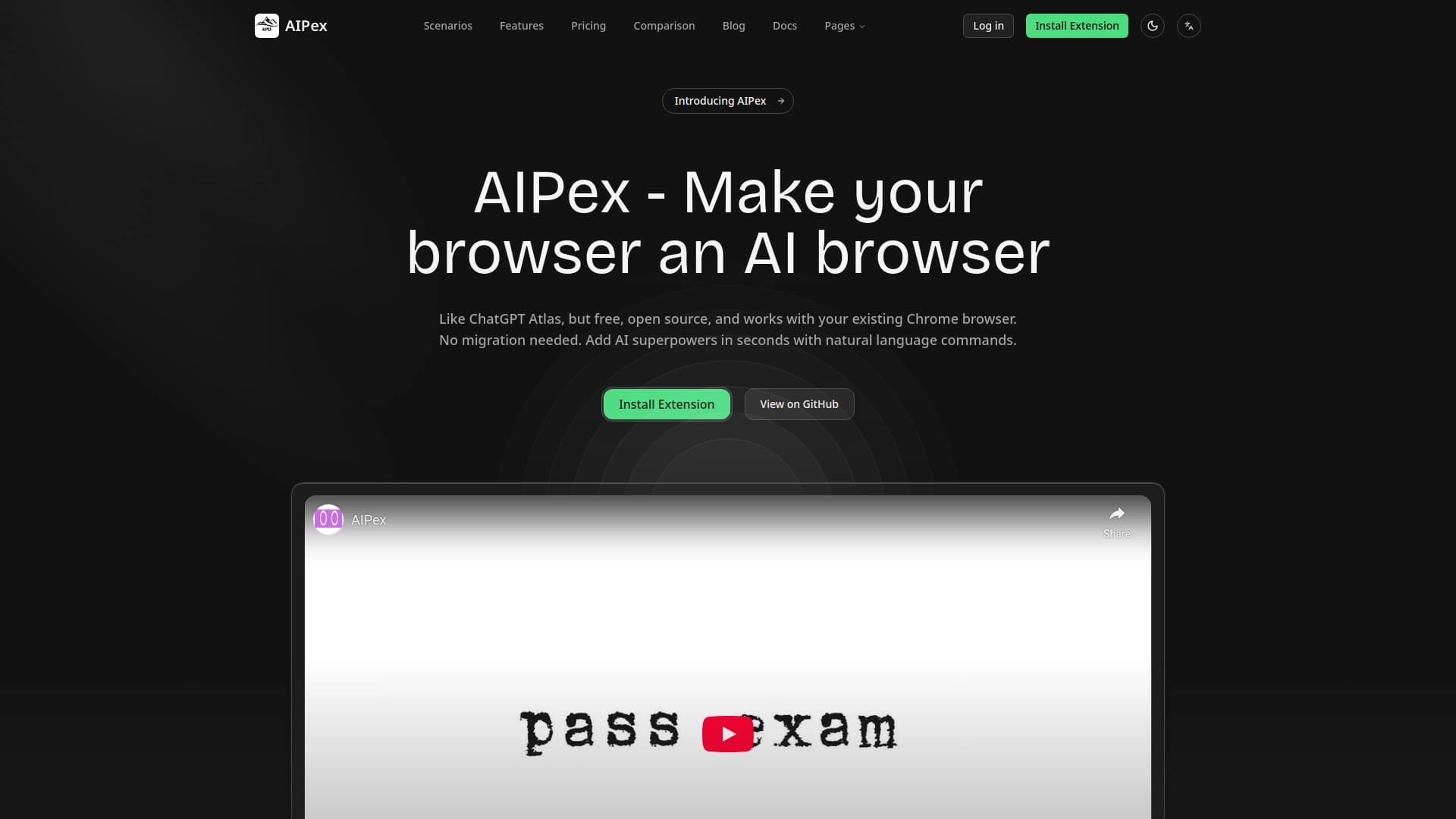

Chrome extension that helps manage tabs, history, and bookmarks with an AI assistant.


Project management platform with task assignment, time tracking, and employee workload monitoring features.


Desktop AI assistant for macOS, Windows, and Linux that launches via hotkey above all windows and combines multiple language models in one interface.


Platform for creating multi-agent AI systems and chatbots to automate customer support and lead generation.
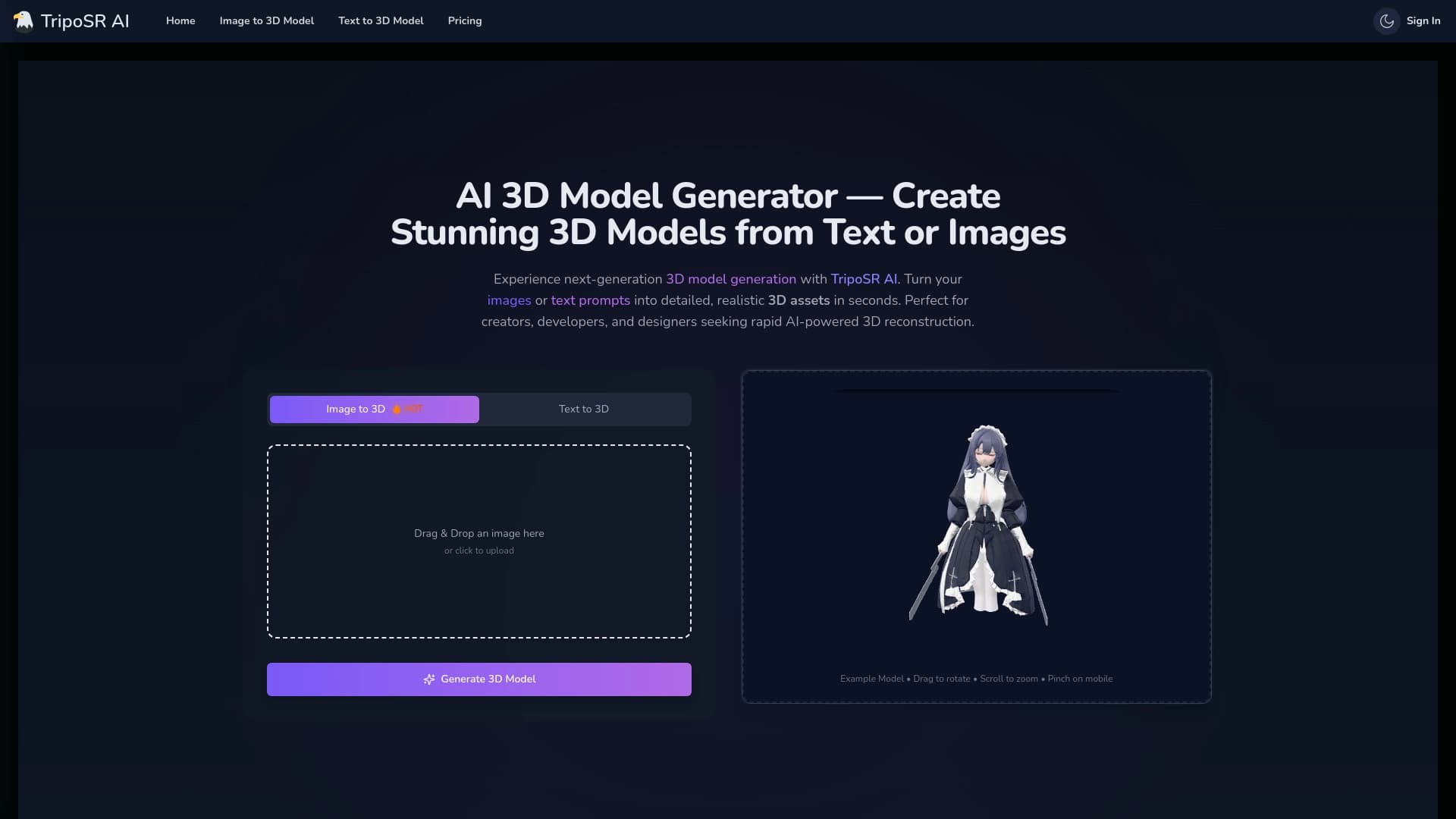

Open-source tool for quickly converting a single image into a 3D model.

AI agent for automating customer communications and support.
AllChat is a universal platform that combines several popular language models in a single interface for communication, image generation, file analysis, and code execution.