
Animating images: First Order Model
Tool for animating static images using a reference video as the motion source.
Overview
First Order Model is a neural network designed to animate static images. The model's main task is to transfer motion and facial expressions from a reference video to a still photograph. This is an image animation technology where results are achieved without complex 3D reconstruction of the object.
How the model works
The algorithm uses an approach based on keypoint detection. The neural network analyzes the reference video and tracks how individual parts of the object move (for example, eyes, mouth, head turns). This motion data is then applied to the static image. The model performs local transformations of individual regions, which helps preserve the texture and detail of the original photo. It is the combination of global motion transfer and local changes that produces a more natural result compared to simple overlay.
Access to the tool
The tool is distributed as a demonstration notebook in the Google Colab environment. This means users do not need to install additional software or configure an environment on their own computer. All computations are performed on Google's remote servers, making the model accessible even on low-powered devices.
Characteristics of Animating images: First Order Model
| Characteristic | Value |
|---|---|
| Task type | Animating a static image based on a video stream |
| Core method | Motion transfer using keypoints and local transformations |
| Application areas | Portraits, human figures, animal images |
| Distribution method | Free access |
| Launch format | Demonstration notebook in Google Colab |
| Environment setup required | None (cloud-based launch) |
| Input data | Static image + reference video with motion |
| Output data | Animated video based on the original image |
Who is the Animating images: First Order Model neural network for?
Designers and creative professionals
The tool can be useful for designers who want to quickly create animated content for presentations or prototypes without using complex video editors. The model allows bringing static illustrations or mockups to life, adding dynamics in a short time.
AI researchers and developers
Since the code is an open research notebook, it is suitable for studying image animation methods based on keypoints. Developers can examine the model architecture, modify parameters, or use it as a foundation for their own experiments.
Regular users for entertainment
The tool is also accessible to a broad audience. Anyone can upload their own photo and a video with motion to get a fun or unusual result. The free access and simple launch in Colab make the tool attractive for testing the capabilities of modern neural networks without deep technical knowledge.
How to use the Animating images: First Order Model neural network?
Launching the notebook in Google Colab
The primary way to use the tool is by opening the demonstration notebook in the Google Colab environment. You will need a Google account. After opening the notebook, you need to run the code cells sequentially. Most actions are automated, from installing dependencies to loading model weights.
Preparing input data
To create an animation, you will need two files: a photo and a reference video. The photo should be clear and contain the object you want to bring to life. The video serves as the source of motion. The better the quality of these files and the fewer unnecessary details they contain, the higher the quality of the result.
Getting and saving the result
After running all the notebook cells, the model will process the input data and generate the output video. This usually happens automatically within a few minutes, depending on the load on Colab servers. The final file can be downloaded to your computer or viewed directly in the browser.
Key features of Animating images: First Order Model
Facial expression transfer
The model can capture facial muscle movements and transfer them to a static image. This allows bringing portraits to life, making them smile, blink, or speak if the reference video contains the corresponding expressions.
Body movement animation
In addition to facial expressions, the neural network tracks body and limb movements. This makes it possible to create animations of characters and figures that replicate tilts, turns, or gestures from the reference recording.
Working with animal images
The tool is not limited to human faces. The built-in algorithms are adaptive enough to work with animal faces. Users can create animations based on videos of cats, dogs, or other animals, expanding creative possibilities.
Advantages of Animating images: First Order Model
- Free access: The model requires no financial investment, allowing anyone to try the technology without purchasing a subscription.
- No need for a powerful PC: Running in Google Colab moves all computations to the cloud, so users only need a browser and a stable internet connection.
- Easy launch: No manual environment configuration is required — the notebook contains all instructions and commands for installing dependencies.
- Flexible application: Allows animating not only faces but also bodies and animals, making the tool versatile for various tasks.
Disadvantages of Animating images: First Order Model
- Limited format: The tool works as a demonstration notebook rather than a full application or API, which may be inconvenient for commercial use.
- Dependence on Google infrastructure: Speed and stability depend on the load on Colab servers. During peak hours, you may experience queue delays.
- Results depend on input data: Animation quality directly depends on the clarity of the input image and how well the object proportions match between the photo and video. If the objects differ significantly, the result may be distorted.
What tasks does Animating images: First Order Model solve?
Creating content for social media
Users can bring old photos to life by adding dynamics. Such content attracts more attention in news feeds compared to static images.
Prototyping in design
Designers can quickly show clients how a particular character will look in motion, using static graphics and any reference video as a base.
Educational tool for learning AI
For students and professionals studying computer vision, the notebook serves as a clear example of implementing a complex neural network architecture in an accessible environment without deep programming.
Pricing for Animating images: First Order Model
The tool is distributed under a free model. This means using the neural network in demonstration mode requires no payment. Users do not need to purchase a license, pay for a subscription, or top up a balance. However, it is worth noting that the Google Colab environment itself has limitations on free usage, including limits on computation time and RAM. For commercial or more intensive use, paid Colab plans may be required, which are paid separately to the Google platform itself, not to the author of this model.
Terms of use for Animating images: First Order Model
Code and licensing
Since the model is distributed as research code, its use is governed by the terms of the corresponding repository. Typically, such code is provided for scientific and educational purposes. Despite free access, it is recommended to review the documentation and license of the specific model version before commercial use.
Technical requirements for launch
A modern web browser (Chrome, Firefox, etc.) and a Google account are required. A stable internet connection is necessary, as large amounts of data are transferred to and from the server. The power of your local computer does not matter, as all operations are performed remotely.
Availability of Animating images: First Order Model
Geographic availability
The service runs through Google Colab servers, which are available in most countries around the world. Restrictions may only arise in countries where Google services are officially blocked. In all other cases, access to the tool is not geographically restricted.
Language support
The notebook interface and code comments are typically in English. However, this is not a critical obstacle, as operation comes down to sequentially clicking the "Run" button for cells. A basic understanding of English or using a built-in browser translator is sufficient for successful work.
How Animating images: First Order Model differs from alternatives
Animation approach
Many competing tools use generative adversarial networks (GANs) directly to "fill in" new frames. In contrast, First Order Model is based on motion transfer using keypoints. This approach often better preserves character identity, since the texture of the original image is only changed locally rather than completely redrawn.
Distribution method
The tool is not a commercial product with an API and technical support. It is open research code that requires users to perform actions within the notebook. Most popular alternatives offer a convenient web interface with file upload via a button. The difference is that First Order Model requires fewer intermediate parameter adjustments but is less convenient for inexperienced users.
Versatility of animatable objects
While many alternatives specialize exclusively in human faces, this model demonstrates the ability to work with bodies and figures. This makes it more flexible for tasks requiring animation of not just the head but the entire character body, which is less common in alternatives.
Conclusion
Animating images: First Order Model is a powerful research tool that allows anyone to explore modern image animation technologies for free. Thanks to the Google Colab environment, users do not need powerful hardware or technical skills — simply finding a photo and a reference video is enough. The model excels at transferring motion to portraits, figures, and even animals. Despite some limitations related to dependence on Google infrastructure and the need to manually run the notebook, this tool remains an excellent choice for experiments, learning, and quickly creating animated content.
Frequently asked questions
See also

An open platform for generating images and other visual content from text descriptions using AI.

AI toolkit for video generation and editing, including avatars, lip-sync, and voice cloning.

Mobile app for photo editing and creating stylized avatars using AI.

BannsAi is an AI-powered service for quickly creating ad banners based on a text description or reference.
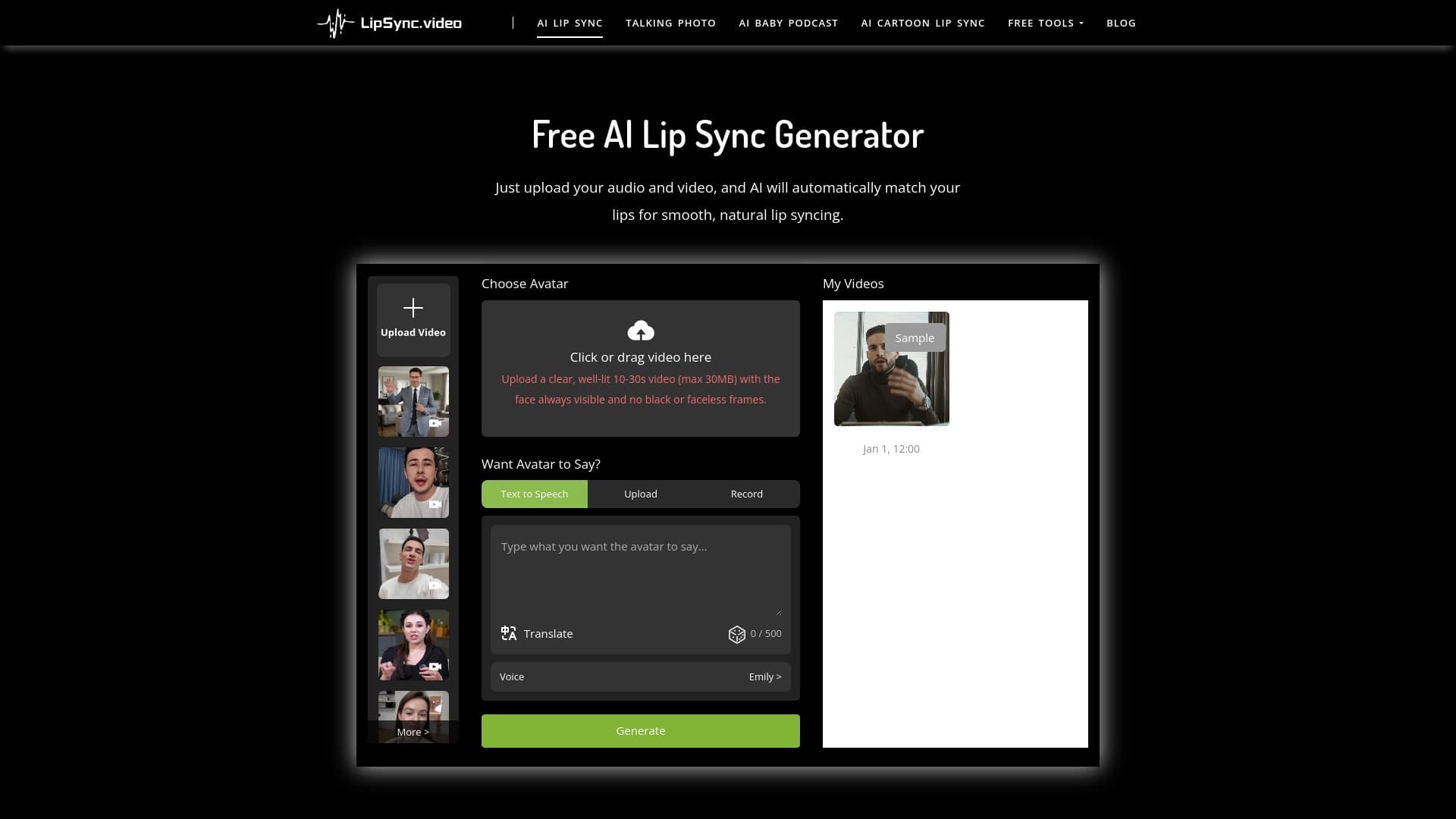

Service for turning static images into videos with singing and lip-syncing using AI.

AI-powered service for automatically creating “faceless” short videos for TikTok, YouTube Shorts, and other platforms.
Online tool for swapping faces in photos, videos, and GIFs without registration or watermarks.
Simple and easy-to-use photo editor with an intuitive interface.