
Eunomia
Orchestration framework for AI agents with YAML-based configuration.
Overview
Eunomia is an open-source framework designed for orchestrating AI agents. Its key feature is managing all configuration through YAML files. This means developers and teams can describe agent behavior and structure declaratively, without needing to write complex code from scratch.
The project's philosophy is configuration-first. Instead of programming logic in Python or another language, you describe what the agent should do in a structured text format. This approach simplifies iterations, version control, and collaboration on agents. Eunomia provides tools for quickly deploying and testing agents, making it useful both at the prototyping stage and in production.
Eunomia Features
| Feature | Value |
|---|---|
| Type | Framework for orchestrating AI agents |
| Configuration approach | Configuration-first (YAML) |
| Core components | Agent roles, prompt templates, tools, memory, branching logic |
| Tool support | Synchronous and asynchronous |
| Advanced capabilities | RAG, chain-of-thought reasoning |
| Extensibility | Plugin system (custom tools, memory backends, logging) |
| Interface | CLI |
| Runtime environment | Locally or in the cloud |
Who is Eunomia for?
Developers and Engineers
The primary target audience is developers who need to quickly build and deploy complex AI agent systems. Eunomia allows them to abstract away from low-level implementation and focus on agent logic and behavior through YAML schemas.
Technical Teams and Startups
Teams working on prototypes or maintaining multiple agent versions benefit from the configuration-driven approach. The ability to quickly change prompts or roles without rewriting code accelerates experimentation and time-to-market.
DevOps Specialists
Thanks to the CLI and cloud deployment, automation specialists can integrate Eunomia into CI/CD pipelines, use it for automated configuration checks, and manage the agent lifecycle in clusters.
How to Use Eunomia
Creating and Validating Configurations
Work begins with the CLI. Framework commands allow you to scaffold a project, generating a starting directory and file structure. Next, you describe agents in YAML. An important step is configuration validation, which Eunomia performs with built-in tools, helping to avoid syntax and logic errors before launch.
Defining Roles and Logic
YAML files define agent roles, prompt templates for communication, memory settings, and logic for switching between dialogue branches or tasks. For complex scenarios, chain-of-thought reasoning and external tool integration via plugins can be used.
Running and Integration
After configuration, the agent is launched via the CLI in a local environment for quick testing. For production, the system supports cloud deployment, ensuring scalability and service availability.
Key Features of Eunomia
YAML Configuration
This is the foundational feature that permeates the entire framework. Users describe roles, prompts, integrations, and storage in one or more YAML files. This makes the setup process transparent and versionable.
Synchronous and Asynchronous Tools
Eunomia allows connecting both fast synchronous functions (e.g., simple API calls) and long-running asynchronous operations without blocking the main execution flow.
RAG and Chain-of-Thought Reasoning
The framework includes support for Retrieval-Augmented Generation, allowing agents to use external knowledge bases to improve responses. Chain-of-thought enables the agent to break down complex tasks into a sequence of logical steps.
Plugin System
A plugin architecture is provided to extend standard capabilities. It allows adding custom tools, connecting non-standard memory backends, or integrating specialized logging systems.
Advantages of Eunomia
- Rapid prototyping. The configuration-driven approach lets you test an agent hypothesis in minutes, not days.
- Reduced custom development costs. Teams don't need to write boilerplate code, as the framework provides ready-made mechanisms for memory, tools, and branching.
- Deployment flexibility. The ability to run both locally and in the cloud offers freedom of choice at different development stages.
- Configuration transparency. YAML is human-readable, simplifying onboarding for new team members and logic audits.
Disadvantages of Eunomia
The main drawback relates to the limited publicly available information about the framework: there is no comprehensive public statistics, ecosystem documentation, or a large community. The technology is niche and may not suit everyone—only those willing to work with declarative approaches. New users may need time to learn the syntax of YAML structures for complex scenarios. Additionally, the framework likely requires team expertise in machine learning and agent architecture.
What Problems Does Eunomia Solve?
- Building chatbots and assistants. An agent can be configured to act as a support service or personal assistant with specific dialogue templates and access to knowledge bases.
- Workflow automation. Orchestrating multiple agents, each performing its own task (data parsing, API calls, analysis), into a unified system.
- Experiments with AI logic. Quickly testing different prompts, parameters, and reasoning schemes without rewriting application code.
- Building RAG-based systems. Creating agents that search for information in external sources and generate answers based on findings.
Eunomia Pricing
The source data does not include information about the distribution model or pricing. For details on cost, licensing terms, or the availability of a free version, please refer directly to the project's official website or its repository. Based on available data, the framework may be free or offered under paid subscriptions for cloud features.
Eunomia Terms of Use
Detailed terms of use (license, restrictions, rules for operating the cloud component) are not disclosed in the provided source materials. For up-to-date information, please consult the project's official documentation. Typically, open-source frameworks require compliance with an Apache or MIT license, but exact terms should be verified with the rights holder.
Eunomia Availability
Eunomia is available for local use via the CLI, implying installation on developers' local machines. Cloud environment support is also stated, allowing agents to be deployed on scalable infrastructure. The project is positioned as a developer tool, implying access to source code or installation packages; however, specific access methods are not described in the source data.
How Eunomia Differs from Alternatives
Declarative Approach and Speed of Change
The main difference is the emphasis on configuration. Unlike many frameworks where agent logic must be written in code, Eunomia moves it into YAML. This makes the system more transparent for quick edits and allows specialists without deep programming knowledge to participate in agent setup.
Integration of Diverse Tools
The ability to combine synchronous and asynchronous tools, as well as extend functionality with plugins, sets Eunomia apart from solutions limited to a specific type of operation or a fixed set of built-in features.
Simplified Orchestration of Complex Scenarios
Built-in support for chain-of-thought reasoning, RAG, and branching logic elevates the framework to a level where truly adaptive and context-aware dialogue systems can be created without complex coding.
Conclusion
Eunomia is a flexible tool for developing AI agents based on declarative YAML configurations. It targets technical professionals seeking to reduce development time and simplify the scaling of their AI solutions. Support for diverse tools, extensibility through plugins, and cloud deployment capability make it a strong candidate for commercial and research projects. However, full implementation will require independent study of the documentation and verification of distribution terms, as public information on pricing and licensing is currently insufficient.
Frequently asked questions
See also
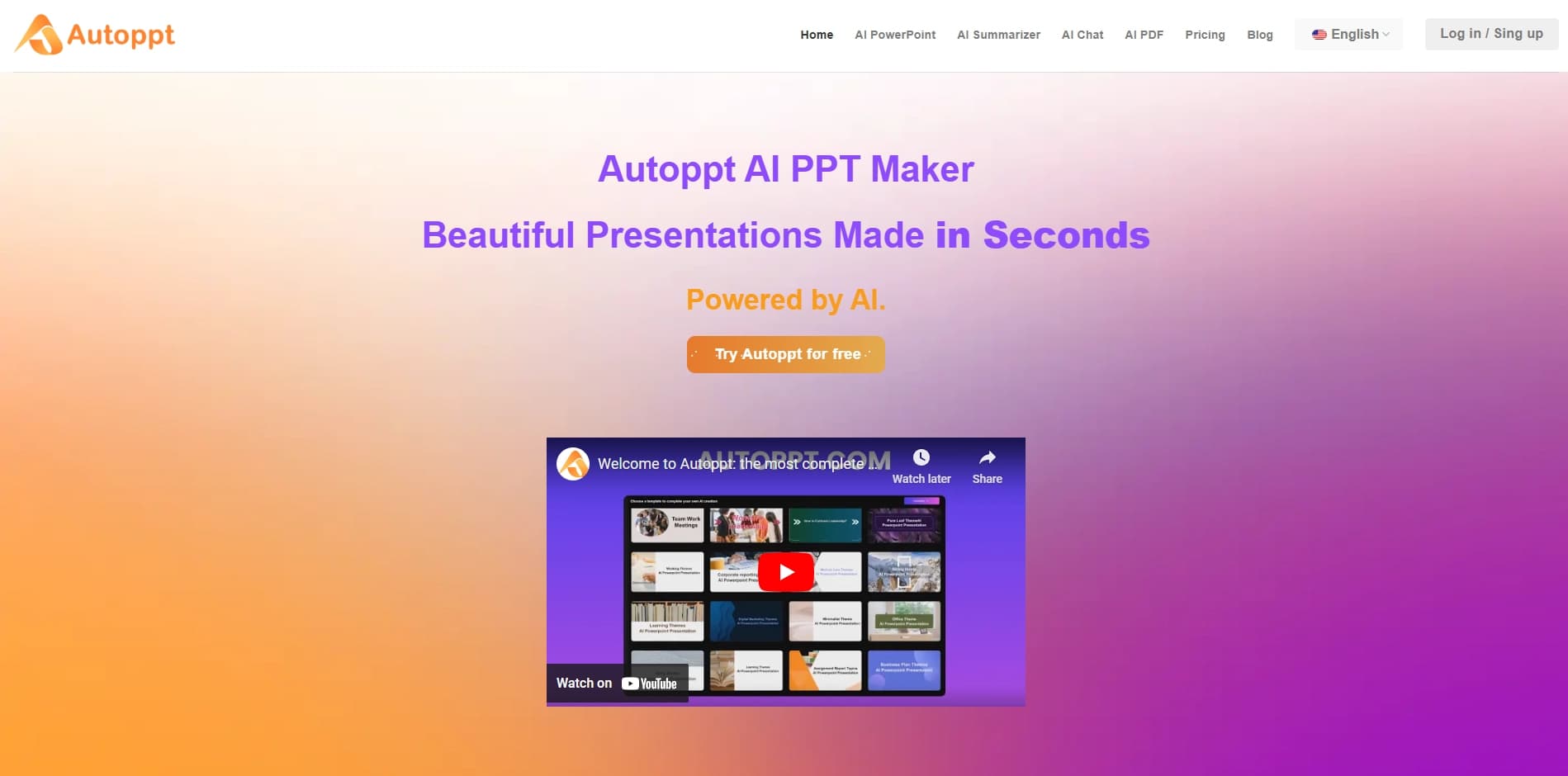

Online AI-powered service for quickly creating presentations based on a given topic or an uploaded document.
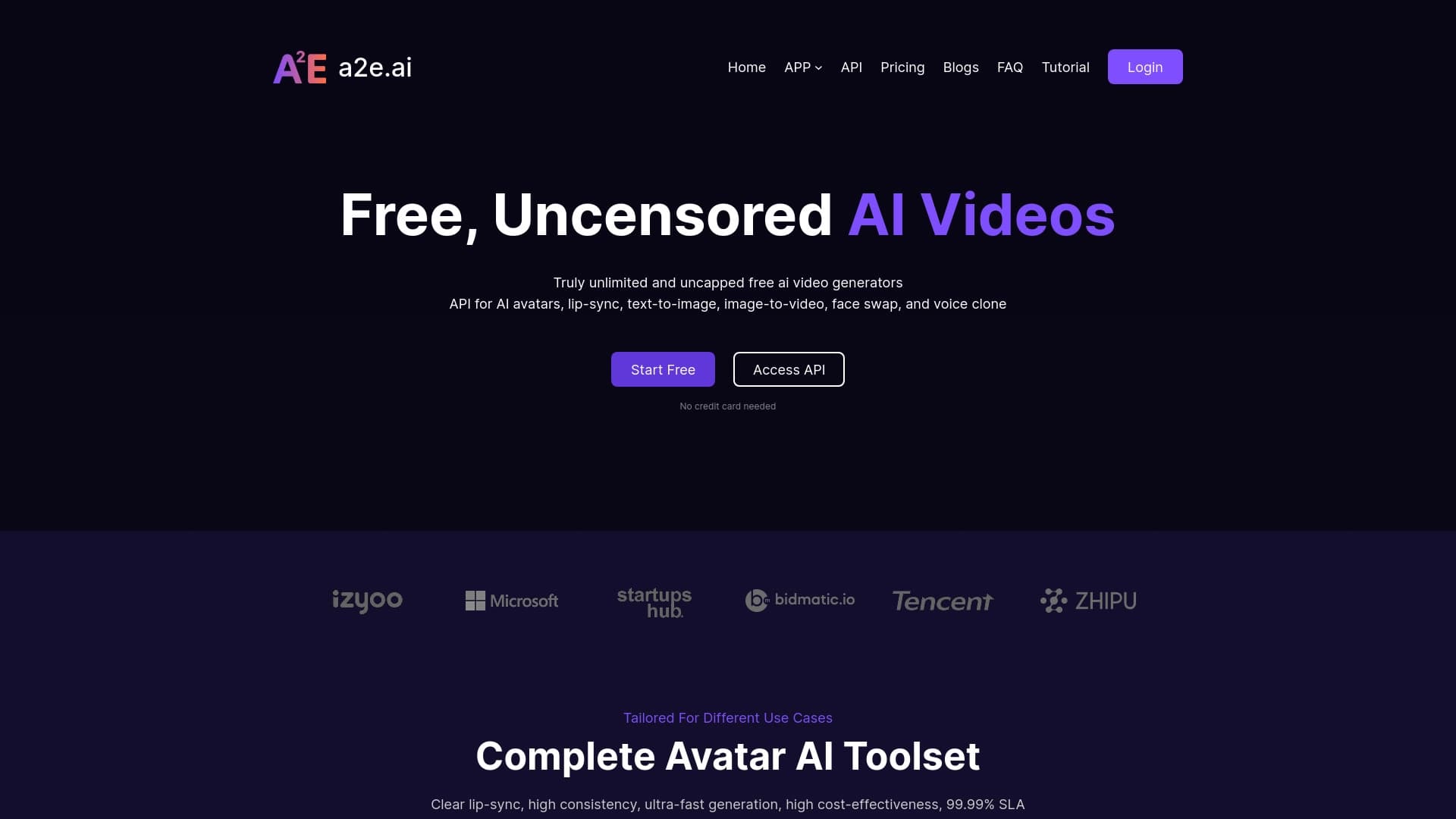

AI toolkit for video generation and editing, including avatars, lip-sync, and voice cloning.
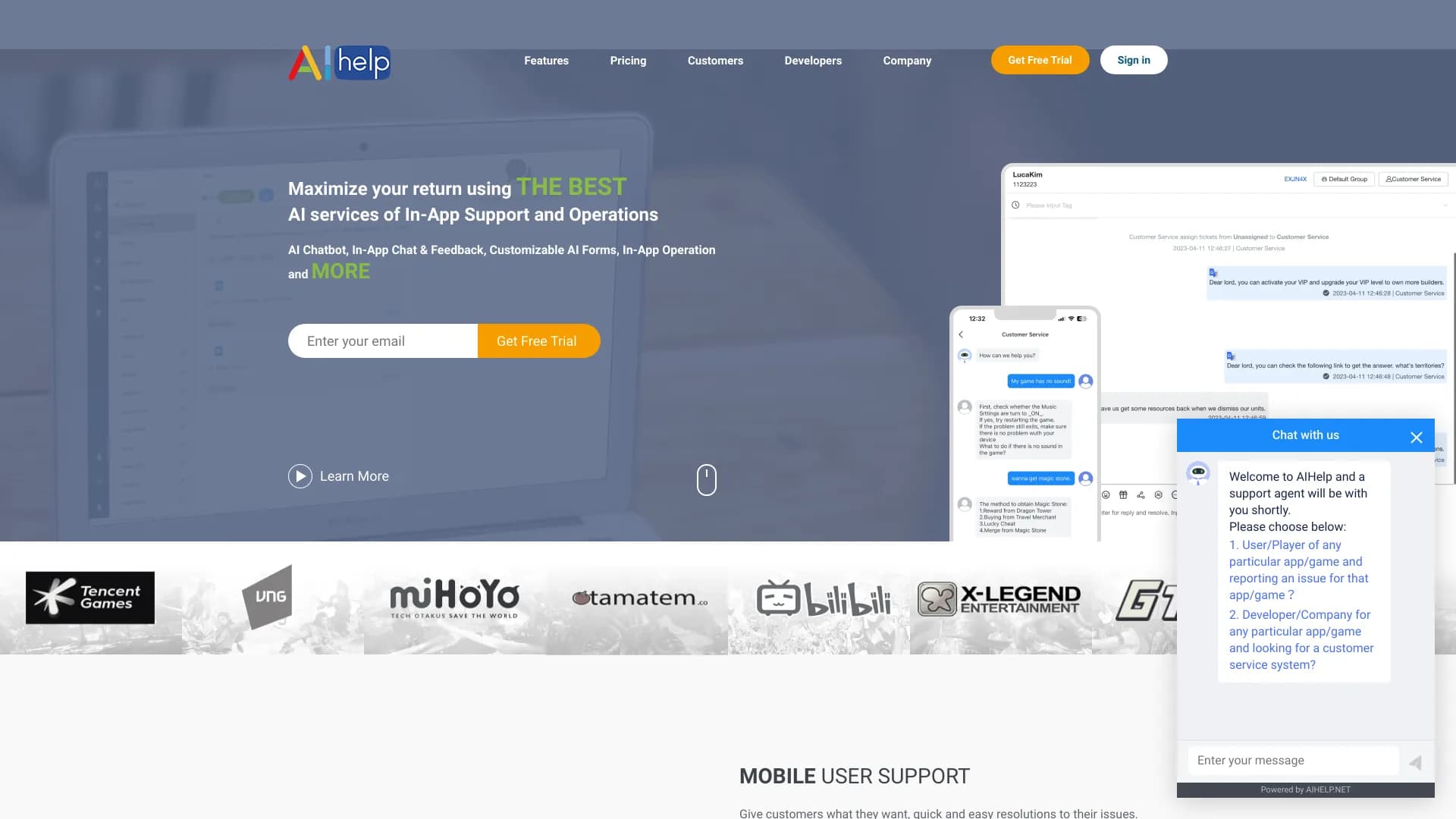

AI platform for user support in applications, including a chatbot and ticketing system.
AI assistant for automating retail tasks and optimizing call center operations.

Neural network for generating SEO-optimized articles and automating blog management.

A platform for content creators that combines link management, email marketing, an online store, and analytics in a single visual editor without coding.

BannsAi is an AI-powered service for quickly creating ad banners based on a text description or reference.

Platform for increasing organic traffic and creating content with the help of AI and expert participation.