
CraftMusic AI
Music generator that creates cinematic tracks from text, graphic, or audio prompts.
Overview
CraftMusic AI is an AI-based music generator that creates cinematic tracks from three types of input: text descriptions, graphic files (images), and audio prompts. Simply put, you describe the desired sound in words, upload an image that conveys the right mood, or send a piece of audio — and the neural network turns it into an original musical composition.
The tool is primarily aimed at creating atmospheric, "cinematic" pieces — soundtracks, ambient backdrops, dramatic intros. Instead of picking music from ready-made libraries, the user can generate a unique track that precisely matches their vision. Technical details about how the model works and which algorithms underpin it are not disclosed in public sources.
CraftMusic AI Features
| Feature | Value |
|---|---|
| Tool type | AI-based music generator |
| Input data | Text prompts, images, audio files |
| Primary genre | Cinematic, atmospheric music |
| Output format | Music track (format details not specified) |
| Distribution model | Not defined |
| Availability | Not disclosed |
| Pricing policy | Not disclosed |
Who is CraftMusic AI suitable for?
Videomakers and video editors
CraftMusic AI can be useful for those who work with video and need unique sound accompaniment. Instead of searching for ready-made tracks that may overlap with other creators' work, a videomaker can generate a soundtrack for a specific shot, mood, or plot twist.
Content creators and bloggers
For content creators on YouTube, Instagram, or TikTok, it's important that music underscores the emotional tone of the video. The ability to upload an image or a short description and get a track that precisely matches the video's atmosphere can streamline the content production process.
Sound engineers and composers
Even professionals can use CraftMusic AI as a tool for finding inspiration or creating rough drafts. By uploading an audio reference and slightly adjusting the direction through text, you can quickly get ideas that are later refined manually.
How to use CraftMusic AI?
Since there is no official documentation in public sources, the process described below is the general logic of operation for similar AI generators, based on the stated functionality.
Step 1: Choosing the prompt type
First, the user needs to decide which type of input data to use: a text description, an image, or an audio file. This determines how accurately the desired mood of the future track will be conveyed.
Step 2: Preparing and uploading the material
If text is chosen, you need to compose a description: genre, tempo, mood, instruments, desired dynamics. If an image is chosen, upload a file with the right atmosphere (a movie still, nature photo, abstract art, etc.). For audio, prepare a fragment that sets the stylistic direction.
Step 3: Running generation and getting the result
After processing the input data, the neural network creates a musical composition. The user receives a finished track that can be downloaded and used in their projects.
Key features of CraftMusic AI
Text-based music generation
The user enters a text description of the desired sound — from simple characteristics like "dark ambient" to detailed scenarios like "slow piano melody with strings building toward the finale" — and gets a track that matches the request.
Image-based generation
The uploaded image is analyzed by the AI to extract its emotional and atmospheric context. The color palette, composition, and subject of the image become the basis for creating the musical backdrop.
Audio-based generation
An audio file can serve as a reference for style, rhythm, or timbral coloring. The neural network processes the uploaded fragment and generates a new track, preserving the key characteristics of the source material while creating an original piece.
Advantages of CraftMusic AI
Input versatility
The ability to use three different types of prompts (text, image, audio) is the main advantage. The user can choose the method that is most convenient or best conveys their intent.
Cinematic quality of results
The tool is specifically tuned to create atmospheric, expressive music suitable for film, games, and serious video projects. This sets it apart from generators focused on pop music or simple club beats.
Originality of tracks
Each generation creates a unique composition that has not been published before. This reduces the risk of copyright claims and makes the creator's content more individual.
Disadvantages of CraftMusic AI
Lack of information about details
Currently, there is no public data on sound quality, supported formats, maximum track duration, number of generations per session, and other technical specifications.
Unclear access terms
It is unclear whether the service works for free, by subscription, or with one-time payments. It is also unknown whether the tool requires registration, or whether it works on the web or as a desktop version.
Limited evidence base
Information about real use cases, user reviews, and demo tracks is absent from public sources. This makes it difficult to objectively assess the quality of the music the service generates.
What tasks does CraftMusic AI solve?
Creating music accompaniment without royalty payments
Using ready-made music from stock libraries often involves paying licensing fees or risking copyright infringement. CraftMusic AI allows you to generate your own track — but the terms of its commercial use are not yet defined.
Quick sound prototyping
When you need a "rough" soundtrack for editing, a presentation, or a pitch, generation takes less time than searching for a suitable track or commissioning a composer.
Translating visual images into music
For those who think in images rather than words, image-based generation is a convenient way to "sound out" a picture. This allows the emotions of a scene to be expressed in sound without needing to explain them in words.
CraftMusic AI Pricing
Currently, there is no official information about pricing, subscription costs, or one-time payments for using CraftMusic AI in public sources. It is unknown whether the tool is distributed for free, under a freemium model, or requires full prepayment. Potential users should keep an eye on updates on the project's official resources.
CraftMusic AI Terms of Use
Public data on the service's terms of use is also absent. It is unclear whether generated music can be used in commercial projects, whether attribution is required, or under what conditions rights to created compositions are transferred. Until official clarification from the developers, tracks should be used for commercial purposes with caution.
CraftMusic AI Availability
Information about which region and platforms the service operates on is absent. It is unknown whether the tool is available as a web application, desktop program, or mobile app. There is also no data on support for different interface languages or geo-restrictions.
How CraftMusic AI differs from alternatives
The main difference between CraftMusic AI and most other music generators is multimodal input. Many services work only with text descriptions, while CraftMusic AI additionally accepts images and audio files. An image can convey more subtle mood nuances than words, and audio can set a precise stylistic framework.
The second difference is the focus on cinematic quality. While many competitors aim to create electronic music, pop tracks, or background beds for videos, CraftMusic AI is positioned as a tool for creating precisely atmospheric, expressive compositions that can be used in films, series, and games.
Conclusion
CraftMusic AI is a promising music generator with an interesting multimodal input concept and a clear focus on cinematic sound design. The ability to create tracks from text, images, and audio makes it a flexible tool for many scenarios — from video editing to finding inspiration. However, the complete lack of public information about pricing, access terms, and rights to generated works holds back its mass adoption. Until the developers disclose these details, the tool remains a niche solution for those willing to work under conditions of uncertainty.
Frequently asked questions
See also
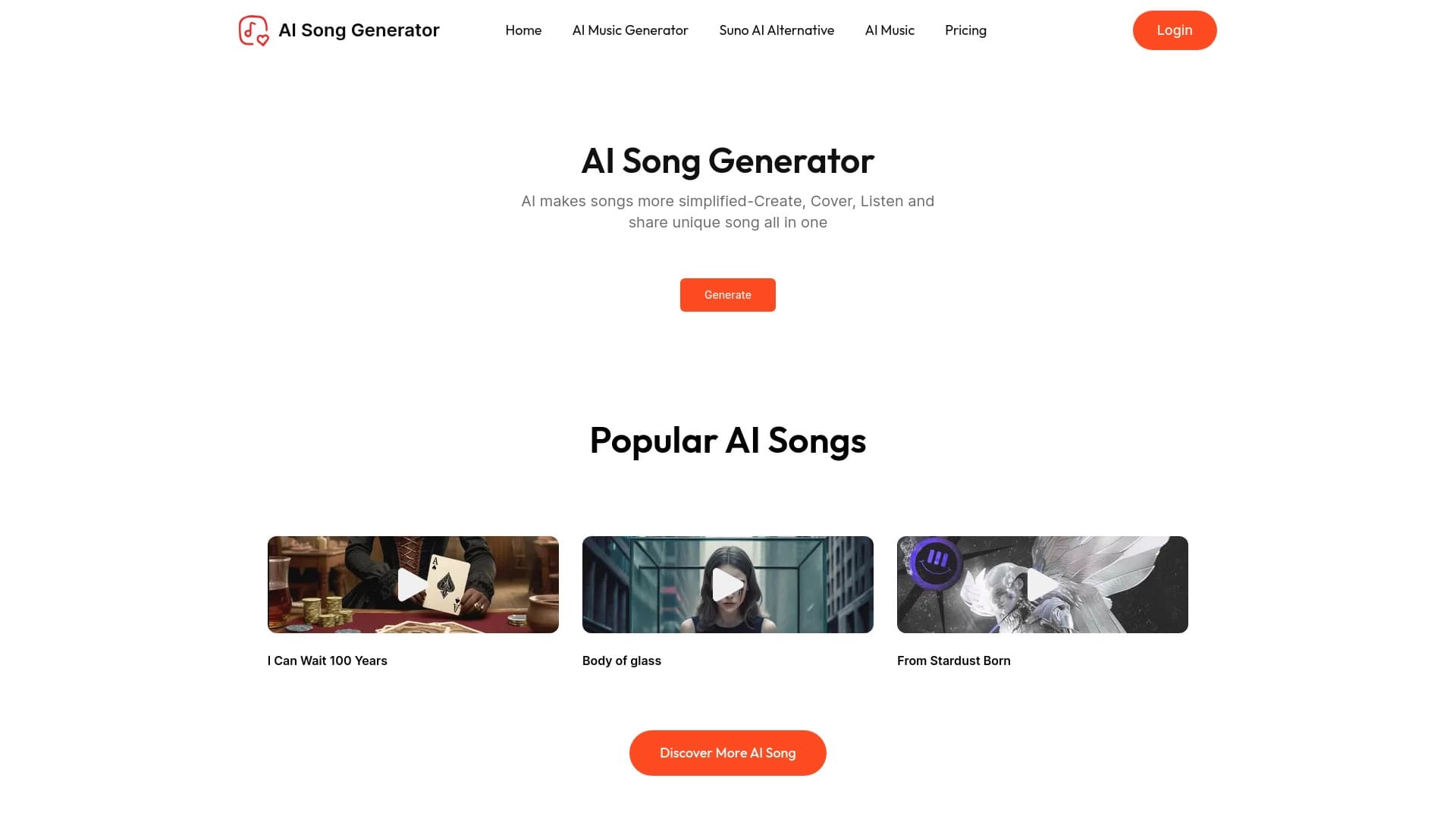
An online service that uses AI to create songs and music, supporting both simple text descriptions of a track and uploading your own lyrics.
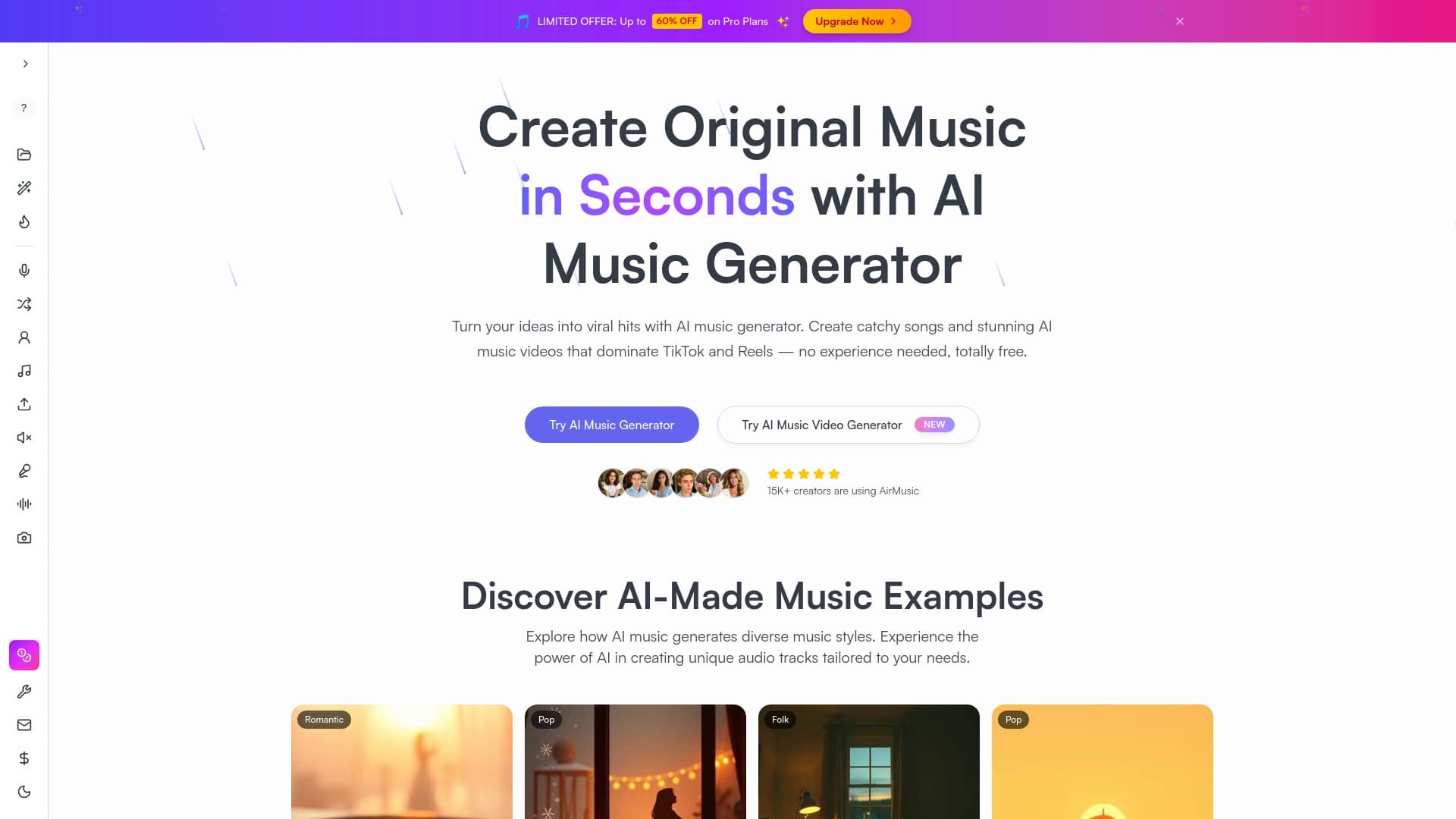
Music generator from text descriptions with style and mood customization, as well as export of individual tracks.
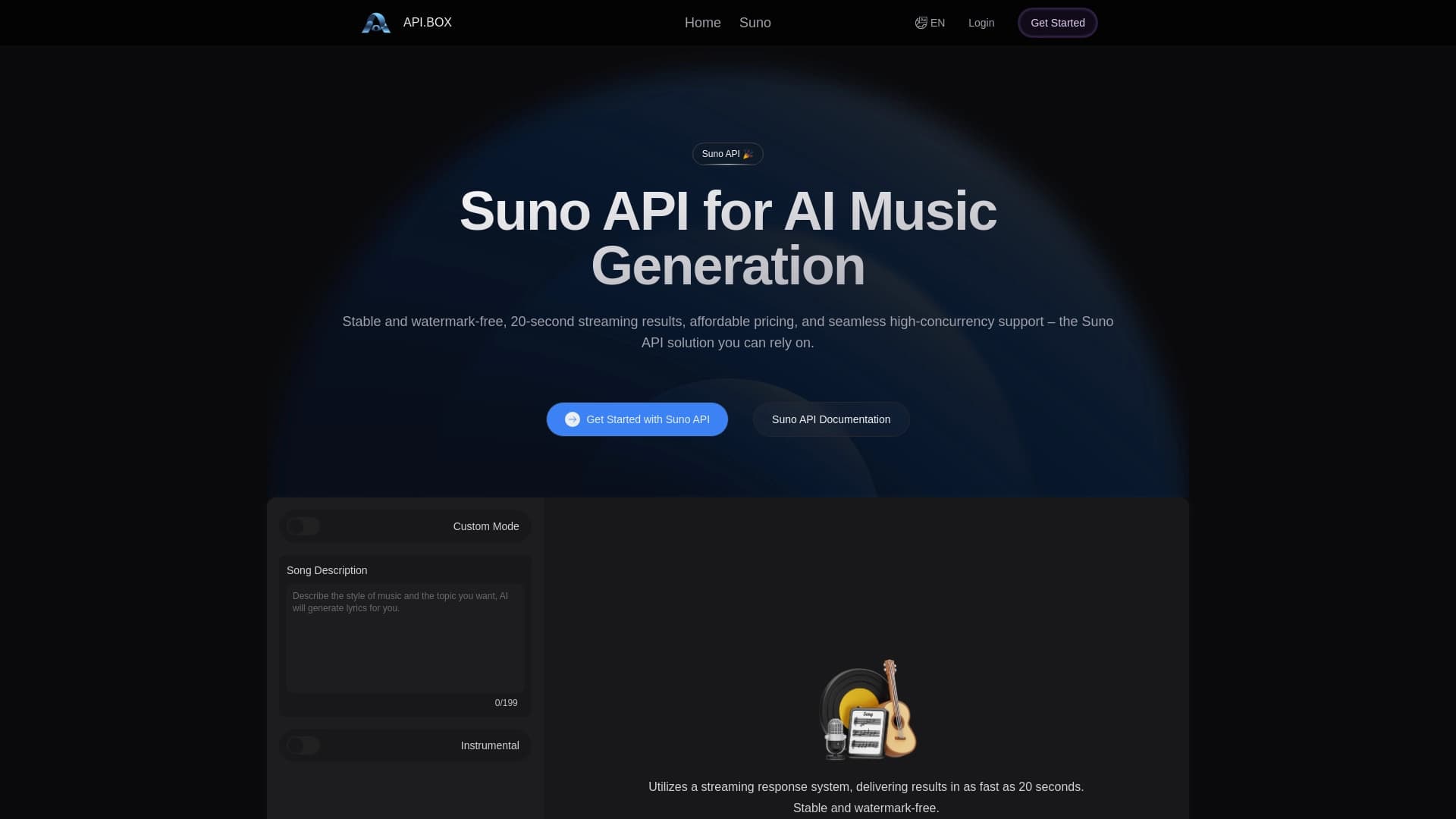
Unofficial API access to Suno AI for music generation and integration into applications.

AI-based platform for generating music and songs from a text description.
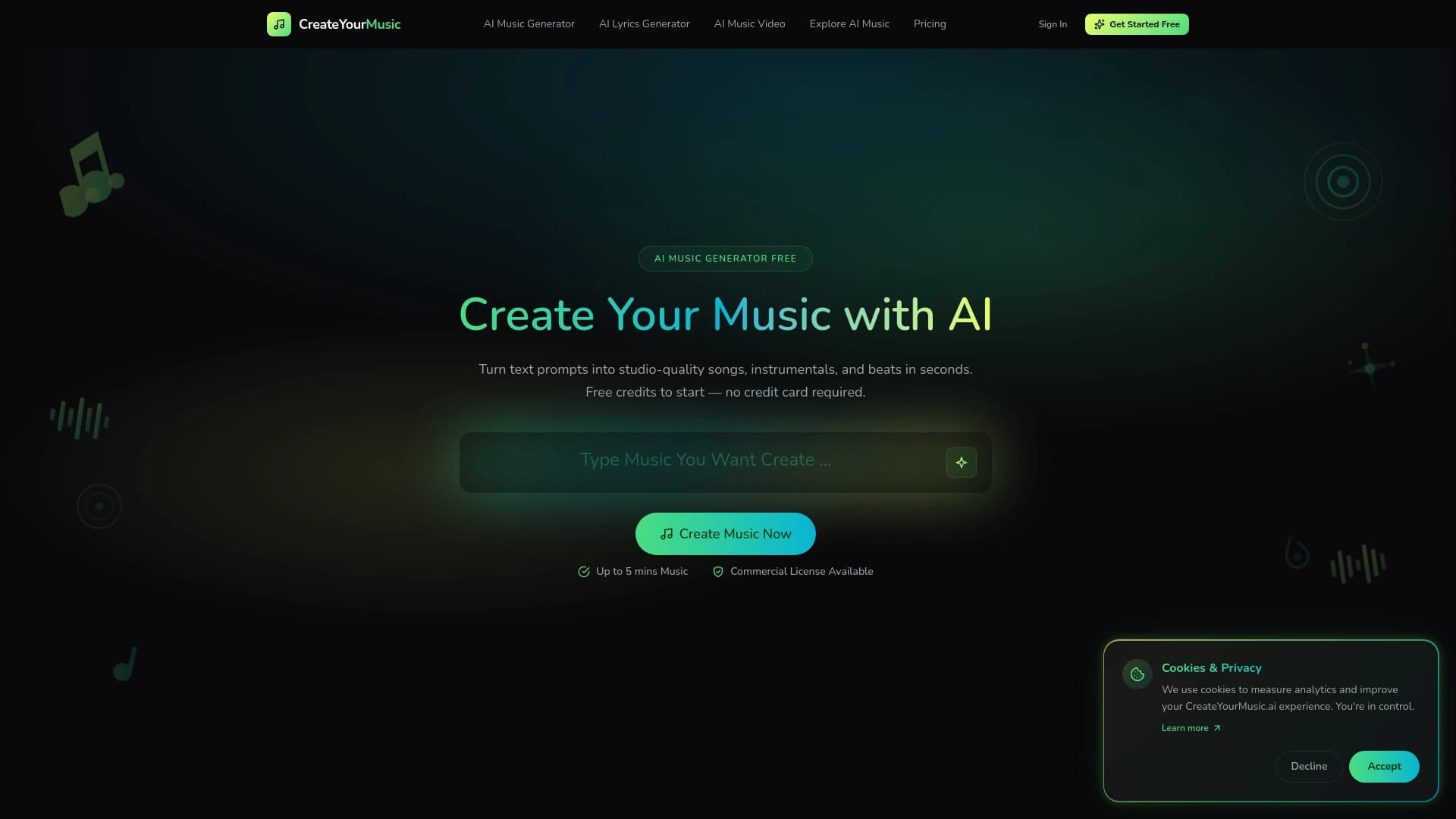

A neural network that creates music based on a text description or song lyrics.
Online service for creating music and songs from a text description with the ability to download tracks.
AI platform for voice synthesis and cloning that converts text into realistic speech.


Platform for creating anime art, comics, and videos with AI.