

Consensus
AI-based search engine that finds answers in peer-reviewed scientific publications and formulates synthesized conclusions.
Ranked in
Overview
Consensus
Description of the Consensus AI
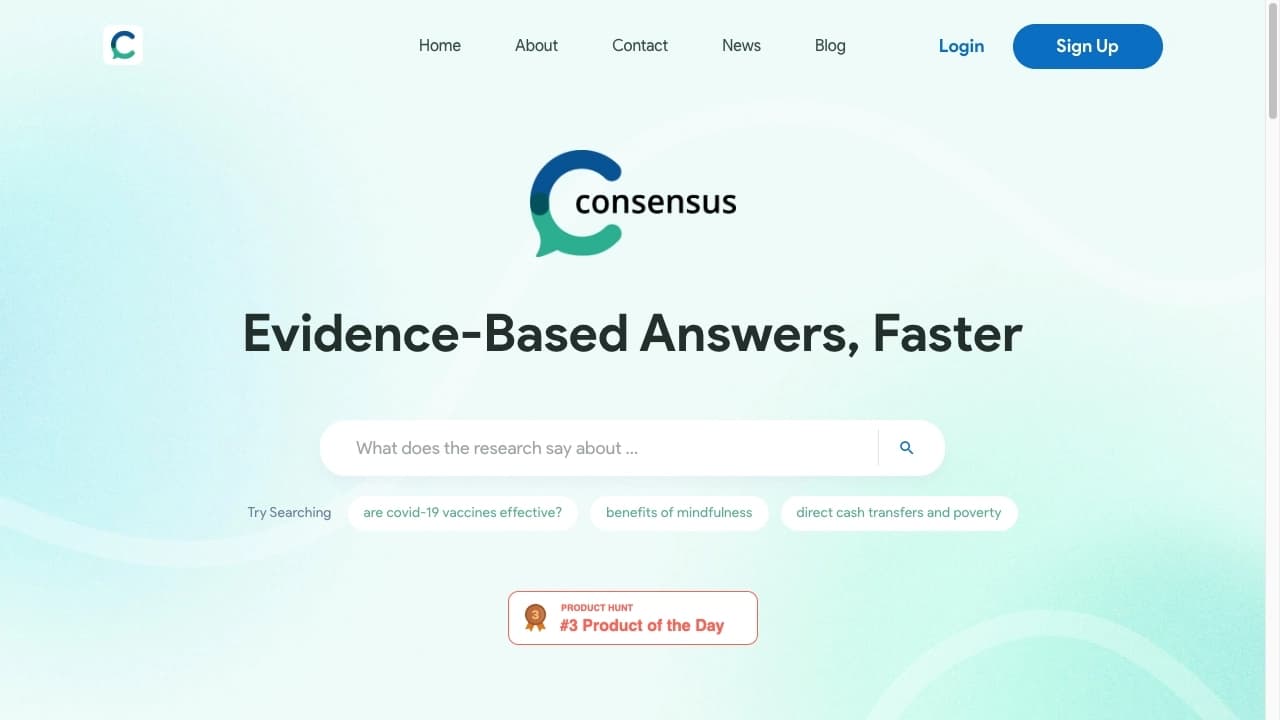
Consensus is an AI-powered search engine that specializes in finding answers in peer-reviewed scientific publications. Instead of returning a simple list of links, the service analyzes the contents of articles and formulates synthesized conclusions, helping users quickly understand what science says about a given question.
The tool processes queries in plain human language and searches a database of more than 220 million peer-reviewed scientific papers. By default, the algorithm combines semantic and exact search, allowing it to find both keyword-based materials and works relevant to the essence of the query.
Consensus was created to make scientific knowledge more accessible and understandable. It helps quickly assess how well a particular claim is supported by research, which topics have consensus, and where there is scientific disagreement. At the same time, the service does not replace independent verification of primary sources but significantly speeds up initial familiarization with a topic.
Consensus Features
| Feature | Value |
|---|---|
| Type | Search engine for scientific articles |
| Categories | Search engines, Research, Summarization, Education |
| Distribution model | Freemium |
| Database | Over 220 million peer-reviewed scientific papers |
| Website | consensus.app |
| First publication date | 07-03-2023 |
| Tag | text-to-text |
Who is the Consensus AI suitable for?
Students and learners
Consensus is a convenient assistant for students who need evidence-based information for term papers, theses, and academic projects. The service allows them to quickly find relevant research and get brief summaries without spending time reading dozens of abstracts manually.
Researchers and medical professionals
Scientists, researchers, and healthcare professionals can quickly verify the scientific basis of a claim, compare contradictory data from different sources, and assess what consensus has formed in the literature on a topic of interest.
Analysts, writers, and curious users
For business analysts, content writers, and simply curious people, the tool helps find verified scientific data without the need to dive deeply into every publication. The wide range of topics — from health and psychology to technology — makes the service useful for a variety of queries.
How to use the Consensus AI?
Ask a question in plain language
Start by phrasing your question the way you would ask a person. For example: "Does meditation help with stress?" or "Does caffeine affect sleep quality?" The system understands the meaning of the query rather than just searching for keywords.
Review the synthesized answer
In response, the service generates a conclusion based on the found studies, accompanied by confidence indicators and links to specific scientific papers. You immediately see which articles the answer is based on and how many studies support or refute the claim.
Go deeper when needed
For more complex multi-step tasks, you can use the Research Agent, which performs searches, applies filters, builds citation chains, and helps identify gaps in the topic. Also available are the Ask Paper tool for breaking down individual articles and My Library for saving materials you like.
Key features of Consensus
Search across the scientific database and synthesis of findings
Consensus analyzes millions of scientific articles and, instead of a simple list of links, provides a synthesized answer formulated from the found research. Each conclusion is accompanied by links to specific publications and citations.
Consensus Meter and confidence assessment
The tool shows the degree of agreement among studies: you see how many papers support the claim, how many refute it, as well as confidence indicators and the level of evidence. This helps assess how solid the scientific basis of the answer is.
Additional tools for working with sources
Ask Paper lets you break down individual articles into parts, and My Library lets you save found materials for further work. Results are grouped by topic, and the most cited works are brought to the forefront.
Advantages of Consensus
Time savings
Instead of reading dozens of abstracts and articles, the user immediately gets clear, formulated answers tied to primary sources. This significantly speeds up research work.
Transparency and the full picture
The service shows exactly which articles the answer is based on, demonstrates the level of evidence, and the number of supporting or refuting studies. Grouping results by topic helps see the whole picture rather than individual fragments.
Objectivity
The results are based on data from peer-reviewed scientific papers, not marketing materials. The service runs without ads and strives for impartial presentation of information across a wide range of topics — from health and mindfulness to technology.
Disadvantages of Consensus
Does not replace verification of primary sources
The main limitation of the tool is that it does not replace independent work with sources. Before making an important decision or using data in serious work, it is necessary to refer to the articles themselves: study the research methodology, sample characteristics, publication date, and limitations.
Limited coverage
The service focuses specifically on scientific literature, so it is not suitable for tasks requiring broad web search, news context, or non-academic sources. Such scenarios require other tools.
What tasks does Consensus solve?
Searching for and evaluating information
The main tasks of the service are finding answers to questions in scientific articles, assessing the quality and reliability of sources, and testing hypotheses. The tool helps quickly understand what science says about a particular topic and determine whether an assumption is supported by research.
Working with contradictory data
Consensus is convenient for comparing contradictory data from different sources: Consensus Meter clearly shows whether there is a consensus in the scientific literature on a question or whether studies diverge in opinion.
Preparing materials
The service helps find sources for term papers and theses, gather data for business analytics, and obtain brief research summaries for further use in materials and publications.
Consensus Pricing
Consensus operates on a freemium model — a free tier is available, and any user can try the service by performing a free search. Paid tiers with expanded capabilities are also available; however, specific prices are not specified in the source data, so exact figures are not provided here.
Consensus Terms of Use
The service provides the opportunity to start with a free beta version, allowing users to evaluate the tool's functionality before moving to paid terms. Detailed information about subscription plans, free access limits, and commercial use terms is not fully disclosed in the available data.
Consensus Availability
Consensus is a web service available at consensus.app. It works in a browser format and is designed for a wide range of users: students, researchers, doctors, analysts, and anyone who wants to quickly get an evidence-based answer to a question of interest. To get started, simply open the site and enter a search query.
How Consensus differs from alternatives
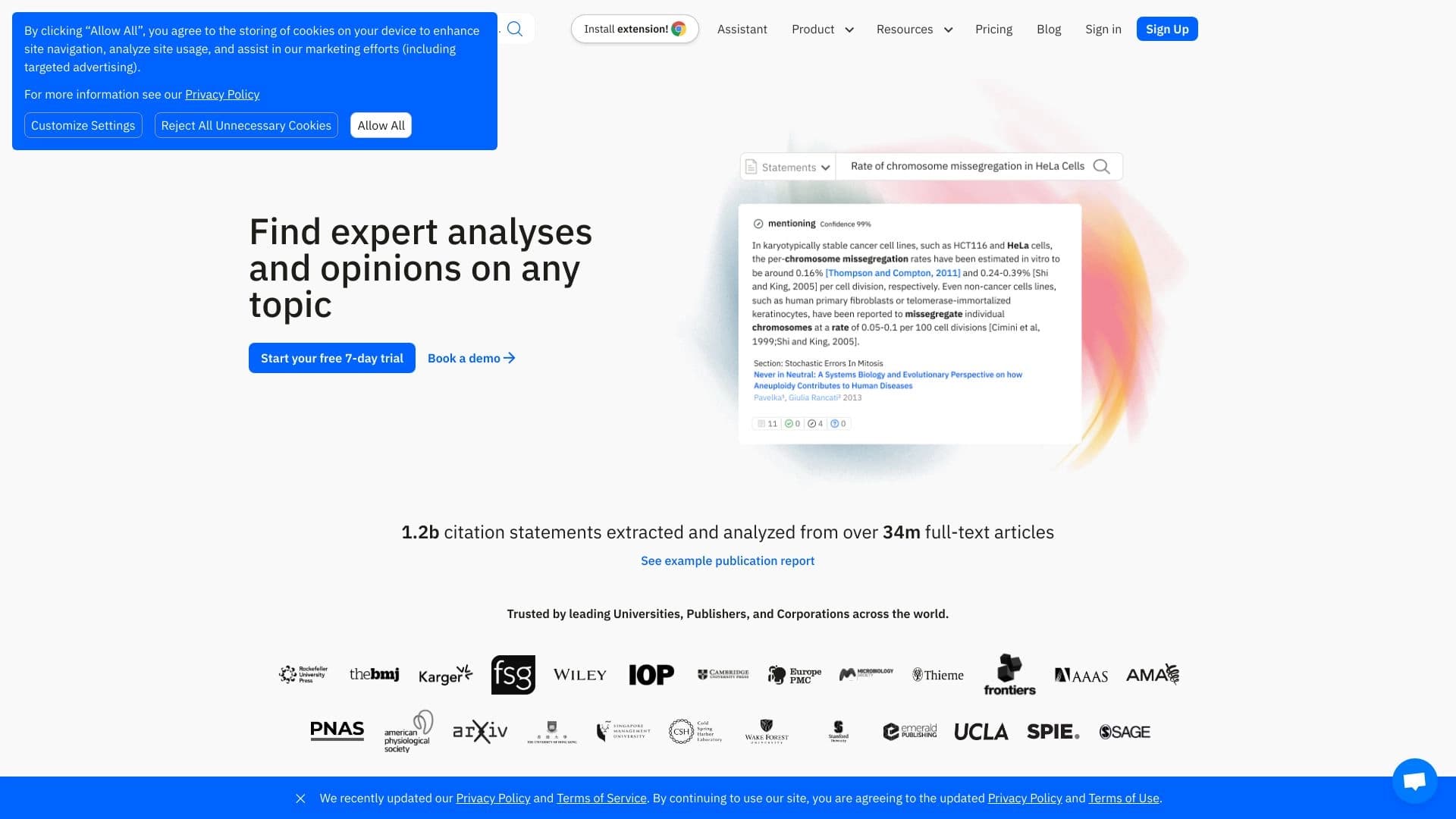
The main difference of Consensus is its narrow specialization in scientific publications. Unlike Perplexity, which performs broad web search across various sources, and Scite, which tracks citations between works, Consensus focuses on searching peer-reviewed scientific articles and generating AI summaries.
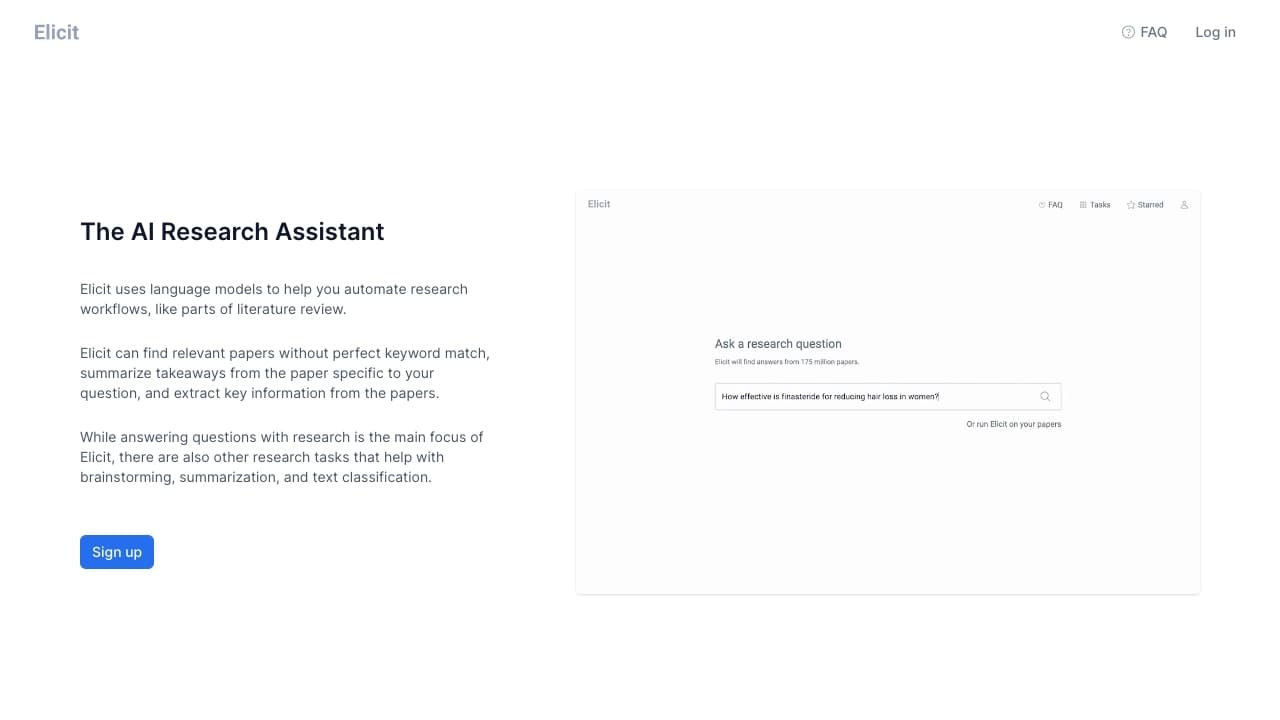
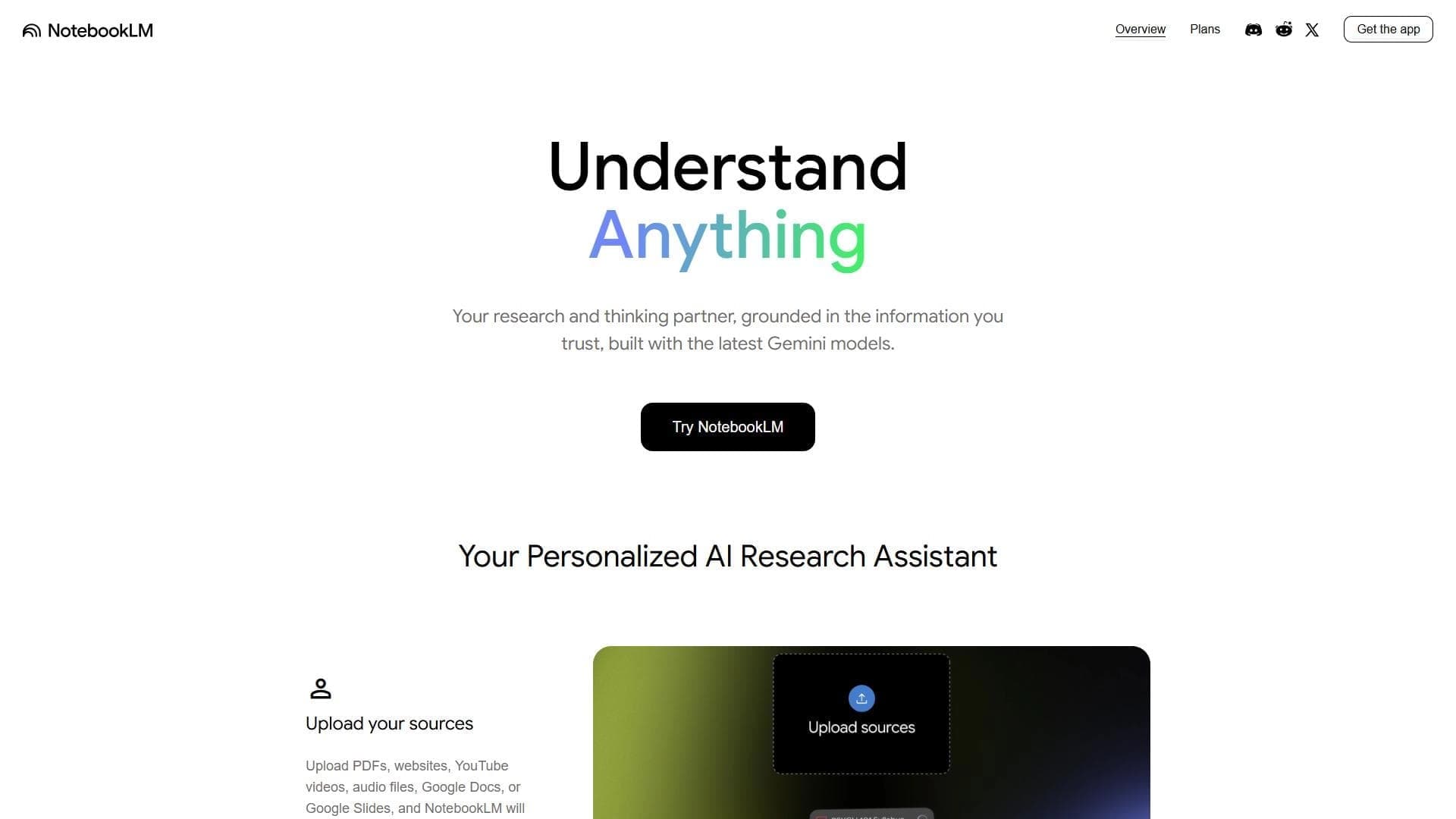
Another distinctive feature is the display of the degree of agreement between studies through Consensus Meter. The user sees not just a collection of articles but a clear assessment of how much studies converge in opinion on a given question. Close alternatives also include Jenni AI, NotebookLM, and Elicit; however, it is the combination of science-oriented search with visualization of scientific consensus that sets Consensus apart.
Conclusion
Consensus is a practical tool that noticeably simplifies working with scientific data. Instead of independently studying dozens of articles, the user gets ready-made synthesized answers with reliability assessments and links to primary sources. The service saves time for students, researchers, doctors, and business analysts, helping them quickly assess the scientific basis of claims. At the same time, it is important to remember that Consensus is a supplementary tool: before making serious decisions, it is necessary to verify information against primary sources, since only careful reading of the publications themselves can provide a final assessment of the methodology and quality of a study.
Frequently asked questions
Similar AI tools


See also
AllChat is a universal platform that combines several popular language models in a single interface for communication, image generation, file analysis, and code execution.

A neural network for document analysis that extracts key information, creates summaries, and answers questions about the contents of uploaded files.

Online AI-powered service for quickly creating presentations based on a given topic or an uploaded document.

AI Slide Studio is an AI-powered service for quickly creating customizable presentations on a given topic.
Catalog of AI tools with educational materials and guides for selecting neural networks.


Neural network for generating SEO-optimized articles and automating blog management.

AI agent for automating routine browser actions, such as filling out forms and collecting data.
AIJOURNEY is a catalog and search platform for discovering AI tools, updated daily.