

Coggler
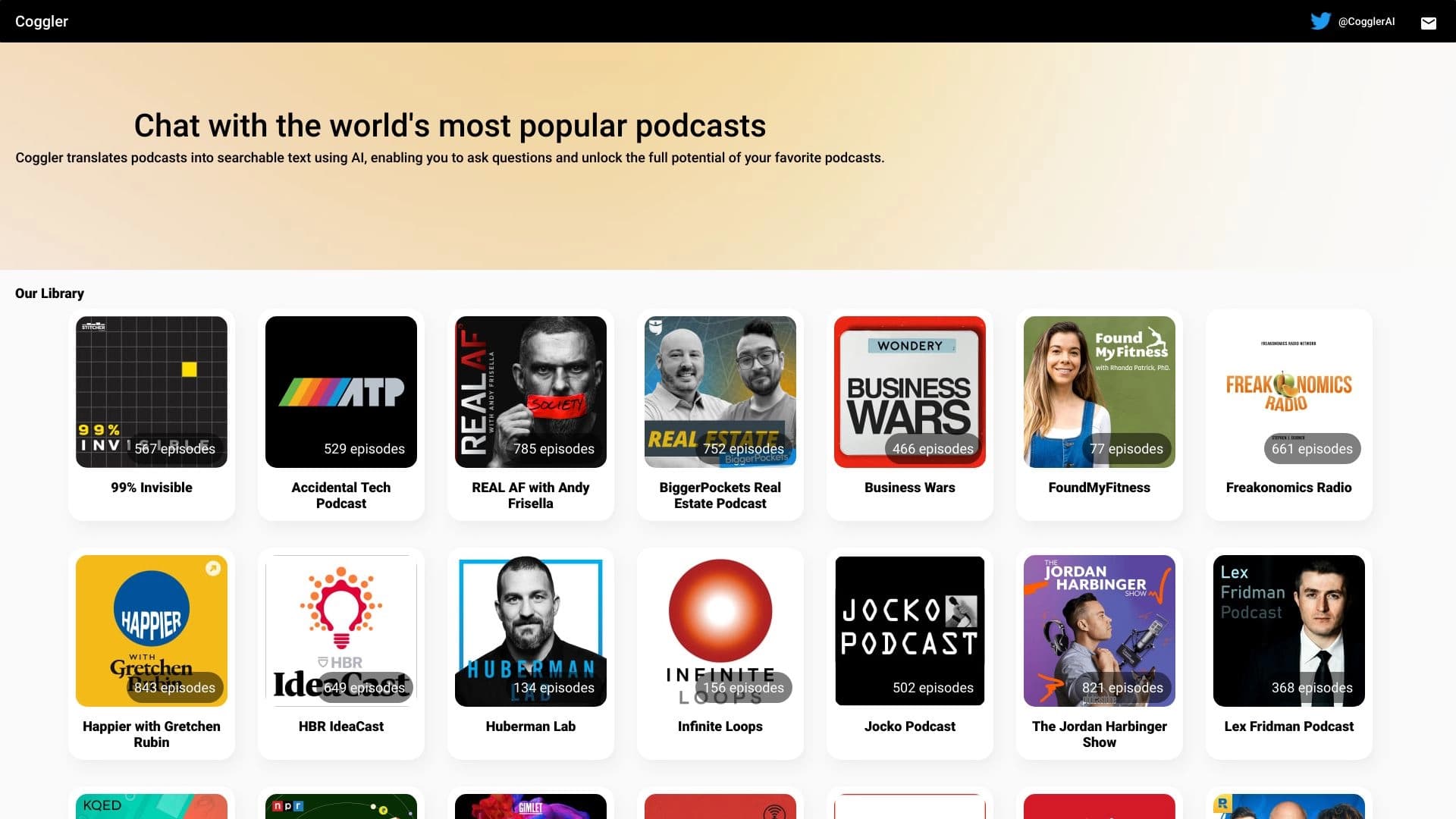
Coggler automatically transcribes podcasts and turns them into a searchable text database for quickly finding the fragments you need.
Overview
Coggler is a specialized artificial intelligence service that solves a long-standing problem for podcast enthusiasts: the need to listen to long episodes just to find one interesting thought. Instead, Coggler automatically creates text transcripts of audio episodes and turns them into a unified searchable database. Users can ask the service a question, and the AI will find the relevant quote, topic, or mention across any of the processed episodes.
The core technology
The technology is based on automatic speech transcription. The AI listens to a podcast's audio track, recognizes the words, and generates structured text. This text is then indexed to enable full-text search.
Time savings
The service's main goal is to save users from manually sifting through dozens of hours of audio content. Instead, you can ask the system a specific question and get a precise answer with a quote from the relevant episode.
Coggler characteristics
| Characteristic | Value |
|---|---|
| Tool type | AI service for podcast search and chat |
| Main categories | Podcasts, audio transcription |
| How to use | Web application, chat with podcast episodes |
| Main features | Speech recognition, full-text search, interactive chat |
| Catalog publication date | December 30, 2025 |
| Website | coggler.com |
Who is Coggler suitable for?
Podcast listeners
The service will be useful for those who actively consume content but don't have time to listen to every new episode. Coggler lets you quickly check whether a specific topic was discussed in an episode and jump straight to the relevant segment.
Content creators and journalists
Editors and bloggers can use Coggler to find quotes, verify facts, and gather material. Instead of re-listening to episodes, authors get direct links to the exact statements made by guests.
Marketers and researchers
Market research professionals can use the text database to analyze brand mentions, discussion sentiment, and identify trends being discussed in popular podcasts.
How to use Coggler?
Search the database
The primary use case is full-text search across all transcribed episodes. The user enters a key phrase, such as a company name or a term, and gets a list of all mentions with context.
Interact via chat
Instead of classic text search, you can ask a natural-language question in the chat. The AI interprets the query and returns not just a list of results, but a formulated answer with excerpts from the audio files.
Navigate episodes
After receiving an answer, the user can see exactly which episode discussed the topic of interest, making it easier to work with the content further.
Coggler's main features
Automatic transcription
The AI independently processes popular podcasts, turning the speech of hosts and guests into editable text. This creates a unified content library without the need for manual audio processing.
Full-text search
The system covers episode content by topics, quotes, and mentions. You can search for a specific person or an abstract idea discussed across several episodes.
Interactive dialogue with content
The chat interface allows you to ask follow-up questions and get excerpts from podcasts. This turns passive listening into active research with sources.
Coggler's advantages
Faster access to information
The main benefit is significant time savings. Listening to an average podcast manually takes 40 minutes to an hour, while searching the transcript takes seconds.
Structuring audio knowledge
Coggler turns scattered audio recordings into an organized database. This makes it easier to create your own material based on what you've heard.
Precision in finding details
Users can quickly locate not just a topic, but specific phrases, guest names, or exact quotes without re-listening to the entire podcast.
Mindful content consumption
Instead of passive background listening, users work with the content purposefully, which improves information retention.
Coggler's drawbacks
Currently, public sources indicate that the service's distribution model is undefined (unknown). The lack of information about pricing and availability could be a significant barrier for potential users.
It should also be noted that the service focuses on popular podcasts. If a user listens to niche shows with a small audience, there's a chance the desired episode won't be in the transcription database.
What problems does Coggler solve?
Quick information retrieval
The service solves the main problem: finding the right data within a large volume of audio content. This is critical for those who use podcasts as a source of facts.
Research and topic exploration
Coggler lets you connect information from different episodes, building a complete picture of a topic of interest. All discussions on a specific question are gathered in one place.
Material preparation
Journalists, marketers, and editors can use transcripts to create articles, posts, and analytical reports, extracting the quotes they need from podcasts.
Audio content management
For advanced users, the service becomes a tool for organizing a personal knowledge library, turning streaming audio recordings into an accessible reference resource.
Coggler pricing
The source website's data contains no information about pricing plans, subscription costs, or one-time payments. There is also no data on a free tier or trial period. For current pricing policy, you need to visit the official website at coggler.com.
Coggler terms of use
Detailed terms of service are not disclosed in the provided sources. It's unknown whether registration is required to use the chat, whether there are limits on the number of requests or the volume of transcribed content. There is also no information about the license for using text transcripts for commercial purposes. It's recommended to review the terms on the official resource before starting to use the service.
Coggler availability
The service's official website is available at coggler.com. The catalog publication date is December 30, 2025. Details about network support, required technical specifications, or geographic restrictions on the AI's operation are not available in the sources.
How Coggler differs from alternatives
Deep integration of search and chat
Coggler's main distinction is the symbiosis of full-text search and a conversational interface. The user doesn't just enter a query but has a dialogue with the AI, which finds and structures the relevant fragments.
Podcast focus
While many transcription services position themselves as universal tools for any audio recording, Coggler specializes specifically in podcasts. This allows the service to adapt its recognition algorithms to the specific speech patterns of hosts, background noise, and studio recording characteristics.
Automatic processing of popular shows
Unlike tools that require manually uploading each file, Coggler automatically processes well-known podcasts. Users can start searching right away without a preparation step.
Conclusion
Coggler is a modern solution for navigating the world of audio content. The service automatically transcribes podcasts and creates a searchable database, allowing users to find the quotes, topics, and mentions they need through chat. This approach saves time for regular listeners, simplifies the work of journalists and researchers, and gives content creators new tools for exploring audio material. Despite the uncertainty around its pricing policy, the stated functionality makes Coggler a promising assistant for anyone working with podcasts.
Frequently asked questions
See also

AI travel planner that creates personalized itineraries and helps you choose flights, accommodation, and activities in a chat.
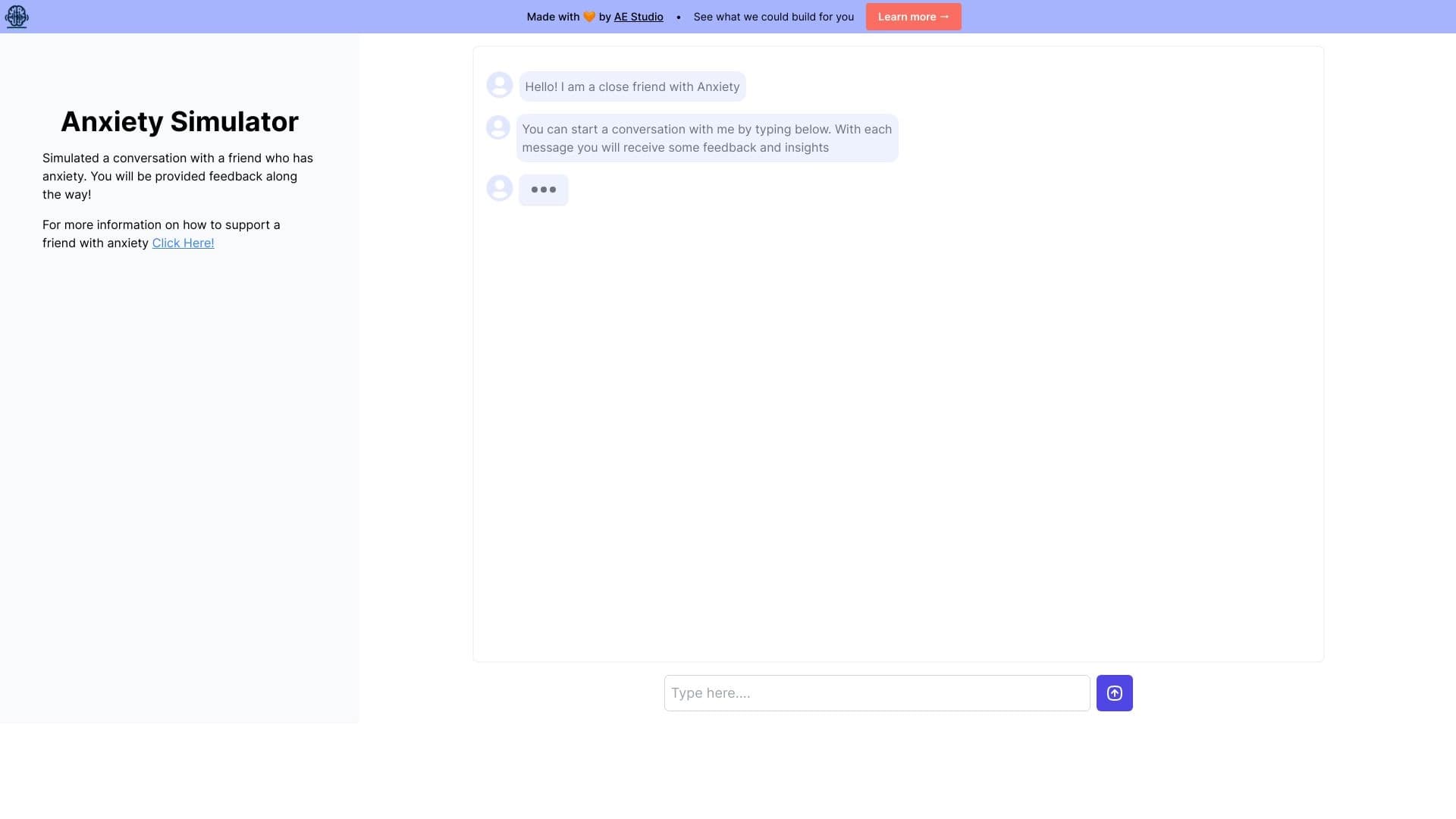
Web simulator for practicing supportive communication with a person experiencing anxiety.
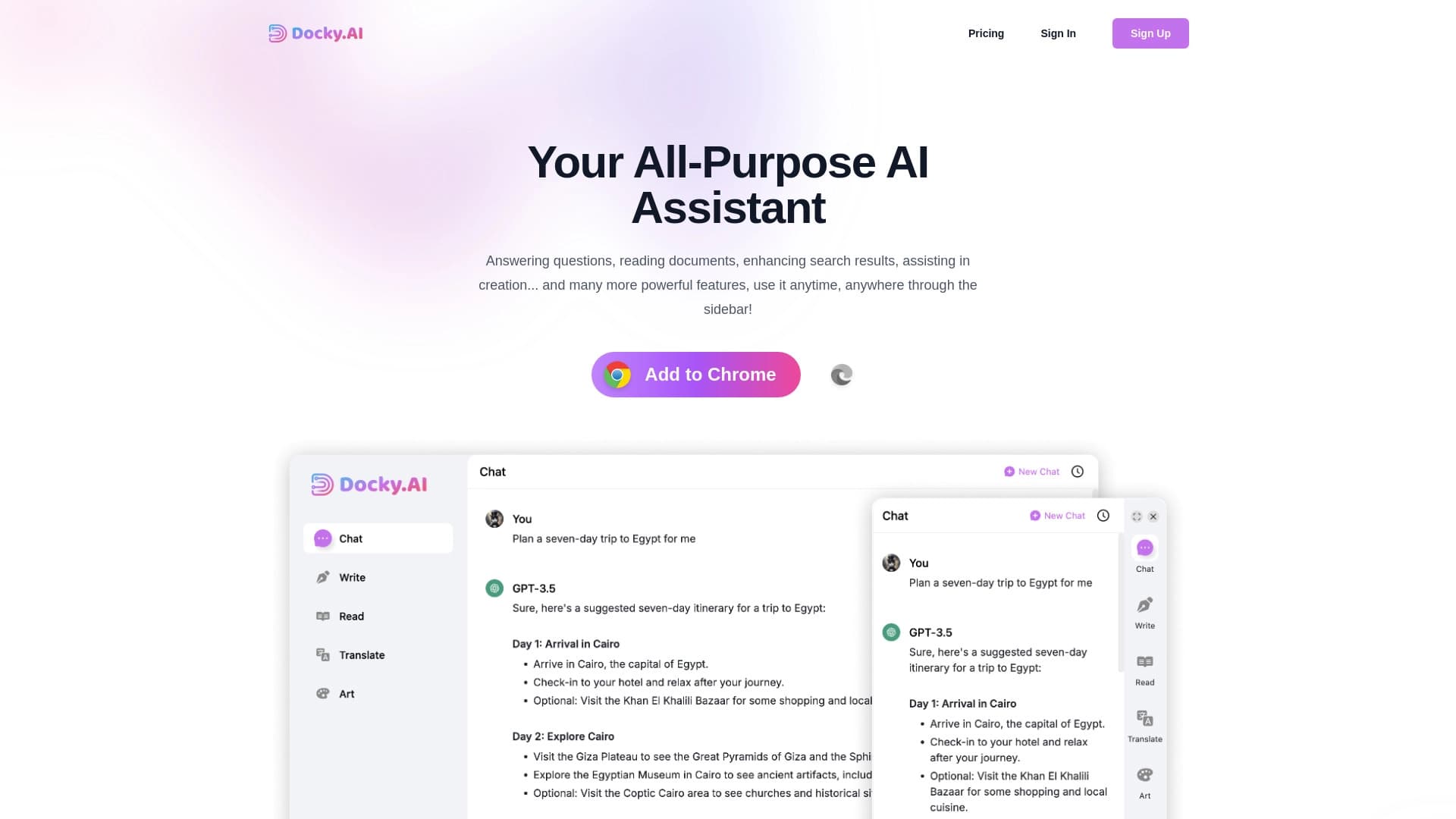

Side AI panel that helps answer questions, work with documents, and generate images.


Averi is a marketing platform that brings campaign planning, content creation, and analytics together in a single interface.
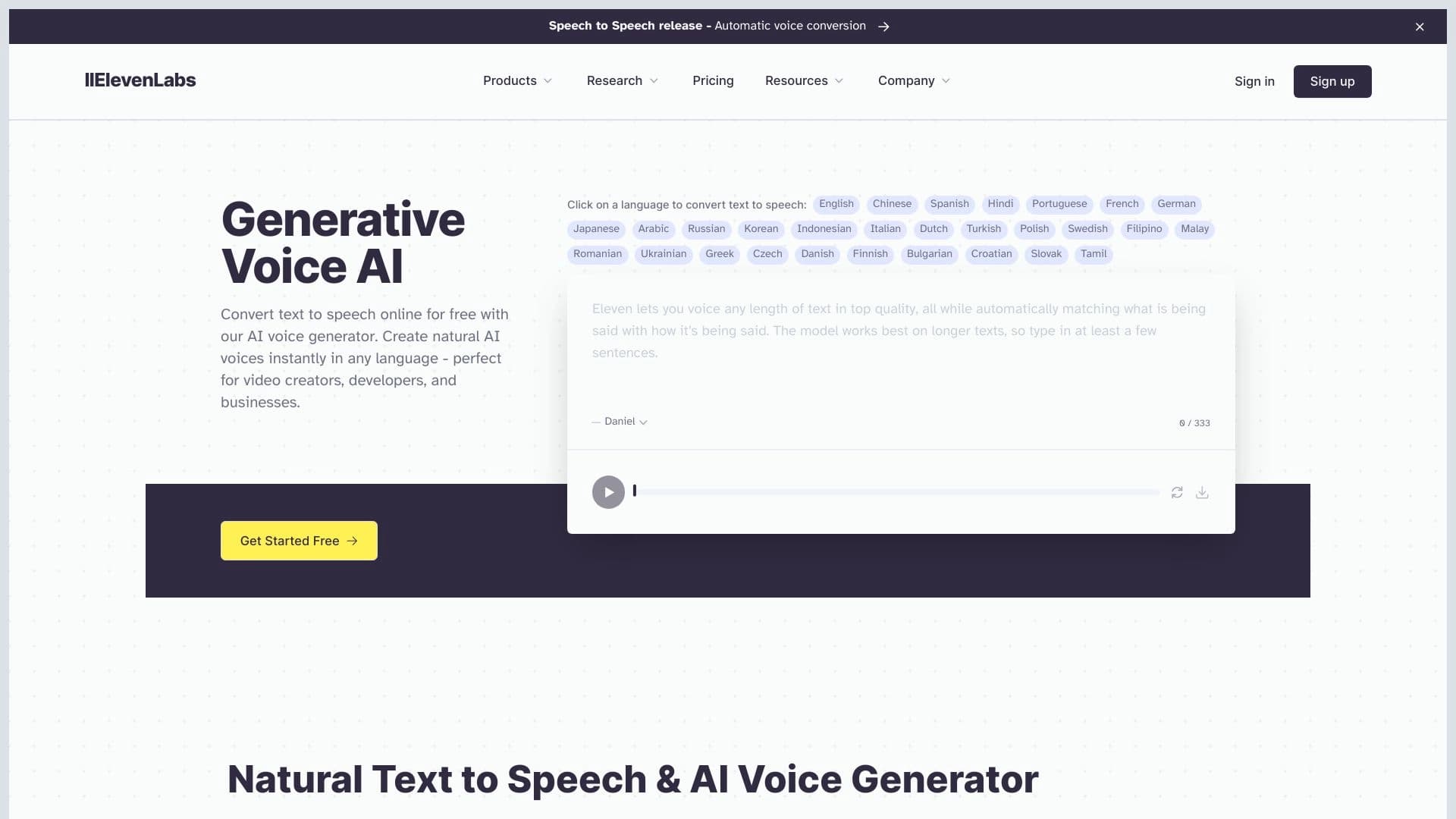
AI platform for voice synthesis and cloning that converts text into realistic speech.
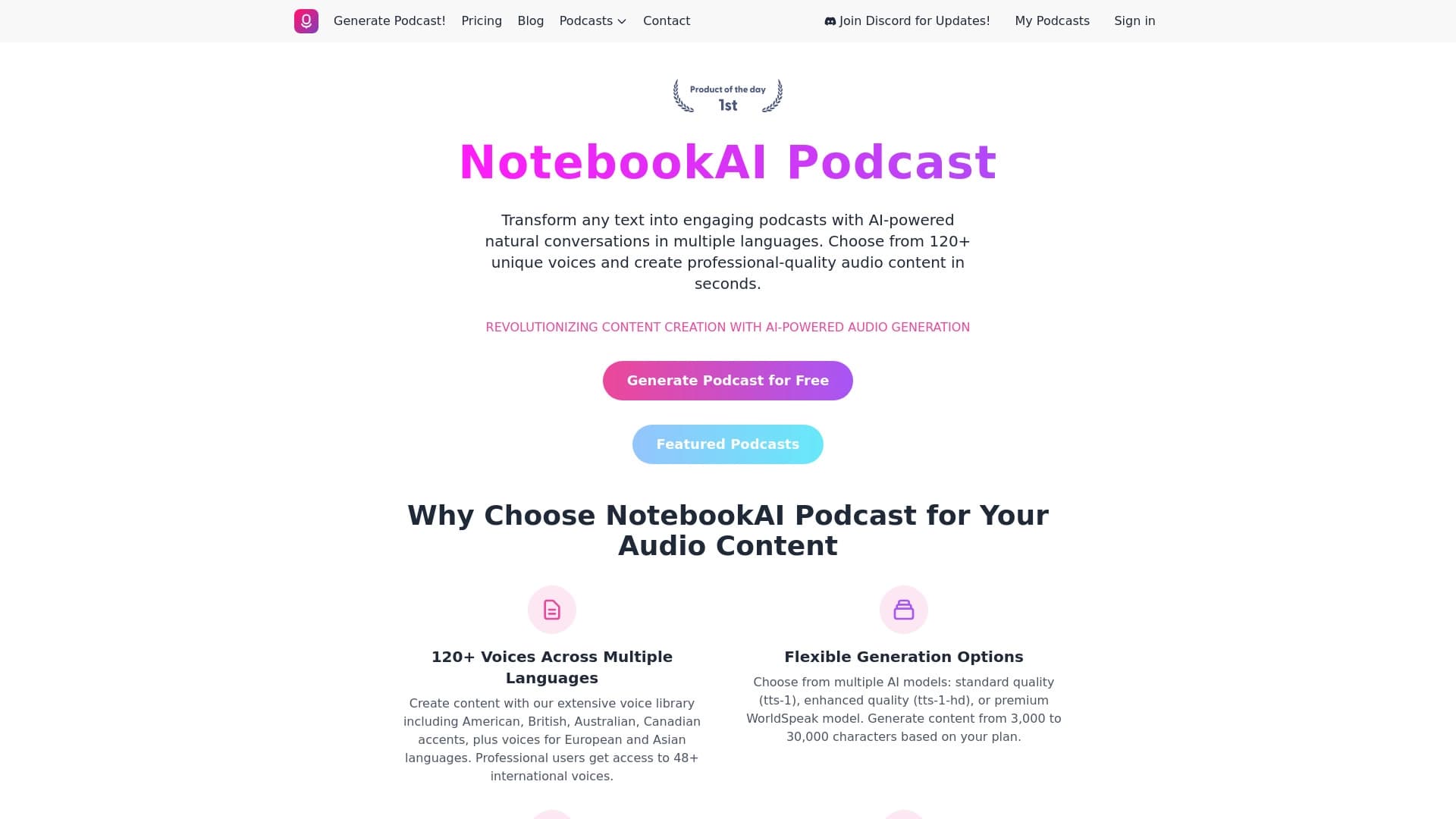

A service for turning text into podcasts with naturally sounding voices in different languages.

A multifunctional AI assistant for chat, text and image generation, translation, and programming help.
Yandex's multimodal voice assistant powered by the YandexGPT neural network that answers questions, generates texts and images, analyzes files, and controls the smart home.